
MFEM Community Workshop
September 22–25, 2026
Georgia Tech + Virtual

Overview
The MFEM team, together with Georgia Tech's School of Computational Science and Engineering and the Open Source Program Office, invite you to the 2026 MFEM Community Workshop, which will take place on September 22-25, 2026, in a hybrid format: in-person at Georgia Tech + virtually on Zoom. The goal of the workshop is to foster collaboration among all MFEM users and developers, share the latest MFEM features with the broader community, deepen application engagements, and solicit feedback to guide future development directions for the project.
We encourage you to join us in person if you can! As you make travel plans, please note that the first day of the workshop (September 22) will be reserved for a hands-on MFEM tutorial.
Please contact the meeting organizers with any questions: mfem@llnl.gov
Registration
If you plan to attend, either in-person or virtually, please register no later than September 11th.
-
In person: The registration fee for in-person attendance is $150 for regular participants and $75 for students. After completing this registration form, please pay the registration fee here: Payment Link.
-
Remote: There is no registration fee for remote participants. Zoom details will be distributed prior to the event date.
Venue
The Sept. 22 tutorial will be held at the Georgia Tech Coda Building (Room 114 on the first floor, 756 W Peachtree St NW, Atlanta, GA 30308), then the rest of the workshop will take place in the Georgia Tech Global Learning Center (GLC) (Room 222, 84 5th St NW, Atlanta, GA 30308). These locations are marked on the map below.
Lodging Options
We have not arranged an official conference hotel, but there are plenty of options in Midtown within walking distance of the venue, the Georgia Tech Global Learning Center (84 5th St NW, Atlanta, GA 30308). Attendees are encouraged to book early, as late September is a busy season in Atlanta. A few suggestions:
- Georgia Tech Hotel and Conference Center — adjacent to the venue (1 min walk)
- Renaissance Atlanta Midtown Hotel — 6 min walk
- Hilton Garden Inn Atlanta Midtown — 10 min walk
- Hotel Indigo Atlanta Midtown — 13 min walk
- Courtyard by Marriott Atlanta Midtown — 14 min walk
- Element by Marriott Atlanta Midtown — 14 min walk
- Residence Inn Atlanta Midtown/Georgia Tech — 14 min walk
- Hyatt Centric Midtown Atlanta — 15 min walk
- Hampton Inn Atlanta-Georgia Tech-Downtown — 18 min walk
- Sonesta Select Atlanta Midtown Georgia Tech — 18 min walk
- Hampton Inn & Suites Atlanta Midtown — 21 min walk
The venue is also a 10-minute walk from the Midtown MARTA station, which connects directly to Hartsfield-Jackson Atlanta International Airport as well as to other parts of the city, should you prefer to stay farther afield.
Meeting Format
This will be the third hybrid edition of the MFEM community workshop and the sixth overall. Highlights of the program include:
- Free guided tutorial (to be held on the first day of the workshop, September 22)
- Tutorial registration is separate as part of the LLNL High Performance Computing Innovation Center’s summer tutorial series
- Hybrid format: Georgia Tech (Coda Building, Room 114 on the first floor) or on Webex
- Great for new users!
- Note: The tutorial will take place 9am–11am PT / 12pm–2pm ET. The Webex registration page above displays your current time zone.
- Project news and roadmap
- Application developer talks – submit your abstract with registration
- Student lightning talks – submit your abstract with registration
- In-person poster session
- Visualization contest
- Office hours
See also the agendas for the previous 2025, 2024, 2023, 2022, and 2021 MFEM workshops.
Workshop participants are encouraged to join the MFEM Community Slack workspace to communicate with other MFEM users and developers before, during and after the MFEM workshop.
Agenda
After the tutorial on September 22, workshop activities will take place 8:00am–5:00pm Eastern Daylight Time (GMT-4) on September 23–25. Breakfast, lunch, and break refreshments will be provided for in-person attendees on September 23–25.
Tuesday, September 22
In person: Georgia Tech Coda Building, Room 114 (first floor)
Remote: Webex link will be provided
| Time | Activity/Presenter |
|---|---|
| 12:00-2:00 | Julian Andrej (LLNL), Tzanio Kolev (LLNL)Guided tutorialRegister until September 21 as part of the LLNL High Performance Computing Innovation Center’s summer tutorial series. |
Wednesday, September 23
In person: Georgia Tech GLC, Room 222
Remote: Zoom link will be provided
| Time | Activity/Presenter |
|---|---|
| 8:00-8:30 | Check-in and breakfast |
| 8:30-9:00 | Qi Tang (Georgia Tech)WelcomeOverview of the workshop agenda, participant demographics, and community resources. |
| 9:00-9:30 | Tzanio Kolev (LLNL)State of MFEMThe project’s past, present, and future with an emphasis on key capabilities and examples. |
| 9:30-10:00 | Veselin Dobrev (LLNL)Recent developments in MFEMFeatures developed during 2026. |
| 10:00-11:00 | Break |
| 11:00-11:30 | Shani Martinez-Weissberg (Tel-Aviv University)FEA of very large bone models based on micro-CT scansHigh-resolution micro-computed tomography (µCT)-based micro-finite element (µFE) models provide a powerful framework for investigating bone mechanics but remain computationally challenging at anatomically relevant scales. This work presents a scalable µFE framework for large-scale biomechanical analysis of an intact New Zealand White rabbit femur using predominantly open-source tools. Bone geometries were segmented from µCT images and converted into voxel-based finite element meshes containing more than 8×10^8 degrees of freedom. Simulations were performed using the MFEM library, employing both full assembly and matrix-free element-by-element formulations for large-scale linear elasticity problems. Numerical results were verified against a commercial finite element solver and experimentally validated using compression testing and digital image correlation measurements. In addition, the influence of image resolution on displacement and principal strain predictions was investigated. The study demonstrates the feasibility of performing anatomically realistic µFE analyses at unprecedented scales using moderate high-performance computing resources and highlights the potential of MFEM for image-based biomechanical applications. |
| 11:30-12:00 | Ryan Black (Children’s Hospital of Philadelphia)An open-source computational framework for immersed fluid–structure interaction modeling using FEBio and MFEMHeart valve disease and dysfunction present significant challenges in pediatric populations, where heterogeneous anatomy often requires highly individualized treatment strategies. Computational fluid–structure interaction (FSI) modeling offers a promising tool for the evaluation and optimization of patient-specific repairs by predicting both valve mechanics and the resulting hemodynamics. In this talk, we present an open-source computational framework for immersed FSI modeling using FEBio and MFEM (FEBioMFEMiFSI). FSI coupling is achieved using a fictitious domain/distributed Lagrange multiplier methodology with variational multiscale stabilization to enhance accuracy on under-resolved grids characteristic of unfitted FSI methods. A fully implicit, monolithic scheme provides robust coupling for the strongly coupled fluid–solid interactions characteristic of cardiovascular applications. The method is implemented by coupling MFEM, a GPU-ready and scalable finite element library with state-of-the-art parallel performance, with FEBio, which provides advanced solid modeling capabilities and an extensive material library for biomechanics. We demonstrate the capabilities of the framework using several test problems, including a three-dimensional semilunar heart valve simulation. We will also discuss ongoing GPU acceleration efforts for the framework leveraging matrix-free finite element methods. |
| 12:00-1:00 | Lunch |
| 1:00-1:30 | Andrew Ho (LLNL)Developments in GPU computing with MFEMWe will provide an explicit description of our implementation of simplicial finite elements for the complete de Rahm complex in 4D. We choose to develop finite elements in 4D because of their usefulness in spacetime applications. Specifically, we are interested in simplex elements for the potential of mesh adaptivity. Our work modifies and updates a previously generated MFEM branch developed by Andreas Schafelner and Martin Neumueller. Our work consists of the following stages: defining degrees of freedom on a reference element, constructing a Vandermonde matrix to transfer modal functions to nodal functions, methods for computing both the value of conforming basis functions and their derivatives, and finally orientation matching for neighboring elements. We then demonstrate the capabilities of our functions with an order of accuracy study on appropriate canonical PDEs. |
| 1:30-2:00 | Arturo Vargas (LLNL) MAGMA kernels for packed triangular matricesHigh-order L2 discontinuous FEM discretizations in scientific computing often require repeated solution of many small dense linear systems, for example in mass matrix operations. This work presents new MAGMA kernels for batched symmetric positive definite systems in packed storage, reducing memory traffic and improving throughput on GPU and APU platforms. By storing only one triangular half of each matrix, the packed format substantially lowers memory footprint while maintaining performance. We present integration results from MFEM and an LLNL high-order ALE hydrodynamics code, showing reduced memory use and strong performance for representative high-order assembly and mass matrix workflows. These results demonstrate the value of packed storage and fused solves for end-to-end application performance. |
| 2:00-3:00 | Student talks Maxwell Paik (NYU) Improving the scalability of algebraic multigrid with filteringRecent work has introduced algebraic multigrid with filtering (AMGF), an efficient preconditioner for large-scale, ill-conditioned contact mechanics problems with provable convergence guarantees [Petrides et al. 2026]. AMGF augments a standard global preconditioner (AMG) with a direct solve on the subspace in contact, resulting in significant improvements in convergence and performance. However, for massive problems, direct factorization of the subspace will become a bottleneck. We present a specialized smoother on the subspace that is designed to replace AMGF's direct solver. We apply an additive Schwarz-style correction with subdomains corresponding to contact constraints. Our approach improves scalability while maintaining comparable convergence to AMGF.David Winters (Georgia Tech) Lagrangian information geometric regularizationThe compressible Euler equations develop nonsmooth solutions in the form of shocks in virtually all smooth initial conditions. Existing remedies, such as artificial viscosity or limiters, can smear fine-scale structures if too much is added or fail to prevent spurious oscillations if too little is added. The recently proposed Information-Geometric Regularization overcomes this problem by introducing the first inviscid shock regularization. Applied to Eulerian CFD, it has recently enabled the first compressible fluid simulation to exceed a quadrillion degrees of freedom. This work extends IGR to Lagrangian fluid dynamics with shocks. The accumulation of mesh points towards shock fronts coupled and the use of an adaptive IGR that shrinks with an element’s size allows for sharper shock resolution than in the Eulerian case. We integrate the IGR into Laghos, an MFEM-based high-order Lagrangian discretization of compressible shock hydrodynamics equations using curvilinear finite elements. We show that IGR is able to prevent singular shocks from forming without adding artificial viscosity, enabling the use of high-order discretizations of shock-laden flows in the Laghos framework.Brook Eyob (Georgia Tech) Discontinuous Galerkin semidiscretization of the information geometric regularized compressible Euler equationsWe present a discontinuous Galerkin formulation of the information geometric regularization (IGR) framework for the compressible Euler equations in MFEM. The method regularizes compressive dynamics through an entropic pressure obtained from an auxiliary elliptic equation that enters the Euler fluxes as an augmented pressure while preserving the conservative structure of the discretization. Numerical results demonstrate stable shock resolution without limiters or artificial viscosity while retaining fine-scale flow features in smooth regions.Kevin Sweet (Portland State University) High-order ALE hydrodynamics with tangential movement on curved boundariesLagrangian hydrodynamics models fluid flow by tracking individual particles in a moving mesh, which can lead to highly deformed elements. Arbitrary Lagrangian-Eulerian (ALE) methods address this by periodically regularizing the mesh and remapping state variables to the new mesh. In this work, we present an ALE method that allows tangential movement of mesh nodes on curved domain boundaries. This is done by weakly enforcing boundary conditions during the Lagrangian phase, using a parameterization of the boundary to ensure exact tangential motion during the remesh phase, and solving advection equations for the remap phase. Numerical results are given for various 2D and 3D domains. |
| 3:00-4:00 | Break |
| 4:00-4:30 | Leonardo Molinari (LLNL)dFEM: differentiable finite elements in MFEMWe will take a detailed look into the recent developments of Automatic Differentiation in MFEM which leverages modern compiler framework techniques of the LLVM project. The presentation is concluded with exciting new experiments as well as news about recent developments. |
| 4:30-5:00 | Siyuan Brant Qian (UIUC)MFEM-Poseidon: hardware-adaptive numerics for MFEM through compiler-based rewritingThe finite element method is foundational to science and engineering, and is now used at scales that demand GPU accelerators. Portability solutions enable one code base to execute across devices, but performance portability does not necessarily follow: FP64 throughput ranges from 1/2 to 1/64 of FP32, while much of modern GPU throughput is concentrated in reduced-precision tensor cores. Moreover, directly implementing a mathematical formulation in floating point can sacrifice either accuracy or performance. MFEM-Poseidon applies the Poseidon profile-guided compiler to MFEM. Users write operators and custom physics and specify an accuracy target; the compiler then rewrites kernels, choosing precisions, algebraic transformations, and specialized hardware units for the target device. Rewritten programs run 9.14× faster for elasticity operator evaluation, 5.05× faster for its conjugate-gradient solve, and 1.57× faster for a diffusion kernel while preserving near-FP64 accuracy on an RTX 5090. On a GH200, the same operator is instead mapped onto FP64 tensor cores, achieving a 2.48× end-to-end speedup. Rewrite strategies also transfer from surrogate profiles to production problem sizes. In this talk, I will present the MFEM-Poseidon workflow, show how it integrates with MFEM operators and user-defined physics, and discuss how the compiler adapts the same application to GPUs with very different arithmetic capabilities. I will also describe our experience using profile-guided numerical rewriting in MFEM and optimization opportunities for compiler-assisted performance portability in future MFEM applications. |
Thursday, September 24
In person: Georgia Tech GLC, Room 222
Remote: Zoom link will be provided
| Time | Activity/Presenter |
|---|---|
| 8:00-8:30 | Breakfast |
| 8:30-9:00 | Alexander Blair (UKAEA)MFEM in MOOSE: a framework for coupled multiphysicsLast year, initial support for setting up and solving MFEM-based FE problems was added to MOOSE; a large-scale open-source parallel FE multiphysics framework originating from Idaho National Laboratory (INL). Since then, MOOSE's MFEM capabilities have developed at pace. This year, support for solving nonlinear problems, eigenproblems, and DG problems using MFEM have been added, alongside capabilities to enable interpolative transfers between MFEM-based and libMesh-based variables to facilitate coupling with existing problems in the MOOSE framework. In this presentation, we shall present the range of new MFEM capabilities added to MOOSE this year, and outline how users can get started with using MOOSE with MFEM. |
| 9:00-9:30 | Vladimir Fedorov (Raiden Numerics LLC)mufem: a Python-native multiphysics framework built on MFEM and the design of a GPU-accelerated DGTD Maxwell solverWe present mufem, a Python-native finite element framework developed at Raiden Numerics for scalable multiphysics simulations, with a primary focus on electromagnetics, plasma, and coupled thermal problems. mufem is built directly on top of MFEM and exposes its high-order finite elements, adaptive mesh refinement, and CPU/GPU performance portability through a high-level Python API targeted at industrial users and automated design workflows. The main part of the talk centers on mufem's discontinuous Galerkin time-domain (DGTD) solver for the full Maxwell system. We discuss how MFEM's existing infrastructure — DG spaces, face integrators, parallel mesh handling, and the partial-assembly machinery — provided the majority of the building blocks needed for a parallel DGTD implementation. We then describe the components we had to introduce ourselves: custom bilinear-form integrators for the upwind numerical flux and material couplings, together with a manual partial-assembly implementation of these integrators to enable efficient execution on GPUs. To bring everything together, we plan to walk through a few real-world applications from electromagnetic and photonic device design. These examples will let us show mufem in action — how it scales on multi-GPU systems, where we still hit walls today, and where we plan to take the framework next. |
| 9:30-10:00 | Gregory Legrain (Ecole Centrale de Nantes)A comparative study of finite‑element techniques for analyzing complex geometriesThe integration of complex geometries into numerical simulations remains a significant challenge in computational mechanics, particularly in applications such as additive manufacturing, biomedical imaging, and materials science. To provides practical guidelines for selecting the most suitable method based on problem complexity and desired accuracy, advancing the seamless integration of image-based computations and complex geometric modeling in engineering simulations, we compare different numerical methods. Only methods involving minimal geometrical pre-treatment are considered here: voxel-based FEM, conformal decomposition FEM (CDFEM) and fictitious domain methods. The geometry is represented thanks to level-set functions which can be obtained from a segmentation or recalculated from a meshed surface. To validate and compare these methods, convergence analyses are conducted for 2D and 3D scalar and vector problems of increased complexity. |
| 10:00-11:00 | Break and group photo |
| 11:00-11:30 | Boyan Lazarov (LLNL)Scalable design and optimization for frequency-domain wave and vibration problemsTopology optimization offers an effective approach for controlling wave propagation and structural vibration. However, high-resolution frequency-domain design is computationally intensive, as each optimization step requires repeated state and adjoint solutions for large systems. The conditioning of these systems deteriorates with mesh refinement, significant material contrast, and proximity to resonance. This work presents a scalable density-based framework for time-harmonic acoustic and elastic design. Its core contribution is reformulating the complex finite-element equations as coupled real block systems, enabling parallel iterative solvers and multilevel preconditioning within the optimization process. Frequency-response formulations address forced-response and resonance-oriented design. Adjoint sensitivities are integrated with gradient-based updates, while filtering and projection techniques provide regularization, length-scale control, and robustness to both uniform and non-uniform geometric variations. The implementation leverages the MFEM finite-element library and distributes state, adjoint, sensitivity, and optimization computations across distributed-memory resources. Representative acoustic and three-dimensional structural examples examine mesh scalability, material contrast, and excitation-frequency selection. |
| 11:30-12:00 | Dohyun Kim (Brown University)Multi-material topology optimization with polytopal constraintsWe introduce an efficient and scalable method for density-based multi-material topology optimization, integrating classical mirror descent techniques with point-wise polytopal design constraints. Such constraints arise naturally in this class of problems, wherein the vertices of convex polytopes correspond to distinct design states, only one of which should be occupied at each point in space. The framework generates a descending sequence of iterates by penalizing the design space around the previous iterate with a generalized distance function tailored to the convex geometry of the n-dimensional polytope. This distance function, called a Bregman divergence, smooths the optimization landscape, ensuring that each iterate strictly satisfies the point-wise constraints. Subsequently, global constraints (e.g., bounds on the structural mass) can be enforced easily by solving a small, finite-dimensional dual problem. The resulting method is simple to implement and demonstrates robustness and efficiency when combined with an Armijo-type line search algorithm. We validate the method in structural design problems involving the optimal arrangement of both isotropic and anisotropic materials, as well as magnetic flux optimization in electric motors. |
| 12:00-1:00 | Lunch |
| 1:00-1:30 | Yuanzhe Xi (Emory University)MFEM + LLMAbstract to come |
| 1:30-2:00 | Rui Peng Li (LLNL)AI-driven algebraic multigrid: graph neural networks for operator designWe develop ML and data-driven strategies to accelerate algebraic multigrid (AMG) by learning the key operators. Using graph neural networks (GNNs) and reinforcement learning (RL), we model sparse matrices as graphs and optimize AMG coarsening directly from data. Our results demonstrate that neural operators can reproduce and potentially improve AMG components using LLNL’s expertise in scalable PDE solvers and scientific machine learning. |
| 2:00-3:00 | Student talks Rushan Zhang (Georgia Tech) Particle in cell simulation in MFEMWe present a new electrostatic Particle-In-Cell (PIC) miniapp for MFEM that couples explicit particle dynamics with a finite-element Poisson solver on periodic meshes. The implementation demonstrates a finite-element PIC workflow, including charge deposition, periodic Poisson solves, field interpolation, leap-frog particle integration, and parallel particle redistribution. By combining MFEM’s particle infrastructure with compatible finite element spaces and parallel solvers, the miniapp provides a scalable reference implementation for electrostatic PIC simulations. In this talk, we will discuss the implementation of finite-element PIC methods in MFEM and demonstrate the solver on the Landau damping benchmark.Anthony Kolshorn (Portland State University) Implicit-explicit Runge Kutta methods in design optimization with applications to heat transferThis presentation will illustrate a method for exploiting the structure of topology optimization problems with mixed multi-physics constraints. Design Optimization is typically constrained by Partial Differential Equations (PDEs) derived from physical laws. For large-scale applications, exploiting the structure of the PDE significantly reduces implementation and computational costs. For time-dependent PDEs, Implicit-Explicit Runge-Kutta (IMEX-RK) time integration has proven highly successful in solving fluid dynamics and heat transfer problems. We lay the groundwork for an adjoint-based design approach using IMEX-RK schemes for forward- and backward-time integration. We provide a general derivation of the discrete adjoint for IMEX-RK methods. Large heat transfer topology optimization experiments in MFEM demonstrate the efficacy of our framework in the high-performance computing (HPC) context.Pablo Cortes (Portland State University) A continuous-adjoints framework for PDE-constrained optimization in 3D time dependent wave propagation phenomenaWe present a high-performance computing framework for 3D PDE-constrained optimization in time dependent wave propagation, with applications in topology optimization and inverse problems. Continuous adjoints are derived from the first-order optimality conditions of a Lagrangian operator defined over a space-time cylinder. Adjoint consistency of the fully discrete system is then reduced to verifying the transpose of a monolithic space-time operator obtained by discretizing these continuous optimality conditions. To overcome severe 3D space-time memory bottlenecks, optimal time-checkpointing schemes are seamlessly integrated into the reverse time-marching process. Large-scale 3D elastodynamic benchmarks demonstrate the framework's scalability, memory efficiency, and versatility across different optimization tasks and discretization schemes.Amit Rotem (Virginia Tech) Scalable WaveHoltz in MFEMFinite element discretizations of the Helmholtz equations lead to massive and highly indefinite linear systems which are difficult to solve with classical iterative methods. We present a scalable WaveHoltz solver for the Helmholtz equation in MFEM, leveraging optimized finite element infrastructure to achieve performance portability on modern GPU architectures. Our formulation combines off-the-shelf MFEM components with a novel modified midpoint time-stepping scheme accelerated by algebraic multigrid resulting in a robust and performant method providing a practical pathway to scalable Helmholtz solvers. We compare against alternative off-the-shelf solvers and analyze key design choices, highlighting tradeoffs impacting robustness, efficiency, and implementation simplicity. |
| 3:00-4:00 | Break |
| 4:00-5:00 | Poster session (in-person only) |
Friday, September 25
In person: Georgia Tech GLC, Room 222
Remote: Zoom link will be provided
| Time | Activity/Presenter |
|---|---|
| 8:00-8:30 | Breakfast |
| 8:30-9:00 | Student talks Radovan Dabetić (ETH Zurich) Multigrid preconditioning for FEEC using mass-lumping and transforming smoothersFor PDEs naturally posed in the de Rham complex, structure-preserving mixed and saddle-point finite element discretizations typically produce indefinite linear systems. We propose a multigrid preconditioning framework that combines mass-lumped (explicitly invertible) FEEC mass matrices with transforming smoothers that map the operator to a block form with positive definite diagonal blocks, enabling Gauss-Seidel-type relaxation on the transformed system. Under mild h-uniform norm-equivalence assumptions (and for trivial topology), we prove stability of the mass-lumped systems, and by extension spectral equivalence between the mass-lumped and original FEEC operators, which motivates using multigrid cycles designed for the mass-lumped operators as preconditioners for the consistent FEEC systems. While our primary focus is on algorithmic design rather than formal convergence theory, extensive numerical experiments on the Hodge-Dirac operator, mixed Hodge-Laplacians, and a magnetostatics saddle-point system in 2D and 3D demonstrate the robustness of the approach.Christine Tseng (Brown University) Explicit-implicit-null timestepping for anisotropic diffusionThe Explicit-Implicit-Null (EIN) time integrator is a novel IMEX scheme developed to linearly treat stiff, nonlinear spatial derivative terms, bypassing traditional time-step limitations and nonlinear solver costs. We implement the EIN framework within MFEM by developing example custom TimeDependentOperators alongside targeted extensions to MFEM's native IMEX ODE solver classes. We verify the scheme’s performance up to third-order accuracy on nonlinear isotropic and anisotropic diffusion problems. Numerical results demonstrate that higher-order EIN variants successfully mitigate stiffness, significantly enhancing performance scaling and proving the value of high-order methods in scientific computing. |
| 9:00-9:30 | Shipeng Mao (Chinese Academy of Sciences)Structure-preserving, high-order, efficient MHD simulation in MFEMMagnetohydrodynamics (MHD) governs the behavior of electrically conducting fluids such as plasmas, liquid metals, and the solar coVanderbilt Universityrona, with important applications in astrophysics, geophysics, and magnetic confinement fusion. The MHD model has important physical properties, such as the divergence-free constraints on the velocity and magnetic fields, helicity conservation, the topology of magnetic field lines, the energy law, and positivity of density, which must be preserved in numerical simulations to ensure reliable long-time results. In this talk, we present a family of structure-preserving, high-order finite element methods implemented in MFEM that exactly maintain these properties. Built on finite element exterior calculus (FEEC), these methods include Eulerian, arbitrary Lagrangian–Eulerian (ALE), and fully Lagrangian formulations for compressible and incompressible MHD, and are high-order accurate and efficient enough for large-scale GPU simulations. Numerical benchmarks demonstrate their accuracy, efficiency, and robustness in extreme regimes, including high Reynolds numbers and magnetic Reynolds numbers. |
| 9:30-10:00 | Jan Nikl (LLNL)Updates in the framework for mixed systems of MFEMThe talk summarizes the overall design of the framework for mixed systems in MFEM and its recent updates. This framework offers a user-friendly way of setting up mixed systems for problems of hydrodynamics, thermodynamics, electromagnetics, elasticity and others. On top of that, it enables a single-line algebraic reduction of the system by eliminating discontinuous potentials or fluxes, like in the Local Discontinuous Galerkin (LDG) method. However, even more appealing feature is the single-line hybridization of the total flux (e.g. Hybridizable Discontinuous Galerkin (HDG) or Broken Raviart-Thomas (HBRT)). The discrete system is formed only for the trace unknowns on the skeleton of the mesh, while overall stability is improved. Moreover, such discrete systems can be efficiently preconditioned by algebraic multigrid methods, for example. The new additions to the framework include more choices of the trace space, which enables setups with the Embedded Discontinuous Galerkin method, which even further reduces size of the hybridized system. Secondly, LDG and HDG methods have been extended for problems of linear elasticity with demonstration in modified MFEM examples, including AMR based on the native HDG error estimator. Finally, hybridized methods have been introduced to the world of mesh optimization, where the native HDG error estimator can be used as a metric in the Target Matrix Optimization Paradigm for PDE-driven mesh optimization. This kind of adaptivity becomes very useful in problems of strongly anisotropic diffusion, where it naturally aligns the high-order mesh with the direction of anisotropy and reduces the number of refinement levels needed. |
| 10:00-11:00 | Break and visualization contest awards |
| 11:00-11:30 | Chunyu Zhang (Sun Yat-Sen University)A two-scale high-order damaged elasticity theory and solution procedure for quasi-brittle fractureTo rigorously capture the tight coupling between elastic deformation and damage initiation/propagation in quasi-brittle fracture processes, a two-scale damaged elasticity theory is proposed that accounts for the meso-scale inhomogeneity of both the strain and the damage fields. It formulates a degraded strain energy density to capture size effects and localized damage initiation and propagation through a homogenization operation. This approach takes a simplified and unified physics and offers a consistent treatment of higher-order deformation and damage, enabling natural incorporation of size effects on fracture strength. No additional regularization is needed to maintain damage localization. Structural deformation is solved using the principle of minimum potential energy, where the Augmented Lagrangian Method (ALM) reduces the order of gradient operators. All boundary conditions are free of high-order terms and can be applied in the conventional manner. Numerical investigations demonstrate the theory's capability to predict non-singular deformation at crack tips, accurately model size-dependent fracture in perforated brittle plates, and achieve mesh-independent failure predictions in benchmark problems. |
| 11:30-12:00 | Jacopo Rodeschin (University of Bergamo)A scalable state-space Python package for spatio-temporal geostatisticsThis work presents a novel low-rank approximation of the multivariate State-Space Model (SSM) for high-dimensional spatio-temporal data, where the temporal dynamics follow a first-order autoregressive process. The approach is based on the Stochastic Partial Differential Equation (SPDE) representation of the Matérn Gaussian spatial covariance function, applied component-wise to the spatial processes that are independent over time. This formulation yields a sparse representation of the latent process on a finite element mesh, enabling scalable inference. Model parameters are estimated using an Expectation-Maximization (EM) algorithm. Simulation studies and a real-world environmental application demonstrate the model's effectiveness in capturing complex spatio-temporal dependencies while maintaining computational efficiency in high-dimensional settings. |
| 12:00-1:00 | Lunch |
| 1:00-1:30 | Guosheng Fu (Notre Dame)Entropy-stable and physical-constraint-preserving DGSEM for relativistic hydrodynamicsHigh-order methods for relativistic hydrodynamics must preserve both nonlinear stability and physical constraints, including positive density and pressure and subluminal velocity. This talk presents an entropy-stable discontinuous Galerkin spectral element framework combined with physical-constraint-preserving limiting. Building on the W-form formulation introduced by Kailiang Wu, we develop entropy-stable discretizations for general relativistic hydrodynamics on stationary spacetimes and for symmetry-reduced two-dimensional models with compatible entropy laws. A unified DGSEM combines entropy-conservative fluxes, compatible geometric source discretizations, and discrete geometric conservation laws on curvilinear meshes. Numerical results demonstrate high-order accuracy and robustness for special relativistic flows and black-hole accretion problems. |
| 1:30-2:00 | Hennes Hajduk (TU Dortmund University)Property-preserving numerical methods for the shallow-water equations with source termsThe shallow water equations are a fundamental mathematical model used to describe the motion of water in rivers, coastal regions, oceans, and other large-scale geophysical settings. Despite their relatively simple form, these equations capture a wide range of important phenomena, including tsunami propagation, storm surges, and flooding caused by dam failures. Reliable simulations of such events play an important role in risk assessment, disaster management, and environmental planning. Designing numerical methods that simultaneously satisfy all of these requirements is a longstanding challenge. Existing approaches often preserve only some of these properties or achieve them at the expense of excessive numerical diffusion, which can reduce accuracy in practical simulations. In this presentation, I will present a recently developed framework for constructing numerical methods that preserve positivity, entropy stability, and well-balancedness simultaneously. My talk will conclude with numerical examples demonstrating the performance of the method on standard benchmark problems, followed by a discussion of future research directions. |
| 2:00-3:00 | Student talks Yiming Yu (Brown University) Topology optimization for inspectabilityNondestructive evaluation is essential for detecting critical defects prior to product deployment, and X-ray computed tomography (CT) is among the most reliable techniques for this purpose. However, effective CT inspection requires product designs that allow sufficient X-ray intensity to pass through the structure and reach the detector. This study develops a density-based topology optimization model with maximum-attenuation constraints. Two approaches for computing attenuation are presented: a ray-casting method and an advection-based model. Additionally, a new method employing auxiliary slack variables is introduced to enable stricter enforcement of the local attenuation limit. The proposed topology optimization formulation is validated on several two-dimensional examples and large-scale three-dimensional problems in MFEM. The results demonstrate that the method enforces inspectability constraints while maintaining superior structural performance.Ashvin Oli (Vanderbilt University) Scalable phase-field fracture simulations on Frontier using MFEMPhase-field methods enable robust simulation of complex brittle fracture, including glacier crevasse propagation, without explicit crack tracking, but require computationally demanding elasticity–damage solves at the mesh resolutions needed to resolve fracture geometry. We present a parallel staggered phase-field fracture solver built with MFEM and PETSc and evaluate its performance through large-scale simulations on the OLCF Frontier supercomputer. Strong- and weak-scaling studies demonstrate scalability of the elasticity solve to problems approaching 1 billion degrees of freedom across thousands of MPI ranks, while GAMG-preconditioned Krylov solvers provide stable iteration counts at scale.Jielin Yang (University of Notre Dame) A h-adaptive entropy-stable oscillation-eliminating discontinuous Galerkin method for the Euler equations on curvilinear meshesWe propose a new entropy stable DG method for Euler equations on curvilinear mesh. The scheme is entropy stable and h-adaptive, besides we use the oscillation-eliminating method to control the spurious oscillation due to shock. Various numerical examples will be shown to demonstrate the scheme.Mitchell Scott (Emory University) Accelerating multigrid prolongation via bipartite graph attention networksWhen trying to solve large, sparse linear systems Lu=f, arising from an elliptic differential operator, multigrid is the go-to method as it has nice scaling properties. To convert between these grids of differing coarsening levels, the prolongation operator is used. While there is a standard technique for constructing the prolongation operator for geometric multigrid, we exploit the bipartite graph structure of the nodes. We use graph attention networks on the nodes to learn the optimal weights between the nodes. We compare this method to standard prolongation techniques on baselines from MFEM. |
| 3:00-4:00 | Break |
| 4:00-4:30 | Noe Reyes Rivas (Brown University)Proximal Galerkin for contact mechanicsThe proximal Galerkin method is a numerical method for solving variational problems with inequality constraints. We apply the method to Signorini’s problem, the classical model of a three-dimensional linearly elastic body resting on a rigid, frictionless surface, and multi-body contact problems. We also introduce a regularized primal form of proximal Galerkin and provide implementations using the finite element software MFEM. |
| 4:30-5:00 | Patrick Saber (Penn State)Implementation details for the 4D MFEM branchIn this talk, we will provide an explicit description of our implementation of simplicial finite elements for the complete de Rahm complex in 4D. We choose to develop finite elements in 4D because of their usefulness in spacetime applications. Specifically, we are interested in simplex elements for the potential of mesh adaptivity. Our work modifies and updates a previously generated MFEM branch developed by Andreas Schafelner and Martin Neumueller. Our work consists of the following stages: defining degrees of freedom on a reference element, constructing a Vandermonde matrix to transfer modal functions to nodal functions, methods for computing both the value of conforming basis functions and their derivatives, and finally orientation matching for neighboring elements. We then demonstrate the capabilities of our functions with an order of accuracy study on appropriate canonical PDE’s. |
Simulation and Visualization Contest
We will be holding a simulation and visualization contest open to all attendees. Participants can submit visualizations (images or videos) from MFEM-related simulations. The winner of the competition (selected by the organizing committee) will receive an MFEM T-shirt. We will also feature the images in the gallery. Here are the winners from the 2025 workshop:
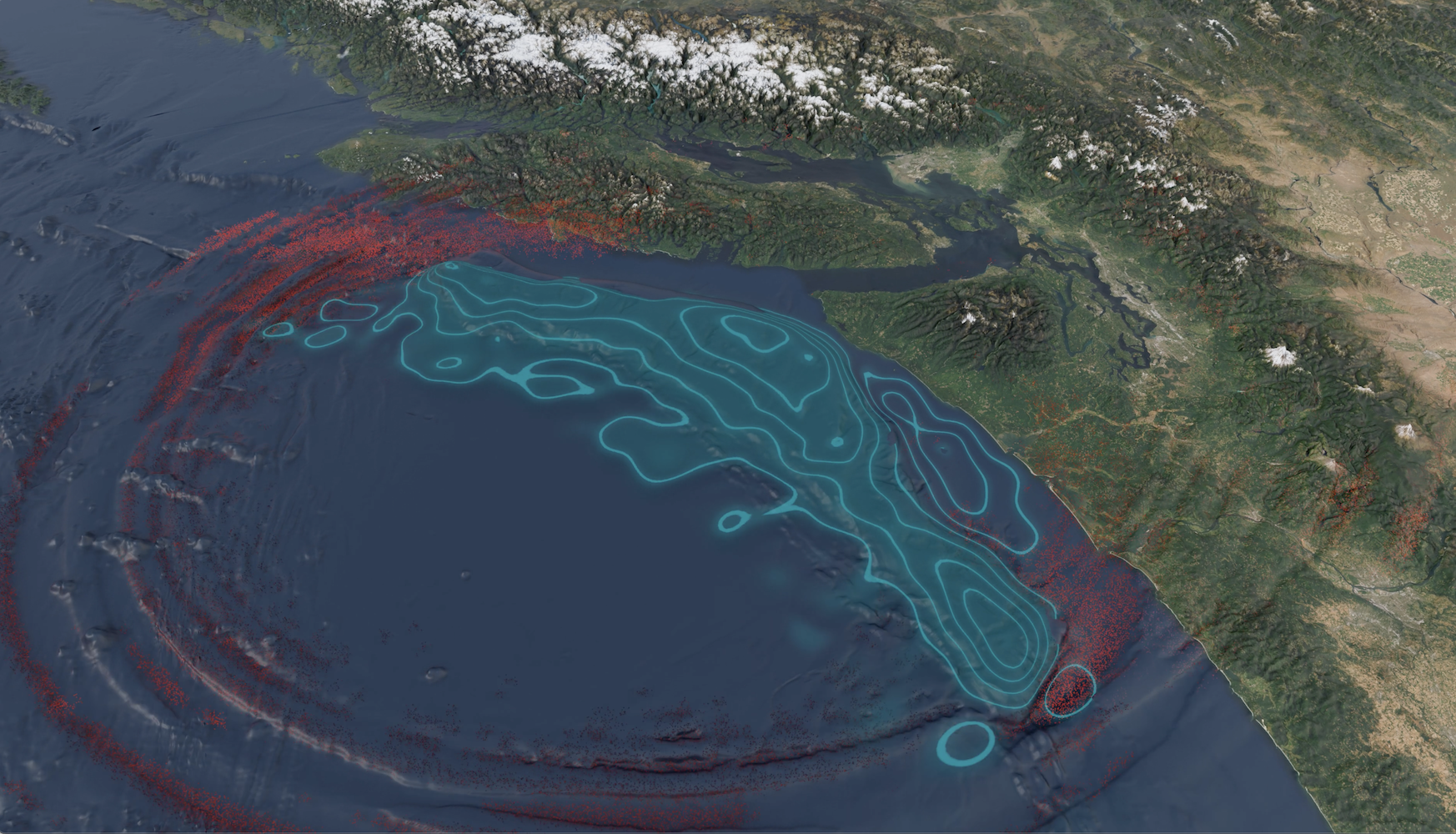
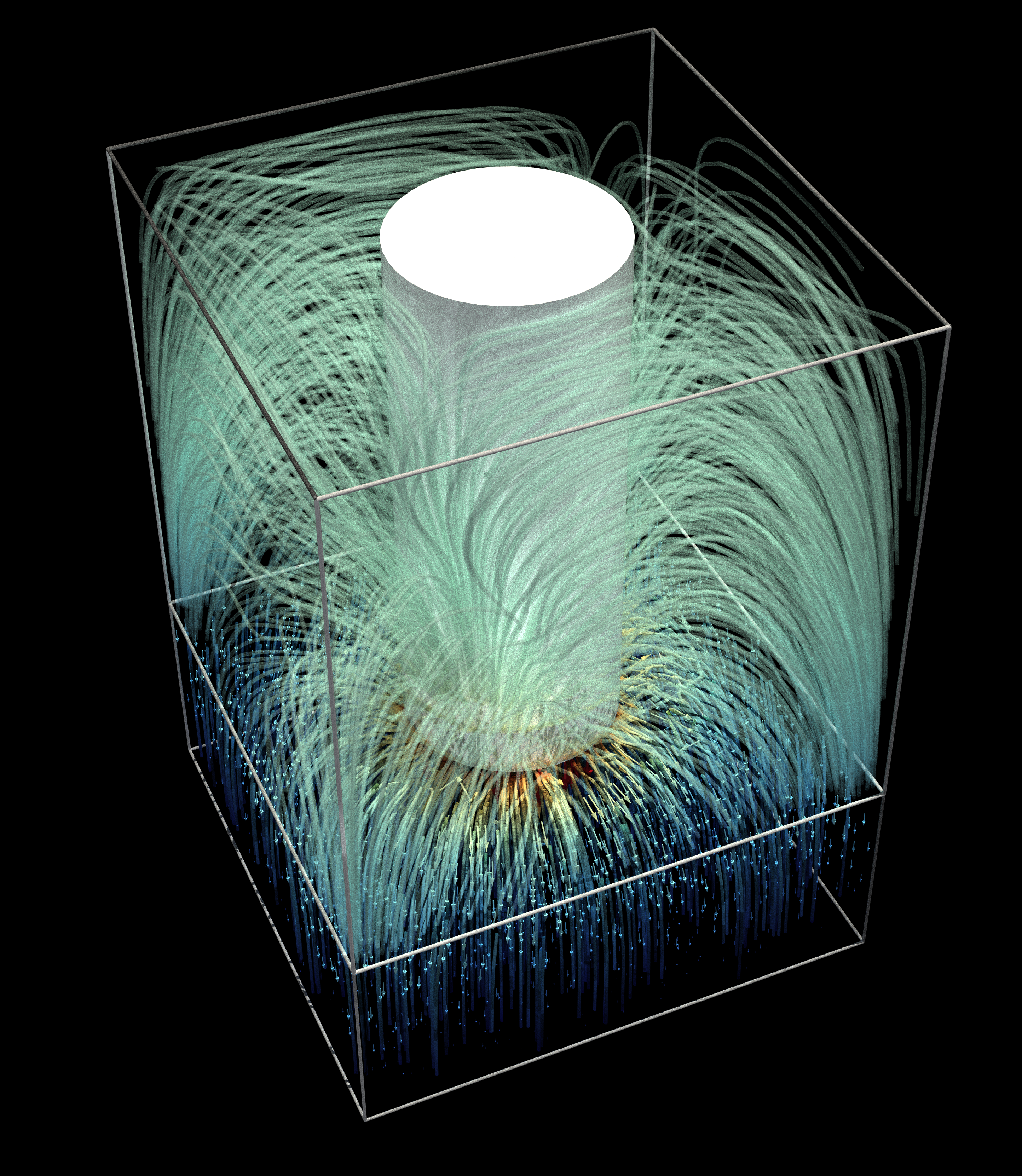
To submit an entry in the contest, please fill out the Google form.
Alternatively, you may email your submission to mfem@llnl.gov, including your name, institution, a short description of the simulation (the underlying physics, discretization, application details, etc.), and visualization software used (GLVis, ParaView, VisIt, etc.).
Virtual Backgrounds
We invite workshop participants to use the virtual backgrounds designed for this event. Click each image to enlarge, then right-click to save locally.




Workshop Sponsors
We gratefully acknowledge the support of our workshop sponsors.
Gold Sponsor – $6,000

Silver Sponsor – $4,000


Bronze Sponsor – $2,000

If your organization is interested in sponsoring the workshop, please contact the organizers at mfem@llnl.gov.
About Livermore and LLNL
Founded in 1869, Livermore is California's oldest wine region, framed by award-winning wineries, farmlands, and ranches that mirror the valley's western heritage. As home to renowned science and technology centers, Lawrence Livermore and Sandia national labs, Livermore is a technological hub and an academically engaged community. It has become an integral part of the Bay Area, successfully competing in the global market powered by its wealth of research, technology, and innovation.
For more than 70 years, LLNL has applied science and technology to make the world a safer place. World-class facilities include the National Ignition Facility, the Advanced Manufacturing Laboratory, and the Livermore Computing Center hosting the world's fastest exascale supercomputer, El Capitan.
About Georgia Tech
The Georgia Institute of Technology (Georgia Tech or GT), is one of the nation's top public research universities with more than 50,000 students who study in person at the main campus in Atlanta, at off-campus instructional sites such as Georgia Tech-Europe in France, and through distance and online learning.
GT's School of Computational Science and Engineering creates future leaders who keep pace with and solve the most challenging problems in science, engineering, health, and social domains. This research focuses on high-performance computing, modeling and simulation, and large-scale Big Data analytics powered by machine learning and artificial intelligence to enable breakthroughs in scientific discovery and engineering practice. GT's Open Source Program Office (OSPO) supports the development, maintenance, and sustainability of open-source research software.
Organizing Committee
Holly Auten ┊ John Camier ┊ Brendan Keith ┊ Tzanio Kolev ┊ Will Pazner ┊ Socratis Petrides ┊ Sohail Reddy ┊ Syun'ichi Shiraiwa ┊ Qi Tang
