<?xml version="1.0" encoding="utf-8"?>
<feed xmlns="http://www.w3.org/2005/Atom">
    <id>https://mlflow.org/articles/</id>
    <title>MLflow Blog</title>
    <updated>2026-08-20T00:00:00.000Z</updated>
    <generator>https://github.com/jpmonette/feed</generator>
    <link rel="alternate" href="https://mlflow.org/articles/"/>
    <subtitle>MLflow Blog</subtitle>
    <icon>https://mlflow.org/img/mlflow-favicon.ico</icon>
    <entry>
        <title type="html"><![CDATA[When to Containerize AI Agent Workloads (and How to Start)]]></title>
        <id>https://mlflow.org/articles/containerizing-ai-agent-workloads/</id>
        <link href="https://mlflow.org/articles/containerizing-ai-agent-workloads/"/>
        <updated>2026-08-20T00:00:00.000Z</updated>
        <summary type="html"><![CDATA[Discover when and how to effectively containerize AI agent workloads for scalability, security, and seamless deployment in production settings.]]></summary>
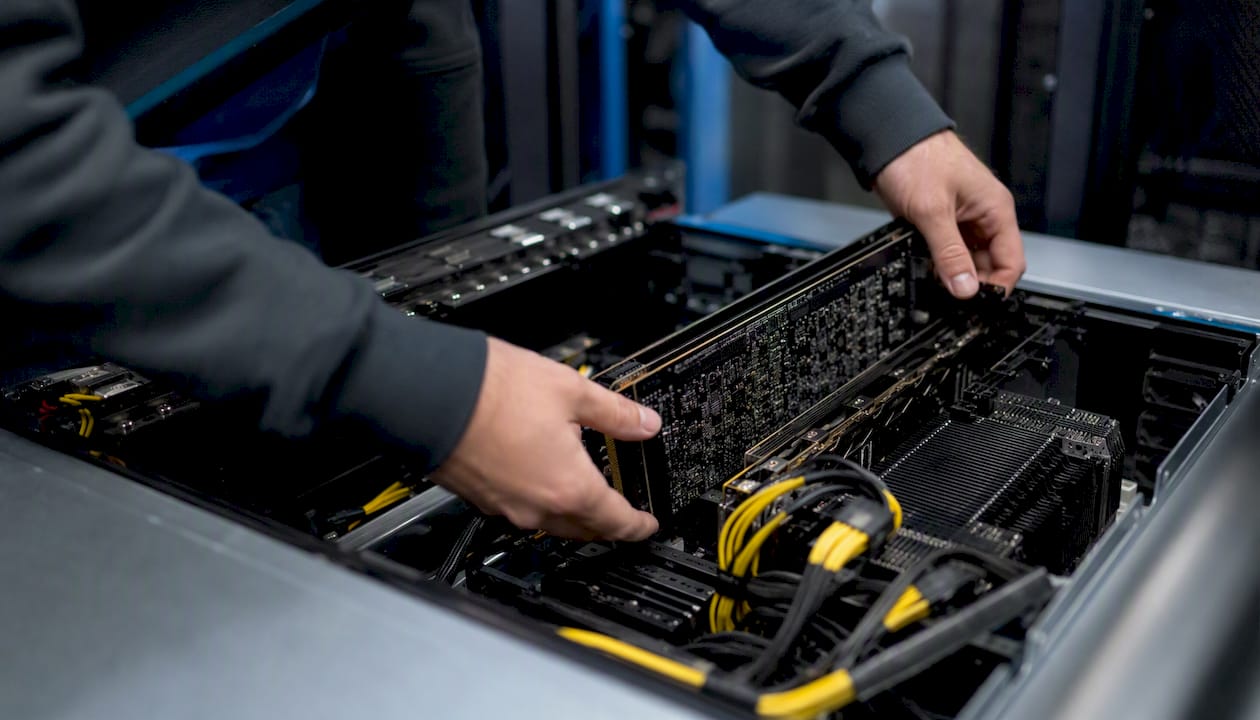
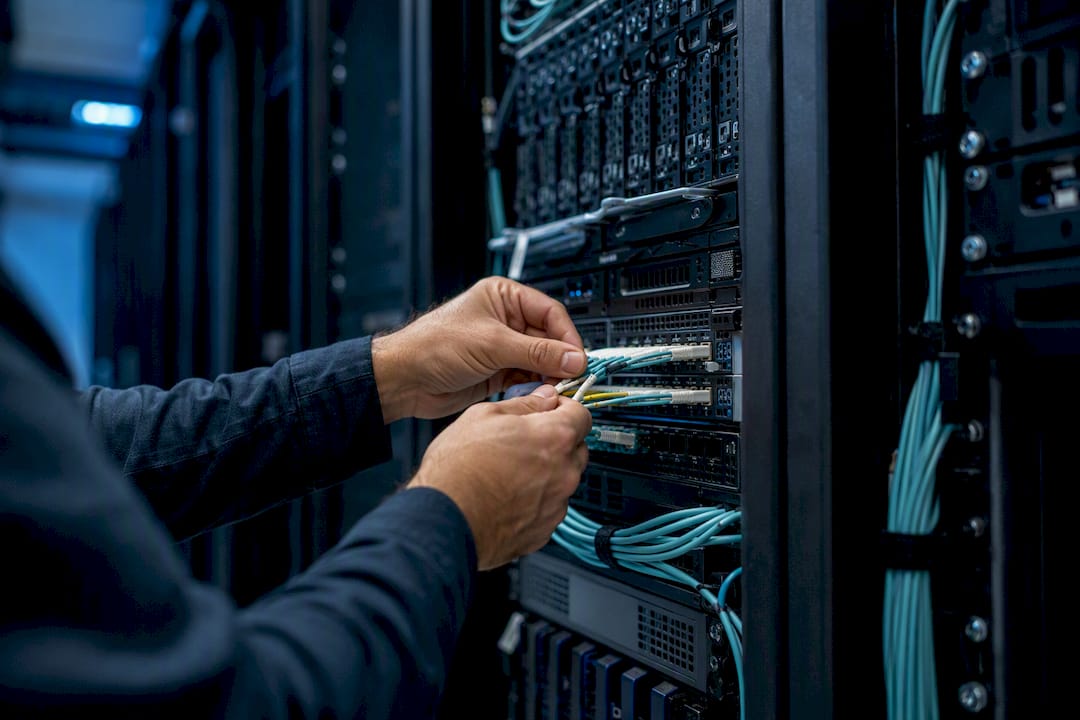
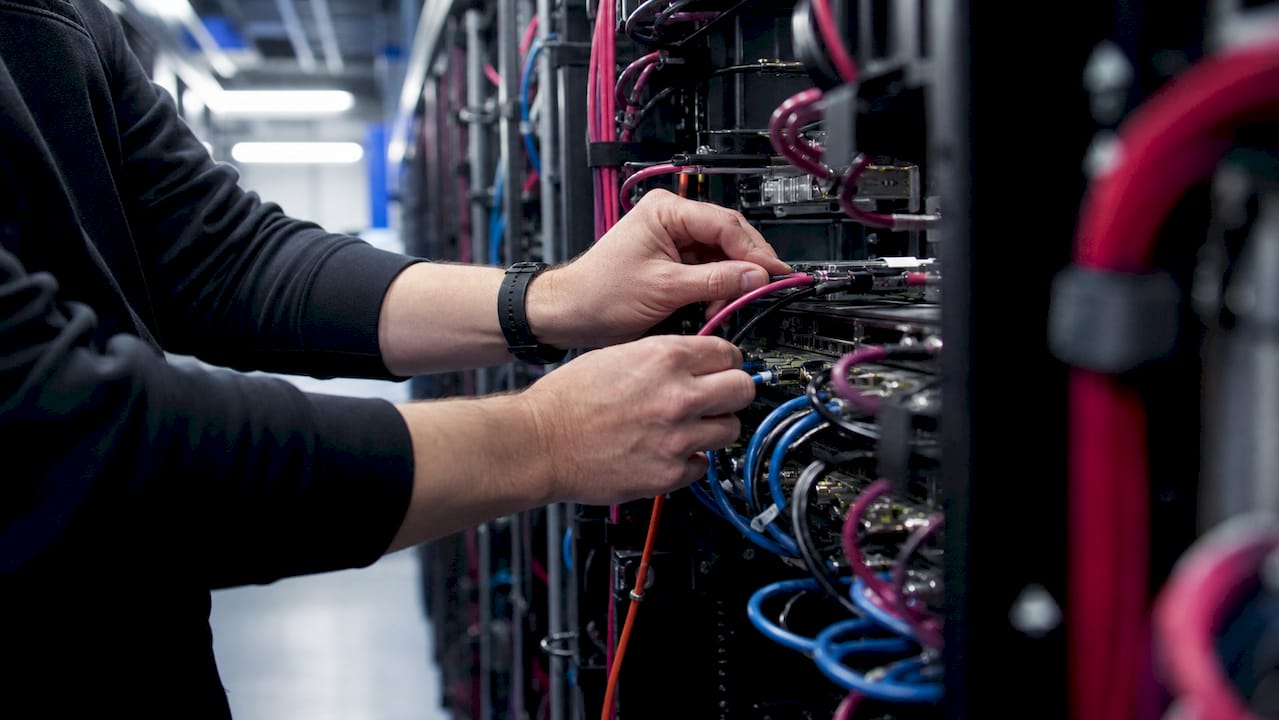
        <content type="html"><![CDATA[<p><img decoding="async" loading="lazy" src="https://csuxjmfbwmkxiegfpljm.supabase.co/storage/v1/object/public/blog-images/organization-30814/1787251112692_Hands-connecting-container-orchestration-hardware.jpeg" alt="Hands connecting container orchestration hardware" class="img_ev3q"></p>
<p>Containerize agent workloads the moment they move to networked, multi-user, or production settings. If your agent is still a notebook experiment running on your laptop, skip the overhead. Once it serves real requests, talks to other services, or needs to scale, package it.</p>
<p>Your first move is straightforward: build an OCI image with a working health endpoint, push it to an approved registry, and generate an SBOM (or AI-BOM, for models and prompt assets). That single step unlocks everything else, versioning, rollback, reproducible deploys.</p>
<p>Before that image goes anywhere near production, confirm:</p>
<ul>
<li class="">GPU support is configured correctly for your host driver version</li>
<li class="">The image is signed with provenance attestation attached</li>
<li class="">Observability hooks (OpenTelemetry traces, MLflow run logging) are wired in from the start</li>
<li class="">The container runs with minimal permissions, non-root, no unnecessary syscalls</li>
</ul>
<p>We'll walk through each of these in detail, but that checklist is the difference between an agent that behaves in staging and one that surprises you at 2 a.m. in production.</p>
<h2 class="anchor anchorTargetStickyNavbar_Vzrq" id="key-takeaways">Key Takeaways<a href="https://mlflow.org/articles/containerizing-ai-agent-workloads/#key-takeaways" class="hash-link" aria-label="Direct link to Key Takeaways" title="Direct link to Key Takeaways" translate="no">​</a></h2>
<p>Containerizing AI agent workloads succeeds when teams pair standard OCI build and CI/CD discipline with agent-specific controls for GPU scheduling, short-lived credentials, and reasoning-level observability.</p>
<table><thead><tr><th>Point</th><th>Details</th></tr></thead><tbody><tr><td>Containerize at the production threshold</td><td>Move to OCI containers once an agent serves networked, multi-user, or production traffic.</td></tr><tr><td>Build signed, SBOM-backed images</td><td>Generate an SBOM/AI-BOM and sign every image before it reaches an approved registry.</td></tr><tr><td>Match GPU runtime to host drivers</td><td>Align CUDA versions and use the NVIDIA Container Toolkit to avoid runtime mismatches.</td></tr><tr><td>Issue action-scoped credentials</td><td>Replace permanent service accounts with short-lived tokens mapped to each agent action.</td></tr><tr><td>Trace reasoning end to end</td><td>Use OpenTelemetry and MLflow together to link distributed traces to run artifacts and evaluation scores.</td></tr></tbody></table>
<h2 class="anchor anchorTargetStickyNavbar_Vzrq" id="table-of-contents">Table of Contents<a href="https://mlflow.org/articles/containerizing-ai-agent-workloads/#table-of-contents" class="hash-link" aria-label="Direct link to Table of Contents" title="Direct link to Table of Contents" translate="no">​</a></h2>
<ul>
<li class=""><a href="https://mlflow.org/articles/containerizing-ai-agent-workloads/#packaging-an-ai-agent-as-an-oci-container" class="">Packaging an AI Agent as an OCI Container</a></li>
<li class=""><a href="https://mlflow.org/articles/containerizing-ai-agent-workloads/#gpu-support-and-image-optimization-for-agent-workloads" class="">GPU Support and Image Optimization for Agent Workloads</a></li>
<li class=""><a href="https://mlflow.org/articles/containerizing-ai-agent-workloads/#how-should-you-orchestrate-and-scale-many-agents" class="">How Should You Orchestrate and Scale Many Agents?</a></li>
<li class=""><a href="https://mlflow.org/articles/containerizing-ai-agent-workloads/#securing-agents-with-sandboxing-and-short-lived-credentials" class="">Securing Agents With Sandboxing and Short-Lived Credentials</a></li>
<li class=""><a href="https://mlflow.org/articles/containerizing-ai-agent-workloads/#building-supply-chain-governance-into-your-cicd-pipeline" class="">Building Supply Chain Governance Into Your CI/CD Pipeline</a></li>
<li class=""><a href="https://mlflow.org/articles/containerizing-ai-agent-workloads/#how-do-you-trace-and-evaluate-agent-reasoning-in-production" class="">How Do You Trace and Evaluate Agent Reasoning in Production?</a></li>
<li class=""><a href="https://mlflow.org/articles/containerizing-ai-agent-workloads/#a-concrete-byoc-deployment-sequence" class="">A Concrete BYOC Deployment Sequence</a></li>
<li class=""><a href="https://mlflow.org/articles/containerizing-ai-agent-workloads/#what-actually-trips-teams-up-in-production" class="">What Actually Trips Teams Up in Production</a></li>
<li class=""><a href="https://mlflow.org/articles/containerizing-ai-agent-workloads/#how-mlflow-fits-into-your-containerized-agent-stack" class="">How MLflow Fits Into Your Containerized Agent Stack</a></li>
<li class=""><a href="https://mlflow.org/articles/containerizing-ai-agent-workloads/#frequently-asked-questions" class="">Frequently Asked Questions</a></li>
<li class=""><a href="https://mlflow.org/articles/containerizing-ai-agent-workloads/#sources" class="">Sources</a></li>
</ul>
<h2 class="anchor anchorTargetStickyNavbar_Vzrq" id="packaging-an-ai-agent-as-an-oci-container">Packaging an AI Agent as an OCI Container<a href="https://mlflow.org/articles/containerizing-ai-agent-workloads/#packaging-an-ai-agent-as-an-oci-container" class="hash-link" aria-label="Direct link to Packaging an AI Agent as an OCI Container" title="Direct link to Packaging an AI Agent as an OCI Container" translate="no">​</a></h2>
<p>An agent is not a script, it's a runtime with dependencies, model weights, and often a persistent connection to external tools. Treating it like a container image from day one means you inherit decades of software engineering discipline instead of reinventing deployment from scratch. <a href="https://www.redhat.com/en/blog/using-containers-bring-software-engineering-rigor-ai-workloads" target="_blank" rel="noopener noreferrer" class="">Red Hat's guidance on containerizing AI workloads</a> makes this point directly: package models, MCP servers, and agents as standard OCI containers so you can reuse existing CI/CD, registries, and supply chain security rather than building custom tooling.</p>
<p>Here's a practical build sequence:</p>
<ol>
<li class=""><strong>Use multi-stage Dockerfiles.</strong> Separate your build stage (compilers, dev dependencies, model conversion tools) from your runtime stage. The final image should carry only what's needed to execute, nothing else.</li>
<li class=""><strong>Handle model artifacts deliberately.</strong> Bake small models directly into the image layer. For large ones, mount them as external volumes or lazy-fetch them at startup, baking multi-gigabyte weights into every image bloats your registry and slows every deploy.</li>
<li class=""><strong>Add explicit <code>/health</code> and <code>/ready</code> routes</strong> with structured JSON logging so orchestrators and observability tools can actually tell what's happening inside.</li>
<li class=""><strong>Run as a non-root user</strong>, set memory and CPU limits, and include a lightweight entrypoint script that handles SIGTERM gracefully so in-flight agent actions don't get killed mid-execution.</li>
<li class=""><strong>Generate your SBOM during the build</strong>, not after, and sign the image before it ever touches a registry.</li>
</ol>
<p><strong>Pro Tip:</strong> <em>Keep a dedicated "model layer" separate from your application code layer in the Dockerfile. When you update the agent logic but not the model, Docker's layer caching means you rebuild in seconds instead of minutes.</em></p>
<h2 class="anchor anchorTargetStickyNavbar_Vzrq" id="gpu-support-and-image-optimization-for-agent-workloads">GPU Support and Image Optimization for Agent Workloads<a href="https://mlflow.org/articles/containerizing-ai-agent-workloads/#gpu-support-and-image-optimization-for-agent-workloads" class="hash-link" aria-label="Direct link to GPU Support and Image Optimization for Agent Workloads" title="Direct link to GPU Support and Image Optimization for Agent Workloads" translate="no">​</a></h2>
<p>CUDA version mismatches are the number one cause of "it works locally, fails in the cluster" reports. Match your base image's CUDA toolkit version to the host driver exactly, and test on identical driver/runtime combinations before promoting anything to production.</p>
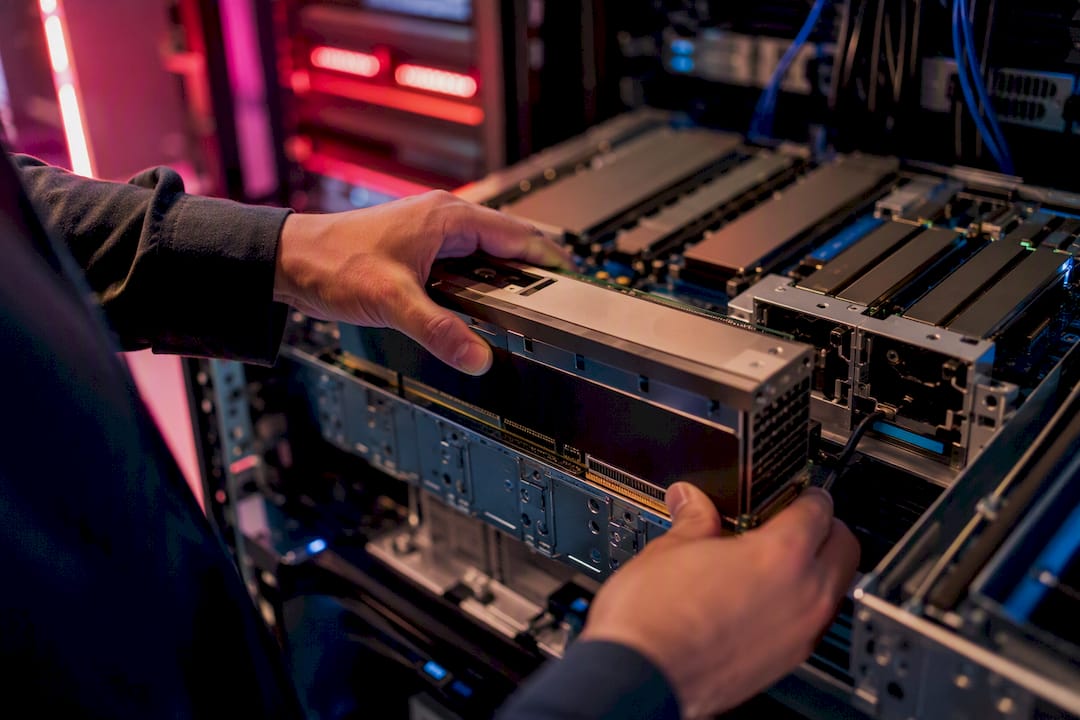
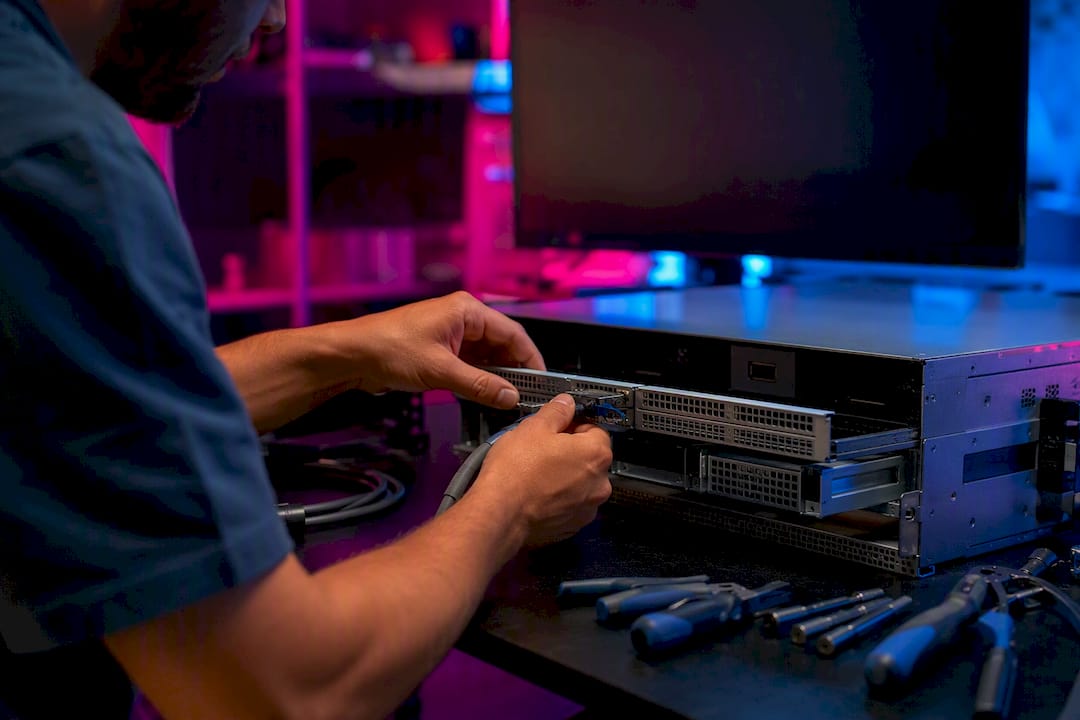
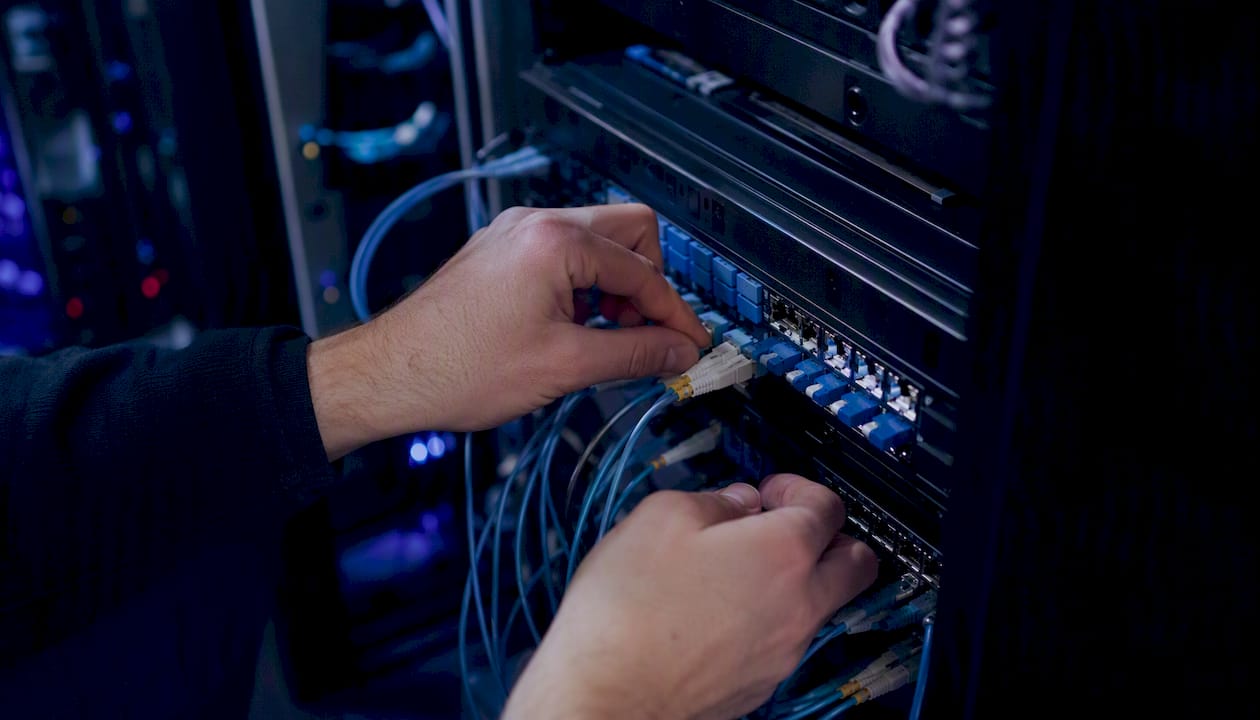
<p><img decoding="async" loading="lazy" src="https://csuxjmfbwmkxiegfpljm.supabase.co/storage/v1/object/public/blog-images/organization-30814/1787251127714_Hands-installing-GPU-module-in-server.jpeg" alt="Hands installing GPU module in server" class="img_ev3q"></p>
<p>For Kubernetes environments, run the NVIDIA Container Toolkit or an equivalent runtime, and expose GPUs to pods through the device plugin rather than hand-rolling access.</p>
<p>A few things worth knowing before you commit to a GPU strategy:</p>
<ul>
<li class=""><strong>MIG (Multi-Instance GPU) partitioning</strong> works well for serving many small models concurrently, but it can fragment memory and hurt throughput for large models that need contiguous GPU memory.</li>
<li class=""><strong>Warm pools and preloaded model weights</strong> cut cold-start latency dramatically compared to loading weights fresh on every pod start.</li>
<li class=""><strong>Autoscale on GPU utilization, not CPU.</strong> CPU metrics tell you almost nothing about whether your inference pods are saturated.</li>
</ul>
<p>Misconfigured GPU scheduling can double job completion time or leave expensive accelerators sitting idle, according to <a href="https://www.mirantis.com/blog/ai-workloads-management-and-best-practices/" target="_blank" rel="noopener noreferrer" class="">Mirantis's workload management research</a>. Benchmark your fractional GPU strategy against your actual model sizes before locking it in.</p>
<h2 class="anchor anchorTargetStickyNavbar_Vzrq" id="how-should-you-orchestrate-and-scale-many-agents">How Should You Orchestrate and Scale Many Agents?<a href="https://mlflow.org/articles/containerizing-ai-agent-workloads/#how-should-you-orchestrate-and-scale-many-agents" class="hash-link" aria-label="Direct link to How Should You Orchestrate and Scale Many Agents?" title="Direct link to How Should You Orchestrate and Scale Many Agents?" translate="no">​</a></h2>
<p>Kubernetes has become the default control plane for AI workloads because it already solves the hard problems: scheduling, portability, and reproducibility across environments. The pattern that works in practice looks like this:</p>
<ul>
<li class=""><strong>Separate node pools by resource profile.</strong> GPU nodes, CPU-heavy nodes, and memory-optimized nodes each get their own pool, labeled for topology-aware scheduling so the scheduler places pods intelligently instead of guessing.</li>
<li class=""><strong>Use gang scheduling for distributed jobs.</strong> If an agent workflow spins up multiple cooperating pods that all need to start together, a batch operator or gang scheduler prevents partial starts that waste GPU time.</li>
<li class=""><strong>Route asynchronous agent tasks through a queue.</strong> Not every agent action needs a live HTTP response. Queue-driven architectures decouple request intake from execution, which matters enormously when agent tasks have unpredictable duration.</li>
<li class=""><strong>Autoscale on the signal that actually reflects load.</strong> Queue backlog depth, GPU utilization, and request latency are far better autoscaling triggers than raw CPU usage. Combine a standard Horizontal Pod Autoscaler with a custom queue-based scaler for the best of both.</li>
<li class=""><strong>Segregate latency-sensitive inference from background agents.</strong> Put them in separate namespaces with separate resource quotas. A background summarization agent should never be able to starve your real-time customer-facing agent of GPU capacity.</li>
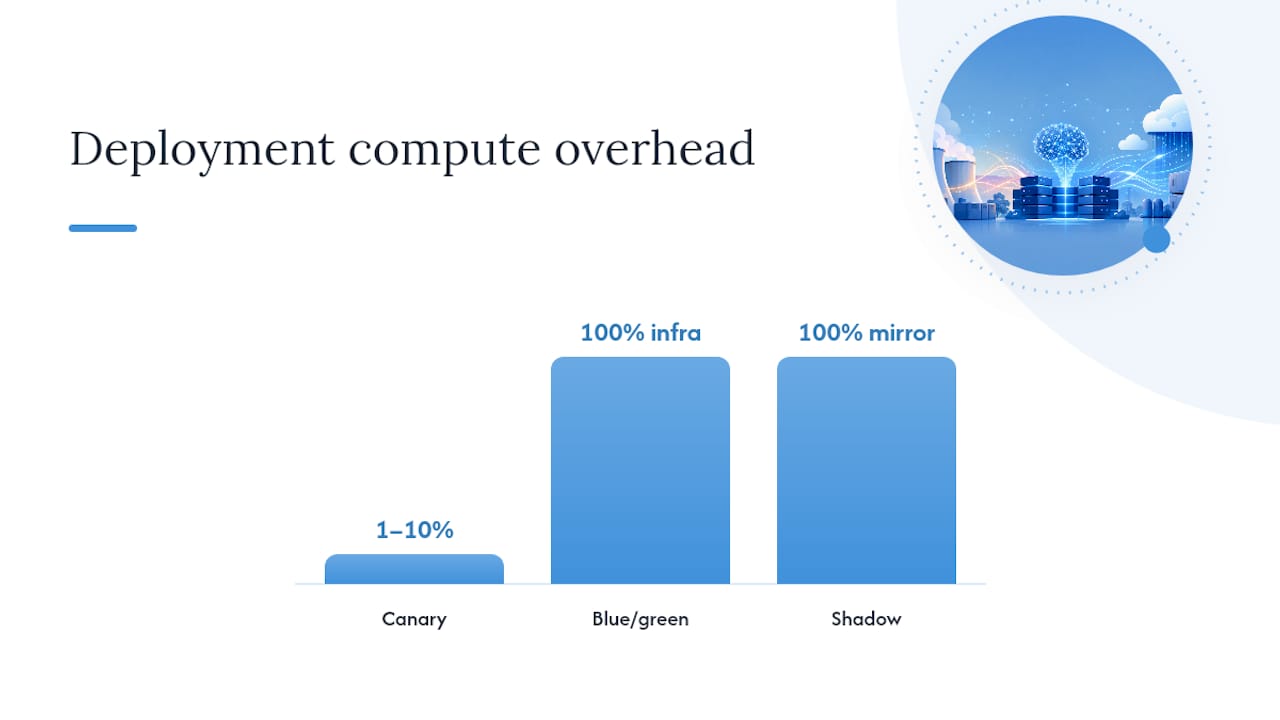
<li class=""><strong>Rehearse your rollback before you need it.</strong> Canary deploys, blue/green cutovers, and versioned image tags all work, but only if you've actually tested the rollback path, not just the forward deploy.</li>
</ul>
<p>Open-source schedulers and GPU operators, like those cataloged in IBM's genai-workload-manager project, can add fair queuing and GPU sharing on top of vanilla Kubernetes when your cluster hosts many competing agent workloads. Vanilla K8s scheduling assumes fairly homogeneous jobs; agent workloads rarely are.</p>
<h2 class="anchor anchorTargetStickyNavbar_Vzrq" id="securing-agents-with-sandboxing-and-short-lived-credentials">Securing Agents With Sandboxing and Short-Lived Credentials<a href="https://mlflow.org/articles/containerizing-ai-agent-workloads/#securing-agents-with-sandboxing-and-short-lived-credentials" class="hash-link" aria-label="Direct link to Securing Agents With Sandboxing and Short-Lived Credentials" title="Direct link to Securing Agents With Sandboxing and Short-Lived Credentials" translate="no">​</a></h2>
<p>Agents are different from typical services in one critical way: they take autonomous action. That means the security model has to assume an agent might do something you didn't explicitly script, and design for containment rather than trust.</p>
<ol>
<li class=""><strong>Sandbox the container itself.</strong> Run as non-root, apply a seccomp profile to restrict syscalls, and lock down the filesystem to read-only where the agent doesn't need to write.</li>
<li class=""><strong>Issue short-lived, action-scoped tokens</strong>, not long-lived service account keys. Each agent action gets its own credential, scoped to exactly what that action needs.</li>
<li class=""><strong>Enforce network egress allowlists</strong> and apply Kubernetes NetworkPolicies alongside strict RBAC on every service account tied to an agent.</li>
<li class=""><strong>Build in guardrails</strong>: require human approval for sensitive actions, rate-limit tool calls, and keep a runtime kill switch within reach.</li>
<li class=""><strong>Send every action log and trace ID to centralized observability</strong> so a postmortem doesn't start with "we don't actually know what it did."</li>
</ol>
<p><a href="https://goteleport.com/blog/kubernetes-for-agentic-ai/" target="_blank" rel="noopener noreferrer" class="">Teleport's research on agentic AI security</a> makes the case bluntly: agent workloads change infrastructure state autonomously, so permanent high-privilege service accounts create a blast radius no team should accept. Short-lived, auditable credentials mapped to specific agent actions are the alternative.</p>
<p><strong>Pro Tip:</strong> <em>Map every issued token back to a trace ID at the moment of issuance. When an agent does something unexpected, you want to trace the exact credential, action, and reasoning step in one query, not three separate log systems.</em></p>
<h2 class="anchor anchorTargetStickyNavbar_Vzrq" id="building-supply-chain-governance-into-your-cicd-pipeline">Building Supply Chain Governance Into Your CI/CD Pipeline<a href="https://mlflow.org/articles/containerizing-ai-agent-workloads/#building-supply-chain-governance-into-your-cicd-pipeline" class="hash-link" aria-label="Direct link to Building Supply Chain Governance Into Your CI/CD Pipeline" title="Direct link to Building Supply Chain Governance Into Your CI/CD Pipeline" translate="no">​</a></h2>
<p>A signed, policy-gated image doesn't happen by accident, it's a pipeline design choice. Your CI process should output a signed image, a full SBOM, and provenance metadata as standard build artifacts, not optional extras bolted on later.</p>
<ul>
<li class="">Run automated vulnerability scans and model/prompt-safety tests as pipeline gates, not manual checklist items.</li>
<li class="">Use admission controllers in Kubernetes to reject any image that lacks a valid signature or attestation.</li>
<li class="">Manage BYOC deployments through GitOps and infrastructure-as-code tools like Terraform, and keep build privileges separate from deploy privileges.</li>
<li class="">Restrict production clusters to pull only from approved internal registries.</li>
<li class="">Build rollback artifacts and smoke tests into the pipeline itself so a bad deploy has a tested exit path.</li>
</ul>
<p>Red Hat's guidance on supply chain rigor treats agents as standard software artifacts precisely so teams can reuse this infrastructure instead of inventing parallel governance for AI.</p>
<h2 class="anchor anchorTargetStickyNavbar_Vzrq" id="how-do-you-trace-and-evaluate-agent-reasoning-in-production">How Do You Trace and Evaluate Agent Reasoning in Production?<a href="https://mlflow.org/articles/containerizing-ai-agent-workloads/#how-do-you-trace-and-evaluate-agent-reasoning-in-production" class="hash-link" aria-label="Direct link to How Do You Trace and Evaluate Agent Reasoning in Production?" title="Direct link to How Do You Trace and Evaluate Agent Reasoning in Production?" translate="no">​</a></h2>
<p>Debugging an agent that misbehaved three hops into a multi-step reasoning chain is nearly impossible without structured tracing. Instrument every agent run with OpenTelemetry traces, and link each trace to an MLflow run ID so the distributed trace and the model-level record point to the same event.</p>
<p>Record prompts, model outputs, tool calls, and evaluation artifacts inside MLflow. That gives you both an audit trail and a baseline for catching regressions when you update a prompt or swap a model. Automated evaluation with LLM-as-a-judge frameworks, stored as <a href="https://mlflow.org/genai/observability" target="_blank" rel="noopener noreferrer" class="">MLflow evaluation artifacts</a>, turns "does this still work" from a manual spot check into a repeatable test.</p>
<blockquote>
<p>The core challenge with agentic systems isn't running them, it's knowing what they actually did. Correlating LLM outputs, tool calls, and each decision step into a single trace, with OpenTelemetry carrying the distributed trace and MLflow capturing the run artifacts and evaluations, is what turns a black box into something you can debug.</p>
</blockquote>
<ul>
<li class="">Agent request comes in → OpenTelemetry captures the distributed trace → MLflow logs the run, artifacts, and evaluation score, all linked by ID.</li>
</ul>
<p>The <a href="https://mlflow.org/blog/agent-costs-mlflow-gateway" target="_blank" rel="noopener noreferrer" class="">MLflow AI Gateway</a> adds prompt version control and cost governance across model providers on top of that observability layer, so a team debugging behavior and a team watching the budget are looking at the same data.</p>
<h2 class="anchor anchorTargetStickyNavbar_Vzrq" id="a-concrete-byoc-deployment-sequence">A Concrete BYOC Deployment Sequence<a href="https://mlflow.org/articles/containerizing-ai-agent-workloads/#a-concrete-byoc-deployment-sequence" class="hash-link" aria-label="Direct link to A Concrete BYOC Deployment Sequence" title="Direct link to A Concrete BYOC Deployment Sequence" translate="no">​</a></h2>
<p>Here's a sequence you can follow end to end, modeled closely on <a href="https://codelabs.developers.google.com/codelabs/agent-runtime-deploy-containerized-agent" target="_blank" rel="noopener noreferrer" class="">Google's Agent Runtime codelab</a>:</p>
<ol>
<li class=""><strong>Wrap the agent in a small FastAPI app</strong> exposing <code>/health</code>, <code>/ready</code>, and, if needed, a streaming response endpoint.</li>
<li class=""><strong>Write a two-stage Dockerfile</strong>: a builder stage that installs dependencies and serializes the model, and a slim runtime stage running as a non-root user.</li>
<li class=""><strong>Build and push through CI</strong>: the pipeline builds the image, generates an SBOM, signs it, and pushes to your artifact registry.</li>
<li class=""><strong>Deploy via BYOC</strong>, referencing the image URI from your runtime platform or Kubernetes manifests, with permissions and infrastructure defined in Terraform or an SDK for reproducibility.</li>
<li class=""><strong>Run post-deploy checks</strong>: smoke test the endpoints, confirm OpenTelemetry traces and MLflow logs are flowing, and verify autoscaling quotas match expected load.</li>
</ol>
<h2 class="anchor anchorTargetStickyNavbar_Vzrq" id="what-actually-trips-teams-up-in-production">What Actually Trips Teams Up in Production<a href="https://mlflow.org/articles/containerizing-ai-agent-workloads/#what-actually-trips-teams-up-in-production" class="hash-link" aria-label="Direct link to What Actually Trips Teams Up in Production" title="Direct link to What Actually Trips Teams Up in Production" translate="no">​</a></h2>
<p>Most teams treat their first agent deployment as a one-off experiment, then panic when it needs a hotfix six weeks later with no CI/CD in place. Apply your pipeline discipline from day one. Identity and observability are cheap early and expensive to retrofit. Start sandboxed, then expand governance as the agent earns more responsibility, not before.</p>
<h2 class="anchor anchorTargetStickyNavbar_Vzrq" id="how-mlflow-fits-into-your-containerized-agent-stack">How MLflow Fits Into Your Containerized Agent Stack<a href="https://mlflow.org/articles/containerizing-ai-agent-workloads/#how-mlflow-fits-into-your-containerized-agent-stack" class="hash-link" aria-label="Direct link to How MLflow Fits Into Your Containerized Agent Stack" title="Direct link to How MLflow Fits Into Your Containerized Agent Stack" translate="no">​</a></h2>
<p>Once your agents are containerized, signed, and running in production, the harder problem becomes knowing what they're actually doing at scale, and that's where MLflow's agent and LLM engineering tools come in.</p>
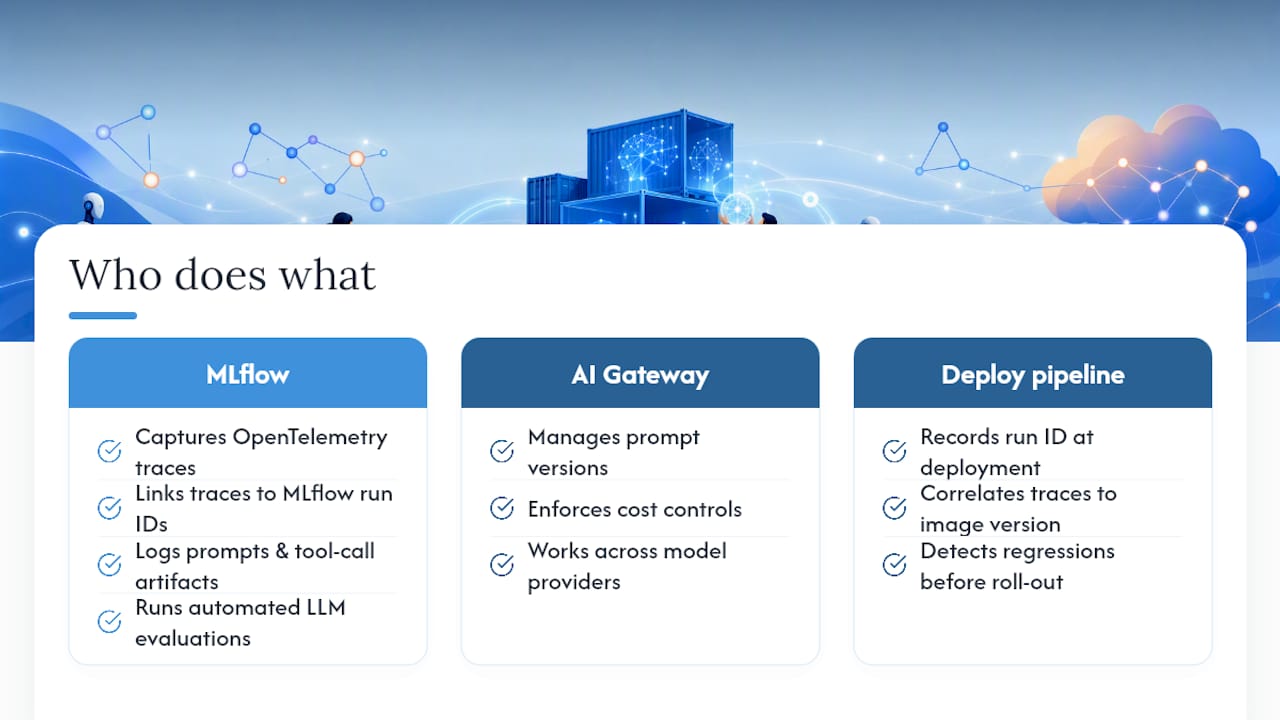
<p>MLflow captures the observability layer this article has been building toward: OpenTelemetry traces linked to MLflow run IDs, prompts and tool calls logged as artifacts, and automated LLM-as-a-judge evaluation running against every version you ship. In a BYOC flow, that means your deploy pipeline can record a run ID at the moment of deployment, then correlate every trace back to that specific image version, letting you catch a regression before it reaches every user. The <a href="https://mlflow.org/ai-observability" target="_blank" rel="noopener noreferrer" class="">MLflow AI observability tools</a> handle the tracing and evaluation side, while the AI Gateway manages prompt versions and cost controls across whichever model providers your agents call. If your team is past the "does it run" stage and into "can we trust what it's doing," start with the <a href="https://mlflow.org/ai-platform" target="_blank" rel="noopener noreferrer" class="">MLflow AI platform overview</a> to see how the pieces connect to your existing container pipeline.</p>
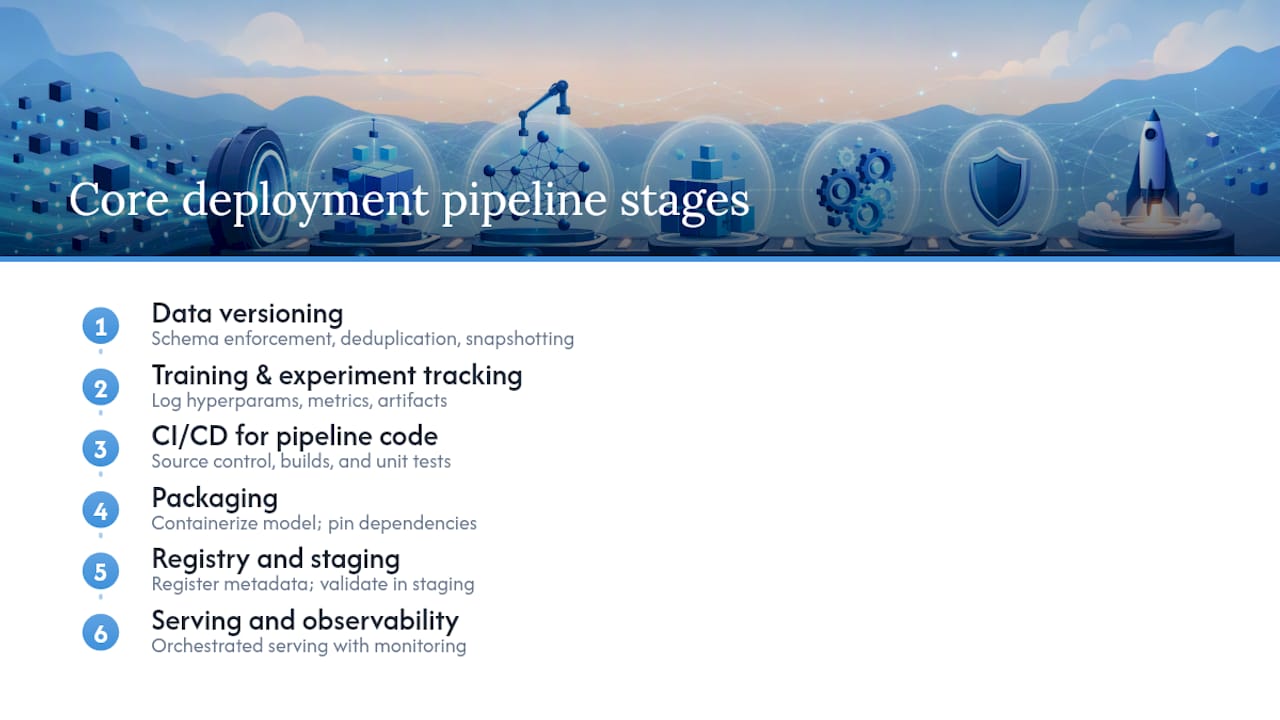
<p><img decoding="async" loading="lazy" src="https://csuxjmfbwmkxiegfpljm.supabase.co/storage/v1/object/public/blog-images/organization-30814/1787251195647_How-MLflow-Fits-Into-Your-Containerized-Agent-Stack-overview-diagram.jpeg" alt="How MLflow Fits Into Your Containerized Agent Stack — overview diagram" class="img_ev3q"></p>
<h2 class="anchor anchorTargetStickyNavbar_Vzrq" id="frequently-asked-questions">Frequently Asked Questions<a href="https://mlflow.org/articles/containerizing-ai-agent-workloads/#frequently-asked-questions" class="hash-link" aria-label="Direct link to Frequently Asked Questions" title="Direct link to Frequently Asked Questions" translate="no">​</a></h2>
<p><strong>Do I need to containerize an AI agent that only runs locally for testing?</strong>
No. Containerization pays off once the agent moves into networked, multi-user, or production environments where reproducibility and governance matter. Local experiments can stay uncontainerized until you're ready to deploy.</p>
<p><strong>What's the difference between containerizing a regular app and containerizing AI agent workloads?</strong>
Agent workloads add GPU dependency management, large model artifacts, autonomous tool-calling behavior, and a need for reasoning-level tracing, none of which a typical web service has to handle.</p>
<p><strong>Is Kubernetes required for container orchestration for AI agents?</strong>
It's the dominant control plane for good reason: it handles GPU scheduling, autoscaling, and node pool separation natively. Smaller deployments can run on simpler orchestrators, but most production agent fleets end up on Kubernetes.</p>
<p><strong>How does MLflow help with deploying AI agents specifically?</strong>
MLflow logs agent runs, prompts, tool calls, and evaluation results as linked artifacts, and connects to OpenTelemetry traces so you can debug a specific reasoning chain instead of guessing from raw logs.</p>
<h2 class="anchor anchorTargetStickyNavbar_Vzrq" id="sources">Sources<a href="https://mlflow.org/articles/containerizing-ai-agent-workloads/#sources" class="hash-link" aria-label="Direct link to Sources" title="Direct link to Sources" translate="no">​</a></h2>
<ul>
<li class=""><a href="https://www.redhat.com/en/blog/using-containers-bring-software-engineering-rigor-ai-workloads" target="_blank" rel="noopener noreferrer" class="">Using containers to bring software engineering rigor to AI workloads</a></li>
<li class=""><a href="https://codelabs.developers.google.com/codelabs/agent-runtime-deploy-containerized-agent" target="_blank" rel="noopener noreferrer" class="">Deploy containerized agent to Agent Runtime (codelab)</a></li>
<li class=""><a href="https://www.mirantis.com/blog/ai-workloads-management-and-best-practices/" target="_blank" rel="noopener noreferrer" class="">AI Workload Management and Best Practices | Mirantis</a></li>
<li class=""><a href="https://goteleport.com/blog/kubernetes-for-agentic-ai/" target="_blank" rel="noopener noreferrer" class="">Kubernetes for agentic AI (Teleport blog)</a></li>
</ul>
<h2 class="anchor anchorTargetStickyNavbar_Vzrq" id="recommended">Recommended<a href="https://mlflow.org/articles/containerizing-ai-agent-workloads/#recommended" class="hash-link" aria-label="Direct link to Recommended" title="Direct link to Recommended" translate="no">​</a></h2>
<ul>
<li class=""><a href="https://mlflow.org/articles/tags/ai-agent-deployment-best-practices" target="_blank" rel="noopener noreferrer" class="">One post tagged with "AI agent deployment best practices" | MLflow</a></li>
<li class=""><a href="https://mlflow.org/articles/tags/best-practices-for-ai-deployment" target="_blank" rel="noopener noreferrer" class="">One post tagged with "best practices for AI deployment" | MLflow</a></li>
<li class=""><a href="https://mlflow.org/articles/tags/ai-tool-optimization-tips" target="_blank" rel="noopener noreferrer" class="">One post tagged with "AI tool optimization tips" | MLflow</a></li>
<li class=""><a href="https://mlflow.org/articles/tags/using-ai-agents-wisely" target="_blank" rel="noopener noreferrer" class="">One post tagged with "using AI agents wisely" | MLflow</a></li>
</ul>]]></content>
        <category label="why containerize ai workloads" term="why containerize ai workloads"/>
        <category label="AI workload management" term="AI workload management"/>
        <category label="scaling AI workloads" term="scaling AI workloads"/>
        <category label="containerizing ai agent workloads" term="containerizing ai agent workloads"/>
        <category label="deploying AI agents" term="deploying AI agents"/>
        <category label="container orchestration for AI" term="container orchestration for AI"/>
        <category label="best practices for containerizing AI" term="best practices for containerizing AI"/>
    </entry>
    <entry>
        <title type="html"><![CDATA[What Is Cross-Department AI Reuse? A Governance Playbook]]></title>
        <id>https://mlflow.org/articles/what-is-cross-department-ai-reuse/</id>
        <link href="https://mlflow.org/articles/what-is-cross-department-ai-reuse/"/>
        <updated>2026-08-19T00:00:00.000Z</updated>
        <summary type="html"><![CDATA[Explore how cross-department AI reuse can streamline operations, reduce duplication, and enhance collaboration through effective governance.]]></summary>
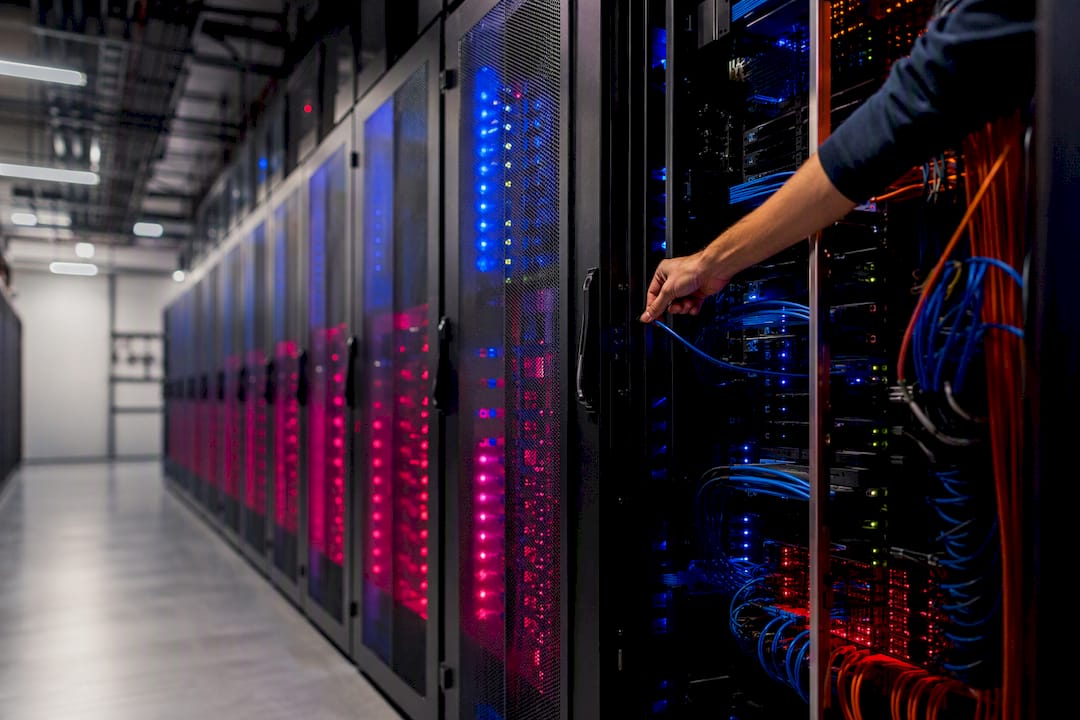
        <content type="html"><![CDATA[<p><img decoding="async" loading="lazy" src="https://csuxjmfbwmkxiegfpljm.supabase.co/storage/v1/object/public/blog-images/organization-30814/1787182477410_Hands-managing-network-cables-in-data-center.jpeg" alt="Hands managing network cables in data center" class="img_ev3q"></p>
<p>Cross-department AI reuse means treating models, prompt templates, agent skills, and evaluation harnesses as shared assets that multiple business functions consume instead of rebuilding from scratch. It sounds simple, but <a href="https://www.deloitte.com/cy/en/issues/generative-ai/state-of-ai-in-enterprise.html" target="_blank" rel="noopener noreferrer" class="">Deloitte's research</a> found that the real barrier to scaling AI across an enterprise is no longer technical. It's organizational: pilots stay isolated because no one owns the handoff between teams. The immediate takeaway is that reuse only works with governance and a shared platform behind it, not just good intentions.</p>
<ul>
<li class="">Reuse cuts duplicate engineering work across marketing, finance, ops, and HR.</li>
<li class="">Governance frameworks like the NIST AI RMF or an internal AI Coordination Council prevent conflicting model outputs.</li>
<li class="">A platform like Mlflow gives teams a common layer for versioning, routing, and evaluation.</li>
</ul>
<p><strong>Pro Tip:</strong> <em>Before building anything new, search your model registry first. If a discoverable asset already exists, adopting it beats reinventing it almost every time.</em></p>
<h2 class="anchor anchorTargetStickyNavbar_Vzrq" id="key-takeaways">Key Takeaways<a href="https://mlflow.org/articles/what-is-cross-department-ai-reuse/#key-takeaways" class="hash-link" aria-label="Direct link to Key Takeaways" title="Direct link to Key Takeaways" translate="no">​</a></h2>
<p>Cross-department AI reuse succeeds when a shared platform handles routing, observability, governance, and sandboxing while stage gates and named owners keep pilots accountable.</p>
<table><thead><tr><th>Point</th><th>Details</th></tr></thead><tbody><tr><td>Reuse cuts duplicate work</td><td>Shared assets across departments reduce redundant engineering and conflicting model outputs.</td></tr><tr><td>Barrier is organizational</td><td>Deloitte finds governance gaps, not technical limits, block AI from scaling past pilots.</td></tr><tr><td>Four capabilities stay central</td><td>Model routing, observability, governance, and sandbox belong to a shared platform team.</td></tr><tr><td>Stage gates control spend</td><td>Retiring pilots at gate two, as seen in the Fortune 500 case, keeps costs disciplined.</td></tr><tr><td>Mlflow supports the stack</td><td>Mlflow's versioning, tracing, and evaluation tools map directly to the four core reuse capabilities.</td></tr></tbody></table>
<h2 class="anchor anchorTargetStickyNavbar_Vzrq" id="table-of-contents">Table of Contents<a href="https://mlflow.org/articles/what-is-cross-department-ai-reuse/#table-of-contents" class="hash-link" aria-label="Direct link to Table of Contents" title="Direct link to Table of Contents" translate="no">​</a></h2>
<ul>
<li class=""><a href="https://mlflow.org/articles/what-is-cross-department-ai-reuse/#what-counts-as-cross-department-ai-usage-in-practice" class="">What Counts as Cross-Department AI Usage in Practice</a></li>
<li class=""><a href="https://mlflow.org/articles/what-is-cross-department-ai-reuse/#why-cross-functional-ai-usage-pays-off" class="">Why Cross-Functional AI Usage Pays Off</a></li>
<li class=""><a href="https://mlflow.org/articles/what-is-cross-department-ai-reuse/#common-failure-modes-that-break-ai-collaboration-between-teams" class="">Common Failure Modes That Break AI Collaboration Between Teams</a></li>
<li class=""><a href="https://mlflow.org/articles/what-is-cross-department-ai-reuse/#the-organizational-shape-that-makes-reuse-possible" class="">The Organizational Shape That Makes Reuse Possible</a></li>
<li class=""><a href="https://mlflow.org/articles/what-is-cross-department-ai-reuse/#core-platform-capabilities-every-reuse-program-needs" class="">Core Platform Capabilities Every Reuse Program Needs</a></li>
<li class=""><a href="https://mlflow.org/articles/what-is-cross-department-ai-reuse/#a-stepwise-playbook-from-pilot-to-embedded-reuse" class="">A Stepwise Playbook From Pilot to Embedded Reuse</a></li>
<li class=""><a href="https://mlflow.org/articles/what-is-cross-department-ai-reuse/#metrics-that-prove-ai-resource-sharing-is-working" class="">Metrics That Prove AI Resource Sharing Is Working</a></li>
<li class=""><a href="https://mlflow.org/articles/what-is-cross-department-ai-reuse/#your-first-30-60-and-90-days" class="">Your First 30, 60, and 90 Days</a></li>
<li class=""><a href="https://mlflow.org/articles/what-is-cross-department-ai-reuse/#how-mlflow-fits-an-ai-model-reuse-program" class="">How Mlflow Fits an AI Model Reuse Program</a></li>
<li class=""><a href="https://mlflow.org/articles/what-is-cross-department-ai-reuse/#why-platform-discipline-beats-both-extremes" class="">Why Platform Discipline Beats Both Extremes</a></li>
<li class=""><a href="https://mlflow.org/articles/what-is-cross-department-ai-reuse/#mlflow-gives-you-the-shared-platform-layer-without-the-rebuild" class="">Mlflow Gives You the Shared Platform Layer Without the Rebuild</a></li>
<li class=""><a href="https://mlflow.org/articles/what-is-cross-department-ai-reuse/#frequently-asked-questions" class="">Frequently Asked Questions</a></li>
<li class=""><a href="https://mlflow.org/articles/what-is-cross-department-ai-reuse/#sources" class="">Sources</a></li>
</ul>
<h2 class="anchor anchorTargetStickyNavbar_Vzrq" id="what-counts-as-cross-department-ai-usage-in-practice">What Counts as Cross-Department AI Usage in Practice<a href="https://mlflow.org/articles/what-is-cross-department-ai-reuse/#what-counts-as-cross-department-ai-usage-in-practice" class="hash-link" aria-label="Direct link to What Counts as Cross-Department AI Usage in Practice" title="Direct link to What Counts as Cross-Department AI Usage in Practice" translate="no">​</a></h2>
<p>Reuse isn't limited to model weights. It covers evaluation harnesses (including LLM-as-a-Judge test suites), prompt templates, agent skills, CI/CD jobs, and the deployment wiring that connects them to production systems. If it can be versioned and discovered, it can be reused.</p>
<p>A lead-scoring model built by marketing might power sales prioritization with zero retraining. A prompt template written by legal for contract clause extraction can serve procurement's vendor-review workflow with minor edits. That's the pattern: one team solves a problem once, and a registry makes the solution visible to everyone else.</p>
<ul>
<li class="">Reusable assets: model binaries, prompt templates, agent skills, eval harnesses, CI jobs.</li>
<li class="">Real reuse requires versioning and discoverability, not a shared folder of copy-pasted scripts.</li>
<li class="">A catalog entry with an owner and a version tag is what separates reuse from duplication with extra steps.</li>
</ul>
<h2 class="anchor anchorTargetStickyNavbar_Vzrq" id="why-cross-functional-ai-usage-pays-off">Why Cross-Functional AI Usage Pays Off<a href="https://mlflow.org/articles/what-is-cross-department-ai-reuse/#why-cross-functional-ai-usage-pays-off" class="hash-link" aria-label="Direct link to Why Cross-Functional AI Usage Pays Off" title="Direct link to Why Cross-Functional AI Usage Pays Off" translate="no">​</a></h2>
<p>The business case is concrete. Faster time-to-value, lower maintenance cost, and a single coherent customer experience across departments all follow from not rebuilding the same model five times. IEEE research on AI-driven software reuse found development-time reductions near 25% and maintenance-cost reductions near 20% in case studies that adopted structured reuse practices.</p>
<p>Deloitte's data reinforces this from the governance side: organizations that treat reuse as an organizational design problem, not a tooling purchase, are the ones getting pilots into production. A <a href="https://www.cambridge.org/core/journals/journal-of-management-and-organization/article/implementation-of-artificial-intelligence-in-organizations-by-functional-areas-a-review-and-conceptual-model/94076033096747AF589FEB05827FD274" target="_blank" rel="noopener noreferrer" class="">systematic review of 160 articles</a> backs this up, tying successful cross-functional scaling to data governance, capability building, and socio-technical alignment rather than raw model quality.</p>
<ul>
<li class="">Faster time-to-value from adopting existing assets instead of starting from zero.</li>
<li class="">Lower total cost of ownership when one team maintains a model that three teams consume.</li>
<li class="">Consistent customer-facing decisions instead of contradictory outputs from parallel models.</li>
</ul>
<blockquote>
<p><strong>By the numbers:</strong> AI-driven reuse practices cut development time by roughly <a href="https://doi.org/10.1109/cictn64563.2025.10932477" target="_blank" rel="noopener noreferrer" class="">25% and maintenance cost by roughly 20%</a> in documented case studies.</p>
</blockquote>
<h2 class="anchor anchorTargetStickyNavbar_Vzrq" id="common-failure-modes-that-break-ai-collaboration-between-teams">Common Failure Modes That Break AI Collaboration Between Teams<a href="https://mlflow.org/articles/what-is-cross-department-ai-reuse/#common-failure-modes-that-break-ai-collaboration-between-teams" class="hash-link" aria-label="Direct link to Common Failure Modes That Break AI Collaboration Between Teams" title="Direct link to Common Failure Modes That Break AI Collaboration Between Teams" translate="no">​</a></h2>
<p>Most reuse programs don't fail because the model was bad. They fail because of predictable structural gaps.</p>
<p>Data fragmentation is the most common one: finance and marketing each hold a slightly different version of "customer lifetime value," so any shared model produces answers nobody trusts. The fix is a shared data layer, sometimes called an <strong>AI Data Spine</strong>, that defines which fields are the single source of truth for cross-functional handoffs. Conflicting AI signals show up when two departments deploy separate models answering the same question differently. A model registry with semantic search solves the discoverability problem that causes this in the first place. Agent sprawl, where dozens of ungoverned agents accumulate across business units, is well documented in <a href="https://aws.amazon.com/blogs/industries/managing-ai-agent-sprawl-across-business-units/" target="_blank" rel="noopener noreferrer" class="">AWS's guidance on managing agent sprawl</a>, which recommends a hub-and-spoke governance model with a central registry and risk-based classification.</p>
<ul>
<li class="">Data fragmentation: mitigate with a shared data spine defining single-source-of-truth fields.</li>
<li class="">Conflicting signals: mitigate with a searchable registry that surfaces existing models before new ones get built.</li>
<li class="">Agent sprawl and duplicate procurement: mitigate with stage gates and centralized spend visibility.</li>
</ul>
<p><strong>Pro Tip:</strong> <em>Make the shared platform the fastest way to ship. If self-service through governed infrastructure is quicker than building shadow tools, teams will publish instead of duplicate.</em></p>
<h2 class="anchor anchorTargetStickyNavbar_Vzrq" id="the-organizational-shape-that-makes-reuse-possible">The Organizational Shape That Makes Reuse Possible<a href="https://mlflow.org/articles/what-is-cross-department-ai-reuse/#the-organizational-shape-that-makes-reuse-possible" class="hash-link" aria-label="Direct link to The Organizational Shape That Makes Reuse Possible" title="Direct link to The Organizational Shape That Makes Reuse Possible" translate="no">​</a></h2>
<p>The pattern that keeps recurring in successful programs is a small central platform team paired with lean function-specific implementation teams. The platform team owns model routing, observability, governance, and the sandbox environment. Function teams (marketing AI, finance AI, ops AI) own their specific use cases and domain judgment, but they build on the shared foundation instead of standing up parallel infrastructure.</p>
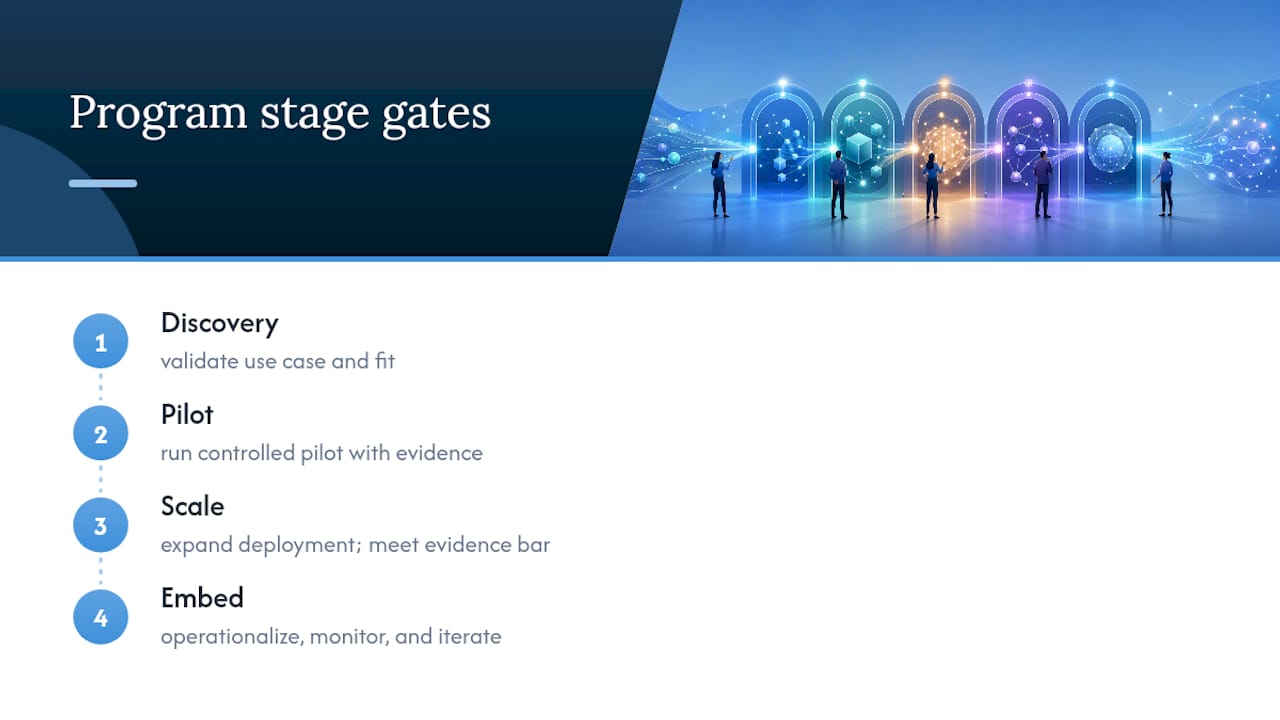
<p>A <a href="https://www.digitalapplied.com/blog/case-study-cross-functional-ai-program-fortune-500-2026" target="_blank" rel="noopener noreferrer" class="">Fortune 500 case study</a> documents this structure directly, built over 18 months around a compact platform team and four stage gates: discovery, pilot, scale, and embed. Quarterly executive review meetings kept spend visible and gave leadership a consistent narrative for the board. Typical roles include a platform product lead, a security partner, a function-AI lead paired with an engineer, and a business owner who signs off at each gate. That review cadence, not just the technology, is what kept the program from splintering into disconnected pilots.</p>
<ul>
<li class="">Central platform team: owns routing, observability, governance, sandbox.</li>
<li class="">Function teams: own domain use cases, stay lean, consume shared services.</li>
<li class="">Four stage gates plus quarterly executive review keep spend and scope under control.</li>
</ul>
<h2 class="anchor anchorTargetStickyNavbar_Vzrq" id="core-platform-capabilities-every-reuse-program-needs">Core Platform Capabilities Every Reuse Program Needs<a href="https://mlflow.org/articles/what-is-cross-department-ai-reuse/#core-platform-capabilities-every-reuse-program-needs" class="hash-link" aria-label="Direct link to Core Platform Capabilities Every Reuse Program Needs" title="Direct link to Core Platform Capabilities Every Reuse Program Needs" translate="no">​</a></h2>
<p>Four capabilities belong in the shared layer, not duplicated inside every department. <strong>Model routing</strong> gives every team a single endpoint with version pinning, fallback logic, and cost allocation by function. <strong>Observability</strong> captures traces of agentic reasoning, eval pass rates, and latency at the p95 percentile, so teams can debug without instrumenting from scratch. <strong>Governance</strong> handles data classification, automated PII detection, and audit logs centrally. The <strong>sandbox</strong> gives teams a self-serve evaluation harness and CI templates so a new use case can be tested without waiting on the platform team.</p>
<p>Centralizing these four cuts per-function headcount and shrinks the audit surface leadership has to defend during a compliance review.</p>
<table><thead><tr><th>Capability</th><th>Core Responsibility</th><th>Measurable Output</th></tr></thead><tbody><tr><td>Model routing</td><td>Version pinning, fallback, cost allocation</td><td>Cost-per-request by function</td></tr><tr><td>Observability</td><td>Agentic trace capture, latency monitoring</td><td>Eval pass rate, latency p95</td></tr><tr><td>Governance</td><td>Data classification, PII detection, audit logs</td><td>Audit trail completeness</td></tr><tr><td>Sandbox</td><td>Self-serve eval harness, CI templates</td><td>Time-to-first-pilot</td></tr></tbody></table>
<p>Mlflow's <a href="https://mlflow.org/articles/tags/ai-model-lifecycle-management" target="_blank" rel="noopener noreferrer" class="">model lifecycle management</a> capabilities map directly onto the routing and versioning row, while its <a href="https://mlflow.org/articles/tags/access-control-in-machine-learning" target="_blank" rel="noopener noreferrer" class="">access control patterns</a> support the governance layer.</p>
<h2 class="anchor anchorTargetStickyNavbar_Vzrq" id="a-stepwise-playbook-from-pilot-to-embedded-reuse">A Stepwise Playbook From Pilot to Embedded Reuse<a href="https://mlflow.org/articles/what-is-cross-department-ai-reuse/#a-stepwise-playbook-from-pilot-to-embedded-reuse" class="hash-link" aria-label="Direct link to A Stepwise Playbook From Pilot to Embedded Reuse" title="Direct link to A Stepwise Playbook From Pilot to Embedded Reuse" translate="no">​</a></h2>
<p>Moving from scattered pilots to embedded, reusable AI assets follows a repeatable sequence.</p>
<ol>
<li class=""><strong>Assess.</strong> Run a readiness inventory across departments to build a tools-gap matrix: what exists, who owns it, what's duplicated.</li>
<li class=""><strong>Catalog.</strong> Stand up a registry and a data spine so every asset has a discoverable entry with an owner and a version.</li>
<li class=""><strong>Pilot.</strong> Launch on top of shared platform services, with explicit pass criteria tied to eval scores and observability traces before anything ships.</li>
<li class=""><strong>Scale.</strong> Move qualifying pilots through stage gates with documented ownership and a cost-attribution plan by function.</li>
<li class=""><strong>Embed.</strong> Fold the asset into business-as-usual with a named owner and a service-level agreement, per Deloitte's finding that pilots need BAU ownership to survive past the demo stage.</li>
</ol>
<p>Gate two, the transition from pilot to scale, is where discipline matters most. The Fortune 500 case study cited above retired roughly one-third of pilots at gate two, a deliberate spend-control mechanism rather than a failure signal. Killing a pilot that can't clear eval thresholds is cheaper than propping it up in production.</p>
<h2 class="anchor anchorTargetStickyNavbar_Vzrq" id="metrics-that-prove-ai-resource-sharing-is-working">Metrics That Prove AI Resource Sharing Is Working<a href="https://mlflow.org/articles/what-is-cross-department-ai-reuse/#metrics-that-prove-ai-resource-sharing-is-working" class="hash-link" aria-label="Direct link to Metrics That Prove AI Resource Sharing Is Working" title="Direct link to Metrics That Prove AI Resource Sharing Is Working" translate="no">​</a></h2>
<p>Executives and auditors need concrete numbers, not a status update that says "it's going well." Track the <strong>handoff rework rate</strong> (how often work gets redone because a handoff between teams failed), <strong>eval pass rate</strong>, <strong>cost-per-request</strong>, <strong>latency p95</strong>, <strong>pilot retirement rate</strong>, and <strong>cross-function adoption rate</strong> as your core KPI set.</p>
<p>Governance signals matter just as much as performance metrics. A quarterly executive review document, named approvers at each stage gate, registered owners in the catalog, and a unified audit trail all tell leadership the program is under control rather than sprawling. The Fortune 500 program's stage-gate discipline and quarterly review cadence are what gave it board-level credibility over 18 months, not the underlying model architecture.</p>
<ul>
<li class="">Handoff rework rate: flags where cross-team processes are breaking down.</li>
<li class="">Eval pass rate and latency p95: core technical health signals for any shared model.</li>
<li class="">Pilot retirement rate: a sign of spend discipline, not program weakness.</li>
</ul>
<blockquote>
<p>Programs with named gate approvers and a recurring executive review cadence are the ones that survive past the first year, based on the Fortune 500 case study's documented structure.</p>
</blockquote>
<h2 class="anchor anchorTargetStickyNavbar_Vzrq" id="your-first-30-60-and-90-days">Your First 30, 60, and 90 Days<a href="https://mlflow.org/articles/what-is-cross-department-ai-reuse/#your-first-30-60-and-90-days" class="hash-link" aria-label="Direct link to Your First 30, 60, and 90 Days" title="Direct link to Your First 30, 60, and 90 Days" translate="no">​</a></h2>
<p>Start small and concrete this week.</p>
<ul>
<li class=""><strong>Day 30:</strong> Inventory every existing model and agent across departments; note owners and overlap.</li>
<li class=""><strong>Day 30:</strong> Stand up one minimal registry entry so at least one asset becomes discoverable.</li>
<li class=""><strong>Day 60:</strong> Define a single shared handoff field in your data spine (start with one, not ten).</li>
<li class=""><strong>Day 60:</strong> Build a sandbox CI job template that any function team can clone.</li>
<li class=""><strong>Day 90:</strong> Run your first cross-functional discovery workshop and identify the next candidate for reuse.</li>
</ul>
<h2 class="anchor anchorTargetStickyNavbar_Vzrq" id="how-mlflow-fits-an-ai-model-reuse-program">How Mlflow Fits an AI Model Reuse Program<a href="https://mlflow.org/articles/what-is-cross-department-ai-reuse/#how-mlflow-fits-an-ai-model-reuse-program" class="hash-link" aria-label="Direct link to How Mlflow Fits an AI Model Reuse Program" title="Direct link to How Mlflow Fits an AI Model Reuse Program" translate="no">​</a></h2>
<p>Mlflow's <a href="https://mlflow.org/articles/tags/centralized-ai-model-access-control" target="_blank" rel="noopener noreferrer" class="">model versioning and routing</a> tools, observability traces for agentic reasoning, and LLM-as-a-Judge evaluation harnesses map directly onto the four platform capabilities discussed earlier. Centralized prompt and gateway management means function teams consume governed infrastructure instead of rebuilding it.</p>
<p><img decoding="async" loading="lazy" src="https://csuxjmfbwmkxiegfpljm.supabase.co/storage/v1/object/public/blog-images/organization-30814/1787182471066_Hands-configuring-AI-evaluation-sandbox-hardware.jpeg" alt="Hands configuring AI evaluation sandbox hardware" class="img_ev3q"></p>
<p><strong>Pro Tip:</strong> <em>Publish a baseline skill or prompt template in your registry with opt-in semantics. Function teams can adopt it safely without a mandate, which drives organic reuse faster than a top-down rollout.</em></p>
<h2 class="anchor anchorTargetStickyNavbar_Vzrq" id="why-platform-discipline-beats-both-extremes">Why Platform Discipline Beats Both Extremes<a href="https://mlflow.org/articles/what-is-cross-department-ai-reuse/#why-platform-discipline-beats-both-extremes" class="hash-link" aria-label="Direct link to Why Platform Discipline Beats Both Extremes" title="Direct link to Why Platform Discipline Beats Both Extremes" translate="no">​</a></h2>
<p>Over-centralize and you get a bottleneck where every function waits on one team. Under-govern and you get agent sprawl and five versions of the same broken model. The evidence points to a middle path: a small platform team providing leverage, paired with disciplined stage gates that force accountability at each handoff. This scales down fine, too. A mid-market team can run the same structure with lighter artifacts and fewer gates, but the same core discipline.</p>
<h2 class="anchor anchorTargetStickyNavbar_Vzrq" id="mlflow-gives-you-the-shared-platform-layer-without-the-rebuild">Mlflow Gives You the Shared Platform Layer Without the Rebuild<a href="https://mlflow.org/articles/what-is-cross-department-ai-reuse/#mlflow-gives-you-the-shared-platform-layer-without-the-rebuild" class="hash-link" aria-label="Direct link to Mlflow Gives You the Shared Platform Layer Without the Rebuild" title="Direct link to Mlflow Gives You the Shared Platform Layer Without the Rebuild" translate="no">​</a></h2>
<p>If you're weighing whether to build routing, observability, governance, and a sandbox in house or adopt something ready, Mlflow gives you all four as an open-source foundation instead of a from-scratch engineering project.</p>
<p><img decoding="async" loading="lazy" src="https://csuxjmfbwmkxiegfpljm.supabase.co/storage/v1/object/public/blog-images/organization-30814/1778726621079_mlflow.jpg" alt="Mlflow" class="img_ev3q"></p>
<p>Enterprise teams that need compliance support, managed deployment, or bespoke integration can layer enterprise support and managed services on top of the free, open-source core. The observability tracing and LLM-as-a-Judge evaluation harnesses map directly to the governance and sandbox capabilities your reuse program needs, so you're not stitching together three separate tools. If your next step is standing up agent and prompt management for a cross-functional pilot, start with Mlflow's agent and LLM engineering platform and see how the registry and gateway map onto your existing stage gates.</p>
<h2 class="anchor anchorTargetStickyNavbar_Vzrq" id="frequently-asked-questions">Frequently Asked Questions<a href="https://mlflow.org/articles/what-is-cross-department-ai-reuse/#frequently-asked-questions" class="hash-link" aria-label="Direct link to Frequently Asked Questions" title="Direct link to Frequently Asked Questions" translate="no">​</a></h2>
<p><strong>What is cross-department AI reuse in simple terms?</strong>
It's the practice of sharing models, prompt templates, agent skills, and evaluation harnesses across business functions instead of each department building its own from scratch.</p>
<p><strong>Why does organizational structure matter more than technology for AI reuse?</strong>
Because the models themselves usually work fine in isolation. What breaks is the handoff between teams, which is why Deloitte's research points to governance as the primary barrier.</p>
<p><strong>How many stage gates should a cross-functional AI program have?</strong>
Four is the pattern that worked in the documented Fortune 500 case: discovery, pilot, scale, and embed, each with its own evidence requirements.</p>
<p><strong>What is an AI Data Spine?</strong>
It's a shared data layer defining which fields serve as the single source of truth for cross-functional handoffs, preventing departments from working off conflicting versions of the same metric.</p>
<p><img decoding="async" loading="lazy" src="https://csuxjmfbwmkxiegfpljm.supabase.co/storage/v1/object/public/blog-images/organization-30814/1787182544029_Frequently-Asked-Questions-overview-diagram.jpeg" alt="Frequently Asked Questions — overview diagram" class="img_ev3q"></p>
<p><strong>Does cross-department AI reuse work for smaller organizations?</strong>
Yes, the same platform-plus-function-team structure scales down with lighter artifacts and fewer formal gates for mid-market teams.</p>
<h2 class="anchor anchorTargetStickyNavbar_Vzrq" id="sources">Sources<a href="https://mlflow.org/articles/what-is-cross-department-ai-reuse/#sources" class="hash-link" aria-label="Direct link to Sources" title="Direct link to Sources" translate="no">​</a></h2>
<ul>
<li class=""><a href="https://www.deloitte.com/cy/en/issues/generative-ai/state-of-ai-in-enterprise.html" target="_blank" rel="noopener noreferrer" class="">State of AI in enterprise (Deloitte)</a></li>
<li class=""><a href="https://www.digitalapplied.com/blog/case-study-cross-functional-ai-program-fortune-500-2026" target="_blank" rel="noopener noreferrer" class="">Case study: Cross-Functional AI Program at Fortune 500</a></li>
<li class=""><a href="https://www.cambridge.org/core/journals/journal-of-management-and-organization/article/implementation-of-artificial-intelligence-in-organizations-by-functional-areas-a-review-and-conceptual-model/94076033096747AF589FEB05827FD274" target="_blank" rel="noopener noreferrer" class="">Implementation of artificial intelligence in organizations by functional areas: a review and conceptual model (Journal of Management and Organization)</a></li>
<li class=""><a href="https://doi.org/10.1109/cictn64563.2025.10932477" target="_blank" rel="noopener noreferrer" class="">AI techniques for predicting software component reusability (IEEE CICTN 2025)</a></li>
</ul>
<h2 class="anchor anchorTargetStickyNavbar_Vzrq" id="recommended">Recommended<a href="https://mlflow.org/articles/what-is-cross-department-ai-reuse/#recommended" class="hash-link" aria-label="Direct link to Recommended" title="Direct link to Recommended" translate="no">​</a></h2>
<ul>
<li class=""><a href="https://mlflow.org/articles/tags/cross-provider-ai-cost-governance" target="_blank" rel="noopener noreferrer" class="">One post tagged with "cross-provider ai cost governance" | MLflow</a></li>
<li class=""><a href="https://mlflow.org/articles/common-enterprise-ai-adoption-challenges" target="_blank" rel="noopener noreferrer" class="">Enterprise AI Adoption Challenges: A 2026 Playbook | MLflow</a></li>
<li class=""><a href="https://mlflow.org/articles/tags/common-hurdles-in-ai" target="_blank" rel="noopener noreferrer" class="">One post tagged with "common hurdles in AI" | MLflow</a></li>
</ul>]]></content>
        <category label="AI implementation across departments" term="AI implementation across departments"/>
        <category label="effective AI resource sharing" term="effective AI resource sharing"/>
        <category label="AI collaboration between teams" term="AI collaboration between teams"/>
        <category label="benefits of AI reuse" term="benefits of AI reuse"/>
        <category label="AI knowledge sharing practices" term="AI knowledge sharing practices"/>
        <category label="how to reuse AI models" term="how to reuse AI models"/>
        <category label="optimizing AI across departments" term="optimizing AI across departments"/>
        <category label="cross-functional AI usage" term="cross-functional AI usage"/>
        <category label="interdepartmental AI solutions" term="interdepartmental AI solutions"/>
        <category label="what is cross-department ai reuse" term="what is cross-department ai reuse"/>
        <category label="AI in organizational strategy" term="AI in organizational strategy"/>
    </entry>
    <entry>
        <title type="html"><![CDATA[Orchestrating AI Pipeline Dependencies at Scale]]></title>
        <id>https://mlflow.org/articles/orchestrating-ai-pipeline-dependencies/</id>
        <link href="https://mlflow.org/articles/orchestrating-ai-pipeline-dependencies/"/>
        <updated>2026-08-18T00:00:00.000Z</updated>
        <summary type="html"><![CDATA[Master the art of orchestrating AI pipeline dependencies effectively. Learn to build, test, and maintain robust multi-stage systems for optimal performance.]]></summary>
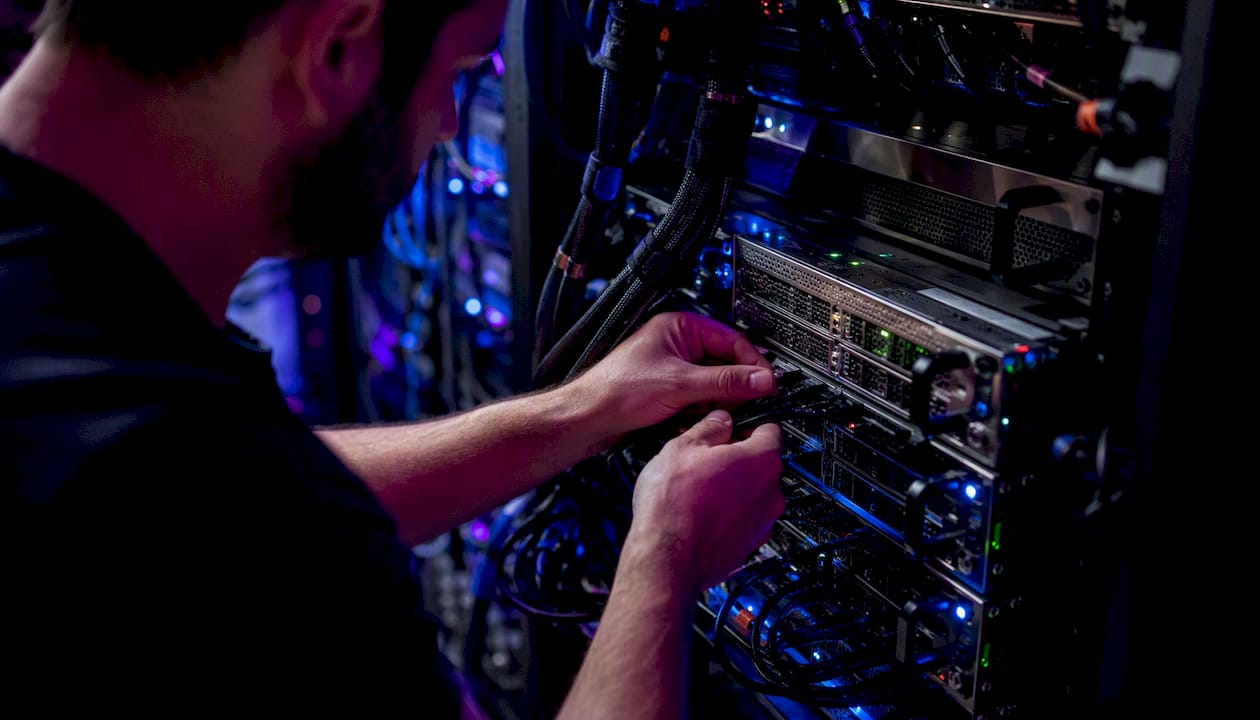
        <content type="html"><![CDATA[<p><img decoding="async" loading="lazy" src="https://csuxjmfbwmkxiegfpljm.supabase.co/storage/v1/object/public/blog-images/organization-30814/1787081670180_Hands-connecting-fiber-optic-cable-in-server-room.jpeg" alt="Hands connecting fiber optic cable in server room" class="img_ev3q"></p>
<p>Orchestrating AI pipeline dependencies means building an explicit dependency graph, layering asset awareness on top of task scheduling, and inserting verification checkpoints wherever an agentic stage hands off to the next. That's the whole engineering answer. Everything else in this guide explains how to build it, test it, and keep it from breaking at 2 a.m.</p>
<p>This applies to teams running multi-stage AI systems: ingestion, feature extraction, embeddings, training, evaluation, deployment, and increasingly, agentic reasoning steps that call each other in sequence. Here's what to implement now:</p>
<ul>
<li class=""><strong>Declare producers and consumers explicitly</strong> for every task and every data or model asset, not just the ones that break most often.</li>
<li class=""><strong>Use topological ordering</strong> to sequence execution and catch circular dependencies before they hit production.</li>
<li class=""><strong>Add contract checks</strong> at each handoff, so a downstream task fails loudly instead of silently consuming stale or malformed input.</li>
<li class=""><strong>Enforce idempotency</strong> on every task so retries never double-write or double-charge.</li>
<li class=""><strong>Version and observe every asset</strong> — model weights, embeddings, prompts, datasets — so you can trace any output back to its exact inputs.</li>
</ul>
<p>For core pipeline logic, favor deterministic declarations over dynamic, agent-driven routing. <a href="https://opensource.microsoft.com/blog/2026/05/14/conductor-deterministic-orchestration-for-multi-agent-ai-workflows/" target="_blank" rel="noopener noreferrer" class="">Microsoft's engineering guidance on multi-agent orchestration</a> makes the same case: declared workflows are easier to audit, cheaper to run, and far less likely to spiral into unintended agent loops. Save dynamic routing for sandboxed experimentation, not the paths your customers depend on.</p>
<h2 class="anchor anchorTargetStickyNavbar_Vzrq" id="table-of-contents">Table of Contents<a href="https://mlflow.org/articles/orchestrating-ai-pipeline-dependencies/#table-of-contents" class="hash-link" aria-label="Direct link to Table of Contents" title="Direct link to Table of Contents" translate="no">​</a></h2>
<ul>
<li class=""><a href="https://mlflow.org/articles/orchestrating-ai-pipeline-dependencies/#what-does-orchestrating-ai-pipeline-dependencies-actually-involve" class="">What Does Orchestrating AI Pipeline Dependencies Actually Involve?</a></li>
<li class=""><a href="https://mlflow.org/articles/orchestrating-ai-pipeline-dependencies/#how-is-orchestration-different-from-etl-and-job-scheduling" class="">How Is Orchestration Different From ETL and Job Scheduling?</a></li>
<li class=""><a href="https://mlflow.org/articles/orchestrating-ai-pipeline-dependencies/#what-core-components-does-a-dependency-aware-orchestrator-need" class="">What Core Components Does a Dependency-Aware Orchestrator Need?</a></li>
<li class=""><a href="https://mlflow.org/articles/orchestrating-ai-pipeline-dependencies/#which-orchestration-pattern-fits-your-pipeline" class="">Which Orchestration Pattern Fits Your Pipeline?</a></li>
<li class=""><a href="https://mlflow.org/articles/orchestrating-ai-pipeline-dependencies/#how-do-you-declare-dependencies-in-code" class="">How Do You Declare Dependencies in Code?</a></li>
<li class=""><a href="https://mlflow.org/articles/orchestrating-ai-pipeline-dependencies/#what-operational-practices-keep-dependencies-reliable-at-scale" class="">What Operational Practices Keep Dependencies Reliable at Scale?</a></li>
<li class=""><a href="https://mlflow.org/articles/orchestrating-ai-pipeline-dependencies/#which-orchestration-tool-category-fits-your-pipeline" class="">Which Orchestration Tool Category Fits Your Pipeline?</a></li>
<li class=""><a href="https://mlflow.org/articles/orchestrating-ai-pipeline-dependencies/#how-do-you-choose-the-right-orchestration-approach" class="">How Do You Choose the Right Orchestration Approach?</a></li>
<li class=""><a href="https://mlflow.org/articles/orchestrating-ai-pipeline-dependencies/#how-do-you-test-and-recover-dependencies-in-production" class="">How Do You Test and Recover Dependencies in Production?</a></li>
<li class=""><a href="https://mlflow.org/articles/orchestrating-ai-pipeline-dependencies/#whats-a-practical-starter-checklist-for-implementation" class="">What's a Practical Starter Checklist for Implementation?</a></li>
<li class=""><a href="https://mlflow.org/articles/orchestrating-ai-pipeline-dependencies/#why-most-teams-get-dependency-orchestration-wrong" class="">Why Most Teams Get Dependency Orchestration Wrong</a></li>
<li class=""><a href="https://mlflow.org/articles/orchestrating-ai-pipeline-dependencies/#where-mlflow-fits-into-your-orchestration-stack" class="">Where MLflow Fits Into Your Orchestration Stack</a></li>
<li class=""><a href="https://mlflow.org/articles/orchestrating-ai-pipeline-dependencies/#frequently-asked-questions" class="">Frequently Asked Questions</a></li>
<li class=""><a href="https://mlflow.org/articles/orchestrating-ai-pipeline-dependencies/#sources" class="">Sources</a></li>
</ul>
<h2 class="anchor anchorTargetStickyNavbar_Vzrq" id="what-does-orchestrating-ai-pipeline-dependencies-actually-involve">What Does Orchestrating AI Pipeline Dependencies Actually Involve?<a href="https://mlflow.org/articles/orchestrating-ai-pipeline-dependencies/#what-does-orchestrating-ai-pipeline-dependencies-actually-involve" class="hash-link" aria-label="Direct link to What Does Orchestrating AI Pipeline Dependencies Actually Involve?" title="Direct link to What Does Orchestrating AI Pipeline Dependencies Actually Involve?" translate="no">​</a></h2>
<p>A "dependency" in an AI pipeline is any upstream artifact or event a downstream step requires before it can run correctly. That includes completed tasks, but it also includes assets: a trained model checkpoint, a refreshed embedding index, a validated dataset partition, a deployed prompt version, or a response from an external API. Orchestrating these dependencies means defining, in code, exactly what each task or asset needs before it runs, and exactly what it produces afterward.</p>
<p>The scope is broader than most teams initially assume. A full AI pipeline dependency map typically spans:</p>
<ul>
<li class=""><strong>Data ingestion and validation</strong>, where raw records enter the system and get checked against schema expectations.</li>
<li class=""><strong>Feature extraction and embeddings generation</strong>, which depend on both the ingested data and the model version doing the encoding.</li>
<li class=""><strong>Vector indexing and retrieval setup</strong>, which depends on embeddings being current, not stale.</li>
<li class=""><strong>Model training and fine-tuning</strong>, gated by feature freshness and compute availability.</li>
<li class=""><strong>Evaluation stages</strong>, which depend on a trained model artifact and a held-out dataset that hasn't drifted.</li>
<li class=""><strong>Deployment and serving</strong>, gated by evaluation results clearing a defined threshold.</li>
<li class=""><strong>Agentic reasoning stages</strong>, where one agent's output becomes another's input, often with tool calls in between.</li>
<li class=""><strong>Post-processing and delivery</strong>, the last mile before results reach a user or downstream system.</li>
</ul>
<p>The goal isn't just "make it run." It's correctness (every output traces to verified inputs), minimal recomputation (you don't rebuild an entire embedding index because one document changed), auditability (you can answer "which model version produced this?" months later), cost control (idle compute waiting on unclear dependencies is expensive), and safe automation (agentic stages don't run unchecked against production data).</p>
<h2 class="anchor anchorTargetStickyNavbar_Vzrq" id="how-is-orchestration-different-from-etl-and-job-scheduling">How Is Orchestration Different From ETL and Job Scheduling?<a href="https://mlflow.org/articles/orchestrating-ai-pipeline-dependencies/#how-is-orchestration-different-from-etl-and-job-scheduling" class="hash-link" aria-label="Direct link to How Is Orchestration Different From ETL and Job Scheduling?" title="Direct link to How Is Orchestration Different From ETL and Job Scheduling?" translate="no">​</a></h2>
<p>They solve different problems, and conflating them is where most AI pipeline failures start. A <strong>scheduler</strong> triggers jobs on a clock or a simple event, with no real understanding of what those jobs depend on. <strong>ETL</strong> tools focus on transforming and moving data from one shape to another. <strong>Orchestration</strong> is the layer that understands the full dependency graph: what has to finish, in what order, with what guarantees, before the next thing runs, plus retries, lineage tracking, and failure handling built in.</p>
<ul>
<li class="">A <strong>scheduler</strong> answers "when should this run?" It doesn't know if the upstream data is actually ready.</li>
<li class="">An <strong>ETL tool</strong> answers "how do I transform this dataset?" It doesn't manage cross-stage coordination.</li>
<li class="">An <strong>orchestrator</strong> answers "what must be true before this runs, and what happens if it isn't?"</li>
</ul>
<p>Scheduler-only setups fail constantly in AI systems for reasons that have nothing to do with timing. A cron job might kick off model retraining at 2 a.m. even though the feature store hasn't finished its nightly refresh. An agent handoff might fire before the upstream agent's output has passed a validation check. A model might get promoted to serving before its evaluation gate has actually cleared, because the scheduler only knows the evaluation <em>job</em> ran, not whether it <em>passed</em>.</p>
<p>The practical fix is to stop relying on time-based triggers for anything correctness-critical. Declare producer/consumer contracts and asset lifecycles instead, so a downstream task depends on a verified state, not a clock.</p>
<h2 class="anchor anchorTargetStickyNavbar_Vzrq" id="what-core-components-does-a-dependency-aware-orchestrator-need">What Core Components Does a Dependency-Aware Orchestrator Need?<a href="https://mlflow.org/articles/orchestrating-ai-pipeline-dependencies/#what-core-components-does-a-dependency-aware-orchestrator-need" class="hash-link" aria-label="Direct link to What Core Components Does a Dependency-Aware Orchestrator Need?" title="Direct link to What Core Components Does a Dependency-Aware Orchestrator Need?" translate="no">​</a></h2>
<p>Every orchestration layer managing AI pipeline dependencies at scale needs the same set of building blocks, whether you assemble them yourself or adopt a platform that bundles them.</p>
<ul>
<li class=""><strong>A dependency graph or asset graph</strong> that models tasks and their inputs/outputs explicitly, not implicitly through file paths or naming conventions.</li>
<li class=""><strong>A scheduler/executor</strong> that respects the graph's ordering and can run independent branches concurrently.</li>
<li class=""><strong>Sensors and triggers</strong> that fire on real conditions (a file landing, a table updating, a webhook arriving) rather than fixed intervals.</li>
<li class=""><strong>Contract checks</strong> that validate schema, freshness, and value ranges before a downstream task consumes an upstream output.</li>
<li class=""><strong>Idempotent task runtimes</strong> so re-running a step never corrupts state or duplicates side effects.</li>
<li class=""><strong>Retries with backoff</strong>, tuned per failure class, not a single blanket policy.</li>
<li class=""><strong>A lineage and metadata store</strong> that records what produced what, and when.</li>
<li class=""><strong>Observability and tracing</strong>, especially for multi-step agentic chains where a failure three hops downstream needs to be traced back to its origin.</li>
<li class=""><strong>Policy and gating logic</strong>, such as evaluation thresholds that block a model from reaching production.</li>
<li class=""><strong>Auth and secrets management</strong> scoped per task, so a compromised step can't cascade into a full credential leak.</li>
</ul>
<p>An <strong>asset graph</strong> and a <strong>task DAG</strong> solve related but distinct problems. The task DAG governs execution order; the asset graph governs <em>what data and model versions exist</em> and which task last touched them. You need both, because a task can succeed while producing a stale or invalid asset, and an asset-aware orchestrator is what catches that.</p>
<p><strong>Statistic callout:</strong> SEQCV research on LLM-agent pipelines found that sequential verify-and-split orchestration, where each step's output is checked before the next agent consumes it, improved end-to-end task accuracy by <a href="https://papers.nips.cc/paper_files/paper/2025/file/19206a6ed5ed0aaeed440448dfc5cf7e-Paper-Conference.pdf" target="_blank" rel="noopener noreferrer" class="">up to roughly 30% on evaluated creative tasks</a> compared with unchecked sequential handoffs. Verification checkpoints aren't overhead. They're where reliability actually comes from.</p>
<p>For auditability, log the inputs and outputs of every task, the exact model and dataset versions involved, and the result of every contract check, pass or fail. A simple diagram showing tasks flowing into an asset graph, with verifier checkpoints sitting between each agentic handoff, makes this architecture far easier to communicate to a team than a paragraph of prose ever will.</p>
<h2 class="anchor anchorTargetStickyNavbar_Vzrq" id="which-orchestration-pattern-fits-your-pipeline">Which Orchestration Pattern Fits Your Pipeline?<a href="https://mlflow.org/articles/orchestrating-ai-pipeline-dependencies/#which-orchestration-pattern-fits-your-pipeline" class="hash-link" aria-label="Direct link to Which Orchestration Pattern Fits Your Pipeline?" title="Direct link to Which Orchestration Pattern Fits Your Pipeline?" translate="no">​</a></h2>
<p>Four coordination patterns cover almost every AI workload, and picking the wrong one is a common source of production incidents.</p>
<p><strong>Sequential</strong> orchestration runs steps one after another, each depending on the last. It suits progressive refinement tasks: draft, critique, revise, finalize. <strong>Concurrent (fan-out/fan-in)</strong> orchestration splits work across parallel branches and merges results, which fits ensemble model scoring or multi-source retrieval. <strong>Event-driven</strong> orchestration reacts to asynchronous signals, such as a new batch of records landing or a webhook firing, and suits pipelines where inputs arrive unpredictably. <strong>Dynamic, agent-driven</strong> orchestration lets an agent decide its own next step at runtime, which fits exploratory or open-ended tasks but sacrifices predictability.</p>
<p><img decoding="async" loading="lazy" src="https://csuxjmfbwmkxiegfpljm.supabase.co/storage/v1/object/public/blog-images/organization-30814/1787081673426_Hands-managing-multiple-fiber-optic-cables-in-data-center.jpeg" alt="Hands managing multiple fiber optic cables in data center" class="img_ev3q"></p>
<p><a href="https://learn.microsoft.com/en-us/azure/architecture/ai-ml/guide/ai-agent-design-patterns" target="_blank" rel="noopener noreferrer" class="">Microsoft's Azure architecture guidance on agent design patterns</a> warns that concurrent execution of agentic subtasks can introduce hidden dependency-induced misalignment: two branches quietly assume different versions of shared state, and nothing catches it until the merge step produces nonsense. That risk scales with parallelism.</p>
<table><thead><tr><th>Pattern</th><th>Coordination style</th><th>Best-for scenario</th><th>Main watch-out</th></tr></thead><tbody><tr><td>Sequential</td><td>Strict order, each step gates the next</td><td>Progressive refinement, staged validation</td><td>Latency accumulates across steps</td></tr><tr><td>Concurrent (fan-out/fan-in)</td><td>Parallel branches, merged output</td><td>Ensemble scoring, multi-source retrieval</td><td>Hidden state misalignment between branches</td></tr><tr><td>Event-driven</td><td>Reacts to asynchronous triggers</td><td>Irregular data arrival, real-time ingestion</td><td>Harder to reason about global ordering</td></tr><tr><td>Dynamic/agent-driven</td><td>Agent chooses next step at runtime</td><td>Exploratory research tasks, sandboxed experiments</td><td>Weak auditability, unpredictable cost</td></tr></tbody></table>
<p>The enterprise trade-off is consistent across all four: determinism, auditability, and cost predictability move in one direction, while flexibility and adaptability move in the other. Dynamic routing sounds appealing because it's flexible, but every extra degree of freedom is a degree of freedom you can't audit after the fact, and verification overhead for agent-driven flows tends to grow faster than teams expect.</p>
<p><strong>Pro Tip:</strong> <em>Reserve dynamic, agent-driven flows for isolated experiments or sandboxed features. For anything touching production data or customer-facing output, declare the structure upfront and let verification checkpoints, not agent judgment, decide what happens next.</em></p>
<h2 class="anchor anchorTargetStickyNavbar_Vzrq" id="how-do-you-declare-dependencies-in-code">How Do You Declare Dependencies in Code?<a href="https://mlflow.org/articles/orchestrating-ai-pipeline-dependencies/#how-do-you-declare-dependencies-in-code" class="hash-link" aria-label="Direct link to How Do You Declare Dependencies in Code?" title="Direct link to How Do You Declare Dependencies in Code?" translate="no">​</a></h2>
<p>The DAG with topological sort is still the foundational primitive. Research on AI workflow scheduling shows why: a topological sort guarantees producers run before consumers, lets independent tasks at the same graph level execute in parallel, and detects cycles before you ever hit "run." Skipping this step is how teams end up with pipelines that occasionally consume yesterday's embeddings without anyone noticing.</p>
<p>Here's a minimal pattern for declaring tasks, assets, and a fan-in merge node:</p>
<div class="language-text codeBlockContainer_Ckt0 theme-code-block" style="--prism-color:#9CDCFE;--prism-background-color:#1E1E1E"><div class="codeBlockContent_QJqH"><pre tabindex="0" class="prism-code language-text codeBlock_bY9V thin-scrollbar" style="color:#9CDCFE;background-color:#1E1E1E"><code class="codeBlockLines_e6Vv"><span class="token-line" style="color:#9CDCFE"><span class="token plain">register_task("ingest_data", produces=["raw_dataset"])</span><br></span><span class="token-line" style="color:#9CDCFE"><span class="token plain">register_task("generate_embeddings", requires=["raw_dataset"], produces=["embedding_index"])</span><br></span><span class="token-line" style="color:#9CDCFE"><span class="token plain">register_task("train_model", requires=["embedding_index"], produces=["model_v"])</span><br></span><span class="token-line" style="color:#9CDCFE"><span class="token plain">register_task("evaluate_model", requires=["model_v"], produces=["eval_report"])</span><br></span><span class="token-line" style="color:#9CDCFE"><span class="token plain">register_task("deploy_model", requires=["eval_report"], gate=eval_report.score &gt; THRESHOLD)</span><br></span><span class="token-line" style="color:#9CDCFE"><span class="token plain" style="display:inline-block"></span><br></span><span class="token-line" style="color:#9CDCFE"><span class="token plain">graph = build_dag(tasks)</span><br></span><span class="token-line" style="color:#9CDCFE"><span class="token plain">order = topological_sort(graph)  # raises on cycle detection</span><br></span><span class="token-line" style="color:#9CDCFE"><span class="token plain">run(order)</span><br></span></code></pre></div></div>
<p>Task-level edges work well when the relationship is "this job must finish before that one starts." Asset-level dependencies work better when multiple tasks share the same output, such as three downstream consumers all reading the same embedding index. Declare at the asset level whenever more than one task needs the same guarantee about freshness or version.</p>
<p>Sensors and asset contracts extend this further: a sensor waits on an external condition (a new file, a completed upstream job in another team's pipeline), while a contract check validates that an asset actually matches its expected schema and quality bounds before anything downstream touches it. Conditional branches and gating checks, like the <code>eval_report.score &gt; THRESHOLD</code> line above, block a deployment until the model has genuinely earned it, not just finished running.</p>
<p><strong>Pro Tip:</strong> <em>When schema evolution hits a shared asset, validate the schema version at the contract check, not inside the consuming task. Block downstream execution and trigger a migration path automatically rather than letting a silently mismatched schema propagate three stages deep before anyone notices.</em></p>
<h2 class="anchor anchorTargetStickyNavbar_Vzrq" id="what-operational-practices-keep-dependencies-reliable-at-scale">What Operational Practices Keep Dependencies Reliable at Scale?<a href="https://mlflow.org/articles/orchestrating-ai-pipeline-dependencies/#what-operational-practices-keep-dependencies-reliable-at-scale" class="hash-link" aria-label="Direct link to What Operational Practices Keep Dependencies Reliable at Scale?" title="Direct link to What Operational Practices Keep Dependencies Reliable at Scale?" translate="no">​</a></h2>
<p>Individual DAGs are easy. Dozens of pipelines owned by different teams, sharing models and datasets, is where dependency management gets genuinely hard. Research on the AI dependency footprint found that modern AI stacks accumulate implicit infrastructure dependencies across every added feature, and each one becomes an unassigned risk unless someone owns it explicitly.</p>
<ol>
<li class=""><strong>Run a dependency audit before every major release.</strong> Map every task, asset, and external service your pipeline touches, and confirm each one has a named owner.</li>
<li class=""><strong>Consolidate redundant components.</strong> Three teams building three separate embedding pipelines against the same source data is a cost problem and a consistency problem.</li>
<li class=""><strong>Maintain canonical asset stores.</strong> One source of truth per model family and dataset, with clear versioning, beats every team caching its own copy.</li>
<li class=""><strong>Set SLAs and SLOs per critical asset</strong>, not just per pipeline. A shared feature store needs its own freshness guarantee independent of any single consumer.</li>
<li class=""><strong>Define cost controls and rate limits</strong> at the dependency boundary, especially for calls to external LLM providers.</li>
<li class=""><strong>Establish on-call and escalation paths</strong> specific to dependency failures, separate from general pipeline failures, since the fix usually lives in a different team.</li>
</ol>
<p>Idempotency, retries with backoff, and circuit breakers aren't optional extras. Architectural guidance on dependency mapping for agent systems recommends isolation boundaries and fallback pathways specifically to stop one failing dependency from cascading into a full pipeline outage. When a dependency is unavailable, define a defensive default (a cached prior result, a degraded response, an explicit skip) rather than letting the pipeline hang or fail opaquely.</p>
<p>Cross-team coordination is where version conflicts usually surface. A shared model gets updated by one team and silently breaks three downstream consumers who assumed the old output schema. Maintaining a version compatibility matrix, and scheduling migration windows rather than instant cutovers, avoids most of that pain.</p>
<p><strong>Pro Tip:</strong> <em>Profile your pipeline's critical path quarterly. Materializing and caching the assets that sit on that path, instead of recomputing them on every run, is usually the single highest-leverage change you can make for both cost and latency.</em></p>
<h2 class="anchor anchorTargetStickyNavbar_Vzrq" id="which-orchestration-tool-category-fits-your-pipeline">Which Orchestration Tool Category Fits Your Pipeline?<a href="https://mlflow.org/articles/orchestrating-ai-pipeline-dependencies/#which-orchestration-tool-category-fits-your-pipeline" class="hash-link" aria-label="Direct link to Which Orchestration Tool Category Fits Your Pipeline?" title="Direct link to Which Orchestration Tool Category Fits Your Pipeline?" translate="no">​</a></h2>
<p>Not every pipeline needs the same orchestration architecture. Matching the tool category to the actual workload saves both engineering time and infrastructure cost.</p>
<ul>
<li class=""><strong>Workflow engines (DAG schedulers)</strong> excel at well-defined, code-first task sequencing with mature retry and monitoring support. They tend to lack native model or dataset versioning, so teams bolt that on separately.</li>
<li class=""><strong>Asset-aware orchestrators</strong> track datasets and models as first-class objects with lineage baked in, which suits teams that need strong reproducibility guarantees but adds conceptual overhead for simple jobs.</li>
<li class=""><strong>Event-driven platforms</strong> handle asynchronous, irregular triggers well, though they can make end-to-end ordering harder to reason about without careful design.</li>
<li class=""><strong>Managed platform orchestration</strong> reduces operational burden by handling infrastructure for you, at the cost of some flexibility and potential lock-in.</li>
<li class=""><strong>Orchestration-as-code frameworks</strong> give maximum control and testability but require more upfront engineering investment.</li>
</ul>
<p>For AI pipelines specifically, the gap most tool categories leave open is lifecycle awareness: knowing exactly which model version, prompt version, and evaluation result produced a given output. This is where MLflow's approach to AI workflow orchestration complements whatever scheduler or DAG engine you already run. MLflow doesn't replace your orchestrator's execution engine; it supplies the lifecycle layer around it, deep tracing for agentic reasoning steps, automated LLM-as-a-judge evaluation gates, and a centralized AI Gateway for cross-provider governance, so your dependency graph can gate deployment on an actual evaluation score, not just job completion.</p>
<p>Favor lifecycle-integrated orchestration when you're compliance-heavy, need full reproducibility, or run agentic stages where tracing the reasoning chain matters. Lightweight schedulers remain the right call for simple ETL or straightforward cron-triggered batch jobs where none of that overhead pays for itself.</p>
<h2 class="anchor anchorTargetStickyNavbar_Vzrq" id="how-do-you-choose-the-right-orchestration-approach">How Do You Choose the Right Orchestration Approach?<a href="https://mlflow.org/articles/orchestrating-ai-pipeline-dependencies/#how-do-you-choose-the-right-orchestration-approach" class="hash-link" aria-label="Direct link to How Do You Choose the Right Orchestration Approach?" title="Direct link to How Do You Choose the Right Orchestration Approach?" translate="no">​</a></h2>
<p>Score any candidate approach against the criteria that actually predict pain later, not just ease of initial setup.</p>
<ol>
<li class=""><strong>Asset-awareness</strong>: Does it track dataset and model versions natively, or do you bolt that on yourself?</li>
<li class=""><strong>Lineage</strong>: Can you trace any output back to its exact inputs six months later?</li>
<li class=""><strong>Retry semantics</strong>: Are retries configurable per failure class, with backoff?</li>
<li class=""><strong>Scale and concurrency</strong>: Does it handle your expected parallel task volume without manual tuning?</li>
<li class=""><strong>Incremental recomputation</strong>: Can it skip unchanged branches of the graph automatically?</li>
<li class=""><strong>Observability traces</strong>: Does it capture agentic reasoning steps, not just task start/stop times?</li>
<li class=""><strong>CI/CD and artifact store integration</strong>: Does it fit your existing deployment pipeline?</li>
<li class=""><strong>Governance and access controls</strong>: Can you scope permissions per task or per asset?</li>
<li class=""><strong>Cost model</strong>: Does pricing scale with your actual usage pattern?</li>
<li class=""><strong>Vendor lock-in risk</strong>: How hard would migration be later?</li>
</ol>
<ul>
<li class="">If you need asset versioning and full reproducibility, favor a lifecycle-integrated approach.</li>
<li class="">If you need light ETL scheduling at high throughput, a lightweight scheduler is the better fit.</li>
<li class="">If you're running agentic, multi-LLM flows, prefer deterministic declared steps with verification checkpoints over letting agents freelance the routing.</li>
</ul>
<p>Run any candidate as a pilot on one real pipeline before committing broadly. Track dependency failure rate, mean time to root-cause a broken run, and whether the team can actually read the lineage graph without asking you to explain it.</p>
<h2 class="anchor anchorTargetStickyNavbar_Vzrq" id="how-do-you-test-and-recover-dependencies-in-production">How Do You Test and Recover Dependencies in Production?<a href="https://mlflow.org/articles/orchestrating-ai-pipeline-dependencies/#how-do-you-test-and-recover-dependencies-in-production" class="hash-link" aria-label="Direct link to How Do You Test and Recover Dependencies in Production?" title="Direct link to How Do You Test and Recover Dependencies in Production?" translate="no">​</a></h2>
<p>Testing dependencies means testing contracts, not just code paths. Before any release, run preflight validation against the current asset graph, execute a canary run against production-shaped data at small scale, and run integration tests that assert schema expectations on every declared contract, not just the ones that broke last time.</p>
<p>Track these metrics continuously:</p>
<ul>
<li class=""><strong>Critical-path latency</strong>, so you know which chain of dependencies actually determines your end-to-end runtime.</li>
<li class=""><strong>Success rate per dependency</strong>, not just per pipeline, so a flaky upstream service doesn't hide inside an aggregate number.</li>
<li class=""><strong>Freshness metrics</strong> on every asset with an SLA.</li>
<li class=""><strong>Lineage coverage</strong>, meaning the percentage of outputs you can actually trace back to verified inputs.</li>
<li class=""><strong>Error-class breakdowns</strong>, separating schema mismatches from timeouts from upstream outages.</li>
<li class=""><strong>Cost-by-pipeline</strong>, so a runaway dependency shows up in the budget before it shows up in an incident review.</li>
</ul>
<p>When something breaks, incremental backfills beat full reprocessing almost every time; resume from the last verified checkpoint rather than restarting the entire graph. Circuit breakers should trip automatically when a dependency's error rate crosses a threshold, routing to an automated fallback where one exists, and escalating to a human only when the fallback itself is uncertain. <a href="https://mlflow.org/genai/observability" target="_blank" rel="noopener noreferrer" class="">MLflow's tracing and observability tooling</a> is built for exactly this: capturing the full trace of an agentic run so a failure three steps downstream can be traced back to the exact reasoning step that caused it.</p>
<p>Alerts should always name the specific failure: a failed dependency check, a stale asset past its freshness SLA, a schema mismatch at a contract boundary, or a verification failure at an agentic checkpoint. A generic "pipeline failed" alert at 3 a.m. tells the on-call engineer nothing useful.</p>
<p><strong>Pro Tip:</strong> <em>Set your canary run to use a small, representative slice of production data, not synthetic test fixtures. Synthetic data almost never surfaces the schema drift that actually breaks pipelines.</em></p>
<h2 class="anchor anchorTargetStickyNavbar_Vzrq" id="whats-a-practical-starter-checklist-for-implementation">What's a Practical Starter Checklist for Implementation?<a href="https://mlflow.org/articles/orchestrating-ai-pipeline-dependencies/#whats-a-practical-starter-checklist-for-implementation" class="hash-link" aria-label="Direct link to What's a Practical Starter Checklist for Implementation?" title="Direct link to What's a Practical Starter Checklist for Implementation?" translate="no">​</a></h2>
<p>Before writing any orchestration code, run through three phases.</p>
<ol>
<li class=""><strong>Preflight:</strong> Audit existing dependencies, assign explicit ownership to every asset, and identify which stores should become canonical.</li>
<li class=""><strong>Design:</strong> Draw the DAG and asset graph together, define contracts for every producer/consumer boundary, and mark which stages need verification checkpoints.</li>
<li class=""><strong>Runbook:</strong> Wire up observability before go-live, write integration tests against every contract, and set a versioning policy for every shared asset.</li>
</ol>
<p>A minimal starter template:</p>
<div class="language-text codeBlockContainer_Ckt0 theme-code-block" style="--prism-color:#9CDCFE;--prism-background-color:#1E1E1E"><div class="codeBlockContent_QJqH"><pre tabindex="0" class="prism-code language-text codeBlock_bY9V thin-scrollbar" style="color:#9CDCFE;background-color:#1E1E1E"><code class="codeBlockLines_e6Vv"><span class="token-line" style="color:#9CDCFE"><span class="token plain">tasks = register_tasks([...])</span><br></span><span class="token-line" style="color:#9CDCFE"><span class="token plain">assets = register_assets([...])</span><br></span><span class="token-line" style="color:#9CDCFE"><span class="token plain">declare_edges(tasks, assets)</span><br></span><span class="token-line" style="color:#9CDCFE"><span class="token plain">graph = build_dag(tasks, assets)</span><br></span><span class="token-line" style="color:#9CDCFE"><span class="token plain">verify(graph)  # cycle detection + contract validation</span><br></span><span class="token-line" style="color:#9CDCFE"><span class="token plain">order = topological_sort(graph)</span><br></span><span class="token-line" style="color:#9CDCFE"><span class="token plain">execute(order, checkpoints=verification_gates)</span><br></span></code></pre></div></div>
<ul>
<li class="">Wire this into CI/CD so contract checks run on every pull request, not just at deploy time.</li>
<li class="">Roll out changes canary first, then ramp gradually, then general availability, watching the dependency-failure metrics from the previous section at each stage.</li>
</ul>
<p>Orchestrating AI pipeline dependencies reliably comes down to declaring the graph explicitly, verifying every handoff, and treating assets as first-class, versioned objects rather than side effects of a task finishing.</p>
<table><thead><tr><th>Point</th><th>Details</th></tr></thead><tbody><tr><td>Declare dependencies explicitly</td><td>Map every task and asset producer/consumer relationship in a DAG or asset graph, not through naming conventions.</td></tr><tr><td>Use topological sort</td><td>Enforce producer-before-consumer ordering and detect cycles before execution, not during it.</td></tr><tr><td>Add verification checkpoints</td><td>Sequential verify-and-split approaches improved accuracy by roughly 30% in SEQCV research on evaluated agent tasks.</td></tr><tr><td>Prefer determinism for core logic</td><td>Reserve dynamic, agent-driven routing for sandboxed experiments, not production-critical paths.</td></tr><tr><td>Pair orchestration with lifecycle tooling</td><td>MLflow adds model/data versioning, agentic tracing, and evaluation gates on top of your existing scheduler or DAG engine.</td></tr></tbody></table>
<h2 class="anchor anchorTargetStickyNavbar_Vzrq" id="why-most-teams-get-dependency-orchestration-wrong">Why Most Teams Get Dependency Orchestration Wrong<a href="https://mlflow.org/articles/orchestrating-ai-pipeline-dependencies/#why-most-teams-get-dependency-orchestration-wrong" class="hash-link" aria-label="Direct link to Why Most Teams Get Dependency Orchestration Wrong" title="Direct link to Why Most Teams Get Dependency Orchestration Wrong" translate="no">​</a></h2>
<p>The conventional advice treats orchestration as a scheduling problem: pick a DAG engine, wire up retries, call it done. That's incomplete. The pipelines that actually break in production almost never fail because a task didn't run. They fail because a task ran successfully against the <em>wrong version</em> of an asset, and nothing in the system was watching for that.</p>
<p>What's underrated is verification overhead. Engineers treat contract checks and evaluation gates as friction to minimize, when the SEQCV research suggests the opposite: that overhead is where reliability actually lives, especially once agentic reasoning steps enter the graph. Cutting corners on checkpoints to save latency is a bad trade almost every time it's made.</p>
<p>The gap between what orchestration tools promise and what teams need is lifecycle awareness. A scheduler tells you a job ran. It doesn't tell you whether the model it produced ever passed evaluation, or whether that evaluation used a dataset that's since drifted. Prioritize closing that gap before optimizing anything else, including your DAG's execution speed.</p>
<h2 class="anchor anchorTargetStickyNavbar_Vzrq" id="where-mlflow-fits-into-your-orchestration-stack">Where MLflow Fits Into Your Orchestration Stack<a href="https://mlflow.org/articles/orchestrating-ai-pipeline-dependencies/#where-mlflow-fits-into-your-orchestration-stack" class="hash-link" aria-label="Direct link to Where MLflow Fits Into Your Orchestration Stack" title="Direct link to Where MLflow Fits Into Your Orchestration Stack" translate="no">​</a></h2>
<p>Your DAG engine or scheduler still owns execution order. What most orchestration setups lack is the lifecycle layer that knows which model, prompt, and dataset version actually produced a given result, and whether it passed evaluation before anyone shipped it.</p>
<p><img decoding="async" loading="lazy" src="https://csuxjmfbwmkxiegfpljm.supabase.co/storage/v1/object/public/blog-images/organization-30814/1778726621079_mlflow.jpg" alt="Mlflow" class="img_ev3q"></p>
<p>Mlflow fills that gap as an open-source platform purpose-built for GenAI and LLM lifecycle management. It gives you deep tracing across agentic reasoning steps, so a failure at hop four in a multi-agent chain traces cleanly back to its cause instead of showing up as an opaque pipeline error. Its automated LLM-as-a-judge evaluation framework lets you turn your deployment gate from "the job finished" into "the model actually cleared quality thresholds," which is exactly the kind of verification checkpoint this guide argues for. The AI Gateway adds centralized, cross-provider governance for prompts and credentials, so dependency and access control aren't an afterthought bolted onto each pipeline separately.</p>
<p>If you're already running a DAG engine or scheduler and feel the gap between "task succeeded" and "output is actually trustworthy," start by adding evaluation gates to your highest-risk model deployment path at <a href="https://mlflow.org/genai" target="_blank" rel="noopener noreferrer" class="">Mlflow</a>.</p>
<h2 class="anchor anchorTargetStickyNavbar_Vzrq" id="frequently-asked-questions">Frequently Asked Questions<a href="https://mlflow.org/articles/orchestrating-ai-pipeline-dependencies/#frequently-asked-questions" class="hash-link" aria-label="Direct link to Frequently Asked Questions" title="Direct link to Frequently Asked Questions" translate="no">​</a></h2>
<p><strong>What's the difference between a task dependency and an asset dependency?</strong>
A task dependency means one job must finish before another starts. An asset dependency means a downstream consumer needs a specific, verified version of a dataset or model, regardless of which task produced it. AI pipelines need both, because a task can finish successfully while producing an asset that's stale or invalid.</p>
<p><strong>Do I need a full orchestration platform for a small AI pipeline?</strong>
Not necessarily. A lightweight scheduler with basic retry logic covers simple, low-stakes pipelines fine. The moment you're gating deployment on evaluation results, coordinating across teams, or running agentic multi-step reasoning, asset-aware orchestration with verification checkpoints pays for itself quickly.</p>
<p><strong>How do I handle schema changes without breaking downstream tasks?</strong>
Validate schema version at the contract check between producer and consumer, not inside the consuming task itself. When a mismatch is detected, block downstream execution and route to a migration path automatically rather than letting a silently incompatible schema propagate several stages deep.</p>
<p><strong>Is agent-driven dynamic routing ever appropriate for production pipelines?</strong>
It can work for isolated, sandboxed features where the cost of an unpredictable path is low. For core pipeline logic, especially anything customer-facing or compliance-relevant, declared and deterministic orchestration remains the safer default because it's auditable and its cost is predictable.</p>
<p><strong>What metrics actually indicate a dependency problem before it becomes an outage?</strong>
Watch success rate per individual dependency (not just per pipeline), asset freshness against SLA, and lineage coverage. A dependency whose success rate is quietly declining, or an asset that's drifting past its freshness window, is usually the earliest signal you'll get before a full failure cascades downstream.</p>
<h2 class="anchor anchorTargetStickyNavbar_Vzrq" id="sources">Sources<a href="https://mlflow.org/articles/orchestrating-ai-pipeline-dependencies/#sources" class="hash-link" aria-label="Direct link to Sources" title="Direct link to Sources" translate="no">​</a></h2>
<ul>
<li class=""><a href="https://learn.microsoft.com/en-us/azure/architecture/ai-ml/guide/ai-agent-design-patterns" target="_blank" rel="noopener noreferrer" class="">AI agent design patterns — Microsoft Azure architecture</a></li>
<li class=""><a href="https://opensource.microsoft.com/blog/2026/05/14/conductor-deterministic-orchestration-for-multi-agent-ai-workflows/" target="_blank" rel="noopener noreferrer" class="">Conductor: deterministic orchestration for multi-agent AI workflows</a></li>
<li class=""><a href="https://papers.nips.cc/paper_files/paper/2025/file/19206a6ed5ed0aaeed440448dfc5cf7e-Paper-Conference.pdf" target="_blank" rel="noopener noreferrer" class="">Can dependencies induced by LLM-agent workflows be trusted? (SEQCV research)</a></li>
</ul>
<h2 class="anchor anchorTargetStickyNavbar_Vzrq" id="recommended">Recommended<a href="https://mlflow.org/articles/orchestrating-ai-pipeline-dependencies/#recommended" class="hash-link" aria-label="Direct link to Recommended" title="Direct link to Recommended" translate="no">​</a></h2>
<ul>
<li class=""><a href="https://mlflow.org/articles/tags/stepwise-ai-integration" target="_blank" rel="noopener noreferrer" class="">One post tagged with "stepwise AI integration" | MLflow</a></li>
<li class=""><a href="https://mlflow.org/articles/tags/scalable-ai-solutions" target="_blank" rel="noopener noreferrer" class="">One post tagged with "scalable AI solutions" | MLflow</a></li>
<li class=""><a href="https://mlflow.org/articles/tags/building-ai-infrastructure" target="_blank" rel="noopener noreferrer" class="">One post tagged with "building AI infrastructure" | MLflow</a></li>
<li class=""><a href="https://mlflow.org/articles/tags/ai-inference-scalability" target="_blank" rel="noopener noreferrer" class="">One post tagged with "AI inference scalability" | MLflow</a></li>
</ul>]]></content>
        <category label="how to manage AI pipeline dependencies" term="how to manage AI pipeline dependencies"/>
        <category label="orchestrating machine learning pipelines" term="orchestrating machine learning pipelines"/>
        <category label="AI workflow orchestration" term="AI workflow orchestration"/>
        <category label="best practices for AI dependencies" term="best practices for AI dependencies"/>
        <category label="automating AI pipeline coordination" term="automating AI pipeline coordination"/>
        <category label="dependencies in AI workflows" term="dependencies in AI workflows"/>
        <category label="AI pipeline management" term="AI pipeline management"/>
        <category label="orchestrating ai pipeline dependencies" term="orchestrating ai pipeline dependencies"/>
    </entry>
    <entry>
        <title type="html"><![CDATA[Enterprise AI Compliance Documentation: A Practical Guide]]></title>
        <id>https://mlflow.org/articles/enterprise-ai-compliance-documentation/</id>
        <link href="https://mlflow.org/articles/enterprise-ai-compliance-documentation/"/>
        <updated>2026-08-18T00:00:00.000Z</updated>
        <summary type="html"><![CDATA[Master enterprise AI compliance documentation to ensure your systems operate safely and lawfully, avoiding audits and regulatory hassles.]]></summary>
        <content type="html"><![CDATA[<p><img decoding="async" loading="lazy" src="https://csuxjmfbwmkxiegfpljm.supabase.co/storage/v1/object/public/blog-images/organization-30814/1787081681672_Hands-organizing-compliance-documents-and-digital-media.jpeg" alt="Hands organizing compliance documents and digital media" class="img_ev3q"></p>
<p>Enterprise AI compliance documentation is a single, auditable package: policy, risk register, control catalogue, evidence registry, model cards and evaluation reports, retention rules, and vendor due-diligence records that together prove your AI systems operate safely, lawfully, and explainably. Skip any one of these and an audit or regulator inquiry turns into a fire drill.</p>
<p>Each document earns its place for a specific reason. The policy sets scope and accountability. The risk register and control catalogue map obligations from frameworks like the NIST AI Risk Management Framework to actual controls. Model cards and evaluation reports give auditors the metadata they need without chasing engineers for answers. Retention and logging policies satisfy eDiscovery requests when a regulator or plaintiff asks what your system did on a specific date.</p>
<ul>
<li class="">Corporate AI policy and governance charter</li>
<li class="">Risk taxonomy and control catalogue mapped to a named framework</li>
<li class="">Evidence register with searchable metadata</li>
<li class="">Model cards and evaluation reports per model version</li>
<li class="">Retention, logging, and vendor due-diligence documentation</li>
</ul>
<ol>
<li class="">Inventory every AI system in production or pilot.</li>
<li class="">Assign document owners before you draft a single template.</li>
<li class="">Build the evidence register last, once you know what evidence actually exists.</li>
</ol>
<p><strong>Pro Tip:</strong> <em>Store your evidence register in one indexed repository, not scattered across shared drives. A tool like Mlflow or Microsoft Purview can act as that single source of truth, letting auditors self-serve instead of emailing you for screenshots.</em></p>
<p>Enterprises that consolidate controls into one library, rather than a separate mini-program per regulation, cut duplicated audit prep and speed up <a href="https://neutralpartners.com/resources/blog/enterprise-compliance-management" target="_blank" rel="noopener noreferrer" class="">external audit cycles</a>.</p>
<h2 class="anchor anchorTargetStickyNavbar_Vzrq" id="key-takeaways">Key Takeaways<a href="https://mlflow.org/articles/enterprise-ai-compliance-documentation/#key-takeaways" class="hash-link" aria-label="Direct link to Key Takeaways" title="Direct link to Key Takeaways" translate="no">​</a></h2>
<p>Enterprise AI compliance documentation succeeds when policy, control catalogue, and evidence register are built together and refreshed continuously, not treated as separate one-time deliverables.</p>
<table><thead><tr><th>Point</th><th>Details</th></tr></thead><tbody><tr><td>Start with four documents</td><td>Policy, control catalogue, one model card, and the evidence register come first.</td></tr><tr><td>Automate evidence collection</td><td>Continuous logging beats quarterly manual evidence gathering for audit speed.</td></tr><tr><td>Standardize naming</td><td>Machine-searchable evidence files cut audit response time significantly.</td></tr><tr><td>Assign single owners</td><td>Every control needs one accountable owner, not a shared committee.</td></tr><tr><td>Mlflow accelerates reporting</td><td>Experiment tracking and observability generate model provenance and evaluation evidence automatically.</td></tr></tbody></table>
<h2 class="anchor anchorTargetStickyNavbar_Vzrq" id="table-of-contents">Table of Contents<a href="https://mlflow.org/articles/enterprise-ai-compliance-documentation/#table-of-contents" class="hash-link" aria-label="Direct link to Table of Contents" title="Direct link to Table of Contents" translate="no">​</a></h2>
<ul>
<li class=""><a href="https://mlflow.org/articles/enterprise-ai-compliance-documentation/#what-documents-should-enterprise-ai-compliance-programs-prioritize" class="">What Documents Should Enterprise AI Compliance Programs Prioritize?</a></li>
<li class=""><a href="https://mlflow.org/articles/enterprise-ai-compliance-documentation/#how-do-you-template-model-cards-and-control-entries" class="">How Do You Template Model Cards and Control Entries?</a></li>
<li class=""><a href="https://mlflow.org/articles/enterprise-ai-compliance-documentation/#what-metadata-do-model-reports-need-to-include" class="">What Metadata Do Model Reports Need to Include?</a></li>
<li class=""><a href="https://mlflow.org/articles/enterprise-ai-compliance-documentation/#how-do-you-enforce-controls-and-collect-evidence-continuously" class="">How Do You Enforce Controls and Collect Evidence Continuously?</a></li>
<li class=""><a href="https://mlflow.org/articles/enterprise-ai-compliance-documentation/#who-owns-ai-governance-inside-an-enterprise" class="">Who Owns AI Governance Inside an Enterprise?</a></li>
<li class=""><a href="https://mlflow.org/articles/enterprise-ai-compliance-documentation/#how-does-mlflow-map-to-compliance-documentation-requirements" class="">How Does MLflow Map to Compliance Documentation Requirements?</a></li>
<li class=""><a href="https://mlflow.org/articles/enterprise-ai-compliance-documentation/#whats-the-90-day-roadmap-for-ai-compliance-documentation" class="">What's the 90-Day Roadmap for AI Compliance Documentation?</a></li>
<li class=""><a href="https://mlflow.org/articles/enterprise-ai-compliance-documentation/#what-enterprise-compliance-teams-get-wrong-about-ai-documentation" class="">What Enterprise Compliance Teams Get Wrong About AI Documentation</a></li>
<li class=""><a href="https://mlflow.org/articles/enterprise-ai-compliance-documentation/#accelerate-your-compliance-evidence-with-mlflow" class="">Accelerate Your Compliance Evidence With MLflow</a></li>
<li class=""><a href="https://mlflow.org/articles/enterprise-ai-compliance-documentation/#frequently-asked-questions" class="">Frequently Asked Questions</a></li>
<li class=""><a href="https://mlflow.org/articles/enterprise-ai-compliance-documentation/#sources" class="">Sources</a></li>
</ul>
<h2 class="anchor anchorTargetStickyNavbar_Vzrq" id="what-documents-should-enterprise-ai-compliance-programs-prioritize">What Documents Should Enterprise AI Compliance Programs Prioritize?<a href="https://mlflow.org/articles/enterprise-ai-compliance-documentation/#what-documents-should-enterprise-ai-compliance-programs-prioritize" class="hash-link" aria-label="Direct link to What Documents Should Enterprise AI Compliance Programs Prioritize?" title="Direct link to What Documents Should Enterprise AI Compliance Programs Prioritize?" translate="no">​</a></h2>
<p>Compliance teams rarely have unlimited runway, so sequencing matters more than completeness on day one. Start with the documents auditors ask for first, then build outward.</p>
<ol>
<li class=""><strong>Corporate AI policy</strong> — scope, prohibited uses, approval gates. Owned by legal and compliance jointly.</li>
<li class=""><strong>AI risk taxonomy and register</strong> — categorizes systems by risk tier (a KPMG-style <a href="https://kpmg.com/kpmg-us/content/dam/kpmg/pdf/2025/trusted-ai-controls-matrix-tool-us.pdf" target="_blank" rel="noopener noreferrer" class="">risk-tiering approach</a> works well here). Owned by compliance.</li>
<li class=""><strong>Control catalogue</strong> mapped to a named framework, such as NIST AI RMF or ISO 42001. Owned by compliance, tested by internal audit.</li>
<li class=""><strong>Evidence register</strong> with consistent file naming. Owned by platform engineering, reviewed by compliance.</li>
<li class=""><strong>Model cards</strong> per model and version. Owned by data science.</li>
<li class=""><strong>Evaluation reports</strong> covering bias, safety, and performance thresholds. Owned by data science, reviewed by compliance.</li>
<li class=""><strong>Data lineage records</strong> tracing training data provenance. Owned by data engineering.</li>
<li class=""><strong>Retention and logging policy</strong>. Owned by legal, enforced by platform engineering.</li>
<li class=""><strong>Vendor due-diligence package</strong> for third-party models and APIs. Owned by procurement and legal.</li>
<li class=""><strong>PIA-style privacy assessments</strong> for any system processing personal data. Owned by privacy counsel.</li>
<li class=""><strong>Incident runbooks</strong> for model failures or misuse. Owned by security and compliance jointly.</li>
<li class=""><strong>Training and awareness materials</strong> for staff who build or operate AI systems. Owned by compliance and HR.</li>
</ol>
<table><thead><tr><th>Document</th><th>Minimum Content</th><th>Typical Owner</th></tr></thead><tbody><tr><td>AI policy</td><td>Scope, approvals, prohibited uses</td><td>Legal &amp; compliance</td></tr><tr><td>Control catalogue</td><td>Control statement, test frequency, evidence link</td><td>Compliance</td></tr><tr><td>Model card</td><td>Purpose, data lineage, metrics</td><td>Data science</td></tr><tr><td>Vendor DDA</td><td>Data handling, subprocessors, audit rights</td><td>Procurement/legal</td></tr></tbody></table>
<p><strong>Pro Tip:</strong> <em>With 90 days, build the policy, the control catalogue, and one complete model card for your highest-risk system. Everything else can follow once that pattern proves out.</em></p>
<p>Request a simple template pack internally: one policy skeleton, one control-entry template, one model-card template, and one vendor-DDA template. Standardizing these four saves weeks of rework later.</p>
<h2 class="anchor anchorTargetStickyNavbar_Vzrq" id="how-do-you-template-model-cards-and-control-entries">How Do You Template Model Cards and Control Entries?<a href="https://mlflow.org/articles/enterprise-ai-compliance-documentation/#how-do-you-template-model-cards-and-control-entries" class="hash-link" aria-label="Direct link to How Do You Template Model Cards and Control Entries?" title="Direct link to How Do You Template Model Cards and Control Entries?" translate="no">​</a></h2>
<p>Standardized fields turn a document from a one-off artifact into something machine-searchable and audit-ready. A model card missing training data lineage is functionally useless in an audit, no matter how polished it looks.</p>
<p><strong>Model card fields:</strong></p>
<ul>
<li class="">Purpose and intended use</li>
<li class="">Owner and review date</li>
<li class="">Input schema and output format</li>
<li class="">Training data lineage and source</li>
<li class="">Evaluation metrics and thresholds</li>
<li class="">Bias and safety check results</li>
<li class="">Permitted uses and prohibited uses</li>
<li class="">Human oversight checkpoints</li>
</ul>
<p><strong>Control catalogue entry fields:</strong></p>
<ul>
<li class="">Control statement (what must be true)</li>
<li class="">Owner and test frequency</li>
<li class="">Test pattern (manual attestation vs. automated check)</li>
<li class="">Evidence pointer (link to the evidence register)</li>
</ul>
<p><strong>Evidence record fields:</strong></p>
<ul>
<li class="">File path and unique identifier</li>
<li class="">Ingestion timestamp</li>
<li class="">Verifier name or system</li>
<li class="">Retention rule applied</li>
</ul>
<ol>
<li class="">Draft the field list before the template layout.</li>
<li class="">Pilot the template on one real model.</li>
<li class="">Lock naming conventions before scaling to a second team.</li>
</ol>
<table><thead><tr><th>Field</th><th>Example Value</th></tr></thead><tbody><tr><td>Model name</td><td>fraud-scoring-v3</td></tr><tr><td>Evaluation metric</td><td>Precision, threshold met</td></tr><tr><td>Bias check</td><td>Demographic parity tested, passed</td></tr></tbody></table>
<table><thead><tr><th>Point</th><th>Details</th></tr></thead><tbody><tr><td>Consistent naming</td><td>Machine-searchable evidence cuts audit response time from days to hours.</td></tr><tr><td>Field-level templates</td><td>Standardized model cards and control entries prevent audit gaps across teams.</td></tr></tbody></table>
<p><strong>Pro Tip:</strong> <em>Use an underscore-separated naming convention (model_name_version_date) across every artifact. It sounds trivial until an auditor needs 40 files pulled by Friday.</em></p>
<h2 class="anchor anchorTargetStickyNavbar_Vzrq" id="what-metadata-do-model-reports-need-to-include">What Metadata Do Model Reports Need to Include?<a href="https://mlflow.org/articles/enterprise-ai-compliance-documentation/#what-metadata-do-model-reports-need-to-include" class="hash-link" aria-label="Direct link to What Metadata Do Model Reports Need to Include?" title="Direct link to What Metadata Do Model Reports Need to Include?" translate="no">​</a></h2>
<p>Auditors and regulators expect specific fields, not free-form narrative. A model report missing evaluation thresholds or lineage data forces a follow-up request, which is exactly what a good evidence package avoids.</p>
<table><thead><tr><th>Field</th><th>Why It Matters</th></tr></thead><tbody><tr><td>Model name and version</td><td>Ties every artifact to a specific deployed instance</td></tr><tr><td>Training dataset ID</td><td>Supports data lineage and provenance claims</td></tr><tr><td>Evaluation metrics with thresholds</td><td>Shows pass/fail criteria, not just raw scores</td></tr><tr><td>Deployment configuration</td><td>Documents guardrails and content filters at time of release</td></tr><tr><td>Last review timestamp</td><td>Proves ongoing monitoring, not a one-time check</td></tr></tbody></table>
<table><thead><tr><th>Export Format</th><th>Use Case</th></tr></thead><tbody><tr><td>PDF summary</td><td>Human-readable report for regulators and auditors</td></tr><tr><td>SPDX</td><td>Machine-readable component and dependency manifest</td></tr></tbody></table>
<p>Microsoft's Foundry AI reports and Purview Compliance Manager can <a href="https://learn.microsoft.com/en-us/security/security-for-ai/govern" target="_blank" rel="noopener noreferrer" class="">generate these exports automatically</a>, producing PDF and SPDX outputs tied to model versions rather than requiring manual assembly each time.</p>
<ul>
<li class="">Immutable artifact storage per version</li>
<li class="">Version tags that never get overwritten</li>
<li class="">Human-in-the-loop checkpoints logged with timestamps</li>
</ul>
<ol>
<li class="">Automate report generation at deployment time, not quarterly.</li>
<li class="">Store every export alongside its source model version.</li>
<li class="">Tag reports with retention rules matching your policy.</li>
</ol>
<p><strong>Pro Tip:</strong> <em>Automate report export the day you deploy a model, not the week before an audit. eDiscovery requests rarely give you a comfortable runway.</em></p>
<h2 class="anchor anchorTargetStickyNavbar_Vzrq" id="how-do-you-enforce-controls-and-collect-evidence-continuously">How Do You Enforce Controls and Collect Evidence Continuously?<a href="https://mlflow.org/articles/enterprise-ai-compliance-documentation/#how-do-you-enforce-controls-and-collect-evidence-continuously" class="hash-link" aria-label="Direct link to How Do You Enforce Controls and Collect Evidence Continuously?" title="Direct link to How Do You Enforce Controls and Collect Evidence Continuously?" translate="no">​</a></h2>
<p>Documentation alone doesn't survive an audit. What survives is evidence that controls actually ran, on a schedule, with logs to prove it. This is where most enterprise AI programs quietly fail.</p>
<ul>
<li class="">CI/CD gates that block model promotion without a passing evaluation report</li>
<li class="">Automated bias and performance tests run pre-deployment</li>
<li class="">Prompt and interaction logging captured continuously, not sampled</li>
<li class="">Data lineage capture triggered at every retraining event</li>
<li class="">Role-based access controls on model registries and evidence stores</li>
<li class="">Content-safety filters logged with their configuration version</li>
<li class="">Automated remediation runbooks triggered by threshold breaches</li>
</ul>
<ol>
<li class="">Place bias and safety tests <strong>pretrain</strong> to catch data problems early.</li>
<li class="">Place evaluation gates <strong>predeploy</strong> to block unsafe releases.</li>
<li class="">Place logging and monitoring <strong>postdeploy</strong> for continuous evidence.</li>
</ol>
<p>Continuous control monitoring closes the gap that spreadsheets and manual quarterly reviews leave open, giving compliance teams <a href="https://sprinto.com/blog/enterprise-compliance/" target="_blank" rel="noopener noreferrer" class="">real-time visibility across business units</a> instead of a scramble every audit season. Enterprises reusing a single control library across frameworks report cutting external audit time by roughly 30 to 40 percent.</p>
<p><strong>Pro Tip:</strong> <em>Automation handles volume, but keep a human attestation step for any control tied to a high-stakes decision, like credit approval or hiring. A signature still matters when the outcome affects someone's life.</em></p>
<p><img decoding="async" loading="lazy" src="https://csuxjmfbwmkxiegfpljm.supabase.co/storage/v1/object/public/blog-images/organization-30814/1787081704079_Hand-signing-compliance-document-on-tablet.jpeg" alt="Hand signing compliance document on tablet" class="img_ev3q"></p>
<h2 class="anchor anchorTargetStickyNavbar_Vzrq" id="who-owns-ai-governance-inside-an-enterprise">Who Owns AI Governance Inside an Enterprise?<a href="https://mlflow.org/articles/enterprise-ai-compliance-documentation/#who-owns-ai-governance-inside-an-enterprise" class="hash-link" aria-label="Direct link to Who Owns AI Governance Inside an Enterprise?" title="Direct link to Who Owns AI Governance Inside an Enterprise?" translate="no">​</a></h2>
<p>Documents decay without an operating model behind them. The RACI matrix is what keeps a control catalogue from turning into shelfware within two quarters.</p>
<ul>
<li class=""><strong>Legal</strong>: policy language, regulatory interpretation, incident escalation</li>
<li class=""><strong>Compliance</strong>: control catalogue, evidence register, audit liaison</li>
<li class=""><strong>Platform engineering</strong>: CI/CD gates, logging infrastructure, access controls</li>
<li class=""><strong>Data science</strong>: model cards, evaluation reports, retraining triggers</li>
<li class=""><strong>Privacy counsel</strong>: PIAs, data subject requests, cross-border transfer reviews</li>
</ul>
<ol>
<li class="">Assign one accountable owner per control, never a committee.</li>
<li class="">Set review cadence by risk tier, not a flat calendar.</li>
<li class="">Report a small set of metrics to executive sponsors quarterly.</li>
</ol>
<table><thead><tr><th>Cadence</th><th>Item</th><th>Trigger</th></tr></thead><tbody><tr><td>Quarterly</td><td>Policy review</td><td>Regulatory change or incident</td></tr><tr><td>Monthly</td><td>High-risk model re-evaluation</td><td>New training data or drift signal</td></tr><tr><td>Continuous</td><td>Evidence refresh</td><td>Every deployment event</td></tr></tbody></table>
<table><thead><tr><th>Governance Element</th><th>Manual Approach</th><th>CoE-Backed Approach</th></tr></thead><tbody><tr><td>Control ownership</td><td>Ad hoc, per project</td><td>Centralized, RACI-defined</td></tr><tr><td>Evidence collection</td><td>End-of-quarter scramble</td><td>Continuous ingestion</td></tr></tbody></table>
<blockquote>
<p>A compliance-first culture, backed by executive sponsorship and a dedicated Cloud Compliance Center of Excellence, turns AI governance into an engineering-first discipline instead of an audit-season fire drill.</p>
</blockquote>
<p><strong>Pro Tip:</strong> <em>Report three metrics to your board, not thirty: percentage of models with current model cards, mean time to produce audit evidence, and open high-risk findings.</em></p>
<h2 class="anchor anchorTargetStickyNavbar_Vzrq" id="how-does-mlflow-map-to-compliance-documentation-requirements">How Does MLflow Map to Compliance Documentation Requirements?<a href="https://mlflow.org/articles/enterprise-ai-compliance-documentation/#how-does-mlflow-map-to-compliance-documentation-requirements" class="hash-link" aria-label="Direct link to How Does MLflow Map to Compliance Documentation Requirements?" title="Direct link to How Does MLflow Map to Compliance Documentation Requirements?" translate="no">​</a></h2>
<p>MLflow's tracking and observability features generate much of the metadata compliance teams otherwise assemble by hand. The mapping below shows what each feature produces as documentation.</p>
<ol>
<li class=""><strong>Quick win</strong>: inventory your models, then instrument your single highest-risk model with tracking.</li>
<li class=""><strong>Mid-term</strong>: automate model report generation and wire evaluation gates into CI/CD.</li>
<li class=""><strong>Long-term</strong>: build an organization-wide control library with continuous monitoring across every model.</li>
</ol>
<table><thead><tr><th>MLflow Capability</th><th>Documentation or Evidence Produced</th></tr></thead><tbody><tr><td><a href="https://mlflow.org/classical-ml/experiment-tracking" target="_blank" rel="noopener noreferrer" class="">Experiment tracking</a></td><td>Model provenance and version history</td></tr><tr><td>AI observability and tracing</td><td>Interaction logs and reasoning traces</td></tr><tr><td><a href="https://mlflow.org/llm-as-a-judge" target="_blank" rel="noopener noreferrer" class="">LLM-as-a-Judge evaluation</a></td><td>Evaluation metrics for model cards</td></tr><tr><td>Prompt and version management</td><td>Change history for prompt governance</td></tr></tbody></table>
<p><strong>Pro Tip:</strong> <em>MLflow reduces the manual burden of tracking versions and metrics, but legal and compliance still need to sign off on control language and regulatory mapping. Automation produces evidence; it doesn't produce judgment.</em></p>
<p><strong>Do compliance officers need engineering skills to use these tools?</strong> No. Reviewing exported model reports and evidence logs requires GRC fluency, not code.</p>
<p><strong>How often should evaluation reports be regenerated?</strong> At every retraining event and at minimum quarterly for models in active production.</p>
<h2 class="anchor anchorTargetStickyNavbar_Vzrq" id="whats-the-90-day-roadmap-for-ai-compliance-documentation">What's the 90-Day Roadmap for AI Compliance Documentation?<a href="https://mlflow.org/articles/enterprise-ai-compliance-documentation/#whats-the-90-day-roadmap-for-ai-compliance-documentation" class="hash-link" aria-label="Direct link to What's the 90-Day Roadmap for AI Compliance Documentation?" title="Direct link to What's the 90-Day Roadmap for AI Compliance Documentation?" translate="no">​</a></h2>
<p>Prioritize by risk tier and regulatory exposure, not by which team asks loudest.</p>
<ol>
<li class=""><strong>Days 1 to 30</strong>: inventory AI systems, tier by risk, draft the policy.</li>
<li class=""><strong>Days 31 to 60</strong>: build the control catalogue and first model cards for high-risk systems.</li>
<li class=""><strong>Days 61 to 90</strong>: stand up the evidence register and automate one CI/CD gate.</li>
<li class=""><strong>Months 4 to 6</strong>: extend controls org-wide, automate report generation, run first internal audit dry-run.</li>
</ol>
<ul>
<li class="">Track models documented per month</li>
<li class="">Track mean time to produce audit-ready evidence</li>
<li class="">Track number of controls with automated (versus manual) testing</li>
</ul>
<p><strong>Pro Tip:</strong> <em>Run this in two-week sprints with a visible backlog. Compliance work stalls when it has no cadence.</em></p>
<table><thead><tr><th>Point</th><th>Details</th></tr></thead><tbody><tr><td>Sequence matters</td><td>Policy and one model card come before scaling to the full catalogue.</td></tr><tr><td>Risk tiering drives priority</td><td>High-risk, high-exposure systems get documentation first.</td></tr></tbody></table>
<h2 class="anchor anchorTargetStickyNavbar_Vzrq" id="what-enterprise-compliance-teams-get-wrong-about-ai-documentation">What Enterprise Compliance Teams Get Wrong About AI Documentation<a href="https://mlflow.org/articles/enterprise-ai-compliance-documentation/#what-enterprise-compliance-teams-get-wrong-about-ai-documentation" class="hash-link" aria-label="Direct link to What Enterprise Compliance Teams Get Wrong About AI Documentation" title="Direct link to What Enterprise Compliance Teams Get Wrong About AI Documentation" translate="no">​</a></h2>
<p>Most programs over-invest in policy language and under-invest in evidence plumbing. A beautifully written AI policy means nothing if nobody can produce the log showing a specific model's output on a specific date six months ago.</p>
<p>The bigger miss is treating documentation as a one-time deliverable instead of a living system. Frameworks like NIST AI RMF and ISO 42001 assume continuous re-evaluation, not a binder finished once and shelved. Teams that automate evidence collection from day one spend far less time in audit-season panic than teams that write comprehensive policies and then manually chase screenshots every quarter.</p>
<p>If you're serious about defensible AI governance, prioritize the plumbing over the prose.</p>
<h2 class="anchor anchorTargetStickyNavbar_Vzrq" id="accelerate-your-compliance-evidence-with-mlflow">Accelerate Your Compliance Evidence With MLflow<a href="https://mlflow.org/articles/enterprise-ai-compliance-documentation/#accelerate-your-compliance-evidence-with-mlflow" class="hash-link" aria-label="Direct link to Accelerate Your Compliance Evidence With MLflow" title="Direct link to Accelerate Your Compliance Evidence With MLflow" translate="no">​</a></h2>
<p>Mlflow gives compliance teams what manual spreadsheets never can: continuous, automated evidence generation tied directly to model versions. Instead of chasing data scientists for screenshots before an audit, your team can pull <a href="https://mlflow.org/ai-observability" target="_blank" rel="noopener noreferrer" class="">interaction logs, evaluation metrics, and tracing data</a> straight from the platform where models actually run.</p>
<p><img decoding="async" loading="lazy" src="https://csuxjmfbwmkxiegfpljm.supabase.co/storage/v1/object/public/blog-images/organization-30814/1778726621079_mlflow.jpg" alt="Mlflow" class="img_ev3q"></p>
<p>Mlflow's LLM-as-a-Judge evaluation and experiment tracking generate the <a href="https://babylovegrowth.ai/blog/what-is-ai-generated-content-seo" target="_blank" rel="noopener noreferrer" class="">model provenance and evaluation evidence</a> that feed directly into model cards and control catalogues, cutting the manual documentation burden without replacing the legal judgment your team still applies. If you're building or refreshing your AI compliance program this quarter, start by mapping one high-risk model's lifecycle in Mlflow's <a href="https://mlflow.org/genai" target="_blank" rel="noopener noreferrer" class="">GenAI and agent engineering environment</a> and see what evidence it generates automatically before you build another manual template.</p>
<h2 class="anchor anchorTargetStickyNavbar_Vzrq" id="frequently-asked-questions">Frequently Asked Questions<a href="https://mlflow.org/articles/enterprise-ai-compliance-documentation/#frequently-asked-questions" class="hash-link" aria-label="Direct link to Frequently Asked Questions" title="Direct link to Frequently Asked Questions" translate="no">​</a></h2>
<p><strong>What is the minimum documentation required for enterprise AI compliance?</strong>
A policy, risk register, control catalogue, evidence register, model cards, and retention rules form the baseline audit-ready package.</p>
<p><strong>Which frameworks should enterprise AI compliance documentation reference?</strong>
Most enterprises map controls to the NIST AI RMF, ISO 42001, and the EU AI Act, then layer in sector-specific rules as needed.</p>
<p><strong>How often should model cards be updated?</strong>
Update model cards at every retraining event and review them at minimum quarterly for models in active production use.</p>
<p><strong>Can compliance automation tools replace legal review?</strong>
No. Automation produces evidence and metadata; legal and compliance still interpret regulatory obligations and sign off on control language.</p>
<h2 class="anchor anchorTargetStickyNavbar_Vzrq" id="sources">Sources<a href="https://mlflow.org/articles/enterprise-ai-compliance-documentation/#sources" class="hash-link" aria-label="Direct link to Sources" title="Direct link to Sources" translate="no">​</a></h2>
<ul>
<li class=""><a href="https://learn.microsoft.com/en-us/security/security-for-ai/govern" target="_blank" rel="noopener noreferrer" class="">Security for AI — Govern (Microsoft Learn)</a></li>
<li class=""><a href="https://kpmg.com/kpmg-us/content/dam/kpmg/pdf/2025/trusted-ai-controls-matrix-tool-us.pdf" target="_blank" rel="noopener noreferrer" class="">Deploying trustworthy AI: An Illustrative Risk and Controls Guide (KPMG)</a></li>
<li class=""><a href="https://sprinto.com/blog/enterprise-compliance/" target="_blank" rel="noopener noreferrer" class="">Enterprise compliance: Frameworks, challenges and best practices (Sprinto)</a></li>
<li class=""><a href="https://neutralpartners.com/resources/blog/enterprise-compliance-management" target="_blank" rel="noopener noreferrer" class="">Enterprise Compliance Management: One Program, Many Rules | Neutral Partners</a></li>
</ul>
<h2 class="anchor anchorTargetStickyNavbar_Vzrq" id="recommended">Recommended<a href="https://mlflow.org/articles/enterprise-ai-compliance-documentation/#recommended" class="hash-link" aria-label="Direct link to Recommended" title="Direct link to Recommended" translate="no">​</a></h2>
<ul>
<li class=""><a href="https://mlflow.org/articles/tags/ai-compliance-policies" target="_blank" rel="noopener noreferrer" class="">One post tagged with "AI compliance policies" | MLflow</a></li>
<li class=""><a href="https://mlflow.org/articles/tags/ai-risk-management" target="_blank" rel="noopener noreferrer" class="">One post tagged with "AI risk management" | MLflow</a></li>
<li class=""><a href="https://mlflow.org/articles/tags/ai-accountability-measures" target="_blank" rel="noopener noreferrer" class="">One post tagged with "AI accountability measures" | MLflow</a></li>
<li class=""><a href="https://mlflow.org/articles/tags/ai-governance-framework" target="_blank" rel="noopener noreferrer" class="">One post tagged with "AI governance framework" | MLflow</a></li>
</ul>]]></content>
        <category label="AI regulatory guidelines" term="AI regulatory guidelines"/>
        <category label="AI governance frameworks" term="AI governance frameworks"/>
        <category label="best practices for AI documentation" term="best practices for AI documentation"/>
        <category label="compliance automation tools" term="compliance automation tools"/>
        <category label="enterprise compliance strategy" term="enterprise compliance strategy"/>
        <category label="enterprise risk management AI" term="enterprise risk management AI"/>
        <category label="how to document AI compliance" term="how to document AI compliance"/>
        <category label="enterprise ai compliance documentation" term="enterprise ai compliance documentation"/>
    </entry>
    <entry>
        <title type="html"><![CDATA[AI Pipeline Automation Explained for Production Teams]]></title>
        <id>https://mlflow.org/articles/ai-pipeline-automation-explained/</id>
        <link href="https://mlflow.org/articles/ai-pipeline-automation-explained/"/>
        <updated>2026-08-17T00:00:00.000Z</updated>
        <summary type="html"><![CDATA[Discover how AI pipeline automation transforms production teams by eliminating errors, speeding up deployment, and ensuring consistent models.]]></summary>
        <content type="html"><![CDATA[<p><img decoding="async" loading="lazy" src="https://csuxjmfbwmkxiegfpljm.supabase.co/storage/v1/object/public/blog-images/organization-30814/1786959739679_Hands-connecting-hardware-for-AI-pipeline.jpeg" alt="Hands connecting hardware for AI pipeline" class="img_ev3q"></p>
<p>AI pipeline automation means replacing manual, ad hoc handoffs between data collection, model training, and deployment with a versioned, self-triggering system that moves data and models through defined stages without a human re-running scripts at every step. The production verdict is straightforward: teams that automate ship faster and break less often, because the pipeline itself and not a person's memory enforces consistency.</p>
<p>Three things matter most once you commit to this approach. First, automation removes the human error that creeps into repeated manual steps, and it compresses the time between an experiment and a deployed model. Second, versioning and observability aren't optional extras. A pipeline without a <a href="https://mlflow.org/" target="_blank" rel="noopener noreferrer" class="">model registry</a> and tracing is a pipeline you can't debug at 2 a.m. Third, orchestration and staged validation, using tools like Apache Airflow for scheduling or schema checks like Avro for data contracts, are what keep a bad model or a corrupt dataset from ever reaching production.</p>
<ul>
<li class="">Automation cuts manual error and shortens the path from experiment to deployment.</li>
<li class="">Versioning and observability, covering data, code, and models, are prerequisites for reliability, not nice-to-haves.</li>
<li class="">Orchestration and staged validation gates protect both production safety and infrastructure cost.</li>
</ul>
<p>An <a href="https://perplexityaimagazine.com/ai-tools/what-is-an-ai-pipeline/" target="_blank" rel="noopener noreferrer" class="">AI pipeline is a controlled, versioned workflow</a> that moves data, models, prompts, and outputs through measurable stages. Reliability depends more on that discipline than on any single model's accuracy.</p>
<h2 class="anchor anchorTargetStickyNavbar_Vzrq" id="key-takeaways">Key Takeaways<a href="https://mlflow.org/articles/ai-pipeline-automation-explained/#key-takeaways" class="hash-link" aria-label="Direct link to Key Takeaways" title="Direct link to Key Takeaways" translate="no">​</a></h2>
<p>Automated AI pipelines succeed when versioning, staged validation, and observability are built into every stage rather than bolted on after a production incident forces the issue.</p>
<table><thead><tr><th>Point</th><th>Details</th></tr></thead><tbody><tr><td>Automation reduces risk</td><td>Removes manual error and shortens the path from experiment to deployed model.</td></tr><tr><td>Version every artifact</td><td>Data, code, features, and models all need version control for reproducibility.</td></tr><tr><td>Match pattern to latency need</td><td>Choose batch, streaming, or hybrid based on your actual latency budget, not habit.</td></tr><tr><td>Separate orchestration from lifecycle</td><td>Use Airflow or Kubeflow for scheduling, MLflow for tracking and the model registry.</td></tr><tr><td>Sequence automation deliberately</td><td>Automate versioning and evaluation gates before automating retraining triggers.</td></tr><tr><td>MLflow supports the lifecycle layer</td><td>Provides experiment tracking, a model registry, and evaluation tracing for GenAI and agentic pipelines.</td></tr></tbody></table>
<h2 class="anchor anchorTargetStickyNavbar_Vzrq" id="table-of-contents">Table of Contents<a href="https://mlflow.org/articles/ai-pipeline-automation-explained/#table-of-contents" class="hash-link" aria-label="Direct link to Table of Contents" title="Direct link to Table of Contents" translate="no">​</a></h2>
<ul>
<li class=""><a href="https://mlflow.org/articles/ai-pipeline-automation-explained/#why-ai-pipeline-automation-matters-for-production-teams" class="">Why AI Pipeline Automation Matters for Production Teams</a></li>
<li class=""><a href="https://mlflow.org/articles/ai-pipeline-automation-explained/#core-stages-and-building-blocks-of-an-automated-pipeline" class="">Core Stages and Building Blocks of an Automated Pipeline</a></li>
<li class=""><a href="https://mlflow.org/articles/ai-pipeline-automation-explained/#batch-streaming-and-hybrid-pipelines-which-pattern-fits" class="">Batch, Streaming, and Hybrid Pipelines: Which Pattern Fits?</a></li>
<li class=""><a href="https://mlflow.org/articles/ai-pipeline-automation-explained/#orchestration-and-the-tools-that-power-automated-pipelines" class="">Orchestration and the Tools That Power Automated Pipelines</a></li>
<li class=""><a href="https://mlflow.org/articles/ai-pipeline-automation-explained/#connecting-automated-pipelines-to-cloud-and-infrastructure" class="">Connecting Automated Pipelines to Cloud and Infrastructure</a></li>
<li class=""><a href="https://mlflow.org/articles/ai-pipeline-automation-explained/#a-practical-playbook-from-mvp-to-production" class="">A Practical Playbook: From MVP to Production</a></li>
<li class=""><a href="https://mlflow.org/articles/ai-pipeline-automation-explained/#common-pitfalls-in-ai-pipeline-automation-and-how-to-avoid-them" class="">Common Pitfalls in AI Pipeline Automation and How to Avoid Them</a></li>
<li class=""><a href="https://mlflow.org/articles/ai-pipeline-automation-explained/#where-mlflow-fits-in-an-automated-ai-pipeline" class="">Where MLflow Fits in an Automated AI Pipeline</a></li>
<li class=""><a href="https://mlflow.org/articles/ai-pipeline-automation-explained/#where-ai-pipeline-automation-is-headed-next" class="">Where AI Pipeline Automation Is Headed Next</a></li>
<li class=""><a href="https://mlflow.org/articles/ai-pipeline-automation-explained/#the-trade-offs-nobody-puts-on-the-architecture-diagram" class="">The Trade-Offs Nobody Puts on the Architecture Diagram</a></li>
<li class=""><a href="https://mlflow.org/articles/ai-pipeline-automation-explained/#get-started-with-mlflow-for-production-ai-pipelines" class="">Get Started with MLflow for Production AI Pipelines</a></li>
<li class=""><a href="https://mlflow.org/articles/ai-pipeline-automation-explained/#primary-sources-and-further-reading" class="">Primary Sources and Further Reading</a></li>
<li class=""><a href="https://mlflow.org/articles/ai-pipeline-automation-explained/#frequently-asked-questions" class="">Frequently Asked Questions</a></li>
<li class=""><a href="https://mlflow.org/articles/ai-pipeline-automation-explained/#sources" class="">Sources</a></li>
</ul>
<h2 class="anchor anchorTargetStickyNavbar_Vzrq" id="why-ai-pipeline-automation-matters-for-production-teams">Why AI Pipeline Automation Matters for Production Teams<a href="https://mlflow.org/articles/ai-pipeline-automation-explained/#why-ai-pipeline-automation-matters-for-production-teams" class="hash-link" aria-label="Direct link to Why AI Pipeline Automation Matters for Production Teams" title="Direct link to Why AI Pipeline Automation Matters for Production Teams" translate="no">​</a></h2>
<p>The business case is simple: automation trades one-time engineering effort for ongoing reliability. A pipeline that retrains, validates, and redeploys itself on a schedule costs less to operate over a year than a team manually babysitting notebooks, even though the upfront build takes longer.</p>
<p>The value shows up in three places. Repeatability means the same input produces the same output, which matters enormously when an auditor or a customer asks how a model made a decision six months ago. Speed-to-market means a data scientist's improvement reaches users in hours instead of weeks. Cost control comes from catching a broken model in a staging gate instead of a production incident that pages three engineers at midnight.</p>
<p>The risks of skipping automation are less visible until they hit you. Unreproducible models are the most common failure: someone retrains a model, gets a different result than last quarter, and nobody can explain why because the training data, code version, and hyperparameters were never pinned together. Silent data drift is worse, because the model keeps running and keeps returning "successful" predictions while the accuracy quietly degrades. The <a href="https://ml-ops.org/content/state-of-mlops" target="_blank" rel="noopener noreferrer" class="">State of MLOps overview</a> documents this pattern across organizations: teams frequently have gaps in versioning and monitoring long before they have gaps in model quality.</p>
<ul>
<li class="">Data engineers benefit from consistent, testable ingestion instead of one-off scripts.</li>
<li class="">MLOps and ML engineers get faster iteration cycles with fewer manual promotion steps.</li>
<li class="">SREs benefit from predictable rollback paths instead of ad hoc production firefighting.</li>
</ul>
<p>Investment in automation tends to pay off once a team runs more than a handful of models in production or faces a hard SLA on freshness or latency. Below that threshold, manual retraining might genuinely be the pragmatic choice.</p>
<p><strong>Pro Tip:</strong> <em>If you're not sure whether you need full automation yet, count how many times last quarter someone manually reran a training script under time pressure. Three or more is your signal to automate.</em></p>
<h2 class="anchor anchorTargetStickyNavbar_Vzrq" id="core-stages-and-building-blocks-of-an-automated-pipeline">Core Stages and Building Blocks of an Automated Pipeline<a href="https://mlflow.org/articles/ai-pipeline-automation-explained/#core-stages-and-building-blocks-of-an-automated-pipeline" class="hash-link" aria-label="Direct link to Core Stages and Building Blocks of an Automated Pipeline" title="Direct link to Core Stages and Building Blocks of an Automated Pipeline" translate="no">​</a></h2>
<p>An automated AI pipeline is really six connected stages, each with its own inputs, outputs, and artifacts that need version control. Skipping the versioning step at any one of them is how "it worked yesterday" incidents happen.</p>
<p><strong>Data ingestion</strong> pulls raw data from source systems, whether that's a database, an event stream, or a third-party API, and writes it somewhere durable. This is where schema validation belongs. A format like <a href="https://avro.apache.org/docs/" target="_blank" rel="noopener noreferrer" class="">Apache Avro</a> gives you explicit schemas and compatibility rules, so a producer's schema change fails loudly at ingestion instead of silently corrupting a training run three stages later.</p>
<p><strong>Preprocessing and feature stores</strong> transform raw data into the structured features a model consumes. This stage needs unit tests on transforms, the same way application code does, because a silent bug in a feature calculation is functionally indistinguishable from bad training data.</p>
<p><strong>Training and experimentation</strong> run the actual model fitting, tracked against the exact dataset version and code commit used. This is where an experiment tracker matters most, since without one you're reconstructing "what changed" from memory.</p>
<p><strong>Evaluation</strong> applies both statistical metrics and, increasingly for generative and agentic systems, LLM-as-a-judge scoring before anything gets promoted. This is a hard gate, not a suggestion.</p>
<p><strong>Deployment and serving</strong> package the validated model and expose it, whether through a batch job, an API, or a real-time serving layer.</p>
<p><strong>Monitoring and feedback</strong> close the loop, watching for drift and feeding fresh labeled data back into retraining triggers.</p>
<table><thead><tr><th>Stage</th><th>Key Inputs</th><th>Key Outputs</th><th>Metadata to Version</th></tr></thead><tbody><tr><td>Ingestion</td><td>Raw source data, event streams</td><td>Validated raw dataset</td><td>Schema version, source timestamp</td></tr><tr><td>Preprocessing / features</td><td>Raw dataset</td><td>Feature tables</td><td>Transform code version, feature definitions</td></tr><tr><td>Training</td><td>Feature tables, hyperparameters</td><td>Model checkpoint</td><td>Dataset hash, code commit, run ID</td></tr><tr><td>Evaluation</td><td>Model checkpoint, test set</td><td>Score report</td><td>Metric thresholds, evaluation dataset version</td></tr><tr><td>Deployment</td><td>Approved model</td><td>Live endpoint</td><td>Model version, deployment config</td></tr><tr><td>Monitoring</td><td>Live predictions, ground truth</td><td>Drift alerts</td><td>Baseline distribution, alert thresholds</td></tr></tbody></table>
<p>Picture this as a left-to-right diagram: ingestion connectors feed a feature store, which branches into a training job tracked by an experiment tracker, which outputs to a model registry gated by evaluation scores, which deploys to a serving layer, which streams predictions back into a monitoring system that can trigger retraining. Each arrow in that diagram represents a versioned artifact, not just a data transfer.</p>
<ul>
<li class="">Ingestion connectors handle the plumbing from source systems into your pipeline.</li>
<li class="">Feature stores keep training and serving features consistent so you avoid skew.</li>
<li class="">Experiment trackers and model registries, like MLflow's, record what ran, when, and how it scored.</li>
<li class="">Serving stacks and observability tools close the loop between deployment and monitoring.</li>
</ul>
<p><strong>Pro Tip:</strong> <em>Store evaluation thresholds as versioned config, not hardcoded values. When you tighten a quality bar six months from now, you want a diff you can review, not a buried constant someone has to hunt down.</em></p>
<h2 class="anchor anchorTargetStickyNavbar_Vzrq" id="batch-streaming-and-hybrid-pipelines-which-pattern-fits">Batch, Streaming, and Hybrid Pipelines: Which Pattern Fits?<a href="https://mlflow.org/articles/ai-pipeline-automation-explained/#batch-streaming-and-hybrid-pipelines-which-pattern-fits" class="hash-link" aria-label="Direct link to Batch, Streaming, and Hybrid Pipelines: Which Pattern Fits?" title="Direct link to Batch, Streaming, and Hybrid Pipelines: Which Pattern Fits?" translate="no">​</a></h2>
<p>Batch pipelines process data in scheduled chunks, hourly, daily, whatever your freshness requirement allows. Streaming pipelines process events as they arrive, often within milliseconds to seconds. Hybrid pipelines mix both, typically using streaming for the features that need to be fresh and batch for the heavier, less time-sensitive computation.</p>
<p>The decision usually comes down to your latency budget and cost sensitivity. A recommendation engine that updates a user's profile in real time as they browse needs streaming. A monthly churn-prediction model that scores your entire customer base overnight is a batch job, and forcing it into a streaming architecture wastes infrastructure spend for no benefit.</p>
<table><thead><tr><th>Pattern</th><th>Typical Latency</th><th>Best Fit</th></tr></thead><tbody><tr><td>Batch</td><td>Minutes to hours</td><td>Periodic scoring, reporting, large-scale retraining</td></tr><tr><td>Streaming</td><td>Milliseconds to seconds</td><td>Fraud detection, live recommendations, real-time alerts</td></tr><tr><td>Hybrid</td><td>Mixed</td><td>Document enrichment with fresh signals plus heavy batch scoring</td></tr></tbody></table>
<ul>
<li class="">Batch fits use cases where a delay of hours doesn't hurt the outcome.</li>
<li class="">Streaming fits use cases where a delayed decision is a wrong decision, like fraud detection.</li>
<li class="">Hybrid fits systems that need fresh input signals but can tolerate batch-computed heavy features.</li>
<li class="">Cost sensitivity often pushes teams toward batch even when streaming would technically work better.</li>
</ul>
<h2 class="anchor anchorTargetStickyNavbar_Vzrq" id="orchestration-and-the-tools-that-power-automated-pipelines">Orchestration and the Tools That Power Automated Pipelines<a href="https://mlflow.org/articles/ai-pipeline-automation-explained/#orchestration-and-the-tools-that-power-automated-pipelines" class="hash-link" aria-label="Direct link to Orchestration and the Tools That Power Automated Pipelines" title="Direct link to Orchestration and the Tools That Power Automated Pipelines" translate="no">​</a></h2>
<p>Orchestration is the layer that decides when and how each pipeline stage runs, and it's easy to confuse with the tools that manage model lifecycle. They're complementary, not interchangeable. One layer schedules and sequences work; another tracks experiments and manages model versions; a third handles real-time data movement.</p>
<p>Orchestration patterns break down into a few recognizable shapes. Scheduled DAGs run on a fixed cadence and are the default for batch workloads. Event-driven workflows trigger off an incoming message rather than a clock. Streaming topologies process continuous data with no clear "run" boundary at all. Synchronous request routing handles the case where a user is waiting for a response right now. Agentic loops, increasingly common in GenAI systems, involve a model calling tools and re-evaluating its own output before returning a final answer.</p>
<p><a href="https://airflow.apache.org/docs/apache-airflow/stable/concepts/overview.html" target="_blank" rel="noopener noreferrer" class="">Apache Airflow</a> is the standard for DAG-based scheduling: it manages dependencies, retries, and gives you a UI to see what ran and what failed. <strong>Kubeflow</strong> brings similar orchestration concepts natively into Kubernetes, which matters if your training and serving already live there. <strong>Prefect</strong> and <strong>Dagster</strong> are newer entrants that treat data assets as first-class citizens rather than just tasks in a graph, which tends to make debugging data lineage easier than in a pure task-based DAG tool.</p>
<p><strong>MLflow</strong> sits at a different layer entirely. It doesn't schedule your jobs. It tracks every experiment run, versions your models in a central registry, and, for GenAI and agentic systems specifically, provides evaluation traceability that lets you see the reasoning steps an agent took, not just its final output. That distinction, orchestration versus lifecycle management, is the single most common source of architectural confusion for teams building their first automated pipeline.</p>
<p>For streaming ingestion and processing, <strong>Apache Kafka</strong> provides the durable, ordered event log that most streaming AI pipelines are built on, and <strong>Apache Flink</strong> handles the stateful, low-latency computation on top of that stream, like windowed aggregations for fraud scoring. <strong>TensorFlow Extended (TFX)</strong> offers an end-to-end, ML-specific framework that bundles ingestion, validation, training, and serving components together, which can be a good fit if your stack is already TensorFlow-centric.</p>
<ul>
<li class=""><strong>Best for real-time streaming:</strong> Kafka for ingestion, Flink for stateful processing.</li>
<li class=""><strong>Best for batch orchestration:</strong> Airflow, with mature scheduling and a large connector ecosystem.</li>
<li class=""><strong>Best for Kubernetes-native orchestration:</strong> Kubeflow.</li>
<li class=""><strong>Best for asset-aware workflows:</strong> Dagster or Prefect.</li>
<li class=""><strong>Best for experiment tracking and model lifecycle:</strong> MLflow.</li>
<li class=""><strong>Best for an integrated ML-specific framework:</strong> TFX.</li>
</ul>
<p><strong>Pro Tip:</strong> <em>Don't ask one tool to do everything. A common mistake is trying to force an orchestration engine to also serve as an experiment tracker. Keep scheduling, lifecycle tracking, and streaming processing as separate, specialized layers that talk to each other through well-defined artifacts.</em></p>
<h2 class="anchor anchorTargetStickyNavbar_Vzrq" id="connecting-automated-pipelines-to-cloud-and-infrastructure">Connecting Automated Pipelines to Cloud and Infrastructure<a href="https://mlflow.org/articles/ai-pipeline-automation-explained/#connecting-automated-pipelines-to-cloud-and-infrastructure" class="hash-link" aria-label="Direct link to Connecting Automated Pipelines to Cloud and Infrastructure" title="Direct link to Connecting Automated Pipelines to Cloud and Infrastructure" translate="no">​</a></h2>
<p>Containers are the unit of deployment for both training jobs and serving endpoints, because they package the exact runtime environment your model needs, eliminating "it works on my machine" failures. Kubernetes then handles scheduling those containers at scale, restarting failed pods, and scaling serving replicas up during traffic spikes.</p>
<p><img decoding="async" loading="lazy" src="https://csuxjmfbwmkxiegfpljm.supabase.co/storage/v1/object/public/blog-images/organization-30814/1786959741549_Container-cluster-running-on-cloud-infrastructure.jpeg" alt="Container cluster running on cloud infrastructure" class="img_ev3q"></p>
<p>Managed serving platforms make sense when your team doesn't want to own the operational overhead of scaling infrastructure. Self-hosted serving makes more sense when you have specific latency, cost, or data-residency requirements that a managed platform can't meet.</p>
<p>CI/CD for models extends familiar software practices with a few ML-specific additions. Every code change triggers automated tests, but so does every new model candidate, running against a held-out evaluation set before it's allowed to advance to staging. Canary and shadow testing let a new model run alongside the current production model on a slice of real traffic, comparing outputs before a full rollout.</p>
<p>Feature stores prevent one of the most common production bugs: training-serving skew, where the feature computed during training doesn't quite match the feature computed at inference time. A tool like Feast, paired with a data lakehouse architecture and a serialization format like Avro for schema consistency, closes that gap.</p>
<ul>
<li class="">Package training and serving code identically to avoid environment drift.</li>
<li class="">Run automated evaluation gates on every model candidate before promotion.</li>
<li class="">Use canary or shadow deployments before a full traffic cutover.</li>
<li class="">Define automatic rollback triggers tied to error rate or latency thresholds.</li>
<li class="">Keep training and serving feature computation on the same code path.</li>
</ul>
<p><strong>Pro Tip:</strong> <em>If you can't explain in one sentence how your serving-time feature calculation stays identical to your training-time calculation, you have training-serving skew waiting to happen.</em></p>
<h2 class="anchor anchorTargetStickyNavbar_Vzrq" id="a-practical-playbook-from-mvp-to-production">A Practical Playbook: From MVP to Production<a href="https://mlflow.org/articles/ai-pipeline-automation-explained/#a-practical-playbook-from-mvp-to-production" class="hash-link" aria-label="Direct link to A Practical Playbook: From MVP to Production" title="Direct link to A Practical Playbook: From MVP to Production" translate="no">​</a></h2>
<p>Start smaller than feels comfortable. An MVP automated pipeline needs exactly four things: reliable ingestion, deterministic preprocessing, one tracked training run, and a basic serving endpoint. Everything else gets layered on incrementally.</p>
<ol>
<li class=""><strong>Instrument versioning first.</strong> Before writing a single line of training code, decide how you'll version datasets, code, and models together. Retrofitting versioning after the fact is painful.</li>
<li class=""><strong>Build the training job as a standalone, parameterized script</strong>, not a notebook, so it can run unattended.</li>
<li class=""><strong>Add experiment tracking</strong> so every run records its dataset version, hyperparameters, and metrics automatically.</li>
<li class=""><strong>Add validation gates</strong> that block promotion unless the model beats a defined baseline on a held-out set.</li>
<li class=""><strong>Wire up CI/CD</strong> so a passing model candidate automatically packages, deploys to staging, and waits for a canary check.</li>
<li class=""><strong>Add monitoring</strong> that watches both operational health, latency and error rate, and model health, accuracy and drift.</li>
<li class=""><strong>Define retraining triggers</strong>, whether that's a schedule, a drift threshold, or a manual trigger tied to a business event.</li>
</ol>
<p>The <a href="https://www.scaler.com/blog/mlops-pipeline-explained/" target="_blank" rel="noopener noreferrer" class="">MLOps pipeline model of four canonical stages</a>, ingestion and versioning, training and experimentation, CI/CD and deployment, monitoring and retraining, maps directly onto this sequence. The advice to "version everything" isn't a slogan; it's the difference between debugging a production issue in ten minutes versus two days.</p>
<p>Set cost and latency guardrails before you need them. Decide upfront what an acceptable retraining cost looks like and what latency ceiling triggers an automatic rollback, so those decisions aren't made under pressure during an incident.</p>
<h2 class="anchor anchorTargetStickyNavbar_Vzrq" id="common-pitfalls-in-ai-pipeline-automation-and-how-to-avoid-them">Common Pitfalls in AI Pipeline Automation and How to Avoid Them<a href="https://mlflow.org/articles/ai-pipeline-automation-explained/#common-pitfalls-in-ai-pipeline-automation-and-how-to-avoid-them" class="hash-link" aria-label="Direct link to Common Pitfalls in AI Pipeline Automation and How to Avoid Them" title="Direct link to Common Pitfalls in AI Pipeline Automation and How to Avoid Them" translate="no">​</a></h2>
<p>Schema drift is the quiet killer: an upstream team changes a field name or data type, and your pipeline keeps running, just wrong. Training-serving skew produces a model that scores well in evaluation but underperforms in production because the live feature pipeline diverges from the training one. Silent model degradation is the scariest failure mode of all, since the system returns a "successful" HTTP status while the underlying predictions have quietly gotten worse. Retries without idempotent writes can duplicate side effects, like sending the same alert twice or double charging a customer.</p>
<p>The fixes are consistent across all of these: version everything, from data to code to models. Add staged validation gates so nothing promotes without passing a defined bar. Make writes idempotent and route failures to a dead-letter queue instead of silently dropping them. Monitor both operational metrics and model-quality metrics, since a healthy server and a degrading model can coexist for weeks undetected. Lock down access controls around who can push a model to production.</p>
<ul>
<li class="">Version datasets, code, features, and models together, not separately.</li>
<li class="">Build a golden dataset of known edge cases and test every model candidate against it.</li>
<li class="">Route failed writes to a dead-letter queue rather than dropping them silently.</li>
<li class="">Treat drift detection as a first-class monitoring signal, not an afterthought.</li>
</ul>
<p><strong>Pro Tip:</strong> <em>Treat "the API returned 200 OK" and "the model made a good prediction" as two entirely separate claims you need to verify independently.</em></p>
<p><strong>Pro Tip:</strong> <em>Build your golden dataset from real production edge cases you've already been burned by, not synthetic examples you imagine might happen.</em></p>
<h2 class="anchor anchorTargetStickyNavbar_Vzrq" id="where-mlflow-fits-in-an-automated-ai-pipeline">Where MLflow Fits in an Automated AI Pipeline<a href="https://mlflow.org/articles/ai-pipeline-automation-explained/#where-mlflow-fits-in-an-automated-ai-pipeline" class="hash-link" aria-label="Direct link to Where MLflow Fits in an Automated AI Pipeline" title="Direct link to Where MLflow Fits in an Automated AI Pipeline" translate="no">​</a></h2>
<p>MLflow's core job is tracking what happened during training and managing what happens after: experiment tracking, a central model registry, and, for GenAI and agentic systems, evaluation traceability that captures reasoning steps, not just final outputs. Mapped onto the stages above, MLflow sits primarily at training, evaluation, and the registry gate before deployment.</p>
<p>In practice, that means calling MLflow's tracking API inside your training job so every run logs its parameters, metrics, and artifacts automatically, then promoting a model to the registry only after it clears your evaluation gate. In CI/CD, your pipeline queries the registry for the latest approved version rather than hardcoding a model path, which keeps deployment and lifecycle tracking decoupled. For agentic workflows specifically, MLflow's tracing captures the tool calls and intermediate reasoning an agent produces, which turns debugging a bad agent output from guesswork into inspection.</p>
<ul>
<li class="">Experiment tracking logs every training run's parameters, code version, and metrics.</li>
<li class="">The model registry gives you a single source of truth for which model version is approved.</li>
<li class="">Evaluation traceability, including LLM-as-a-judge scoring, supports automated promotion gates.</li>
<li class="">Tracing for agentic workflows exposes reasoning steps, not just final outputs.</li>
</ul>
<table><thead><tr><th>Point</th><th>Details</th></tr></thead><tbody><tr><td>Tracking layer</td><td>MLflow logs every run's parameters and metrics for reproducibility.</td></tr><tr><td>Registry role</td><td>Acts as the promotion gate between evaluation and deployment.</td></tr><tr><td>GenAI fit</td><td>Tracing captures agent reasoning steps for debugging and audits.</td></tr></tbody></table>
<h2 class="anchor anchorTargetStickyNavbar_Vzrq" id="where-ai-pipeline-automation-is-headed-next">Where AI Pipeline Automation Is Headed Next<a href="https://mlflow.org/articles/ai-pipeline-automation-explained/#where-ai-pipeline-automation-is-headed-next" class="hash-link" aria-label="Direct link to Where AI Pipeline Automation Is Headed Next" title="Direct link to Where AI Pipeline Automation Is Headed Next" translate="no">​</a></h2>
<p>A few near-term shifts are worth planning for now rather than reacting to later. Drift auto-correction, where a pipeline detects degradation and triggers retraining without a human deciding to kick it off, is moving from novelty to expectation. Observability for LLM and agent-based systems is deepening beyond simple latency and error tracking into full reasoning traces, since a wrong answer with no visible reasoning path is nearly impossible to debug. AI-assisted orchestration, pipelines that adjust their own retry logic or resource allocation based on observed failure patterns, is starting to show up in self-healing infrastructure.</p>
<p>These trends push priorities toward tighter monitoring granularity, tighter latency budgets for real-time systems, and stronger governance around what an automated system is allowed to change without approval. Adopt them incrementally: add drift detection before you add auto-retraining, and add tracing before you add self-healing logic. Skipping straight to the advanced capability without the foundational monitoring in place is how automation turns into an unmonitored black box.</p>
<ul>
<li class="">Drift auto-correction shifts retraining from scheduled to triggered.</li>
<li class="">Deeper observability becomes mandatory for LLM and agentic systems, not optional.</li>
<li class="">Self-healing orchestration is emerging but depends entirely on solid monitoring already being in place.</li>
</ul>
<h2 class="anchor anchorTargetStickyNavbar_Vzrq" id="the-trade-offs-nobody-puts-on-the-architecture-diagram">The Trade-Offs Nobody Puts on the Architecture Diagram<a href="https://mlflow.org/articles/ai-pipeline-automation-explained/#the-trade-offs-nobody-puts-on-the-architecture-diagram" class="hash-link" aria-label="Direct link to The Trade-Offs Nobody Puts on the Architecture Diagram" title="Direct link to The Trade-Offs Nobody Puts on the Architecture Diagram" translate="no">​</a></h2>
<p>The honest trade-off in pipeline automation isn't complexity versus simplicity. It's the smallest architecture that meets your actual reliability requirement, versus the architecture that looks impressive in a design review. Full automation on day one, before you know your failure modes, often produces more brittle systems than a team that automates ingestion and training first, runs deployment manually for a few months, and only then automates the parts that have actually caused pain.</p>
<p>Sequence matters more than completeness. Automate versioning and evaluation gates before you automate retraining triggers, because a system that automatically retrains on bad data faster is just automating the wrong outcome faster. Measure success by incidents avoided, not by how many stages carry a green checkmark on an architecture diagram.</p>
<h2 class="anchor anchorTargetStickyNavbar_Vzrq" id="get-started-with-mlflow-for-production-ai-pipelines">Get Started with MLflow for Production AI Pipelines<a href="https://mlflow.org/articles/ai-pipeline-automation-explained/#get-started-with-mlflow-for-production-ai-pipelines" class="hash-link" aria-label="Direct link to Get Started with MLflow for Production AI Pipelines" title="Direct link to Get Started with MLflow for Production AI Pipelines" translate="no">​</a></h2>
<p>MLflow gives you the experiment tracking, model registry, and evaluation traceability this guide has walked through, in a single open-source platform you can run without a licensing negotiation before you've proven the use case.</p>
<p><img decoding="async" loading="lazy" src="https://csuxjmfbwmkxiegfpljm.supabase.co/storage/v1/object/public/blog-images/organization-30814/1778726621079_mlflow.jpg" alt="Mlflow" class="img_ev3q"></p>
<p>Where a hand-rolled tracking spreadsheet or a patchwork of custom scripts breaks down at scale, MLflow's registry gives you one place to see which model version is live, what data trained it, and how it scored before promotion. For teams building agentic or LLM-driven systems specifically, <a href="https://mlflow.org/ai-observability" target="_blank" rel="noopener noreferrer" class="">MLflow's observability tools</a> trace reasoning steps and tool calls, not just final outputs, so a bad response is debuggable instead of mysterious. If you're building evaluation gates for those systems, the <a href="https://mlflow.org/cookbook/red-teaming" target="_blank" rel="noopener noreferrer" class="">red teaming and evaluation resources</a> walk through testing patterns before you promote a model to production.</p>
<p>Start by exploring MLflow's GenAI and LLM engineering tools and installing the open-source package to add tracking to your next training run today.</p>
<h2 class="anchor anchorTargetStickyNavbar_Vzrq" id="primary-sources-and-further-reading">Primary Sources and Further Reading<a href="https://mlflow.org/articles/ai-pipeline-automation-explained/#primary-sources-and-further-reading" class="hash-link" aria-label="Direct link to Primary Sources and Further Reading" title="Direct link to Primary Sources and Further Reading" translate="no">​</a></h2>
<ul>
<li class=""><a href="https://airflow.apache.org/docs/apache-airflow/stable/concepts/overview.html" target="_blank" rel="noopener noreferrer" class="">Apache Airflow documentation</a>: orchestration concepts, DAGs, and scheduling patterns.</li>
<li class=""><a href="https://kafka.apache.org/documentation/" target="_blank" rel="noopener noreferrer" class="">Apache Kafka documentation</a>: streaming ingestion and event-driven architecture fundamentals.</li>
<li class=""><a href="https://flink.apache.org/" target="_blank" rel="noopener noreferrer" class="">Apache Flink</a>: stateful stream processing for real-time feature computation.</li>
<li class=""><a href="https://avro.apache.org/docs/" target="_blank" rel="noopener noreferrer" class="">Apache Avro documentation</a>: schema definition and evolution for data contracts.</li>
<li class=""><a href="https://ml-ops.org/content/state-of-mlops" target="_blank" rel="noopener noreferrer" class="">State of MLOps overview</a>: adoption patterns and common failure modes.</li>
<li class=""><a href="https://www.scaler.com/blog/mlops-pipeline-explained/" target="_blank" rel="noopener noreferrer" class="">MLOps Pipeline Explained</a>: the four-stage MLOps model in practice.</li>
</ul>
<h2 class="anchor anchorTargetStickyNavbar_Vzrq" id="frequently-asked-questions">Frequently Asked Questions<a href="https://mlflow.org/articles/ai-pipeline-automation-explained/#frequently-asked-questions" class="hash-link" aria-label="Direct link to Frequently Asked Questions" title="Direct link to Frequently Asked Questions" translate="no">​</a></h2>
<p><strong>What is AI pipeline automation, explained simply?</strong>
AI pipeline automation is the practice of connecting data ingestion, training, evaluation, and deployment into a versioned workflow that runs and validates itself without a person manually triggering each step.</p>
<p><strong>Which tool should I start with for automating AI workflows?</strong>
Most teams start with an orchestration tool like Apache Airflow or Prefect for scheduling, paired with MLflow for experiment tracking and model versioning, then add Kafka if they need real-time ingestion.</p>
<p><strong>Is Kubeflow necessary if I already use Airflow?</strong>
Not always. Kubeflow makes sense if your training and serving already run on Kubernetes and you want orchestration native to that environment; otherwise Airflow paired with a separate model registry often covers the same needs.</p>
<p><strong>How do I prevent training-serving skew?</strong>
Use a feature store so the same feature computation code path runs at both training and inference time, and validate schemas with a format like Avro to catch mismatches early.</p>
<p><strong>What's the difference between MLflow and an orchestration tool like Airflow?</strong>
Airflow schedules and sequences tasks across your pipeline. MLflow tracks experiments, manages model versions in a registry, and, for GenAI systems, traces agent reasoning. They operate at different layers and typically work together.</p>
<h2 class="anchor anchorTargetStickyNavbar_Vzrq" id="sources">Sources<a href="https://mlflow.org/articles/ai-pipeline-automation-explained/#sources" class="hash-link" aria-label="Direct link to Sources" title="Direct link to Sources" translate="no">​</a></h2>
<ul>
<li class=""><a href="https://perplexityaimagazine.com/ai-tools/what-is-an-ai-pipeline/" target="_blank" rel="noopener noreferrer" class="">What Is an AI Pipeline? 2026 Production Guide</a></li>
<li class=""><a href="https://ml-ops.org/content/state-of-mlops" target="_blank" rel="noopener noreferrer" class="">Ml-ops</a></li>
<li class=""><a href="https://airflow.apache.org/docs/apache-airflow/stable/concepts/overview.html" target="_blank" rel="noopener noreferrer" class="">Apache Airflow documentation — concepts overview</a></li>
<li class=""><a href="https://kafka.apache.org/documentation/" target="_blank" rel="noopener noreferrer" class="">Apache Kafka documentation</a></li>
<li class=""><a href="https://www.scaler.com/blog/mlops-pipeline-explained/" target="_blank" rel="noopener noreferrer" class="">MLOps Pipeline Explained: The Assembly Line Nobody Shows You in the Tutorials</a></li>
</ul>
<h2 class="anchor anchorTargetStickyNavbar_Vzrq" id="recommended">Recommended<a href="https://mlflow.org/articles/ai-pipeline-automation-explained/#recommended" class="hash-link" aria-label="Direct link to Recommended" title="Direct link to Recommended" translate="no">​</a></h2>
<ul>
<li class=""><a href="https://mlflow.org/articles/tags/production-ai-systems" target="_blank" rel="noopener noreferrer" class="">One post tagged with "production AI systems" | MLflow</a></li>
<li class=""><a href="https://mlflow.org/articles/tags/automated-production-assessment" target="_blank" rel="noopener noreferrer" class="">One post tagged with "automated production assessment" | MLflow</a></li>
<li class=""><a href="https://mlflow.org/articles/tags/ai-process-automation" target="_blank" rel="noopener noreferrer" class="">One post tagged with "AI process automation" | MLflow</a></li>
<li class=""><a href="https://mlflow.org/articles/tags/automated-ai-processes" target="_blank" rel="noopener noreferrer" class="">One post tagged with "automated AI processes" | MLflow</a></li>
</ul>]]></content>
        <category label="understanding AI pipeline workflows" term="understanding AI pipeline workflows"/>
        <category label="steps in AI pipeline automation" term="steps in AI pipeline automation"/>
        <category label="AI automation tools" term="AI automation tools"/>
        <category label="how to automate AI processes" term="how to automate AI processes"/>
        <category label="AI pipeline best practices" term="AI pipeline best practices"/>
        <category label="benefits of AI pipeline automation" term="benefits of AI pipeline automation"/>
        <category label="AI pipeline optimization" term="AI pipeline optimization"/>
        <category label="ai pipeline automation explained" term="ai pipeline automation explained"/>
        <category label="automating AI workflows" term="automating AI workflows"/>
        <category label="AI model deployment explained" term="AI model deployment explained"/>
    </entry>
    <entry>
        <title type="html"><![CDATA[Model Deployment Pipelines: The Backbone of Reliable MLOps]]></title>
        <id>https://mlflow.org/articles/role-of-model-deployment-pipelines/</id>
        <link href="https://mlflow.org/articles/role-of-model-deployment-pipelines/"/>
        <updated>2026-08-15T00:00:00.000Z</updated>
        <summary type="html"><![CDATA[Discover how model deployment pipelines enhance MLOps by ensuring safe releases, reproducible versioning, and continuous quality for your ML models.]]></summary>
        <content type="html"><![CDATA[<p><img decoding="async" loading="lazy" src="https://csuxjmfbwmkxiegfpljm.supabase.co/storage/v1/object/public/blog-images/organization-30814/1786779635698_Hands-connecting-server-components-in-data-center.jpeg" alt="Hands connecting server components in data center" class="img_ev3q"></p>
<p>A model deployment pipeline is the automated system that moves a validated model from training into production, controls how traffic reaches it, and feeds live performance data back into retraining. It exists because a model sitting in a notebook helps no one, and a model pushed to production by hand is a liability waiting to surface. The pipeline is the control point for everything that makes ML reliable at scale: safe releases, reproducible versioning, and continuous quality enforcement.</p>
<p>Three roles define what a deployment pipeline actually does for you:</p>
<ul>
<li class=""><strong>Safe release and traffic control</strong> — routing requests through canary, blue-green, or shadow rollouts so a bad model never reaches every user at once.</li>
<li class=""><strong>Reproducible versioning and rollback</strong> — tracking every model artifact through a <a href="https://mlflow.org/classical-ml/model-registry" target="_blank" rel="noopener noreferrer" class="">model registry</a> so you can instantly revert a broken release.</li>
<li class=""><strong>Continuous quality and closed-loop retraining</strong> — detecting drift in production and triggering retraining before accuracy quietly decays.</li>
</ul>
<p>Google Cloud's own MLOps guidance frames this well: pipelines that include <a href="https://docs.cloud.google.com/architecture/mlops-continuous-delivery-and-automation-pipelines-in-machine-learning" target="_blank" rel="noopener noreferrer" class="">automated data and model validation</a> enable continuous training and continuous delivery, not just continuous integration. That distinction, CI/CD versus CI/CD/CT, is the whole story of why ML deployment looks different from standard software CI/CD.</p>
<h2 class="anchor anchorTargetStickyNavbar_Vzrq" id="key-takeaways">Key Takeaways<a href="https://mlflow.org/articles/role-of-model-deployment-pipelines/#key-takeaways" class="hash-link" aria-label="Direct link to Key Takeaways" title="Direct link to Key Takeaways" translate="no">​</a></h2>
<p>A model deployment pipeline works because it closes the loop between production monitoring and automated retraining, turning model decay into a solvable, repeatable process instead of a recurring emergency.</p>
<table><thead><tr><th>Point</th><th>Details</th></tr></thead><tbody><tr><td>Pipelines beat manual deployment</td><td>Automated gates, registries, and rollout controls catch problems before they reach every user.</td></tr><tr><td>Drift is the top failure mode</td><td>Feature and data drift, not code bugs, cause most silent production model decay.</td></tr><tr><td>Rollout strategy depends on risk</td><td>Use blue-green for high-stakes cutovers, canary for gradual exposure, shadow when ground truth is delayed.</td></tr><tr><td>Start with a walking skeleton</td><td>Prove the deploy and rollback path first, then add validation, canaries, and retraining triggers.</td></tr><tr><td>Mlflow covers registry and observability</td><td>Its model registry and AI observability tooling support versioning, rollback, and drift monitoring directly.</td></tr></tbody></table>
<h2 class="anchor anchorTargetStickyNavbar_Vzrq" id="table-of-contents">Table of Contents<a href="https://mlflow.org/articles/role-of-model-deployment-pipelines/#table-of-contents" class="hash-link" aria-label="Direct link to Table of Contents" title="Direct link to Table of Contents" translate="no">​</a></h2>
<ul>
<li class=""><a href="https://mlflow.org/articles/role-of-model-deployment-pipelines/#what-is-the-role-of-model-deployment-pipelines-in-production-ml" class="">What Is the Role of Model Deployment Pipelines in Production ML?</a></li>
<li class=""><a href="https://mlflow.org/articles/role-of-model-deployment-pipelines/#which-deployment-type-and-rollout-strategy-should-you-use" class="">Which Deployment Type and Rollout Strategy Should You Use?</a></li>
<li class=""><a href="https://mlflow.org/articles/role-of-model-deployment-pipelines/#what-are-the-core-stages-of-a-deployment-pipeline" class="">What Are the Core Stages of a Deployment Pipeline?</a></li>
<li class=""><a href="https://mlflow.org/articles/role-of-model-deployment-pipelines/#what-validation-and-quality-gates-should-run-before-deployment" class="">What Validation and Quality Gates Should Run Before Deployment?</a></li>
<li class=""><a href="https://mlflow.org/articles/role-of-model-deployment-pipelines/#how-do-you-monitor-production-models-and-close-the-retraining-loop" class="">How Do You Monitor Production Models and Close the Retraining Loop?</a></li>
<li class=""><a href="https://mlflow.org/articles/role-of-model-deployment-pipelines/#which-serving-infrastructure-fits-your-deployment-needs" class="">Which Serving Infrastructure Fits Your Deployment Needs?</a></li>
<li class=""><a href="https://mlflow.org/articles/role-of-model-deployment-pipelines/#what-governance-and-reproducibility-controls-do-you-need" class="">What Governance and Reproducibility Controls Do You Need?</a></li>
<li class=""><a href="https://mlflow.org/articles/role-of-model-deployment-pipelines/#how-do-you-start-building-a-deployment-pipeline" class="">How Do You Start Building a Deployment Pipeline?</a></li>
<li class=""><a href="https://mlflow.org/articles/role-of-model-deployment-pipelines/#why-deployment-pipelines-are-the-real-bottleneck-in-ml-reliability" class="">Why Deployment Pipelines Are the Real Bottleneck in ML Reliability</a></li>
<li class=""><a href="https://mlflow.org/articles/role-of-model-deployment-pipelines/#how-mlflow-supports-every-stage-of-your-deployment-pipeline" class="">How Mlflow Supports Every Stage of Your Deployment Pipeline</a></li>
<li class=""><a href="https://mlflow.org/articles/role-of-model-deployment-pipelines/#frequently-asked-questions" class="">Frequently Asked Questions</a></li>
<li class=""><a href="https://mlflow.org/articles/role-of-model-deployment-pipelines/#sources" class="">Sources</a></li>
</ul>
<h2 class="anchor anchorTargetStickyNavbar_Vzrq" id="what-is-the-role-of-model-deployment-pipelines-in-production-ml">What Is the Role of Model Deployment Pipelines in Production ML?<a href="https://mlflow.org/articles/role-of-model-deployment-pipelines/#what-is-the-role-of-model-deployment-pipelines-in-production-ml" class="hash-link" aria-label="Direct link to What Is the Role of Model Deployment Pipelines in Production ML?" title="Direct link to What Is the Role of Model Deployment Pipelines in Production ML?" translate="no">​</a></h2>
<p>A model deployment pipeline is an automated, repeatable workflow that packages a trained model, validates it against quality gates, and promotes it through staging into production while keeping every version traceable and reversible. That's the definition. What makes it different from a normal software pipeline is what it has to track along the way.</p>
<p>Picture the lifecycle as a chain: data flows in, gets versioned, trains a model, the model lands in a registry, moves to staging for validation, gets served in production, gets monitored continuously, and if performance degrades, the cycle loops back to retraining. A traditional CI/CD pipeline stops caring once code passes tests and ships. A model deployment pipeline never really stops caring, because the model's accuracy depends on the world staying similar to the data it trained on. When the world shifts, the pipeline needs to notice.</p>
<p>Software CI/CD tests code logic: does the function return the right value, does the build compile, does the integration test pass. A model deployment pipeline has to test all of that <em>plus</em> the data feeding the model, the statistical behavior of the model's outputs, and whether the feature pipeline that generated training data still matches the one generating live predictions. <a href="https://www.bmc.com/blogs/deployment-pipeline/" target="_blank" rel="noopener noreferrer" class="">BMC's engineering documentation</a> describes the four core stages of any deployment pipeline as source, build, test, and deploy. ML pipelines keep all four, but "test" balloons to include:</p>
<ul>
<li class="">Schema validation on incoming data (are the right columns and types present?)</li>
<li class="">Statistical drift checks (has the feature distribution shifted since training?)</li>
<li class="">Model performance checks against a held-out or shadow dataset</li>
<li class="">Fairness and bias checks where the use case demands them</li>
</ul>
<p>This is where model registries, artifact repositories, and experiment tracking earn their place. The registry is the handoff point between the team that trained the model and the system that serves it. <a href="https://www.snowflake.com/en/artificial-intelligence/machine-learning/mlops/model-deployment/" target="_blank" rel="noopener noreferrer" class="">Snowflake's breakdown of model deployment</a> lays out the sequence clearly: package, register, stage and validate, approve, deploy, route traffic, monitor, then rollback or promote. Skip the registry step and you lose the audit trail that tells you which model version is actually serving traffic right now, which is a question that becomes urgent fast the moment something breaks at 2 a.m.</p>
<p>One statistic worth sitting with: practitioners consistently point to <a href="https://www.scaler.com/blog/mlops-pipeline-explained/" target="_blank" rel="noopener noreferrer" class="">data drift as the leading cause</a> of production model failure, not bugs in the serving code. That single fact is why "deployment" for ML can't just mean "ship it and walk away."</p>
<h2 class="anchor anchorTargetStickyNavbar_Vzrq" id="which-deployment-type-and-rollout-strategy-should-you-use">Which Deployment Type and Rollout Strategy Should You Use?<a href="https://mlflow.org/articles/role-of-model-deployment-pipelines/#which-deployment-type-and-rollout-strategy-should-you-use" class="hash-link" aria-label="Direct link to Which Deployment Type and Rollout Strategy Should You Use?" title="Direct link to Which Deployment Type and Rollout Strategy Should You Use?" translate="no">​</a></h2>
<p>Four runtime types and four rollout patterns cover almost every production ML scenario: batch, real-time, serverless/async, and edge for runtime; blue-green, canary, shadow, and A/B for how you introduce a new model version safely. Picking the wrong combination is usually what turns a routine model update into an incident.</p>
<p><strong>Runtime types</strong>, briefly:</p>
<ul>
<li class=""><strong>Batch</strong> — predictions run on a schedule against stored data (nightly churn scoring, weekly demand forecasts).</li>
<li class=""><strong>Real-time</strong> — a live endpoint responds to individual requests within milliseconds (fraud checks, recommendation serving).</li>
<li class=""><strong>Serverless/async</strong> — event-triggered inference that scales to zero when idle, useful for spiky or unpredictable traffic.</li>
<li class=""><strong>Edge</strong> — the model runs on-device or on local hardware, for cases where latency or connectivity rules out a round trip to a server.</li>
</ul>
<p><strong>Rollout patterns</strong> determine how a new model version actually reaches users:</p>
<ul>
<li class=""><strong>Blue-green</strong>: two full production environments run side by side; you cut traffic over all at once once the new version is verified. Choose this when you need instant rollback and can afford duplicate infrastructure. A payment-fraud model update is a good fit, since you want zero ambiguity about which version is live.</li>
<li class=""><strong>Canary</strong>: a small percentage of traffic a small percentage of traffic hits the new model while the rest stays on the current version, and you expand gradually as metrics hold up. This suits high-traffic consumer apps where you want real user signal before full commitment, like a recommendation engine update on an e-commerce site.</li>
<li class=""><strong>Shadow</strong>: the new model receives a copy of live traffic and generates predictions that are logged but never shown to users. This works well when you need to compare model behavior against the incumbent without any user-facing risk, such as testing a new credit-scoring model against years of regulatory scrutiny before it touches a single real decision.</li>
<li class=""><strong>A/B testing</strong>: two model versions are compared on a business metric, not just technical performance. Use this when the question isn't "does it work" but "does it work <em>better</em>", like testing two ranking models against click-through rate.</li>
</ul>
<p><a href="https://www.pagerduty.com/resources/continuous-integration-delivery/learn/what-is-a-deployment-pipeline/" target="_blank" rel="noopener noreferrer" class="">PagerDuty's research on deployment pipelines</a> confirms this pattern: teams choose canary or blue-green largely based on risk tolerance, cost, and whether duplicate environments are practical to maintain.</p>
<p>Decide based on three questions: How much does a bad prediction cost you? How fast do you need to detect a problem? How often are you shipping new versions? High-stakes, low-frequency updates lean blue-green or shadow. High-frequency, lower-stakes updates lean canary.</p>
<p><strong>Pro Tip:</strong> <em>Reach for shadow deployment over canary when ground truth is delayed, like credit default or long-cycle churn models. Canary needs fast feedback to be useful; if you won't know whether a prediction was right for 90 days, shadow lets you compare outputs against the incumbent model without waiting on real-world outcomes to judge quality.</em></p>
<h2 class="anchor anchorTargetStickyNavbar_Vzrq" id="what-are-the-core-stages-of-a-deployment-pipeline">What Are the Core Stages of a Deployment Pipeline?<a href="https://mlflow.org/articles/role-of-model-deployment-pipelines/#what-are-the-core-stages-of-a-deployment-pipeline" class="hash-link" aria-label="Direct link to What Are the Core Stages of a Deployment Pipeline?" title="Direct link to What Are the Core Stages of a Deployment Pipeline?" translate="no">​</a></h2>
<p>Six stages make up a working deployment pipeline: data versioning, training and experiment tracking, CI/CD for pipeline code, packaging, model registry and staging, and production serving with observability. Miss one and you've built a pipeline with a blind spot.</p>
<p><img decoding="async" loading="lazy" src="https://csuxjmfbwmkxiegfpljm.supabase.co/storage/v1/object/public/blog-images/organization-30814/1786779656602_Diagram-of-model-deployment-pipeline-stages.jpeg" alt="Diagram of model deployment pipeline stages" class="img_ev3q"></p>
<p><strong>1. Data ingestion and versioning.</strong> Every dataset that trains a model should be versioned the same way code is. Responsibilities here include schema enforcement, deduplication, and snapshotting so you can reproduce the exact training set behind any model version. Tools in this category range from data version control systems to feature stores. The artifact produced is a versioned dataset with a hash or tag you can reference forever.</p>
<p><strong>2. Training and experiment tracking.</strong> This stage runs the training job and records every hyperparameter, metric, and artifact that comes out of it. The check that matters most: does the new model beat the current baseline on a held-out set by a meaningful margin, not just a rounding error? Experiment tracking tools log this automatically so nobody has to reconstruct "which run produced this model" from memory.</p>
<p><strong>3. CI/CD for pipeline code.</strong> The pipeline's own code, feature transformations, preprocessing scripts, serving logic, needs the same source control, build, and test discipline as any software project. Unit tests here check that transformations produce expected outputs on known inputs, catching silent bugs before they poison a training run.</p>
<p><strong>4. Packaging.</strong> The trained model gets wrapped into a deployable artifact, typically a container image, with its dependencies pinned. This is where <a href="https://www.anaconda.com/guides/ai-model-deployment" target="_blank" rel="noopener noreferrer" class="">Anaconda's guide</a> to AI model deployment makes an important point: packaging alone isn't deployment. The artifact still needs orchestration, an API layer, and monitoring hooks before it's production-ready.</p>
<p><strong>5. Registry and staging.</strong> The packaged model registers with metadata (training data version, metrics, approver) and moves to a staging environment for validation against production-like traffic. This is the gate that separates "trained" from "trusted."</p>
<p><strong>6. Serving and observability.</strong> The model goes live behind an orchestrated serving layer with monitoring wired in from day one, not bolted on after an incident.</p>
<p>Tool categories that support these stages, described generically rather than by vendor: source control systems, CI runners, container registries, model registries, workflow orchestrators, and monitoring/observability platforms. The specific tools matter less than making sure every stage has one.</p>
<p>Treat datasets and model artifacts as first-class citizens alongside code. A mature pipeline versions data, features, and models with the same rigor as source code, because an unreproducible rollback (you can revert the code but not the exact model that was serving) is an audit gap waiting to become a production incident.</p>
<h2 class="anchor anchorTargetStickyNavbar_Vzrq" id="what-validation-and-quality-gates-should-run-before-deployment">What Validation and Quality Gates Should Run Before Deployment?<a href="https://mlflow.org/articles/role-of-model-deployment-pipelines/#what-validation-and-quality-gates-should-run-before-deployment" class="hash-link" aria-label="Direct link to What Validation and Quality Gates Should Run Before Deployment?" title="Direct link to What Validation and Quality Gates Should Run Before Deployment?" translate="no">​</a></h2>
<p>Every production pipeline needs four categories of automated gates before a model ships: data validation, unit tests, model performance and fairness checks, and integration or load tests. Skip any one of these and you're deploying on faith.</p>
<p>A practical checklist to automate:</p>
<ul>
<li class=""><strong>Schema validation</strong>: incoming data matches expected column names, types, and ranges.</li>
<li class=""><strong>Statistical checks</strong>: feature distributions fall within acceptable bounds of the training distribution (a threshold like population stability index under a set value).</li>
<li class=""><strong>Unit tests</strong>: transformation and preprocessing code produces expected outputs on fixed test inputs.</li>
<li class=""><strong>Model performance tests</strong>: accuracy, precision, recall, or business-relevant metrics meet or exceed a defined threshold against a held-out set.</li>
<li class=""><strong>Fairness and bias checks</strong>: performance parity across relevant subgroups where the application demands it.</li>
<li class=""><strong>Integration and load tests</strong>: the full serving stack handles expected request volume within latency targets.</li>
</ul>
<p>The gating flow itself follows a simple, non-negotiable logic:</p>
<ol>
<li class=""><strong>Fail any gate</strong> → stop promotion immediately and notify the owning team; nothing proceeds silently.</li>
<li class=""><strong>Pass all gates</strong> → promote to staging or canary with a limited traffic percentage.</li>
<li class=""><strong>Canary metrics hold steady</strong> → promote to full production traffic.</li>
<li class=""><strong>Canary metrics degrade</strong> → automatic rollback to the previous version, no manual intervention required.</li>
</ol>
<p>BMC's engineering team frames this as the core value of CI/CD discipline applied to deployment: automated gates make releases faster <em>and</em> lower-risk, because humans stop being the bottleneck for catching regressions.</p>
<p>For a latency-sensitive real-time model, a gating policy might require p99 latency under a fixed millisecond threshold at expected peak load, zero increase in error rate over the incumbent version during a 30-minute canary window, and no drop in prediction confidence distribution beyond a defined tolerance. Fail any one, and the rollout halts automatically.</p>
<h2 class="anchor anchorTargetStickyNavbar_Vzrq" id="how-do-you-monitor-production-models-and-close-the-retraining-loop">How Do You Monitor Production Models and Close the Retraining Loop?<a href="https://mlflow.org/articles/role-of-model-deployment-pipelines/#how-do-you-monitor-production-models-and-close-the-retraining-loop" class="hash-link" aria-label="Direct link to How Do You Monitor Production Models and Close the Retraining Loop?" title="Direct link to How Do You Monitor Production Models and Close the Retraining Loop?" translate="no">​</a></h2>
<p>Effective pipelines link monitoring metrics directly to automated retraining triggers, because a model that isn't watched will drift into irrelevance without anyone noticing until the business impact shows up in a quarterly report. Monitoring isn't a dashboard you check when something feels off. It's the sensor system that keeps the whole pipeline honest.</p>
<p>Metrics worth tracking fall into two buckets, technical and model-specific:</p>
<table><thead><tr><th>Metric category</th><th>Why it matters</th><th>Suggested alert logic</th></tr></thead><tbody><tr><td>Latency and throughput</td><td>A slow model degrades user experience even if predictions are accurate</td><td>Alert on sustained p95/p99 increases over a rolling window</td></tr><tr><td>Error rate</td><td>Signals infrastructure or serving failures separate from model quality</td><td>Alert on error rate spikes above baseline</td></tr><tr><td>Prediction distribution</td><td>Sudden shifts often precede accuracy problems</td><td>Alert when output distribution deviates from a trailing baseline</td></tr><tr><td>Feature drift</td><td>Live input data diverging from training data is the top cause of silent decay</td><td>Alert on sustained divergence across multiple windows, not a single spike</td></tr><tr><td>Accuracy or label-based metrics</td><td>The ground-truth check on whether the model is still right</td><td>Alert when delayed labels show a sustained accuracy drop</td></tr><tr><td>Business KPIs</td><td>Technical health doesn't guarantee business value</td><td>Track alongside model metrics, not as a replacement for them</td></tr></tbody></table>
<p><strong>Pro Tip:</strong> <em>Noisy retrain triggers are the fastest way to burn trust in an automated pipeline. Require sustained deviation across multiple time windows, not a single spike, before firing a retrain job, and tie the trigger to actual ground-truth sampling wherever possible rather than proxy signals alone. A pipeline that retrains on every blip trains your team to ignore its alerts.</em></p>
<p>A worked example of the closed loop: drift detection flags that a feature's distribution has diverged from the training baseline for three consecutive monitoring windows. That trigger kicks off an offline retraining job using the most recent labeled data. The retrained model runs through the same validation gates as any new model, no shortcuts because it was triggered automatically. It lands in staging, then a canary rollout at limited traffic, and only gets promoted to full production once canary metrics confirm it performs at least as well as the model it's replacing.</p>
<p>This is precisely the mechanism Google Cloud's MLOps documentation describes as the higher levels of pipeline maturity: automated retraining tied to validated data and model checks, not a human deciding ad hoc that "the model feels stale."</p>
<h2 class="anchor anchorTargetStickyNavbar_Vzrq" id="which-serving-infrastructure-fits-your-deployment-needs">Which Serving Infrastructure Fits Your Deployment Needs?<a href="https://mlflow.org/articles/role-of-model-deployment-pipelines/#which-serving-infrastructure-fits-your-deployment-needs" class="hash-link" aria-label="Direct link to Which Serving Infrastructure Fits Your Deployment Needs?" title="Direct link to Which Serving Infrastructure Fits Your Deployment Needs?" translate="no">​</a></h2>
<p>Choose your serving infrastructure based on latency requirements, scalability needs, and governance constraints, not on what's trendy. Kubernetes, serverless endpoints, managed platforms, and edge deployment each solve a different problem.</p>
<ul>
<li class=""><strong>Kubernetes and containers</strong>: full control over scaling, networking, and multi-model resource isolation, at the cost of real operational overhead. Fits teams running many models with varied resource profiles who need fine-grained rollout control (canary and blue-green map naturally onto Kubernetes traffic-splitting primitives).</li>
<li class=""><strong>Serverless endpoints</strong>: scale to zero, near-instant provisioning, minimal ops burden. Fits spiky or low-volume workloads where paying for idle compute doesn't make sense, though cold-start latency can be a problem for strict real-time use cases.</li>
<li class=""><strong>Edge deployment</strong>: model runs where the data is generated. Fits scenarios where network round-trip time is unacceptable or connectivity isn't guaranteed, at the cost of harder version management across many devices.</li>
</ul>
<p>Whatever you pick, the orchestrator has to handle scheduling, autoscaling, health checks, rolling updates, and resource isolation so one misbehaving model doesn't starve the others on a shared cluster. Anaconda's deployment guide is direct about this: packaging a model is the easy part, orchestration and monitoring at scale is where most teams underestimate the work.</p>
<p>Before any of this goes live, load test the prediction service against expected queries-per-second and confirm memory and compute match production, not a laptop. A model that scores perfectly offline and then times out under real traffic has failed just as completely as one with bad accuracy.</p>
<h2 class="anchor anchorTargetStickyNavbar_Vzrq" id="what-governance-and-reproducibility-controls-do-you-need">What Governance and Reproducibility Controls Do You Need?<a href="https://mlflow.org/articles/role-of-model-deployment-pipelines/#what-governance-and-reproducibility-controls-do-you-need" class="hash-link" aria-label="Direct link to What Governance and Reproducibility Controls Do You Need?" title="Direct link to What Governance and Reproducibility Controls Do You Need?" translate="no">​</a></h2>
<p>Three imperatives cover governance in any regulated or high-risk ML environment: access control and secrets management, lineage and audit trails, and compliance documentation. Skipping these doesn't just create risk, it makes incident response nearly impossible.</p>
<ul>
<li class=""><strong>Model registry metadata and approvals</strong> — every promoted model records who approved it, what data trained it, and what metrics it passed.</li>
<li class=""><strong>Signed artifacts</strong> in artifact repositories, so a deployed container can be verified against tampering.</li>
<li class=""><strong>Role-based access control</strong> limiting who can promote a model to production or trigger a rollback.</li>
<li class=""><strong>Audit logs</strong> for every promote, rollback, and configuration change, timestamped and attributable to a person or automated process.</li>
<li class=""><strong>Reproducible build images</strong> that pin every dependency, so a model deployed six months ago can be rebuilt exactly if you need to investigate an incident.</li>
</ul>
<p>The model registry is what makes rollback and auditability practical rather than theoretical. Without it, "what was serving in production last Tuesday" is a question you answer by grepping logs and hoping. With it, it's a single query.</p>
<h2 class="anchor anchorTargetStickyNavbar_Vzrq" id="how-do-you-start-building-a-deployment-pipeline">How Do You Start Building a Deployment Pipeline?<a href="https://mlflow.org/articles/role-of-model-deployment-pipelines/#how-do-you-start-building-a-deployment-pipeline" class="hash-link" aria-label="Direct link to How Do You Start Building a Deployment Pipeline?" title="Direct link to How Do You Start Building a Deployment Pipeline?" translate="no">​</a></h2>
<p>Start small with a walking-skeleton pipeline, then iterate. Trying to automate data validation, canary rollouts, drift detection, and retraining all in the first sprint is the most common reason deployment automation projects stall out before they ship anything.</p>
<p>A practical sequence:</p>
<ol>
<li class=""><strong>Establish a model registry</strong> as the single source of truth for model versions and metadata.</li>
<li class=""><strong>Containerize a golden artifact</strong> — take one known-good model and wrap it in a reproducible container image.</li>
<li class=""><strong>Automate the deploy path end-to-end</strong> for that single artifact, even with a placeholder model, to prove infrastructure, access controls, and rollback actually work.</li>
<li class=""><strong>Add automated data validation</strong> as the first real quality gate.</li>
<li class=""><strong>Add a canary rollout</strong> so new versions get limited exposure before full traffic.</li>
<li class=""><strong>Add monitoring and a retrain trigger</strong>, closing the loop last, once everything upstream is stable.</li>
</ol>
<p>A high-level CI/CD flow you can adapt:</p>
<div class="language-text codeBlockContainer_Ckt0 theme-code-block" style="--prism-color:#9CDCFE;--prism-background-color:#1E1E1E"><div class="codeBlockContent_QJqH"><pre tabindex="0" class="prism-code language-text codeBlock_bY9V thin-scrollbar" style="color:#9CDCFE;background-color:#1E1E1E"><code class="codeBlockLines_e6Vv"><span class="token-line" style="color:#9CDCFE"><span class="token plain">on push to model-training branch:</span><br></span><span class="token-line" style="color:#9CDCFE"><span class="token plain">  stage: validate_data</span><br></span><span class="token-line" style="color:#9CDCFE"><span class="token plain">    run schema and drift checks against reference dataset</span><br></span><span class="token-line" style="color:#9CDCFE"><span class="token plain">  stage: train</span><br></span><span class="token-line" style="color:#9CDCFE"><span class="token plain">    run training job, log metrics and artifacts</span><br></span><span class="token-line" style="color:#9CDCFE"><span class="token plain">  stage: test</span><br></span><span class="token-line" style="color:#9CDCFE"><span class="token plain">    run unit tests + model performance gate</span><br></span><span class="token-line" style="color:#9CDCFE"><span class="token plain">  stage: package</span><br></span><span class="token-line" style="color:#9CDCFE"><span class="token plain">    build container image, tag with model version</span><br></span><span class="token-line" style="color:#9CDCFE"><span class="token plain">  stage: register</span><br></span><span class="token-line" style="color:#9CDCFE"><span class="token plain">    push artifact and metadata to model registry</span><br></span><span class="token-line" style="color:#9CDCFE"><span class="token plain">  stage: deploy_canary</span><br></span><span class="token-line" style="color:#9CDCFE"><span class="token plain">    route [5%](https://shattered.io/cloudflare-workers-setup-guide/) traffic to new version</span><br></span><span class="token-line" style="color:#9CDCFE"><span class="token plain">  stage: evaluate_canary</span><br></span><span class="token-line" style="color:#9CDCFE"><span class="token plain">    compare metrics against baseline over fixed window</span><br></span><span class="token-line" style="color:#9CDCFE"><span class="token plain">  stage: promote_or_rollback</span><br></span><span class="token-line" style="color:#9CDCFE"><span class="token plain">    if metrics pass: shift to 100% traffic</span><br></span><span class="token-line" style="color:#9CDCFE"><span class="token plain">    if metrics fail: rollback automatically, notify team</span><br></span></code></pre></div></div>
<p><strong>Pro Tip:</strong> <em>The minimal automation to start with is the deploy and rollback path, not the fanciest validation logic. A walking-skeleton pipeline that can reliably deploy and revert a dummy model proves your infrastructure and access controls work before you layer in drift detection or automated retraining, which are much harder to debug if the underlying deploy mechanism itself is shaky.</em></p>
<h2 class="anchor anchorTargetStickyNavbar_Vzrq" id="why-deployment-pipelines-are-the-real-bottleneck-in-ml-reliability">Why Deployment Pipelines Are the Real Bottleneck in ML Reliability<a href="https://mlflow.org/articles/role-of-model-deployment-pipelines/#why-deployment-pipelines-are-the-real-bottleneck-in-ml-reliability" class="hash-link" aria-label="Direct link to Why Deployment Pipelines Are the Real Bottleneck in ML Reliability" title="Direct link to Why Deployment Pipelines Are the Real Bottleneck in ML Reliability" translate="no">​</a></h2>
<p>The uncomfortable truth about most ML reliability problems is that they get blamed on the model when the actual failure is upstream in the pipeline that shipped it. Teams that treat deployment as an afterthought, something you figure out after the model works in a notebook, consistently see the same outcomes: silent drift, unreproducible rollbacks, and incidents nobody can explain because there's no audit trail connecting a production prediction back to the exact model version and data that produced it.</p>
<p>The caution worth repeating: don't try to automate everything at once. A team that spends three months building a perfect retraining trigger before it has a working canary rollout has built the wrong thing first. Start with the walking skeleton, prove the deploy and rollback path, then layer in validation and drift detection.</p>
<p>This is exactly where capabilities like MLflow's model registry and observability tooling earn their keep, giving teams a reproducible source of truth for versions and a way to trace model behavior in production without building that infrastructure from scratch.</p>
<h2 class="anchor anchorTargetStickyNavbar_Vzrq" id="how-mlflow-supports-every-stage-of-your-deployment-pipeline">How Mlflow Supports Every Stage of Your Deployment Pipeline<a href="https://mlflow.org/articles/role-of-model-deployment-pipelines/#how-mlflow-supports-every-stage-of-your-deployment-pipeline" class="hash-link" aria-label="Direct link to How Mlflow Supports Every Stage of Your Deployment Pipeline" title="Direct link to How Mlflow Supports Every Stage of Your Deployment Pipeline" translate="no">​</a></h2>
<p>Mlflow gives you a working answer to nearly every responsibility covered above without forcing you to stitch together a registry, an evaluation framework, and a monitoring system from separate vendors.</p>
<p><img decoding="async" loading="lazy" src="https://csuxjmfbwmkxiegfpljm.supabase.co/storage/v1/object/public/blog-images/organization-30814/1778726621079_mlflow.jpg" alt="Mlflow" class="img_ev3q"></p>
<p>The mapping is direct:</p>
<ul>
<li class=""><strong>Model registry and rollback</strong> → Mlflow's model registry tracks every version, its metadata, and approval status, so promoting or reverting a model is a controlled action, not a scramble.</li>
<li class=""><strong>Observability and drift signals</strong> → Mlflow's AI observability tooling traces model and agent behavior in production, including the reasoning steps behind agentic predictions, giving you the signal you need to catch degradation before users do.</li>
<li class=""><strong>Automated evaluation for closed-loop quality gates</strong> → Mlflow's LLM-as-a-Judge framework automates the kind of acceptance testing that used to require manual review, particularly for GenAI and agent workflows where traditional accuracy metrics fall short.</li>
<li class=""><strong>GenAI and agent deployment</strong> → for teams moving beyond classical ML into agent and LLM engineering, Mlflow standardizes the serving and evaluation patterns that agentic systems need.</li>
</ul>
<p>If you're building or hardening a deployment pipeline right now, the fastest path forward is to set up a registry for your current models and wire in observability before your next release. Start at <a href="https://mlflow.org/" target="_blank" rel="noopener noreferrer" class="">Mlflow</a> to see how the open-source platform fits into the pipeline stages you've just read about.</p>
<h2 class="anchor anchorTargetStickyNavbar_Vzrq" id="frequently-asked-questions">Frequently Asked Questions<a href="https://mlflow.org/articles/role-of-model-deployment-pipelines/#frequently-asked-questions" class="hash-link" aria-label="Direct link to Frequently Asked Questions" title="Direct link to Frequently Asked Questions" translate="no">​</a></h2>
<p><strong>What is the main role of a model deployment pipeline?</strong>
Its main role is moving a validated model into production reliably, controlling how traffic reaches it, and feeding live performance data back into retraining so accuracy doesn't silently decay.</p>
<p><strong>How does a model deployment pipeline differ from regular CI/CD?</strong>
Regular CI/CD tests code logic and stops once a build passes. A model deployment pipeline also validates data schemas, checks for statistical drift, and often triggers retraining automatically when production data shifts.</p>
<p><strong>What's the difference between canary and shadow deployment?</strong>
Canary sends a small percentage of live traffic to the new model and users see its predictions. Shadow sends a copy of live traffic to the new model, but its predictions are logged for comparison, never shown to users.</p>
<p><strong>How often should a production model be retrained?</strong>
There's no fixed schedule that works universally. The better approach is triggering retraining based on sustained drift signals across multiple monitoring windows, rather than a calendar-based schedule that ignores actual model behavior.</p>
<p><strong>What tools support automating model deployment?</strong>
Automating model deployment typically involves a model registry for versioning, a CI/CD system for pipeline code, container orchestration for serving, and an observability layer for monitoring drift and performance in production.</p>
<h2 class="anchor anchorTargetStickyNavbar_Vzrq" id="sources">Sources<a href="https://mlflow.org/articles/role-of-model-deployment-pipelines/#sources" class="hash-link" aria-label="Direct link to Sources" title="Direct link to Sources" translate="no">​</a></h2>
<ul>
<li class=""><a href="https://docs.cloud.google.com/architecture/mlops-continuous-delivery-and-automation-pipelines-in-machine-learning" target="_blank" rel="noopener noreferrer" class="">MLOps: Continuous delivery and automation pipelines in machine learning | Cloud Architecture Center | Google Cloud Documentation</a></li>
<li class=""><a href="https://www.snowflake.com/en/artificial-intelligence/machine-learning/mlops/model-deployment/" target="_blank" rel="noopener noreferrer" class="">What Is Model Deployment in Machine Learning? | Snowflake</a></li>
<li class=""><a href="https://www.scaler.com/blog/mlops-pipeline-explained/" target="_blank" rel="noopener noreferrer" class="">MLOps Pipeline Explained: The Assembly Line Nobody Shows You in the Tutorials</a></li>
<li class=""><a href="https://www.anaconda.com/guides/ai-model-deployment" target="_blank" rel="noopener noreferrer" class="">AI Model Deployment: The Ultimate Guide | Anaconda</a></li>
<li class=""><a href="https://www.bmc.com/blogs/deployment-pipeline/" target="_blank" rel="noopener noreferrer" class="">Deployment Pipeline: CI/CD in Software Engineering – BMC Software | Blogs</a></li>
</ul>
<h2 class="anchor anchorTargetStickyNavbar_Vzrq" id="recommended">Recommended<a href="https://mlflow.org/articles/role-of-model-deployment-pipelines/#recommended" class="hash-link" aria-label="Direct link to Recommended" title="Direct link to Recommended" translate="no">​</a></h2>
<ul>
<li class=""><a href="https://mlflow.org/articles/mlops-pipeline-automation-best-practices-in-2026" target="_blank" rel="noopener noreferrer" class="">MLOps Pipeline Automation Best Practices in 2026 | MLflow</a></li>
<li class=""><a href="https://mlflow.org/articles/tags/ml-ops-implementation-strategies" target="_blank" rel="noopener noreferrer" class="">One post tagged with "MLOps implementation strategies" | MLflow</a></li>
<li class=""><a href="https://mlflow.org/articles/tags/how-to-optimize-ml-ops-pipeline" target="_blank" rel="noopener noreferrer" class="">One post tagged with "how to optimize MLOps pipeline" | MLflow</a></li>
<li class=""><a href="https://mlflow.org/articles/tags/automating-machine-learning-pipelines" target="_blank" rel="noopener noreferrer" class="">One post tagged with "automating machine learning pipelines" | MLflow</a></li>
</ul>]]></content>
        <category label="importance of deployment pipelines" term="importance of deployment pipelines"/>
        <category label="automating model deployment" term="automating model deployment"/>
        <category label="benefits of deployment pipelines" term="benefits of deployment pipelines"/>
        <category label="role of model deployment pipelines" term="role of model deployment pipelines"/>
        <category label="best practices for deployment" term="best practices for deployment"/>
        <category label="how to deploy ML models" term="how to deploy ML models"/>
        <category label="pipeline efficiency in ML" term="pipeline efficiency in ML"/>
        <category label="model deployment process" term="model deployment process"/>
    </entry>
    <entry>
        <title type="html"><![CDATA[Shared Model Registry: The Backbone of MLOps Governance]]></title>
        <id>https://mlflow.org/articles/role-of-shared-model-registry/</id>
        <link href="https://mlflow.org/articles/role-of-shared-model-registry/"/>
        <updated>2026-08-14T00:00:00.000Z</updated>
        <summary type="html"><![CDATA[Discover how a shared model registry enhances MLOps governance, ensuring streamlined model management, version control, and boosted collaboration.]]></summary>
        <content type="html"><![CDATA[<p><img decoding="async" loading="lazy" src="https://csuxjmfbwmkxiegfpljm.supabase.co/storage/v1/object/public/blog-images/organization-30814/1786693275235_Hands-tagging-hardware-drive-representing-model-artifact.jpeg" alt="Hands tagging hardware drive representing model artifact" class="img_ev3q"></p>
<p>A shared model registry is the single system of record for every model version, its lifecycle state, and the metadata that proves how it got there. If your organization runs more than a handful of production models across more than one team, you need one. Without it, you get duplicated training runs, silent version drift, and no defensible answer when someone asks which model is actually serving predictions right now.</p>
<p>The operational payoff shows up fast once a registry is in place:</p>
<ul>
<li class=""><strong>Versioning and rollback</strong>: every model version stays immutable, so reverting to a known-good state takes minutes, not a fire drill.</li>
<li class=""><strong>Reproducibility</strong>: training data snapshots, commit hashes, and metrics travel with the artifact, so any registered version can be rebuilt or debugged later.</li>
<li class=""><strong>Cross-team discovery</strong>: engineers stop retraining models that already exist somewhere else in the company.</li>
<li class=""><strong>Gated promotion</strong>: models move from staging to production through defined checkpoints instead of a Slack message and a prayer.</li>
<li class=""><strong>Audit trail</strong>: every promotion, approval, and rollback is logged, which matters the moment a regulator or internal auditor asks for evidence.</li>
</ul>
<p>You know you have outgrown ad-hoc model tracking when three things happen at once: multiple teams are shipping models independently, the number of production models has grown past what one person can track in their head, and regulatory or internal risk review has started asking questions your spreadsheet cannot answer. That combination is the real trigger, not the size of your data science org chart.</p>
<h2 class="anchor anchorTargetStickyNavbar_Vzrq" id="key-takeaways">Key Takeaways<a href="https://mlflow.org/articles/role-of-shared-model-registry/#key-takeaways" class="hash-link" aria-label="Direct link to Key Takeaways" title="Direct link to Key Takeaways" translate="no">​</a></h2>
<p>A shared model registry works because it converts model governance from a manual, after-the-fact process into an automated gate that every production deployment has to pass through.</p>
<table><thead><tr><th>Point</th><th>Details</th></tr></thead><tbody><tr><td>Registry is the system of record</td><td>Every model version, its metadata, and its lifecycle state live in one queryable place, not scattered across teams.</td></tr><tr><td>Immutability enables rollback</td><td>Versions are never overwritten, so reverting to a known-good state takes minutes during an incident.</td></tr><tr><td>Metadata schema is non-negotiable</td><td>Owner, data snapshot ID, commit hash, metrics, and risk tier should be required fields, not optional ones.</td></tr><tr><td>Governance depends on gating, not reporting</td><td>No model should reach production without a completed registry entry, since a bypassable gate is not really a gate.</td></tr><tr><td>Start with one pilot model family</td><td>A focused 30-day pilot with automated CI/CD promotion proves the pattern before expanding to more teams.</td></tr><tr><td>MLflow maps the checklist directly</td><td>Tags, stage transitions, and API access implement metadata schema, lifecycle states, and CI/CD integration without custom tooling.</td></tr></tbody></table>
<h2 class="anchor anchorTargetStickyNavbar_Vzrq" id="table-of-contents">Table of Contents<a href="https://mlflow.org/articles/role-of-shared-model-registry/#table-of-contents" class="hash-link" aria-label="Direct link to Table of Contents" title="Direct link to Table of Contents" translate="no">​</a></h2>
<ul>
<li class=""><a href="https://mlflow.org/articles/role-of-shared-model-registry/#what-is-the-role-of-a-shared-model-registry-in-mlops-architecture" class="">What Is the Role of a Shared Model Registry in MLOps Architecture?</a></li>
<li class=""><a href="https://mlflow.org/articles/role-of-shared-model-registry/#what-capabilities-should-a-shared-registry-provide" class="">What Capabilities Should a Shared Registry Provide?</a></li>
<li class=""><a href="https://mlflow.org/articles/role-of-shared-model-registry/#how-do-shared-registries-enable-collaboration-across-teams" class="">How Do Shared Registries Enable Collaboration Across Teams?</a></li>
<li class=""><a href="https://mlflow.org/articles/role-of-shared-model-registry/#what-do-you-need-before-rolling-out-a-registry" class="">What Do You Need Before Rolling Out a Registry?</a></li>
<li class=""><a href="https://mlflow.org/articles/role-of-shared-model-registry/#what-does-a-typical-model-lifecycle-workflow-look-like" class="">What Does a Typical Model Lifecycle Workflow Look Like?</a></li>
<li class=""><a href="https://mlflow.org/articles/role-of-shared-model-registry/#how-does-a-registry-support-governance-and-compliance" class="">How Does a Registry Support Governance and Compliance?</a></li>
<li class=""><a href="https://mlflow.org/articles/role-of-shared-model-registry/#what-operational-practices-keep-a-registry-reliable" class="">What Operational Practices Keep a Registry Reliable?</a></li>
<li class=""><a href="https://mlflow.org/articles/role-of-shared-model-registry/#how-do-you-map-this-checklist-to-an-mlflow-registry" class="">How Do You Map This Checklist to an MLflow Registry?</a></li>
<li class=""><a href="https://mlflow.org/articles/role-of-shared-model-registry/#whats-a-realistic-roadmap-for-your-first-90-days" class="">What's a Realistic Roadmap for Your First 90 Days?</a></li>
<li class=""><a href="https://mlflow.org/articles/role-of-shared-model-registry/#where-mlflow-fits-into-your-registry-strategy" class="">Where MLflow Fits Into Your Registry Strategy</a></li>
<li class=""><a href="https://mlflow.org/articles/role-of-shared-model-registry/#frequently-asked-questions" class="">Frequently Asked Questions</a></li>
<li class=""><a href="https://mlflow.org/articles/role-of-shared-model-registry/#sources" class="">Sources</a></li>
</ul>
<h2 class="anchor anchorTargetStickyNavbar_Vzrq" id="what-is-the-role-of-a-shared-model-registry-in-mlops-architecture">What Is the Role of a Shared Model Registry in MLOps Architecture?<a href="https://mlflow.org/articles/role-of-shared-model-registry/#what-is-the-role-of-a-shared-model-registry-in-mlops-architecture" class="hash-link" aria-label="Direct link to What Is the Role of a Shared Model Registry in MLOps Architecture?" title="Direct link to What Is the Role of a Shared Model Registry in MLOps Architecture?" translate="no">​</a></h2>
<p>A model registry is an immutable, versioned store for model artifacts, paired with a metadata layer that tracks lifecycle state, ownership, and lineage. It is not a folder of pickled files on shared storage. Every registered version is a fixed bundle that includes model weights, preprocessing code, a model signature, and enough metadata to answer "what is this, who owns it, and where did it come from" without asking anyone.</p>
<p>That combination matters because the <a href="https://vetoralabs.com/system-design/concepts/ai-ml/ml-model-registry" target="_blank" rel="noopener noreferrer" class="">artifact bundle itself is treated as an immutable entity</a>: once version 7 of a fraud model is registered, it never changes. Version 8 is a new record, not an edit. That immutability is what makes rollback trustworthy. If a canary deployment starts throwing errors, you point traffic back at version 7 knowing exactly what that version contains, because nobody quietly patched it last Tuesday.</p>
<h3 class="anchor anchorTargetStickyNavbar_Vzrq" id="registry-vs-catalog-vs-artifact-store">Registry vs. catalog vs. artifact store<a href="https://mlflow.org/articles/role-of-shared-model-registry/#registry-vs-catalog-vs-artifact-store" class="hash-link" aria-label="Direct link to Registry vs. catalog vs. artifact store" title="Direct link to Registry vs. catalog vs. artifact store" translate="no">​</a></h3>
<p>These three systems get conflated constantly, and the confusion causes real architecture mistakes. An artifact store (think object storage) holds raw files with no opinion about lifecycle. A model registry adds versioning, stage transitions, and governance metadata on top of those artifacts. A model catalog goes broader still, indexing models alongside datasets, pipelines, and dashboards for enterprise-wide search and lineage. <a href="https://atlan.com/know/model-registry-implementation-guide/" target="_blank" rel="noopener noreferrer" class="">Registries focus on versioned artifacts and deployment lifecycle; catalogs handle discovery and governance across the wider data estate</a>.</p>
<table><thead><tr><th>System</th><th>Primary role</th><th>Typical handoff</th></tr></thead><tbody><tr><td>Artifact store</td><td>Stores raw files (weights, containers, logs) with no lifecycle logic</td><td>Feeds the registry when a training run completes</td></tr><tr><td>Model registry</td><td>Tracks versions, lifecycle stages, ownership, and approval status</td><td>Feeds CI/CD for deployment and monitoring for telemetry</td></tr><tr><td>Model catalog</td><td>Indexes models, datasets, and pipelines for enterprise search and lineage</td><td>Pulls metadata from the registry to enrich cross-asset discovery</td></tr></tbody></table>
<p>Picture the flow left to right: training pipelines push artifacts and metrics into the registry. The registry feeds CI/CD, which handles validation and promotion. Serving infrastructure pulls the approved version, monitoring writes telemetry back into the registry's metadata, and a governance layer sits on top pulling audit reports on demand. That loop, not the registry alone, is what makes the <a href="https://ml-ops.org/content/model-governance" target="_blank" rel="noopener noreferrer" class="">registry the connective tissue between training and production</a>.</p>
<h2 class="anchor anchorTargetStickyNavbar_Vzrq" id="what-capabilities-should-a-shared-registry-provide">What Capabilities Should a Shared Registry Provide?<a href="https://mlflow.org/articles/role-of-shared-model-registry/#what-capabilities-should-a-shared-registry-provide" class="hash-link" aria-label="Direct link to What Capabilities Should a Shared Registry Provide?" title="Direct link to What Capabilities Should a Shared Registry Provide?" translate="no">​</a></h2>
<p>Evaluating a registry (or deciding whether MLflow's built-in registry meets your needs) comes down to a specific set of capabilities, not a vague sense of "does model tracking." Here is what has to be present:</p>
<ul>
<li class=""><strong>Immutable artifact versioning</strong>, so no version can be silently overwritten after registration.</li>
<li class=""><strong>Model signatures</strong>, which define expected input and output schemas and catch integration mismatches before they hit production.</li>
<li class=""><strong>A structured metadata schema</strong>, capturing owner, training data snapshot, commit hash, and metrics for every version.</li>
<li class=""><strong>Lineage tracking</strong>, linking each model version back to the exact training run, dataset version, and code that produced it.</li>
<li class=""><strong>Promotion stages</strong>, typically experimental, staging, production, and archived, with explicit transitions between them.</li>
<li class=""><strong>Role-based access control and approval workflows</strong>, so promotion to production requires sign-off from the right people, not just permission to push a button.</li>
<li class=""><strong>API and SDK access</strong>, so registration and querying can be automated inside pipelines rather than done by hand in a UI.</li>
<li class=""><strong>Audit logs</strong>, recording who did what to which version and when.</li>
<li class=""><strong>Integration hooks</strong> for CI/CD and monitoring systems, so the registry is a live participant in deployment, not a bystander.</li>
</ul>
<p>Here's a compact view of what a well-designed metadata schema captures at registration time, and why each field earns its place:</p>
<table><thead><tr><th>Metadata field</th><th>Purpose</th><th>Typical storage type</th></tr></thead><tbody><tr><td>Model ID</td><td>Unique identifier for the model family</td><td>String</td></tr><tr><td>Version number</td><td>Immutable sequential identifier for this artifact bundle</td><td>Integer</td></tr><tr><td>Owner</td><td>Individual or team accountable for the model</td><td>String / user reference</td></tr><tr><td>Training data snapshot ID</td><td>Points to the exact dataset version used</td><td>String / URI reference</td></tr><tr><td>Commit hash</td><td>Ties the model to the exact training code</td><td>String</td></tr><tr><td>Metrics</td><td>Accuracy, calibration, or fairness scores at registration</td><td>Structured JSON/key-value</td></tr><tr><td>Risk tier</td><td>Classification driving review cadence and approval depth</td><td>Enum (low/medium/high)</td></tr><tr><td>Model signature</td><td>Expected input/output schema</td><td>Structured schema object</td></tr></tbody></table>
<p><strong>Pro Tip:</strong> <em>Enforce mandatory metadata at the API level, not through a wiki page nobody reads. If the registration call rejects a submission missing an owner, risk tier, or data snapshot ID, you never end up with orphaned models six months later that nobody can explain.</em></p>
<p>Skipping any one of these fields does not save time. It just moves the cost to the day someone needs to explain a bad prediction in production and discovers the training data snapshot was never recorded.</p>
<h2 class="anchor anchorTargetStickyNavbar_Vzrq" id="how-do-shared-registries-enable-collaboration-across-teams">How Do Shared Registries Enable Collaboration Across Teams?<a href="https://mlflow.org/articles/role-of-shared-model-registry/#how-do-shared-registries-enable-collaboration-across-teams" class="hash-link" aria-label="Direct link to How Do Shared Registries Enable Collaboration Across Teams?" title="Direct link to How Do Shared Registries Enable Collaboration Across Teams?" translate="no">​</a></h2>
<p>The value of a registry multiplies the moment more than one team touches it. A registry that only one engineer understands is a filing cabinet. A registry that a platform team, three product teams, and a compliance function all query independently is infrastructure.</p>
<p>The core workflow looks the same regardless of scale:</p>
<ol>
<li class=""><strong>A training job publishes an immutable version.</strong> The pipeline calls the registry API at the end of a successful run, attaching metrics, the data snapshot ID, and the code commit hash automatically, with no manual copy-paste step.</li>
<li class=""><strong>Teams discover models through metadata search</strong>, not tribal knowledge. Someone building a churn model in a different business unit searches the registry for "customer churn" and finds three existing candidates instead of starting from zero.</li>
<li class=""><strong>Consumers pull a specific version into their own pipeline</strong> using the registry's SDK, referencing the version number rather than a loose file path, so their integration is pinned to something that cannot change underneath them.</li>
</ol>
<p>In pseudocode, that consumption pattern is close to:</p>
<div class="language-text codeBlockContainer_Ckt0 theme-code-block" style="--prism-color:#9CDCFE;--prism-background-color:#1E1E1E"><div class="codeBlockContent_QJqH"><pre tabindex="0" class="prism-code language-text codeBlock_bY9V thin-scrollbar" style="color:#9CDCFE;background-color:#1E1E1E"><code class="codeBlockLines_e6Vv"><span class="token-line" style="color:#9CDCFE"><span class="token plain">model = registry.get_model(name="customer-churn-v2", stage="production")</span><br></span><span class="token-line" style="color:#9CDCFE"><span class="token plain">predictions = model.predict(input_batch)</span><br></span></code></pre></div></div>
<p>And publishing looks like:</p>
<div class="language-text codeBlockContainer_Ckt0 theme-code-block" style="--prism-color:#9CDCFE;--prism-background-color:#1E1E1E"><div class="codeBlockContent_QJqH"><pre tabindex="0" class="prism-code language-text codeBlock_bY9V thin-scrollbar" style="color:#9CDCFE;background-color:#1E1E1E"><code class="codeBlockLines_e6Vv"><span class="token-line" style="color:#9CDCFE"><span class="token plain">registry.register_model(</span><br></span><span class="token-line" style="color:#9CDCFE"><span class="token plain">    name="customer-churn-v2",</span><br></span><span class="token-line" style="color:#9CDCFE"><span class="token plain">    artifact_path=run.artifact_uri,</span><br></span><span class="token-line" style="color:#9CDCFE"><span class="token plain">    metadata={"owner": "growth-ml", "risk_tier": "medium"}</span><br></span><span class="token-line" style="color:#9CDCFE"><span class="token plain">)</span><br></span></code></pre></div></div>
<p><a href="https://github.com/MicrosoftDocs/azure-ai-docs/blob/main/articles/machine-learning/how-to-share-models-pipelines-across-workspaces-with-registries.md" target="_blank" rel="noopener noreferrer" class="">Published documentation for cross-workspace registry sharing</a> follows this same register, promote, and share pattern, which is a useful template if you are writing your own internal playbook.</p>
<p>Organizations tend to settle into one of three sharing patterns. A single organization-wide registry with namespaces works well when governance needs to stay centralized and teams are comfortable sharing infrastructure. Federated registries, where each business unit runs its own instance under shared governance rules, fit larger enterprises with regulatory boundaries between divisions. Workspace-level registries with cross-registry discovery suit companies running semi-autonomous product teams that still need occasional visibility into each other's models.</p>
<p>Whichever pattern you pick, do not forget environment sharing. A model without its dependency manifest or container image is only half portable. Package the environment (a <code>requirements.txt</code>, a Conda spec, or a container image reference) alongside the model artifact so a consuming team can actually run what they just discovered.</p>
<p><img decoding="async" loading="lazy" src="https://csuxjmfbwmkxiegfpljm.supabase.co/storage/v1/object/public/blog-images/organization-30814/1786693276342_Hands-preparing-container-images-for-deployment.jpeg" alt="Hands preparing container images for deployment" class="img_ev3q"></p>
<h2 class="anchor anchorTargetStickyNavbar_Vzrq" id="what-do-you-need-before-rolling-out-a-registry">What Do You Need Before Rolling Out a Registry?<a href="https://mlflow.org/articles/role-of-shared-model-registry/#what-do-you-need-before-rolling-out-a-registry" class="hash-link" aria-label="Direct link to What Do You Need Before Rolling Out a Registry?" title="Direct link to What Do You Need Before Rolling Out a Registry?" translate="no">​</a></h2>
<p>Standing up a registry without a plan produces a registry nobody trusts by month three. Work through this checklist before your first production model goes in:</p>
<ul>
<li class=""><strong>Storage choice</strong>: pick object storage or a managed backend that supports versioned, immutable writes.</li>
<li class=""><strong>Artifact immutability</strong>: confirm the registry rejects overwrites of an existing version rather than relying on team discipline.</li>
<li class=""><strong>Metadata schema</strong>: finalize required fields before onboarding models, not after.</li>
<li class=""><strong>RBAC model</strong>: define who can register, who can promote, and who can approve production transitions.</li>
<li class=""><strong>Integration points</strong>: wire the registry into CI/CD, monitoring, and your feature store or data catalog from day one.</li>
<li class=""><strong>Audit logging</strong>: turn on logging for every state change, not just production promotions.</li>
<li class=""><strong>Retention policy</strong>: decide how long archived versions stay queryable versus cold-stored.</li>
<li class=""><strong>Backup and disaster recovery plan</strong>: know how you would restore the registry itself if it went down.</li>
<li class=""><strong>Queryability SLA</strong>: set a target for how fast a governance query needs to return, because a <a href="https://aigovernance.com/playbook/ai-model-registry" target="_blank" rel="noopener noreferrer" class="">registry that takes hours to answer "which models touch health data" is functionally useless during an audit</a>.</li>
</ul>
<p>A minimum viable metadata schema should include model ID (required), version (required), owner (required), training data snapshot ID (required), commit hash (required), metrics (required), risk tier (required), and model signature (recommended, required for anything customer-facing). Anything beyond that is nice to have, not blocking.</p>
<p>On the security side, use dedicated service accounts for pipeline-to-registry calls rather than personal credentials, apply least-privilege RBAC so most engineers can register but not promote, and require an explicit approval gate before any version reaches production stage.</p>
<p><strong>Pro Tip:</strong> <em>When retrofitting existing models into a new registry, do not try to backfill everything at once. Prioritize by risk tier and blast radius first: customer-facing and regulated models go in during week one, internal experimentation models can wait until the backlog naturally clears.</em></p>
<h2 class="anchor anchorTargetStickyNavbar_Vzrq" id="what-does-a-typical-model-lifecycle-workflow-look-like">What Does a Typical Model Lifecycle Workflow Look Like?<a href="https://mlflow.org/articles/role-of-shared-model-registry/#what-does-a-typical-model-lifecycle-workflow-look-like" class="hash-link" aria-label="Direct link to What Does a Typical Model Lifecycle Workflow Look Like?" title="Direct link to What Does a Typical Model Lifecycle Workflow Look Like?" translate="no">​</a></h2>
<p>A registry earns its keep across the full lifecycle, not just at the registration step. Here is the sequence most enterprise teams converge on:</p>
<ol>
<li class=""><strong>Training run completes</strong> and produces metrics, artifacts, and a data snapshot reference.</li>
<li class=""><strong>Register the version</strong> in the registry, attaching all required metadata automatically through the pipeline.</li>
<li class=""><strong>Automated validation tests run</strong>, checking accuracy thresholds, calibration, and, for regulated use cases, fairness metrics against a held-out evaluation set.</li>
<li class=""><strong>Staging promotion</strong>, often as a canary serving a small percentage of live traffic, to observe real-world behavior before full rollout.</li>
<li class=""><strong>Production promotion</strong>, gated by human approval for high-risk models and fully automated for low-risk ones that clear every threshold.</li>
<li class=""><strong>Runtime monitoring</strong> begins, tracking latency, prediction distributions, and business metrics.</li>
<li class=""><strong>Drift detection</strong> flags when incoming data or outputs diverge from what the model was trained and validated on.</li>
<li class=""><strong>Retrain or rollback</strong>, depending on whether drift reflects a genuine shift worth retraining for or an anomaly best reversed.</li>
<li class=""><strong>Archive or retire</strong> older versions once they are no longer serving traffic, keeping them queryable for audit purposes without cluttering active production views.</li>
</ol>
<p>A workable promotion policy ties specific gates to specific risk tiers. A low-risk internal model might auto-promote once it clears an accuracy threshold and passes a data-snapshot validation check. A high-risk model touching credit decisions or health data should require a calibration check, a fairness check across protected groups, and a named human approver before it ever reaches production stage, regardless of how clean its metrics look.</p>
<p>The step that gets skipped most often is feeding monitoring telemetry back into the registry's metadata. Without that loop, the registry knows what got deployed but has no memory of how it actually performed, which makes drift detection and future model comparisons much harder to trust.</p>
<h2 class="anchor anchorTargetStickyNavbar_Vzrq" id="how-does-a-registry-support-governance-and-compliance">How Does a Registry Support Governance and Compliance?<a href="https://mlflow.org/articles/role-of-shared-model-registry/#how-does-a-registry-support-governance-and-compliance" class="hash-link" aria-label="Direct link to How Does a Registry Support Governance and Compliance?" title="Direct link to How Does a Registry Support Governance and Compliance?" translate="no">​</a></h2>
<p>Governance is not a separate system bolted onto MLOps. It is what the registry's audit fields exist to serve. An auditor's core questions map almost one-to-one onto registry capabilities: what versions exist, who approved each promotion, what data trained each one, and how risky is each model classified as being.</p>
<p>A defensible audit trail needs immutable version history, a link from every model version to its training data snapshot, a recorded chain of approvals for each promotion, a risk tier field on every entry, and the ability to export a compliance report on demand rather than assembling one by hand under deadline pressure. Governance guidance is explicit that no model should reach production without a completed registry entry and a finished risk assessment, which makes the registry entry itself the hard gate, not a courtesy step.</p>
<p>That structure covers three concrete use cases that come up constantly in enterprise environments. Regulators ask for evidence of model provenance and approval history, and a queryable registry turns that from a weeklong scramble into an export job. Post-incident forensics after a bad prediction or an outage rely on knowing exactly which version was live, when it was promoted, and what data trained it. Internal control reviews need periodic proof that risk-tiered models are being re-reviewed on schedule, not just approved once and forgotten.</p>
<p><strong>Integration challenges remain one of the most common barriers enterprises report</strong> when connecting registries to governance frameworks and broader compliance tooling, a friction point consistent with what implementation guides describe as the hardest part of rolling registries out at scale. Registries that plug into structured governance frameworks, rather than sitting as isolated tools, tend to get past that friction fastest. Teams formalizing controls under frameworks like NIST's AI Risk Management Framework or ISO 42001 often lean on dedicated <a href="https://sentrix.ca/Framework-NISTAI" target="_blank" rel="noopener noreferrer" class="">compliance automation tooling</a> to keep registry metadata synchronized with the broader control environment, particularly for ISO 42001 alignment or resilience obligations under frameworks like DORA for regulated financial entities.</p>
<p><strong>Pro Tip:</strong> <em>Export audit reports in a plain, portable format like CSV or JSON alongside a human-readable PDF summary. Auditors rarely want to log into your registry UI; they want a file they can attach to their own report, and building that export path early saves a scramble later.</em></p>
<p><img decoding="async" loading="lazy" src="https://csuxjmfbwmkxiegfpljm.supabase.co/storage/v1/object/public/blog-images/organization-30814/1786693386354_How-Does-a-Registry-Support-Governance-and-Compliance-overview-diagram.jpeg" alt="How Does a Registry Support Governance and Compliance? — overview diagram" class="img_ev3q"></p>
<h2 class="anchor anchorTargetStickyNavbar_Vzrq" id="what-operational-practices-keep-a-registry-reliable">What Operational Practices Keep a Registry Reliable?<a href="https://mlflow.org/articles/role-of-shared-model-registry/#what-operational-practices-keep-a-registry-reliable" class="hash-link" aria-label="Direct link to What Operational Practices Keep a Registry Reliable?" title="Direct link to What Operational Practices Keep a Registry Reliable?" translate="no">​</a></h2>
<p>A registry that works well on day one can degrade badly by year two if teams treat it as a formality instead of a control system. A short list of habits separates the registries that stay trustworthy from the ones that quietly turn into shelfware:</p>
<ul>
<li class=""><strong>Do</strong> require complete metadata at registration, with the API rejecting incomplete submissions.</li>
<li class=""><strong>Don't</strong> ever allow a version to be overwritten; every change is a new version, full stop.</li>
<li class=""><strong>Do</strong> make the registry genuinely queryable, with governance questions answerable in seconds rather than hours.</li>
<li class=""><strong>Do</strong> enforce model signatures so input/output mismatches get caught before deployment, not after.</li>
<li class=""><strong>Do</strong> automate promotion gates wherever the risk tier allows it, reserving manual review for genuinely high-stakes models.</li>
<li class=""><strong>Do</strong> schedule periodic reviews of production models tied to their risk tier, not just at initial approval.</li>
</ul>
<p>The mistakes that keep showing up across organizations are strikingly consistent: model files dumped into object storage with no attached metadata, missing model signatures that only surface as bugs once a downstream consumer changes their input format, no rollback plan tested until an actual incident forces one, and isolated team-level registries that never connect to any central governance layer. Registries combined with promotion gates and automated rollback measurably reduce incidents and cut the time it takes to reverse a bad deployment, but only when those gates are actually enforced rather than theoretical.</p>
<p><strong>Pro Tip:</strong> <em>A federated governance model, where central platform teams set non-negotiable standards (immutability, mandatory fields, audit logging) while individual teams retain autonomy over their own namespaces and promotion cadence, tends to scale better than either pure centralization or pure team-by-team freedom. Rigid centralization creates bottlenecks; total autonomy creates governance gaps. Federation splits the difference.</em></p>
<h2 class="anchor anchorTargetStickyNavbar_Vzrq" id="how-do-you-map-this-checklist-to-an-mlflow-registry">How Do You Map This Checklist to an MLflow Registry?<a href="https://mlflow.org/articles/role-of-shared-model-registry/#how-do-you-map-this-checklist-to-an-mlflow-registry" class="hash-link" aria-label="Direct link to How Do You Map This Checklist to an MLflow Registry?" title="Direct link to How Do You Map This Checklist to an MLflow Registry?" translate="no">​</a></h2>
<p>MLflow's model registry implements most of this checklist directly, which makes it a practical reference point for translating the general design into something concrete. Metadata maps cleanly onto MLflow's tagging system: owner, training data snapshot ID, risk tier, and commit hash all become model version tags attached at registration time, queryable later through the same API.</p>
<p>The core operational flow in MLflow follows the same register, validate, promote, deploy sequence described earlier:</p>
<ol>
<li class=""><strong>Register</strong> a model version after a training run completes, attaching tags for owner, data snapshot, and risk tier at the same call.</li>
<li class=""><strong>Run automated validation</strong> as a CI step, checking accuracy and calibration thresholds against the newly registered version before allowing any stage transition.</li>
<li class=""><strong>Transition the model's stage</strong> from staging to production once validation passes and, for high-risk models, once a named approver signs off.</li>
<li class=""><strong>Query the registry</strong> from serving infrastructure to pull the current production version by name and stage, rather than a hardcoded path.</li>
<li class=""><strong>Roll back</strong> by transitioning traffic back to the previous production-tagged version the moment monitoring flags a regression, since that prior version was never overwritten.</li>
</ol>
<p>On the integration side, CI pipeline hooks should call MLflow's API to run validation tests immediately after registration and only proceed to a stage transition if those tests pass. Monitoring systems should write performance metrics and drift scores back into MLflow as tags on the live production version, closing the telemetry loop described earlier in the lifecycle section. Audit exports can pull directly from MLflow's version history and tag metadata to generate the compliance reports regulators or internal reviewers request. Teams building this out find <a href="https://mlflow.org/articles/tags/ai-model-tracking-guide" target="_blank" rel="noopener noreferrer" class="">MLflow's tagging and lifecycle documentation</a> useful for structuring that mapping without reinventing field names from scratch, and the <a href="https://mlflow.org/articles/tags/ai-model-governance-framework" target="_blank" rel="noopener noreferrer" class="">governance framework resources</a> helpful when aligning stage transitions with formal approval requirements.</p>
<p><strong>Pro Tip:</strong> <em>Version your environment and dependency manifests with the same rigor as your model weights, and keep the previous production version's serving container warm rather than fully torn down. When a rollback decision has to happen at 2 a.m., the difference between "flip traffic back" and "rebuild a container from scratch" is the difference between a five-minute incident and a two-hour one.</em></p>
<h2 class="anchor anchorTargetStickyNavbar_Vzrq" id="whats-a-realistic-roadmap-for-your-first-90-days">What's a Realistic Roadmap for Your First 90 Days?<a href="https://mlflow.org/articles/role-of-shared-model-registry/#whats-a-realistic-roadmap-for-your-first-90-days" class="hash-link" aria-label="Direct link to What's a Realistic Roadmap for Your First 90 Days?" title="Direct link to What's a Realistic Roadmap for Your First 90 Days?" translate="no">​</a></h2>
<p>Rolling out a shared registry works best as a phased effort rather than a big-bang migration. A 30/60/90 structure keeps momentum visible to stakeholders while giving the platform team room to fix mistakes before they compound.</p>
<p><strong>Days 1 to 30 (pilot)</strong>: pick one team and one model family with clear ownership. Deliverables: finalized metadata schema, RBAC roles defined, and one model fully registered with automated CI/CD promotion working end to end.</p>
<p><strong>Days 31 to 60 (expand)</strong>: onboard two to three additional teams, focusing on those with the highest-risk or highest-visibility models first. Deliverables: cross-team discovery tested in practice, monitoring telemetry writing back into registry metadata, and a documented rollback drill completed successfully.</p>
<p><strong>Days 61 to 90 (govern)</strong>: formalize the review cadence, connect audit export tooling, and socialize the registry as the mandatory gate for production deployment across the organization. Deliverables: compliance report export validated against a real audit request format, periodic review schedule published, and a retirement policy for archived versions in place.</p>
<p>Getting this right requires the right people at the table from day one: platform owners who run the registry infrastructure, model owners accountable for individual entries, a security representative defining access controls, a compliance stakeholder validating the audit fields actually satisfy regulatory needs, and SRE or infrastructure staff who own the monitoring integration.</p>
<p>Track a small set of metrics from the pilot onward rather than waiting until "later" to measure success: time-to-deploy for a new model version, mean time to rollback when something breaks, the percentage of production models actually living in the registry versus still floating outside it, and an audit-readiness score based on how completely metadata fields are populated across all registered models. The <a href="https://mlflow.org/articles/ai-model-registry-management-checklist" target="_blank" rel="noopener noreferrer" class="">implementation checklist resources</a> and broader <a href="https://mlflow.org/articles/tags/ai-model-lifecycle-management" target="_blank" rel="noopener noreferrer" class="">lifecycle management guidance</a> are useful reference points as this roadmap moves from pilot into enterprise-wide policy.</p>
<h3 class="anchor anchorTargetStickyNavbar_Vzrq" id="running-registries-at-scale-taught-me-one-uncomfortable-lesson">Running registries at scale taught me one uncomfortable lesson<a href="https://mlflow.org/articles/role-of-shared-model-registry/#running-registries-at-scale-taught-me-one-uncomfortable-lesson" class="hash-link" aria-label="Direct link to Running registries at scale taught me one uncomfortable lesson" title="Direct link to Running registries at scale taught me one uncomfortable lesson" translate="no">​</a></h3>
<p>The failure pattern that shows up most often is not a missing feature. It is a registry that becomes documentation instead of infrastructure. Teams register their models diligently, fill out every metadata field, and then deploy through a completely separate manual path that never actually consults the registry to decide what gets served. The registry looks healthy from the outside. Nobody notices the gap until an incident review asks "which version was live" and the honest answer is "the registry says one thing, but someone pushed a hotfix directly to the serving container three weeks ago."</p>
<p>The checklist item that would have caught this is deceptively simple: the deployment pipeline should be technically incapable of serving a model that is not the current registry-tagged production version. Not discouraged. Incapable. If a rollback or hotfix is urgent enough to bypass the registry, it needs to go through the registry anyway, immediately, even if that means registering the emergency fix five minutes after the fact rather than skipping the step entirely.</p>
<p>The lesson for platform teams and model owners is the same: a registry only governs what it actually gates. Metadata completeness is necessary but not sufficient. If deployment infrastructure can route around the registry, the registry is a reporting tool, not a control, and every audit trail it produces is describing a process that was optional rather than mandatory.</p>
<h2 class="anchor anchorTargetStickyNavbar_Vzrq" id="where-mlflow-fits-into-your-registry-strategy">Where MLflow Fits Into Your Registry Strategy<a href="https://mlflow.org/articles/role-of-shared-model-registry/#where-mlflow-fits-into-your-registry-strategy" class="hash-link" aria-label="Direct link to Where MLflow Fits Into Your Registry Strategy" title="Direct link to Where MLflow Fits Into Your Registry Strategy" translate="no">​</a></h2>
<p>Mapping this article's checklist onto a real platform is straightforward with MLflow. Metadata fields like owner, risk tier, and data snapshot ID become model version tags. Lifecycle states (experimental, staging, production, archived) are built into the model registry's stage transitions. Registration, querying, and promotion all run through a documented API and CLI, so your CI/CD pipeline can call MLflow directly rather than relying on manual UI clicks. Observability hooks let monitoring systems write drift and performance data straight back into the registry's metadata, closing the loop this article keeps coming back to.</p>
<p><img decoding="async" loading="lazy" src="https://csuxjmfbwmkxiegfpljm.supabase.co/storage/v1/object/public/blog-images/organization-30814/1778726621079_mlflow.jpg" alt="Mlflow" class="img_ev3q"></p>
<p>If you are further along and working specifically with generative models and agents, MLflow's <a href="https://mlflow.org/genai" target="_blank" rel="noopener noreferrer" class="">GenAI and agent engineering tools</a> extend this same registry-and-lifecycle discipline to LLM-based systems, including prompt versioning through the <a href="https://mlflow.org/cookbook/prompt-engineering" target="_blank" rel="noopener noreferrer" class="">prompt engineering cookbook</a> and automated quality checks through LLM-as-a-Judge evaluation. For teams validating high-risk models before promotion, the <a href="https://mlflow.org/cookbook/red-teaming" target="_blank" rel="noopener noreferrer" class="">red-teaming cookbook</a> covers safety testing patterns that fit directly into the validation gate described earlier in this article.</p>
<p>MLflow is open-source and free to run yourself, with enterprise support and managed options available for teams that need dedicated help scaling it across a large organization. The concrete next step: register your first model through MLflow's tracking API this week, attach the minimum metadata schema from this article's checklist, and wire one CI step to enforce it before you try to onboard a second team.</p>
<h2 class="anchor anchorTargetStickyNavbar_Vzrq" id="frequently-asked-questions">Frequently Asked Questions<a href="https://mlflow.org/articles/role-of-shared-model-registry/#frequently-asked-questions" class="hash-link" aria-label="Direct link to Frequently Asked Questions" title="Direct link to Frequently Asked Questions" translate="no">​</a></h2>
<p><strong>What is the main role of a shared model registry in MLOps?</strong>
Its main role is acting as the single source of truth for every model version, its metadata, and its lifecycle state, so training, deployment, and monitoring systems all reference the same authoritative record instead of separate, drifting copies.</p>
<p><strong>How does a model registry differ from a model catalog?</strong>
A registry focuses on versioning and deployment lifecycle for models specifically, while a catalog provides broader discovery and lineage across datasets, pipelines, and models together, often pulling metadata from the registry to enrich its own index.</p>
<p><strong>Do small teams need a shared registry, or is it only for large enterprises?</strong>
Smaller teams with one or two production models can often get by with lighter tracking, but the moment you have multiple teams shipping models independently or any regulatory exposure, the collaboration and audit benefits of a registry outweigh the setup cost.</p>
<p><strong>Can a shared registry work across multiple business units with different compliance needs?</strong>
Yes, through a federated pattern where each unit runs its own namespace or instance under shared governance standards, letting teams retain autonomy over promotion cadence while central policy enforces mandatory fields and audit logging everywhere.</p>
<p><strong>What happens to old model versions in a shared registry?</strong>
They move to an archived stage rather than being deleted, staying queryable for audit and forensic purposes while no longer serving live traffic, with retention policy determining how long they remain in active versus cold storage.</p>
<p><em>This article provides general information about model registry practices and is not a substitute for a formal compliance or risk assessment from qualified legal or regulatory counsel.</em></p>
<h2 class="anchor anchorTargetStickyNavbar_Vzrq" id="sources">Sources<a href="https://mlflow.org/articles/role-of-shared-model-registry/#sources" class="hash-link" aria-label="Direct link to Sources" title="Direct link to Sources" translate="no">​</a></h2>
<ul>
<li class=""><a href="https://aigovernance.com/playbook/ai-model-registry" target="_blank" rel="noopener noreferrer" class="">How do we build and maintain an AI model registry? | AI Governance Institute</a></li>
<li class=""><a href="https://vetoralabs.com/system-design/concepts/ai-ml/ml-model-registry" target="_blank" rel="noopener noreferrer" class="">ML Model Registry -- AI / ML Infrastructure | System Design Concepts — Vetora</a></li>
<li class=""><a href="https://ml-ops.org/content/model-governance" target="_blank" rel="noopener noreferrer" class="">Ml-ops</a></li>
</ul>
<h2 class="anchor anchorTargetStickyNavbar_Vzrq" id="recommended">Recommended<a href="https://mlflow.org/articles/role-of-shared-model-registry/#recommended" class="hash-link" aria-label="Direct link to Recommended" title="Direct link to Recommended" translate="no">​</a></h2>
<ul>
<li class=""><a href="https://mlflow.org/articles/tags/ai-model-governance-framework" target="_blank" rel="noopener noreferrer" class="">One post tagged with "ai model governance framework" | MLflow</a></li>
<li class=""><a href="https://mlflow.org/articles/ai-model-registry-management-checklist" target="_blank" rel="noopener noreferrer" class="">AI Model Registry Management Checklist for MLOps Engineers | MLflow</a></li>
<li class=""><a href="https://mlflow.org/articles/tags/effective-ai-model-management" target="_blank" rel="noopener noreferrer" class="">One post tagged with "effective ai model management" | MLflow</a></li>
</ul>]]></content>
        <category label="role of shared model registry" term="role of shared model registry"/>
        <category label="shared model registry benefits" term="shared model registry benefits"/>
        <category label="how to use model registry" term="how to use model registry"/>
        <category label="challenges in shared model registry" term="challenges in shared model registry"/>
        <category label="model registry for collaboration" term="model registry for collaboration"/>
        <category label="shared model repository advantages" term="shared model repository advantages"/>
        <category label="importance of model registry" term="importance of model registry"/>
    </entry>
    <entry>
        <title type="html"><![CDATA[Alerts in ML Monitoring: A Practical Ops Playbook]]></title>
        <id>https://mlflow.org/articles/role-of-alerts-in-ml-monitoring/</id>
        <link href="https://mlflow.org/articles/role-of-alerts-in-ml-monitoring/"/>
        <updated>2026-08-13T00:00:00.000Z</updated>
        <summary type="html"><![CDATA[Learn how alerts enhance ML monitoring by ensuring prompt responses to model issues, improving diagnostics, and routing actions effectively.]]></summary>
        <content type="html"><![CDATA[<p><img decoding="async" loading="lazy" src="https://csuxjmfbwmkxiegfpljm.supabase.co/storage/v1/object/public/blog-images/organization-30814/1786600113083_Hands-adjusting-physical-alert-system-in-server-room.jpeg" alt="Hands adjusting physical alert system in server room" class="img_ev3q"></p>
<p>Alerts are the action boundary of ML monitoring: they convert observed model and data problems into immediate, documented responses. Passive monitoring tells you <em>what</em> is happening; alerts tell your team <em>that something requires a response right now</em>. The distinction matters more than most teams realize when they first wire up a monitoring stack.</p>
<p>The role of alerts in ML monitoring breaks down into three core functions:</p>
<ul>
<li class=""><strong>Detect urgent change</strong> — fire when a signal crosses a threshold or a statistical test flags a distribution shift that exceeds your business tolerance.</li>
<li class=""><strong>Assign ownership and route response</strong> — page the right on-call engineer, open a ticket, or trigger an automated mitigation, depending on severity.</li>
<li class=""><strong>Point to diagnostics and runbooks</strong> — every alert should carry a link to the affected <a href="https://mlflow.org/articles/tags/what-is-model-health-monitoring" target="_blank" rel="noopener noreferrer" class="">model run or artifact</a> and a documented investigation path.</li>
</ul>
<p>Not every signal belongs in an alert. A sudden accuracy collapse on your primary revenue model warrants a P1 page. Slow seasonal drift in a secondary feature warrants a dashboard annotation and a weekly review, not a 2 AM wake-up. Getting that boundary right is what separates a team with a healthy on-call rotation from one drowning in noise.</p>
<p>Google SRE practices formalize this through SLO/error-budget framing: rather than alerting on raw metric values, you alert when error-budget burn rate exceeds a threshold that signals the SLO will be exhausted before the next review window. Mlflow extends this model into the ML layer by linking alert context directly to run IDs and <a href="https://mlflow.org/articles/tags/model-assessment-methods" target="_blank" rel="noopener noreferrer" class="">model registry</a> entries, so responders can pull the exact training artifacts and evaluation logs the moment an alert fires.</p>
<hr>
<h2 class="anchor anchorTargetStickyNavbar_Vzrq" id="key-takeaways">Key Takeaways<a href="https://mlflow.org/articles/role-of-alerts-in-ml-monitoring/#key-takeaways" class="hash-link" aria-label="Direct link to Key Takeaways" title="Direct link to Key Takeaways" translate="no">​</a></h2>
<p>Alerts are the operational contract between your monitoring system and your on-call team: they only work when every alert is owned, linked to a runbook, and validated before it reaches a pager.</p>
<table><thead><tr><th>Point</th><th>Details</th></tr></thead><tbody><tr><td>Alerts vs. monitoring</td><td>Alerts demand an immediate, documented response; monitoring supports investigation and trend analysis.</td></tr><tr><td>Signal prioritization</td><td>Start with business-proxy and output KPIs; add input feature monitors only where they predict output degradation.</td></tr><tr><td>Threshold design</td><td>Compute baselines at deploy time, use PSI/KS comparisons, and apply debounce windows and inhibition rules to cut noise.</td></tr><tr><td>Runbooks and ownership</td><td>Every alert must carry a runbook URL, a named owner, and an Mlflow run ID for rapid root-cause analysis.</td></tr><tr><td>Mlflow integration</td><td>Attaching Mlflow run IDs and model registry versions to alert payloads shortens RCA and supports reproducible incident response.</td></tr></tbody></table>
<hr>
<h2 class="anchor anchorTargetStickyNavbar_Vzrq" id="table-of-contents">Table of Contents<a href="https://mlflow.org/articles/role-of-alerts-in-ml-monitoring/#table-of-contents" class="hash-link" aria-label="Direct link to Table of Contents" title="Direct link to Table of Contents" translate="no">​</a></h2>
<ul>
<li class=""><a href="https://mlflow.org/articles/role-of-alerts-in-ml-monitoring/#whats-the-difference-between-monitoring-and-alerting-in-ml" class="">What's the difference between monitoring and alerting in ML?</a></li>
<li class=""><a href="https://mlflow.org/articles/role-of-alerts-in-ml-monitoring/#what-signals-and-metrics-should-feed-your-ml-alerts" class="">What signals and metrics should feed your ML alerts?</a></li>
<li class=""><a href="https://mlflow.org/articles/role-of-alerts-in-ml-monitoring/#which-alert-detector-type-fits-your-use-case" class="">Which alert detector type fits your use case?</a></li>
<li class=""><a href="https://mlflow.org/articles/role-of-alerts-in-ml-monitoring/#how-do-you-design-thresholds-that-dont-cause-alert-fatigue" class="">How do you design thresholds that don't cause alert fatigue?</a></li>
<li class=""><a href="https://mlflow.org/articles/role-of-alerts-in-ml-monitoring/#how-should-alert-routing-ownership-and-escalation-work-in-practice" class="">How should alert routing, ownership, and escalation work in practice?</a></li>
<li class=""><a href="https://mlflow.org/articles/role-of-alerts-in-ml-monitoring/#how-do-you-build-response-playbooks-that-actually-get-used" class="">How do you build response playbooks that actually get used?</a></li>
<li class=""><a href="https://mlflow.org/articles/role-of-alerts-in-ml-monitoring/#what-tooling-and-integrations-does-a-production-ml-alerting-stack-need" class="">What tooling and integrations does a production ML alerting stack need?</a></li>
<li class=""><a href="https://mlflow.org/articles/role-of-alerts-in-ml-monitoring/#what-can-teams-learn-from-linkedin-alertigers-production-ml-alerting" class="">What can teams learn from LinkedIn AlerTiger's production ML alerting?</a></li>
<li class=""><a href="https://mlflow.org/articles/role-of-alerts-in-ml-monitoring/#how-do-you-test-and-validate-alerts-before-they-hit-production" class="">How do you test and validate alerts before they hit production?</a></li>
<li class=""><a href="https://mlflow.org/articles/role-of-alerts-in-ml-monitoring/#what-are-the-most-common-ml-alerting-anti-patterns" class="">What are the most common ML alerting anti-patterns?</a></li>
<li class=""><a href="https://mlflow.org/articles/role-of-alerts-in-ml-monitoring/#a-practical-perspective-on-running-ml-alerting-in-production" class="">A practical perspective on running ML alerting in production</a></li>
<li class=""><a href="https://mlflow.org/articles/role-of-alerts-in-ml-monitoring/#mlflow-gives-you-traceable-alerts-from-day-one" class="">Mlflow gives you traceable alerts from day one</a></li>
<li class=""><a href="https://mlflow.org/articles/role-of-alerts-in-ml-monitoring/#sources" class="">Sources</a></li>
</ul>
<h2 class="anchor anchorTargetStickyNavbar_Vzrq" id="whats-the-difference-between-monitoring-and-alerting-in-ml">What's the difference between monitoring and alerting in ML?<a href="https://mlflow.org/articles/role-of-alerts-in-ml-monitoring/#whats-the-difference-between-monitoring-and-alerting-in-ml" class="hash-link" aria-label="Direct link to What's the difference between monitoring and alerting in ML?" title="Direct link to What's the difference between monitoring and alerting in ML?" translate="no">​</a></h2>
<p>Monitoring and alerting are complementary but operationally distinct. Monitoring is the continuous collection, storage, and visualization of signals: dashboards, trend lines, anomaly scores, and distribution plots that data scientists use to understand model behavior over time. Alerting is the narrow, urgent layer on top: a predefined rule that fires when a signal crosses a threshold and demands an explicit, time-bounded response.</p>
<p>The primary consumer of monitoring is a data scientist or ML engineer doing investigation and trend analysis. The primary consumer of an alert is whoever is on-call right now, and they need to know exactly what to do in the next 15 minutes. <a href="https://building.nubank.com/best-practices-for-real-time-machine-learning-alerting/" target="_blank" rel="noopener noreferrer" class="">Nubank's engineering team</a> puts it plainly: alerts are for urgent problems that require immediate, predefined responses, while monitoring supports deeper investigation. Conflating the two is the fastest path to alert fatigue.</p>
<table><thead><tr><th>Signal</th><th>Time horizon</th><th>Primary consumer</th><th>Monitoring or alerting?</th></tr></thead><tbody><tr><td>Prediction latency p99</td><td>Real-time</td><td>On-call engineer</td><td>Alerting (P1 if SLO breach)</td></tr><tr><td>Model accuracy (rolling 24h)</td><td>Daily</td><td>Data scientist</td><td>Both: dashboard + P1 alert on collapse</td></tr><tr><td>PSI on key feature</td><td>Weekly</td><td>ML engineer</td><td>Monitoring (warning alert at PSI &gt; 0.2)</td></tr><tr><td>Prediction entropy drift</td><td>Hourly</td><td>On-call / ML engineer</td><td>Alerting (P2 if sustained)</td></tr><tr><td>Feature pipeline error rate</td><td>Real-time</td><td>On-call engineer</td><td>Alerting (P1 if &gt; threshold)</td></tr><tr><td>Seasonal accuracy trend</td><td>Monthly</td><td>Data scientist</td><td>Monitoring only</td></tr></tbody></table>
<p><strong>Pro Tip:</strong> <em>Every alert you create should include a direct link to the diagnostic dashboard for that model and the Mlflow run ID of the currently deployed version. A responder who has to hunt for context wastes minutes that compound into SLO violations.</em></p>
<hr>
<h2 class="anchor anchorTargetStickyNavbar_Vzrq" id="what-signals-and-metrics-should-feed-your-ml-alerts">What signals and metrics should feed your ML alerts?<a href="https://mlflow.org/articles/role-of-alerts-in-ml-monitoring/#what-signals-and-metrics-should-feed-your-ml-alerts" class="hash-link" aria-label="Direct link to What signals and metrics should feed your ML alerts?" title="Direct link to What signals and metrics should feed your ML alerts?" translate="no">​</a></h2>
<p>Start from business impact, not from raw input distributions. A <a href="https://home.mlops.community/public/blogs/guide-to-monitoring-machine-learning-applications" target="_blank" rel="noopener noreferrer" class="">practitioner's guide from the MLOps Community</a> is explicit: teams that wire up alerts on every input feature change first produce mostly low-value noise. The right sequence is output KPIs first, then prediction distributions, then input features.</p>
<p>The core signal categories and their measurement methods:</p>
<ul>
<li class=""><strong>Model performance metrics:</strong> accuracy, AUC-ROC, F1, calibration error, top-k accuracy. Measure on labeled ground-truth windows; cadence depends on label latency.</li>
<li class=""><strong>Prediction distribution / prediction drift:</strong> prediction entropy, confidence-coverage curves, output histogram shifts. Jensen-Shannon divergence (JSD) works well for comparing output distributions across time windows.</li>
<li class=""><strong>Input/feature distributions:</strong> Population Stability Index (PSI) and Kolmogorov-Smirnov (KS) test for continuous features; chi-squared for categoricals. <a href="https://sentryml.com/posts/model-monitoring/" target="_blank" rel="noopener noreferrer" class="">Baseline at deploy time</a> and route PSI warnings (0.1–0.2) to low-noise channels; route critical events (PSI &gt; 0.2) to pager.</li>
<li class=""><strong>Latency and availability:</strong> p50/p95/p99 inference latency, error rate, timeout rate. These are infrastructure-adjacent and often the fastest signals to detect serving failures.</li>
<li class=""><strong>Feature pipeline / data health:</strong> null rate, schema violations, out-of-range values, pipeline job failure. A broken feature pipeline can silently degrade model inputs before any model metric moves.</li>
<li class=""><strong>Business-proxy metrics:</strong> conversion rate, revenue per prediction, click-through rate. These are the ultimate ground truth for <a href="https://mlflow.org/articles/tags/importance-of-model-health" target="_blank" rel="noopener noreferrer" class="">model health</a> and should anchor your P1 alert definitions.</li>
</ul>
<table><thead><tr><th>Signal</th><th>Statistic</th><th>Alert window</th><th>Suggested route</th></tr></thead><tbody><tr><td>Accuracy (labeled)</td><td>Absolute drop vs baseline</td><td>24h rolling</td><td>P1 page if significant drop</td></tr><tr><td>Feature PSI</td><td>PSI score</td><td>1h rolling</td><td>P2 Slack if moderate drift; P1 page if significant drift</td></tr><tr><td>Prediction entropy</td><td>JSD vs reference</td><td>1h rolling</td><td>P2 Slack if sustained high value</td></tr><tr><td>Inference latency p99</td><td>Absolute ms vs SLO</td><td>5-min rolling</td><td>P1 page if latency exceeds SLO</td></tr><tr><td>Pipeline job failure</td><td>Binary (fail/pass)</td><td>Per run</td><td>P1 page immediately</td></tr><tr><td>Business KPI proxy</td><td>% change vs 7-day avg</td><td>1h rolling</td><td>P1 page if notable drop</td></tr></tbody></table>
<hr>
<p><img decoding="async" loading="lazy" src="https://csuxjmfbwmkxiegfpljm.supabase.co/storage/v1/object/public/blog-images/organization-30814/1786600213031_What-signals-and-metrics-should-feed-your-ML-alerts-overview-diagram.jpeg" alt="What signals and metrics should feed your ML alerts? — overview diagram" class="img_ev3q"></p>
<h2 class="anchor anchorTargetStickyNavbar_Vzrq" id="which-alert-detector-type-fits-your-use-case">Which alert detector type fits your use case?<a href="https://mlflow.org/articles/role-of-alerts-in-ml-monitoring/#which-alert-detector-type-fits-your-use-case" class="hash-link" aria-label="Direct link to Which alert detector type fits your use case?" title="Direct link to Which alert detector type fits your use case?" translate="no">​</a></h2>
<p>Three detector families cover most production ML alerting needs, and each has a distinct cost-benefit profile.</p>
<h3 class="anchor anchorTargetStickyNavbar_Vzrq" id="threshold-based-alerts">Threshold-based alerts<a href="https://mlflow.org/articles/role-of-alerts-in-ml-monitoring/#threshold-based-alerts" class="hash-link" aria-label="Direct link to Threshold-based alerts" title="Direct link to Threshold-based alerts" translate="no">​</a></h3>
<p>Threshold detectors are deterministic: if metric X exceeds value Y for duration Z, fire. They are the lowest-maintenance option and the right default for well-understood infrastructure metrics like latency, error rates, and pipeline job failures. The failure mode is brittleness: a static threshold set at model launch drifts out of calibration as traffic patterns change, producing false positives in high-traffic periods and false negatives during low-traffic ones.</p>
<h3 class="anchor anchorTargetStickyNavbar_Vzrq" id="statistical-drift-tests-ks-psi-jsd">Statistical drift tests (KS, PSI, JSD)<a href="https://mlflow.org/articles/role-of-alerts-in-ml-monitoring/#statistical-drift-tests-ks-psi-jsd" class="hash-link" aria-label="Direct link to Statistical drift tests (KS, PSI, JSD)" title="Direct link to Statistical drift tests (KS, PSI, JSD)" translate="no">​</a></h3>
<p>Statistical tests quantify how much a distribution has shifted from a reference window. The KS test measures the maximum distance between two empirical CDFs; PSI converts that into a binned stability score with interpretable thresholds (PSI &lt; 0.1 is stable, 0.1–0.2 is moderate drift, &gt; 0.2 is significant). JSD is symmetric and bounded, making it useful for comparing prediction distributions. The calibration challenge is choosing the right window size: too short and you get noise-driven alerts; too long and you miss fast-moving drift. <a href="https://adhdecode.com/mlops/model-monitoring/alert-design-ml-systems-monitoring/" target="_blank" rel="noopener noreferrer" class="">Dynamic baselines and rate-of-change signals</a> outperform static thresholds for these tests, especially when traffic volume varies.</p>
<h3 class="anchor anchorTargetStickyNavbar_Vzrq" id="ml-based-anomaly-detectors">ML-based anomaly detectors<a href="https://mlflow.org/articles/role-of-alerts-in-ml-monitoring/#ml-based-anomaly-detectors" class="hash-link" aria-label="Direct link to ML-based anomaly detectors" title="Direct link to ML-based anomaly detectors" translate="no">​</a></h3>
<p>Learned detectors adapt to seasonality and complex multivariate patterns that rule-based systems miss. They handle feature interactions and temporal dependencies that PSI and KS cannot capture. The trade-off is explainability and maintenance: a neural anomaly detector that fires at 3 AM needs to tell the on-call engineer <em>why</em> it fired, not just that it did. Raw anomaly scores are not sufficient for an actionable page; post-processing and explainability steps are mandatory at production scale.</p>
<table><thead><tr><th>Detector type</th><th>Sensitivity</th><th>Explainability</th><th>Maintenance cost</th><th>Best for</th></tr></thead><tbody><tr><td>Threshold</td><td>Low</td><td>High</td><td>Low</td><td>Latency, error rates, pipeline failures</td></tr><tr><td>Statistical (KS/PSI/JSD)</td><td>Medium</td><td>Medium</td><td>Medium</td><td>Feature/prediction drift, data quality</td></tr><tr><td>ML-based anomaly</td><td>High</td><td>Low (requires post-processing)</td><td>High</td><td>Complex multivariate, seasonal signals</td></tr></tbody></table>
<blockquote>
<p><strong>KS test calibration note:</strong> A KS p-value below 0.05 indicates statistically significant distribution shift, but statistical significance is not the same as operational significance. With large sample sizes, trivial shifts become significant. Set alert thresholds on the KS statistic value itself (e.g., D &gt; 0.1) rather than on p-value alone, and combine with a minimum sample size requirement.</p>
</blockquote>
<blockquote>
<p><strong>PSI calibration note:</strong> PSI is sensitive to binning strategy. Use equal-frequency bins computed on the training reference distribution and keep bin count consistent across windows. A PSI of 0.1 on a 10-bin histogram is not equivalent to a PSI of 0.1 on a 20-bin histogram.</p>
</blockquote>
<p><strong>Pro Tip:</strong> <em>Composite alerts — requiring two or more signals to co-occur before firing — are one of the most effective ways to cut false-positive rates. Require both a PSI &gt; 0.15 on a key feature AND a prediction entropy increase before paging; either alone may be noise, but together they point to a real input shift affecting outputs. SLO/burn-rate alerting applies the same principle at the error-budget level.</em></p>
<hr>
<h2 class="anchor anchorTargetStickyNavbar_Vzrq" id="how-do-you-design-thresholds-that-dont-cause-alert-fatigue">How do you design thresholds that don't cause alert fatigue?<a href="https://mlflow.org/articles/role-of-alerts-in-ml-monitoring/#how-do-you-design-thresholds-that-dont-cause-alert-fatigue" class="hash-link" aria-label="Direct link to How do you design thresholds that don't cause alert fatigue?" title="Direct link to How do you design thresholds that don't cause alert fatigue?" translate="no">​</a></h2>
<p>Threshold design is where most teams lose the most time. The process below moves a detector from concept to production without burning out your on-call rotation.</p>
<ol>
<li class=""><strong>Define the business impact first.</strong> What does a violation of this metric cost in revenue, user experience, or SLO budget? If you cannot answer that, you do not yet have enough information to set a threshold.</li>
<li class=""><strong>Choose the metric and measurement window.</strong> Match the window to the signal's natural cadence: latency alerts need 5-minute windows; accuracy alerts on labeled data may need 24-hour rolling windows because label latency is high.</li>
<li class=""><strong>Compute a baseline at deploy time.</strong> Capture the distribution of the metric during the first stable week post-deployment. This baseline is your reference for PSI and KS comparisons. <a href="https://sentryml.com/posts/model-monitoring/" target="_blank" rel="noopener noreferrer" class="">Compute it at deploy time</a> and version it alongside the model artifact.</li>
<li class=""><strong>Set warning and critical thresholds separately.</strong> Warning routes to Slack or a low-noise digest; critical routes to pager. The gap between them gives you a buffer to investigate before escalating.</li>
<li class=""><strong>Apply anti-noise controls.</strong> Use debounce windows (require the condition to hold for N consecutive evaluations before firing), moving-average comparisons instead of point-in-time values, and seasonality-aware baselines for metrics with weekly or daily cycles. Percentile thresholds (e.g., p95 latency) are more stable than absolute thresholds for high-variance metrics.</li>
<li class=""><strong>Define suppression and inhibition rules.</strong> If a pipeline job fails, suppress downstream model-accuracy alerts for that window — the accuracy drop is a symptom, not a separate incident. Inhibition rules prevent alert storms during known outages.</li>
<li class=""><strong>Convert business tolerance to SLO burn-rate triggers.</strong> If your SLO allows 0.1% error rate over 30 days, a burn rate of 14x means you will exhaust the budget in 2 days. Alert at a burn rate that gives you enough time to respond before the budget is gone.</li>
</ol>
<p><strong>Pro Tip:</strong> <em>Treat your alert rules as code. Store them in version control, run them through CI on every change, and require a runbook link as a mandatory field before a rule can be merged. An alert without a runbook is a liability.</em></p>
<hr>
<h2 class="anchor anchorTargetStickyNavbar_Vzrq" id="how-should-alert-routing-ownership-and-escalation-work-in-practice">How should alert routing, ownership, and escalation work in practice?<a href="https://mlflow.org/articles/role-of-alerts-in-ml-monitoring/#how-should-alert-routing-ownership-and-escalation-work-in-practice" class="hash-link" aria-label="Direct link to How should alert routing, ownership, and escalation work in practice?" title="Direct link to How should alert routing, ownership, and escalation work in practice?" translate="no">​</a></h2>
<p>The alert lifecycle has seven steps, and skipping any of them creates operational debt: <strong>detect → notify → acknowledge → investigate → mitigate → post-mortem → tune.</strong></p>
<p>Ownership is the most commonly skipped step. Every alert must have a named owner — a team or rotation, not just a channel. Unowned alerts get ignored. Alerts that lack documented investigation steps or links to a specific diagnostic dashboard become noise quickly; successful teams ensure every alert points to the affected model endpoint and the suspected features.</p>
<p>Standardize the structured fields every alert carries:</p>
<ul>
<li class=""><code>model_id</code> and <code>model_version</code></li>
<li class=""><code>run_id</code> (Mlflow run ID of the deployed artifact)</li>
<li class=""><code>feature_segment</code> (which feature or segment triggered the alert)</li>
<li class=""><code>current_value</code> vs <code>baseline_value</code></li>
<li class=""><code>severity</code> (P1/P2/P3)</li>
<li class=""><code>runbook_url</code></li>
<li class=""><code>diagnostic_dashboard_url</code></li>
</ul>
<p>Escalation timelines should be explicit: if a P1 alert is not acknowledged within 5 minutes, escalate to the secondary on-call. If not mitigated within 30 minutes, escalate to the team lead. These timelines belong in the runbook, not in someone's memory.</p>
<p>Separate detection from notification architecturally. A layered pattern — observe → decide → act — lets you add deduplication, grouping, and inhibition rules between the detector and the pager. <a href="https://123ofai.com/qnalab/system-design/blocks/alerting" target="_blank" rel="noopener noreferrer" class="">Production alerting systems</a> that conflate detection and notification cannot suppress alert storms during cascading failures.</p>
<hr>
<h2 class="anchor anchorTargetStickyNavbar_Vzrq" id="how-do-you-build-response-playbooks-that-actually-get-used">How do you build response playbooks that actually get used?<a href="https://mlflow.org/articles/role-of-alerts-in-ml-monitoring/#how-do-you-build-response-playbooks-that-actually-get-used" class="hash-link" aria-label="Direct link to How do you build response playbooks that actually get used?" title="Direct link to How do you build response playbooks that actually get used?" translate="no">​</a></h2>
<p>A runbook that lives in a wiki page nobody can find during an incident is not a runbook. Every runbook needs these fields, and it needs to fit on one scrollable screen:</p>
<ol>
<li class=""><strong>Alert name and severity</strong></li>
<li class=""><strong>Preconditions</strong> — what must be true for this alert to fire (e.g., model is serving live traffic, feature pipeline ran successfully in the last hour)</li>
<li class=""><strong>Immediate checks</strong> — the first three queries or dashboard panels to open</li>
<li class=""><strong>Diagnostic queries</strong> — specific SQL, Python snippets, or Mlflow API calls to pull the relevant run metrics and feature distributions</li>
<li class=""><strong>Mitigation steps</strong> — ordered, numbered actions</li>
<li class=""><strong>Rollback criteria</strong> — when to cut traffic to the previous model version</li>
<li class=""><strong>Owner and escalation path</strong></li>
<li class=""><strong>Communication steps</strong> — who to notify and what to say</li>
</ol>
<h3 class="anchor anchorTargetStickyNavbar_Vzrq" id="example-playbook-1-p1-accuracy-collapse">Example playbook 1: P1 accuracy collapse<a href="https://mlflow.org/articles/role-of-alerts-in-ml-monitoring/#example-playbook-1-p1-accuracy-collapse" class="hash-link" aria-label="Direct link to Example playbook 1: P1 accuracy collapse" title="Direct link to Example playbook 1: P1 accuracy collapse" translate="no">​</a></h3>
<ul>
<li class="">Check the feature pipeline status for the last 2 hours. If any job failed, the accuracy drop is likely a data issue, not a model issue.</li>
<li class="">Pull the Mlflow run ID from the alert context. Compare current serving metrics against the registered baseline in the model registry.</li>
<li class="">If accuracy is down more than 10% and the pipeline is healthy, cut traffic to the previous model version immediately using your serving layer's traffic-split control.</li>
<li class="">Open an incident ticket with the run ID, current accuracy, and baseline accuracy attached.</li>
<li class="">Notify the model owner and data engineering lead within 15 minutes.</li>
<li class="">Trigger a retrain only after root cause is confirmed — retraining on corrupted data makes the problem worse.</li>
</ul>
<h3 class="anchor anchorTargetStickyNavbar_Vzrq" id="example-playbook-2-data-drift-on-a-key-feature">Example playbook 2: Data drift on a key feature<a href="https://mlflow.org/articles/role-of-alerts-in-ml-monitoring/#example-playbook-2-data-drift-on-a-key-feature" class="hash-link" aria-label="Direct link to Example playbook 2: Data drift on a key feature" title="Direct link to Example playbook 2: Data drift on a key feature" translate="no">​</a></h3>
<ul>
<li class="">Confirm the PSI value and the feature name from the alert context.</li>
<li class="">Pull the feature distribution for the last 24 hours from your feature store and compare against the deploy-time baseline stored in Mlflow artifacts.</li>
<li class="">Check upstream data sources for schema changes, pipeline delays, or source system anomalies.</li>
<li class="">If drift is confirmed and upstream is clean, run the retrain decision checklist: Is labeled data available for the drift period? Is the drift likely to persist? Does the business KPI show impact?</li>
<li class="">If all three are yes, open a retrain ticket. If not, add a monitoring annotation and schedule a review in 48 hours.</li>
</ul>
<p><strong>Do vs. don't:</strong></p>
<ul>
<li class=""><strong>Do</strong> automate traffic cuts and rollbacks for P1 accuracy collapses when the rollback criteria are unambiguous.</li>
<li class=""><strong>Don't</strong> automate retraining decisions — they require human judgment about data quality and business context.</li>
<li class=""><strong>Do</strong> version runbooks alongside model registry entries in Mlflow so the runbook version matches the model version.</li>
<li class=""><strong>Don't</strong> page humans for P3 signals — create a ticket and let the team triage it during business hours.</li>
</ul>
<hr>
<h2 class="anchor anchorTargetStickyNavbar_Vzrq" id="what-tooling-and-integrations-does-a-production-ml-alerting-stack-need">What tooling and integrations does a production ML alerting stack need?<a href="https://mlflow.org/articles/role-of-alerts-in-ml-monitoring/#what-tooling-and-integrations-does-a-production-ml-alerting-stack-need" class="hash-link" aria-label="Direct link to What tooling and integrations does a production ML alerting stack need?" title="Direct link to What tooling and integrations does a production ML alerting stack need?" translate="no">​</a></h2>
<p>A production alerting stack has five layers, and each has distinct capability requirements.</p>
<p><strong>Metrics collectors</strong> ingest model serving logs, feature pipeline outputs, and business KPI streams. They need low-latency ingestion and support for windowed aggregations.</p>
<p><strong>Drift detectors</strong> run statistical tests (KS, PSI, JSD) or ML-based anomaly models against reference distributions. They need access to deploy-time baselines and should output structured drift scores, not just binary pass/fail.</p>
<p><strong>Rule engine</strong> evaluates alert conditions, applies deduplication and grouping, and enforces inhibition rules. This is where composite alert logic lives.</p>
<p><strong>Notification layer</strong> routes alerts to the right channel by severity: P1 to pager, P2 to Slack, P3 to email digest. It should support rich context attachments — Mlflow run IDs, artifact links, and runbook URLs — so responders have everything they need in the alert itself.</p>
<p><strong>Incident management</strong> tracks acknowledgment, investigation notes, and resolution. Bidirectional integration with the rule engine lets resolved incidents automatically close alerts and feed tuning data back into threshold calibration.</p>
<p>Security and privacy considerations are often overlooked in alerting design. Alert payloads that include feature values may contain PII if the model operates on user data. Apply field-level masking before routing alerts to external notification channels. Runbook access should follow least-privilege: on-call engineers need read access to diagnostic dashboards and model artifacts, but not write access to production data stores. Audit logs for alert acknowledgment and escalation actions are a compliance requirement in regulated industries.</p>
<p>For <a href="https://mlflow.org/articles/tags/how-to-monitor-models" target="_blank" rel="noopener noreferrer" class="">monitoring pipeline setup</a> and integration patterns, the architecture decision that matters most is keeping detection and notification separate. A monolithic system that detects and pages in the same step cannot implement inhibition rules or deduplication without significant rework.</p>
<p><img decoding="async" loading="lazy" src="https://csuxjmfbwmkxiegfpljm.supabase.co/storage/v1/object/public/blog-images/organization-30814/1786600135062_Hands-wiring-alert-system-in-data-center-rack.jpeg" alt="Hands wiring alert system in data center rack" class="img_ev3q"></p>
<hr>
<h2 class="anchor anchorTargetStickyNavbar_Vzrq" id="what-can-teams-learn-from-linkedin-alertigers-production-ml-alerting">What can teams learn from LinkedIn AlerTiger's production ML alerting?<a href="https://mlflow.org/articles/role-of-alerts-in-ml-monitoring/#what-can-teams-learn-from-linkedin-alertigers-production-ml-alerting" class="hash-link" aria-label="Direct link to What can teams learn from LinkedIn AlerTiger's production ML alerting?" title="Direct link to What can teams learn from LinkedIn AlerTiger's production ML alerting?" translate="no">​</a></h2>
<p>LinkedIn's AlerTiger is one of the most detailed public accounts of running ML-based anomaly detection at production scale across a large portfolio of AI features. The AlerTiger README describes a deep-learning time-series pipeline with four stages: statistics generation, anomaly detection, post-processing and explainability, and alert routing.</p>
<p>The design choices that made it work at scale:</p>
<ul>
<li class=""><strong>Normalization per feature:</strong> each feature's time series is normalized before entering the detector, so a single model can generalize across features with very different magnitudes and variance profiles.</li>
<li class=""><strong>Seasonality adaptation:</strong> the model learns weekly and daily patterns, which prevents false positives during predictable traffic cycles that would trigger static-threshold alerts.</li>
<li class=""><strong>Post-processing rules:</strong> raw anomaly scores from the neural detector are filtered through post-processing rules before any alert fires. This step is where most of the false-positive reduction happens.</li>
<li class=""><strong>Explainability layer:</strong> the pipeline outputs not just an anomaly flag but a ranked list of contributing factors, so the on-call engineer knows which feature segment or time window drove the score.</li>
</ul>
<p>The lessons that apply directly to teams adopting ML-based detectors:</p>
<ul>
<li class="">Feature and model lifespans are short. Your anomaly detector needs to handle features being added, removed, and retrained frequently without manual reconfiguration.</li>
<li class="">Explainability is a product requirement, not a research nice-to-have. If your detector cannot tell the responder <em>why</em> it fired, it will not survive its first month in production.</li>
<li class="">Post-processing is where you tune the precision-recall trade-off. Invest in it before you invest in a more complex detector architecture.</li>
<li class="">Link every alert from your ML-based detector to the Mlflow run ID of the model that produced the flagged predictions. Without that link, RCA requires manual archaeology through logs.</li>
</ul>
<hr>
<h2 class="anchor anchorTargetStickyNavbar_Vzrq" id="how-do-you-test-and-validate-alerts-before-they-hit-production">How do you test and validate alerts before they hit production?<a href="https://mlflow.org/articles/role-of-alerts-in-ml-monitoring/#how-do-you-test-and-validate-alerts-before-they-hit-production" class="hash-link" aria-label="Direct link to How do you test and validate alerts before they hit production?" title="Direct link to How do you test and validate alerts before they hit production?" translate="no">​</a></h2>
<p>Shipping an untested alert rule to a pager rotation is the fastest way to lose your team's trust in the alerting system. The validation process has four stages:</p>
<ol>
<li class=""><strong>Historical backtesting.</strong> Replay labeled historical incidents through your alert rules and measure precision (what fraction of alerts corresponded to real incidents) and recall (what fraction of real incidents generated an alert). A rule with 40% precision is generating more noise than signal.</li>
<li class=""><strong>Synthetic incident injection.</strong> Inject known failure patterns — feature drift, latency spikes, accuracy drops — into a staging environment and verify that the correct alert fires within the expected window. Measure alert-to-incident lead time: how many minutes before the incident was confirmed did the alert fire?</li>
<li class=""><strong>Shadow alerting.</strong> Run the new alert rule in parallel with production for one to two weeks, logging all fires without routing them to pager. Review the shadow log daily to identify false positives and calibrate thresholds before enabling the pager integration. Backtesting and shadow-mode alerting are the two most effective pre-production validation steps.</li>
<li class=""><strong>Staged rollout.</strong> Enable the alert for a small on-call group first. Collect feedback on false-positive rate, time-to-ack, and runbook clarity before rolling out to the full rotation.</li>
</ol>
<p>Track these metrics for every alert type in production:</p>
<ul>
<li class=""><strong>False-positive rate:</strong> alerts that fired but required no action</li>
<li class=""><strong>Time-to-ack:</strong> median time from alert fire to acknowledgment</li>
<li class=""><strong>Time-to-mitigation:</strong> median time from alert fire to incident resolution</li>
<li class=""><strong>Signal-to-noise ratio:</strong> ratio of actionable alerts to total alerts over a rolling 30-day window</li>
</ul>
<p>Schedule a quarterly alert hygiene review. Pull the false-positive rate and signal-to-noise ratio for every active alert. After significant model changes — retraining, architecture updates, major feature engineering changes — rerun backtesting on all affected alert rules before the new model version goes live.</p>
<hr>
<h2 class="anchor anchorTargetStickyNavbar_Vzrq" id="what-are-the-most-common-ml-alerting-anti-patterns">What are the most common ML alerting anti-patterns?<a href="https://mlflow.org/articles/role-of-alerts-in-ml-monitoring/#what-are-the-most-common-ml-alerting-anti-patterns" class="hash-link" aria-label="Direct link to What are the most common ML alerting anti-patterns?" title="Direct link to What are the most common ML alerting anti-patterns?" translate="no">​</a></h2>
<p>Most alerting failures fall into a small number of repeatable patterns. Recognizing them early saves weeks of on-call pain.</p>
<p><strong>Alerting on too many low-value signals.</strong> A team that wires up alerts on every input feature distribution change at launch will have 200 alerts firing in the first week. The fix: start with output KPIs and business-proxy metrics, add input monitors only after you have confirmed they predict output degradation.</p>
<p><strong>Static thresholds without baselining.</strong> A threshold set at model launch becomes wrong the moment traffic patterns change. The fix: compute baselines at deploy time, version them with the model artifact, and use PSI/KS comparisons against that baseline rather than absolute values.</p>
<p><strong>No runbook link in the alert.</strong> An alert that fires at 2 AM with no investigation path attached will either be ignored or resolved incorrectly. The fix: make runbook URL a required field in your alert schema. Reject alert rules that do not include one.</p>
<p><strong>Treating detection alerts as directly actionable.</strong> An anomaly score from an ML-based detector is a hypothesis, not a confirmed incident. The fix: add a post-processing and explainability layer before routing to pager, and require a human confirmation step for automated mitigations.</p>
<p>Governance practices that prevent these patterns from accumulating:</p>
<ul>
<li class="">Schedule quarterly alert reviews with a fixed agenda: false-positive rate, time-to-ack, runbook currency, and owner confirmation.</li>
<li class="">Track alert performance metrics in the same dashboards as model performance metrics.</li>
<li class="">Require a post-mortem for every P1 incident that includes a section on whether the alerting system performed correctly and what threshold or runbook changes are needed.</li>
</ul>
<hr>
<h2 class="anchor anchorTargetStickyNavbar_Vzrq" id="a-practical-perspective-on-running-ml-alerting-in-production">A practical perspective on running ML alerting in production<a href="https://mlflow.org/articles/role-of-alerts-in-ml-monitoring/#a-practical-perspective-on-running-ml-alerting-in-production" class="hash-link" aria-label="Direct link to A practical perspective on running ML alerting in production" title="Direct link to A practical perspective on running ML alerting in production" translate="no">​</a></h2>
<p>The advice that saved the most time: start with your output KPIs and work backward. When we first set up alerting for a production recommendation model, the instinct was to monitor everything — every feature, every pipeline stage, every distribution. The result was 150 alerts in the first month, of which maybe 20 were actionable.</p>
<p>A few practical rules that hold up across different team sizes and model types:</p>
<ul>
<li class="">Every alert needs an owner. Not a team, a rotation. A specific person who is accountable for its false-positive rate this quarter.</li>
<li class="">Keep the runbook to one scrollable page. If it takes more than that, the alert is covering too many failure modes and should be split.</li>
<li class="">Use CI for runbook and alert-rule changes. A broken runbook discovered during an incident is worse than no runbook.</li>
<li class="">Treat feature explosion as a product problem. When a model has 500 features, you cannot manually tune 500 alert rules. Invest in automatic severity scoring and grouping — rank features by their historical correlation with output degradation and alert only on the top tier.</li>
</ul>
<p>The one caution about scale: ML-based anomaly detectors are genuinely powerful, but they require organizational maturity to operate. If your team does not yet have a reliable runbook process and a working alert hygiene review cadence, a learned detector will generate unexplainable alerts that erode trust faster than static thresholds ever would. Get the operational foundation right first.</p>
<hr>
<h2 class="anchor anchorTargetStickyNavbar_Vzrq" id="mlflow-gives-you-traceable-alerts-from-day-one">Mlflow gives you traceable alerts from day one<a href="https://mlflow.org/articles/role-of-alerts-in-ml-monitoring/#mlflow-gives-you-traceable-alerts-from-day-one" class="hash-link" aria-label="Direct link to Mlflow gives you traceable alerts from day one" title="Direct link to Mlflow gives you traceable alerts from day one" translate="no">​</a></h2>
<p>Wiring up a production ML alerting stack is only as good as the context you can attach to each alert. Mlflow's AI observability platform is built around exactly that problem: every model run, artifact, and evaluation result is traceable by run ID, so when an alert fires, your on-call engineer can pull the deployed model's training data, feature importance scores, and evaluation metrics in seconds — not minutes of log archaeology.</p>
<p><img decoding="async" loading="lazy" src="https://csuxjmfbwmkxiegfpljm.supabase.co/storage/v1/object/public/blog-images/organization-30814/1778726621079_mlflow.jpg" alt="Mlflow" class="img_ev3q"></p>
<p>Mlflow's model registry links alert context directly to registered model versions. Its LLM and agent tracing capabilities extend the same observability pattern to GenAI workloads, where prediction drift and reasoning quality are harder to instrument. For teams running <a href="https://mlflow.org/articles/tags/automating-machine-learning-pipelines" target="_blank" rel="noopener noreferrer" class="">automated ML pipeline</a> workflows, Mlflow run IDs can be attached to alert payloads automatically, shortening root-cause analysis from hours to minutes. Explore Mlflow's AI observability features to see how run-linked alerts fit into your production monitoring stack.</p>
<hr>
<h2 class="anchor anchorTargetStickyNavbar_Vzrq" id="sources">Sources<a href="https://mlflow.org/articles/role-of-alerts-in-ml-monitoring/#sources" class="hash-link" aria-label="Direct link to Sources" title="Direct link to Sources" translate="no">​</a></h2>
<p>The following references were used throughout this guide for production examples, best-practice guidance, and statistical-test calibration:</p>
<ul>
<li class=""><a href="https://building.nubank.com/best-practices-for-real-time-machine-learning-alerting/" target="_blank" rel="noopener noreferrer" class="">Alerting for real-time Models - Building Nubank</a></li>
<li class=""><a href="https://123ofai.com/qnalab/system-design/blocks/alerting" target="_blank" rel="noopener noreferrer" class="">Alerting System in ML Systems — Complete Guide (2026)</a></li>
<li class=""><a href="https://adhdecode.com/mlops/model-monitoring/alert-design-ml-systems-monitoring/" target="_blank" rel="noopener noreferrer" class="">Alert Design for ML Systems — How It Works | ADHDecode</a></li>
<li class=""><a href="https://sentryml.com/posts/model-monitoring/" target="_blank" rel="noopener noreferrer" class="">Model Monitoring in Production: What to Track and When to Act</a></li>
</ul>
<h2 class="anchor anchorTargetStickyNavbar_Vzrq" id="recommended">Recommended<a href="https://mlflow.org/articles/role-of-alerts-in-ml-monitoring/#recommended" class="hash-link" aria-label="Direct link to Recommended" title="Direct link to Recommended" translate="no">​</a></h2>
<ul>
<li class=""><a href="https://mlflow.org/articles/tags/llm-monitoring-tools" target="_blank" rel="noopener noreferrer" class="">One post tagged with "llm monitoring tools" | MLflow</a></li>
<li class=""><a href="https://mlflow.org/blog/observability-multi-agent-part-1" target="_blank" rel="noopener noreferrer" class="">AI observability for production: Seeing Inside Your Multi-Agent System with MLflow | MLflow</a></li>
<li class=""><a href="https://mlflow.org/articles/what-is-llm-observability-a-guide-for-ai-ops-teams" target="_blank" rel="noopener noreferrer" class="">What is LLM observability? A guide for AI ops teams | MLflow</a></li>
<li class=""><a href="https://mlflow.org/articles/tags/llm-observability-framework" target="_blank" rel="noopener noreferrer" class="">One post tagged with "llm observability framework" | MLflow</a></li>
</ul>]]></content>
        <category label="real-time alerts for ML" term="real-time alerts for ML"/>
        <category label="role of alerts in ml monitoring" term="role of alerts in ml monitoring"/>
        <category label="monitoring machine learning models" term="monitoring machine learning models"/>
        <category label="role of notifications in ML" term="role of notifications in ML"/>
        <category label="how alerts improve ML performance" term="how alerts improve ML performance"/>
        <category label="detecting anomalies in ML" term="detecting anomalies in ML"/>
        <category label="best practices for ML alerts" term="best practices for ML alerts"/>
        <category label="importance of alerts in ML" term="importance of alerts in ML"/>
        <category label="alert systems in ML monitoring" term="alert systems in ML monitoring"/>
    </entry>
    <entry>
        <title type="html"><![CDATA[RAG Evaluation Datasets: A Developer's Reproducible Workflow]]></title>
        <id>https://mlflow.org/articles/rag-evaluation-datasets/</id>
        <link href="https://mlflow.org/articles/rag-evaluation-datasets/"/>
        <updated>2026-08-12T00:00:00.000Z</updated>
        <summary type="html"><![CDATA[Explore efficient workflows for RAG evaluation datasets, utilizing top resources and metrics to enhance your model's performance and reproducibility.]]></summary>
        <content type="html"><![CDATA[<p><img decoding="async" loading="lazy" src="https://csuxjmfbwmkxiegfpljm.supabase.co/storage/v1/object/public/blog-images/organization-30814/1786511002918_Hands-manipulating-data-analogues-on-desk.jpeg" alt="Hands manipulating data analogues on desk" class="img_ev3q"></p>
<p>Start with the highest-signal resources: <a href="https://aclanthology.org/2025.acl-long.418.pdf" target="_blank" rel="noopener noreferrer" class="">RAGEval</a> (schema-based synthetic generation + three grounding metrics), RAGAS/WikiEval (reference-free scoring), <a href="https://github.com/amazon-science/GaRAGe" target="_blank" rel="noopener noreferrer" class="">GaRAGe</a> (per-passage grounding annotations), MTRAG (multi-turn conversational benchmark), and TechQA-RAG-Eval (technical-support domain). The recommended evaluation approach combines grounding-aware metrics — Completeness, Hallucination, Irrelevance, Faithfulness, Answer Relevance, Context Relevance — with retrieval metrics like recall@k and MRR, scored through a mix of human grounding labels and LLM-as-a-judge for scale.</p>
<p><strong>Immediate next steps:</strong></p>
<ul>
<li class="">Clone the RAGEval repo (<code>OpenBMB/RAGEval</code>) and run the schema-based generation pipeline on a sample of your own documents.</li>
<li class="">Open the Hugging Face Open-Source AI Cookbook RAG Evaluation notebook and run a small synthetic dataset through an LLM-as-a-judge scorer.</li>
<li class="">Pull the GaRAGe dataset and inspect the <code>evidence_relevant</code> / <code>evidence_correct</code> passage-level labels to understand what grounding annotation looks like in practice.</li>
</ul>
<hr>
<h2 class="anchor anchorTargetStickyNavbar_Vzrq" id="key-takeaways">Key Takeaways<a href="https://mlflow.org/articles/rag-evaluation-datasets/#key-takeaways" class="hash-link" aria-label="Direct link to Key Takeaways" title="Direct link to Key Takeaways" translate="no">​</a></h2>
<p>Grounding-aware metrics combined with a versioned, artifact-logged pipeline are the foundation of a trustworthy RAG evaluation — synthetic datasets accelerate early-stage testing, but human passage-level annotations are what catch silent failures before production.</p>
<table><thead><tr><th>Point</th><th>Details</th></tr></thead><tbody><tr><td>Start with established datasets</td><td>RAGEval, RAGAS/WikiEval, GaRAGe, MTRAG, and TechQA-RAG-Eval cover the core evaluation scenarios.</td></tr><tr><td>Use grounding-aware metrics</td><td>Track Completeness, Hallucination, Faithfulness, and recall@k separately to pinpoint retrieval vs. generation failures.</td></tr><tr><td>Constrain synthetic generation</td><td>Schema-based generation (RAGEval approach) reduces unverifiable labels; RAGEval reports a 1.67% machine-vs-human scoring gap.</td></tr><tr><td>Annotate passage-level grounding</td><td>GaRAGe's <code>evidence_relevant</code> and <code>evidence_correct</code> tags catch silent failures that answer-accuracy metrics miss.</td></tr><tr><td>Mlflow for reproducibility</td><td>Log corpora, embeddings, judge prompts, and raw outputs as Mlflow artifacts to reproduce any evaluation run from a single ID.</td></tr></tbody></table>
<hr>
<h2 class="anchor anchorTargetStickyNavbar_Vzrq" id="table-of-contents">Table of Contents<a href="https://mlflow.org/articles/rag-evaluation-datasets/#table-of-contents" class="hash-link" aria-label="Direct link to Table of Contents" title="Direct link to Table of Contents" translate="no">​</a></h2>
<ul>
<li class=""><a href="https://mlflow.org/articles/rag-evaluation-datasets/#which-public-rag-evaluation-datasets-should-you-use" class="">Which public RAG evaluation datasets should you use?</a></li>
<li class=""><a href="https://mlflow.org/articles/rag-evaluation-datasets/#how-do-you-build-a-synthetic-rag-evaluation-dataset" class="">How do you build a synthetic RAG evaluation dataset?</a></li>
<li class=""><a href="https://mlflow.org/articles/rag-evaluation-datasets/#what-metrics-should-you-track-for-rag-outputs" class="">What metrics should you track for RAG outputs?</a></li>
<li class=""><a href="https://mlflow.org/articles/rag-evaluation-datasets/#how-do-you-run-an-end-to-end-rag-benchmarking-pipeline" class="">How do you run an end-to-end RAG benchmarking pipeline?</a></li>
<li class=""><a href="https://mlflow.org/articles/rag-evaluation-datasets/#how-should-you-design-human-annotation-for-grounding-labels" class="">How should you design human annotation for grounding labels?</a></li>
<li class=""><a href="https://mlflow.org/articles/rag-evaluation-datasets/#what-makes-multi-turn-rag-evaluation-different" class="">What makes multi-turn RAG evaluation different?</a></li>
<li class=""><a href="https://mlflow.org/articles/rag-evaluation-datasets/#running-rag-evaluations-with-mlflow-a-workflow-sketch" class="">Running RAG evaluations with Mlflow: a workflow sketch</a></li>
<li class=""><a href="https://mlflow.org/articles/rag-evaluation-datasets/#the-real-trade-offs-in-rag-eval-dataset-design" class="">The real trade-offs in RAG eval dataset design</a></li>
<li class=""><a href="https://mlflow.org/articles/rag-evaluation-datasets/#mlflow-makes-rag-evaluation-reproducible-at-scale" class="">Mlflow makes RAG evaluation reproducible at scale</a></li>
<li class=""><a href="https://mlflow.org/articles/rag-evaluation-datasets/#papers-repos-and-notebooks-worth-bookmarking" class="">Papers, repos, and notebooks worth bookmarking</a></li>
<li class=""><a href="https://mlflow.org/articles/rag-evaluation-datasets/#sources" class="">Sources</a></li>
</ul>
<h2 class="anchor anchorTargetStickyNavbar_Vzrq" id="which-public-rag-evaluation-datasets-should-you-use">Which public RAG evaluation datasets should you use?<a href="https://mlflow.org/articles/rag-evaluation-datasets/#which-public-rag-evaluation-datasets-should-you-use" class="hash-link" aria-label="Direct link to Which public RAG evaluation datasets should you use?" title="Direct link to Which public RAG evaluation datasets should you use?" translate="no">​</a></h2>
<p>The table below maps each resource to its primary use case, the RAG component it stresses, and the annotation type it provides. Choose based on what your system needs to prove.</p>
<p><img decoding="async" loading="lazy" src="https://csuxjmfbwmkxiegfpljm.supabase.co/storage/v1/object/public/blog-images/organization-30814/1786511143846_Which-public-RAG-evaluation-datasets-should-you-use-overview-diagram.jpeg" alt="Which public RAG evaluation datasets should you use? — overview diagram" class="img_ev3q"></p>
<table><thead><tr><th>Dataset / Resource</th><th>Primary Use Case</th><th>RAG Component Stressed</th><th>Annotation Type</th></tr></thead><tbody><tr><td>RAGEval (OpenBMB/RAGEval)</td><td>Scenario-specific synthetic eval generation</td><td>Generator + grounding</td><td>LLM-generated, schema-constrained</td></tr><tr><td>RAGAS / WikiEval</td><td>Reference-free automated scoring</td><td>Generator (faithfulness, relevance)</td><td>Human judgments + automated</td></tr><tr><td>GaRAGe</td><td>Grounding-level regression testing</td><td>Retriever + generator grounding</td><td>Human passage-level labels</td></tr><tr><td>MTRAG</td><td>Multi-turn conversational RAG</td><td>Retriever across turns + generator</td><td>Human-generated conversations</td></tr><tr><td>TechQA-RAG-Eval</td><td>Domain-specific (technical support) benchmarking</td><td>Retriever + generator</td><td>Human QA pairs + context passages</td></tr><tr><td>HF RAG Eval Notebook</td><td>Hands-on synthetic dataset + LLM-judge tutorial</td><td>End-to-end pipeline</td><td>Synthetic + LLM-as-judge</td></tr><tr><td>Kaggle Single-Topic RAG Eval</td><td>Focused single-topic retrieval testing</td><td>Retriever</td><td>Curated QA pairs</td></tr></tbody></table>
<p><strong>Key notes on scope and size:</strong></p>
<ul>
<li class=""><strong>RAGEval</strong> targets scenario-specific domains (finance, medicine, law) and generates datasets automatically from your own seed documents. The RAGEval paper reports a machine-vs-human absolute scoring difference of 1.67% and a Fleiss' Kappa of 0.7686 across annotators, which is a strong signal that LLM-based scoring is reliable for this schema.</li>
<li class=""><strong>RAGAS/WikiEval</strong> is English-language and works without golden reference answers, making it the fastest path to an automated scoring loop. The RAGAS framework separates faithfulness, answer relevance, and context relevance so you can pinpoint which subsystem is failing.</li>
<li class=""><strong>GaRAGe</strong> provides per-passage <code>evidence_relevant</code> and <code>evidence_correct</code> tags, enabling regression tests that catch silent failures where an answer looks correct but lacks proper grounding.</li>
<li class=""><strong>MTRAG</strong> covers 110 human-generated conversations averaging 7.7 turns (842 tasks total), plus a companion synthetic set (MTRAG-S) for studying automation paths.</li>
<li class=""><strong>TechQA-RAG-Eval</strong> ships with roughly 908 QA pairs, context passages, and an <code>is_impossible</code> flag — useful for testing unanswerable-question handling in knowledge-base scenarios.</li>
</ul>
<hr>
<h2 class="anchor anchorTargetStickyNavbar_Vzrq" id="how-do-you-build-a-synthetic-rag-evaluation-dataset">How do you build a synthetic RAG evaluation dataset?<a href="https://mlflow.org/articles/rag-evaluation-datasets/#how-do-you-build-a-synthetic-rag-evaluation-dataset" class="hash-link" aria-label="Direct link to How do you build a synthetic RAG evaluation dataset?" title="Direct link to How do you build a synthetic RAG evaluation dataset?" translate="no">​</a></h2>
<p>When public benchmarks don't match your production domain, you build your own. Schema-constrained generation is the method that holds up under scrutiny: it ties every question and answer to a verifiable document passage, which makes debugging retrieval vs. generation failures tractable.</p>
<ol>
<li class=""><strong>Collect seed documents.</strong> Pull 50–200 representative documents from your production corpus. Diversity matters more than volume at this stage — cover edge cases, short passages, and dense technical content.</li>
<li class=""><strong>Extract factual keypoints.</strong> For each document, prompt an LLM to extract discrete, verifiable facts. Each keypoint becomes a candidate answer anchor. Keep keypoints atomic; compound facts produce ambiguous labels.</li>
<li class=""><strong>Define your schema.</strong> At minimum, your schema needs: <code>document_id</code>, <code>question</code>, <code>answer</code>, <code>reference_passages</code> (list), and <code>keypoints_covered</code>. RAGEval's schema-based approach adds <code>completeness_target</code> and <code>hallucination_risk</code> fields that make scoring deterministic.</li>
<li class=""><strong>Generate constrained questions.</strong> Prompt the generator with the keypoint and the source passage as context, and instruct it to produce a question answerable <em>only</em> from that passage. This constraint prevents the generator from producing questions that require world knowledge outside the corpus.</li>
<li class=""><strong>Link answers to keypoints.</strong> Each generated answer should map back to one or more keypoints. Store this mapping in the schema — it's what lets you compute Completeness later.</li>
<li class=""><strong>Run post-checks.</strong> Filter out questions where the answer is not grounded in the reference passage (a simple LLM judge prompt works here), remove duplicates, and verify that at least 10–15% of your dataset contains unanswerable questions to test rejection behavior.</li>
</ol>
<p><strong>Pro Tip:</strong> <em>Use the RAGEval GitHub repo as your schema template rather than designing from scratch. The schema enforces keypoint linkage at generation time, which eliminates the most common source of unverifiable synthetic labels before they enter your dataset.</em></p>
<p>The Hugging Face Open-Source AI Cookbook RAG Evaluation notebook walks through a similar pipeline end-to-end and is worth running on a small sample before scaling. For structured-data audits of your schema metadata, the LLM structured data audit tool can flag fields that are missing or machine-unreadable before you commit to a large generation run.</p>
<hr>
<h2 class="anchor anchorTargetStickyNavbar_Vzrq" id="what-metrics-should-you-track-for-rag-outputs">What metrics should you track for RAG outputs?<a href="https://mlflow.org/articles/rag-evaluation-datasets/#what-metrics-should-you-track-for-rag-outputs" class="hash-link" aria-label="Direct link to What metrics should you track for RAG outputs?" title="Direct link to What metrics should you track for RAG outputs?" translate="no">​</a></h2>
<p>Grounding-aware metrics give you a diagnostic picture that answer-accuracy alone cannot. The right metric set covers both retrieval quality and generation fidelity, and separates them clearly so you know which component to fix.</p>
<p><strong>Generation metrics:</strong></p>
<ul>
<li class=""><strong>Completeness</strong> (RAGEval): fraction of reference keypoints covered by the generated answer. Low completeness points to a retrieval gap or a generator that ignores retrieved content.</li>
<li class=""><strong>Hallucination</strong> (RAGEval): presence of claims in the answer not supported by any retrieved passage. High hallucination is a generator problem, not a retrieval problem.</li>
<li class=""><strong>Irrelevance</strong> (RAGEval): proportion of the answer that addresses content outside the question scope. Useful for catching verbose or topic-drifting generators.</li>
<li class=""><strong>Faithfulness</strong> (RAGAS): whether every claim in the answer is attributable to the retrieved context. Computed reference-free via LLM judge.</li>
<li class=""><strong>Answer Relevance</strong> (RAGAS): how well the answer addresses the question, independent of factual correctness.</li>
<li class=""><strong>Context Relevance</strong> (RAGAS): fraction of the retrieved context that is actually needed to answer the question. Low scores indicate noisy retrieval.</li>
</ul>
<p><strong>Retrieval metrics:</strong></p>
<ul>
<li class=""><strong>Recall@k</strong>: fraction of relevant passages appearing in the top-k retrieved results. The primary signal for retriever tuning.</li>
<li class=""><strong>MRR (Mean Reciprocal Rank)</strong>: rewards systems that rank the most relevant passage highest. Useful when the first retrieved passage dominates generation quality.</li>
</ul>
<table><thead><tr><th>Metric</th><th>Diagnoses</th><th>How to Compute</th></tr></thead><tbody><tr><td>Completeness</td><td>Missing keypoints in answer</td><td>LLM judge vs. keypoint list</td></tr><tr><td>Hallucination</td><td>Unsupported claims</td><td>LLM judge vs. retrieved passages</td></tr><tr><td>Irrelevance</td><td>Off-topic generation</td><td>LLM judge on answer scope</td></tr><tr><td>Faithfulness</td><td>Attribution to context</td><td>RAGAS reference-free LLM judge</td></tr><tr><td>Answer Relevance</td><td>Question-answer alignment</td><td>RAGAS reference-free LLM judge</td></tr><tr><td>Context Relevance</td><td>Retrieval noise</td><td>RAGAS reference-free LLM judge</td></tr><tr><td>Recall@k</td><td>Retriever coverage</td><td>Exact match vs. ground-truth passages</td></tr><tr><td>MRR</td><td>Retriever ranking quality</td><td>Reciprocal rank of first relevant result</td></tr></tbody></table>
<p>Reference-free scoring (RAGAS, LLM-as-a-judge) is the right default when you don't have golden answers and need fast iteration. Reference-based scoring (ROUGE, F1, exact match) is worth adding when you have human-verified answers and want a hard accuracy floor. The RAGAS paper notes that context relevance is harder to automate reliably than faithfulness or answer relevance — report all three separately rather than averaging them, so you can see which dimension is pulling scores down.</p>
<p>For a broader view of LLM evaluation metrics and how they interact with human judgments, the Mlflow articles hub covers the tradeoffs in depth.</p>
<hr>
<h2 class="anchor anchorTargetStickyNavbar_Vzrq" id="how-do-you-run-an-end-to-end-rag-benchmarking-pipeline">How do you run an end-to-end RAG benchmarking pipeline?<a href="https://mlflow.org/articles/rag-evaluation-datasets/#how-do-you-run-an-end-to-end-rag-benchmarking-pipeline" class="hash-link" aria-label="Direct link to How do you run an end-to-end RAG benchmarking pipeline?" title="Direct link to How do you run an end-to-end RAG benchmarking pipeline?" translate="no">​</a></h2>
<p>A reproducible pipeline requires explicit decisions at every stage. Skipping config documentation is the most common reason teams can't reproduce a result two weeks later.</p>
<ol>
<li class=""><strong>Data hygiene.</strong> Deduplicate documents, normalize whitespace, and strip boilerplate (headers, footers, navigation text). Contaminated corpora inflate retrieval recall artificially.</li>
<li class=""><strong>Chunking strategy.</strong> Fix chunk size and overlap before indexing. Record both values as pipeline parameters — changing them invalidates all prior retrieval results.</li>
<li class=""><strong>Embedder selection.</strong> Pin the embedding model name and version. Different versions of the same model produce incompatible vector spaces.</li>
<li class=""><strong>Index configuration.</strong> Record ANN parameters (number of neighbors, distance metric, ef_construction for HNSW). These directly affect recall@k.</li>
<li class=""><strong>Retriever evaluation.</strong> Run recall@k and MRR against your ground-truth passage set before touching the generator. Fix retrieval first.</li>
<li class=""><strong>Generator configuration.</strong> Log temperature, top-p, system prompt text, and model version for every experiment. A temperature change is a different experiment.</li>
<li class=""><strong>Scorer configuration.</strong> Log the judge model, judge prompt template, and scoring thresholds. Publish raw judge outputs alongside aggregated scores.</li>
<li class=""><strong>Aggregate and inspect.</strong> Compute per-metric means and distributions. Flag outliers for manual review — they often reveal systematic failure modes invisible in averages.</li>
</ol>
<p><strong>Pro Tip:</strong> <em>Store every pipeline configuration as code (YAML or JSON), not as notebook variables. Version the config file alongside your embeddings and index artifacts so any run can be reproduced exactly from a single commit hash.</em></p>
<p><strong>Logging checklist for each trial:</strong></p>
<ul>
<li class="">Retrieved passages (with passage IDs and scores)</li>
<li class="">Model prompt sent to the generator</li>
<li class="">Raw generator output</li>
<li class="">Judge prompt and raw judge response</li>
<li class="">Per-metric scores and aggregate summary</li>
</ul>
<p>For <a href="https://www.babylovegrowth.ai/free-tools/structured-data-llm-audit" target="_blank" rel="noopener noreferrer" class="">accuracy measurement in AI</a> workflows, Mlflow's experiment tracking captures all of these artifacts in a single run record, making cross-trial comparison straightforward.</p>
<hr>
<h2 class="anchor anchorTargetStickyNavbar_Vzrq" id="how-should-you-design-human-annotation-for-grounding-labels">How should you design human annotation for grounding labels?<a href="https://mlflow.org/articles/rag-evaluation-datasets/#how-should-you-design-human-annotation-for-grounding-labels" class="hash-link" aria-label="Direct link to How should you design human annotation for grounding labels?" title="Direct link to How should you design human annotation for grounding labels?" translate="no">​</a></h2>
<p>Human annotation is the ground truth that validates your automated scoring. A weak annotation schema produces labels that are too coarse to diagnose retrieval vs. generation failures.</p>
<p><strong>Recommended schema fields:</strong></p>
<p>The GaRAGe benchmark uses <code>evidence_relevant</code> and <code>evidence_correct</code> at the passage level, which lets you run regression tests that catch silent failures — cases where answer accuracy holds steady but grounding quality degrades.</p>
<p><strong>Quality control steps:</strong></p>
<ol>
<li class="">Write a detailed annotation guide with at least 10 worked examples covering edge cases (partial evidence, contradictory passages, unanswerable questions).</li>
<li class="">Run a calibration round: have all annotators label the same 20–30 items before the main annotation batch.</li>
<li class="">Target a Fleiss' Kappa of at least 0.60 for acceptable agreement; 0.70+ is the threshold RAGEval reports for their validation tasks.</li>
<li class="">Spot-check 5–10% of completed annotations per annotator per batch.</li>
<li class="">Adjudicate disagreements through a third annotator or a senior reviewer, not by majority vote alone.</li>
</ol>
<p><strong>Tool options:</strong> Label Studio (open-source, self-hosted), Scale AI, or a custom spreadsheet workflow for small batches under 500 items.</p>
<hr>
<h2 class="anchor anchorTargetStickyNavbar_Vzrq" id="what-makes-multi-turn-rag-evaluation-different">What makes multi-turn RAG evaluation different?<a href="https://mlflow.org/articles/rag-evaluation-datasets/#what-makes-multi-turn-rag-evaluation-different" class="hash-link" aria-label="Direct link to What makes multi-turn RAG evaluation different?" title="Direct link to What makes multi-turn RAG evaluation different?" translate="no">​</a></h2>
<p>Single-turn benchmarks systematically overestimate conversational RAG performance. The failure modes that matter most in production only appear across turns.</p>
<p><strong>Non-obvious failure modes to test:</strong></p>
<ul>
<li class=""><strong>Later-turn retrieval degradation:</strong> retrieval quality often drops after turn 3–4 as queries become shorter and more elliptical. MTRAG's 110 conversations averaging 7.7 turns expose this directly.</li>
<li class=""><strong>Non-standalone questions:</strong> a question like "What about the second option?" is unanswerable without conversation history. The MTRAG benchmark explicitly includes these cases and shows they reveal weaknesses invisible in single-turn tests.</li>
<li class=""><strong>Context drift:</strong> the generator accumulates incorrect assumptions from earlier turns and propagates them forward.</li>
<li class=""><strong>Stateful grounding errors:</strong> a passage retrieved in turn 2 is incorrectly treated as relevant in turn 5 after the topic has shifted.</li>
</ul>
<p><strong>Dataset design choices for multi-turn:</strong></p>
<ol>
<li class="">Include at least 20% dependent-turn cases where the question cannot be answered without the prior turn's context.</li>
<li class="">Add unanswerable prompts at random turn positions, not just at the end.</li>
<li class="">Test both last-turn retrieval (only the final query triggers retrieval) and query-rewrite retrieval (the full conversation is condensed into a new query) — they stress different retrieval behaviors and often produce different failure patterns.</li>
<li class="">Track per-turn recall@k separately, not just aggregate recall across the conversation.</li>
</ol>
<p>For building <a href="https://mlflow.org/cookbook/multi-turn-agent" target="_blank" rel="noopener noreferrer" class="">multi-turn agent</a> evaluation datasets that capture these dependencies, Mlflow's multi-turn agent cookbook provides concrete implementation patterns.</p>
<hr>
<h2 class="anchor anchorTargetStickyNavbar_Vzrq" id="running-rag-evaluations-with-mlflow-a-workflow-sketch">Running RAG evaluations with Mlflow: a workflow sketch<a href="https://mlflow.org/articles/rag-evaluation-datasets/#running-rag-evaluations-with-mlflow-a-workflow-sketch" class="hash-link" aria-label="Direct link to Running RAG evaluations with Mlflow: a workflow sketch" title="Direct link to Running RAG evaluations with Mlflow: a workflow sketch" translate="no">​</a></h2>
<p>Mlflow's experiment tracking and artifact management fit naturally into a RAG benchmarking pipeline. Here's a concrete workflow sketch you can adapt.</p>
<ol>
<li class=""><strong>Set up an experiment.</strong> Create a named Mlflow experiment for each evaluation configuration (e.g., <code>rag-eval-finance-v1</code>). This scopes all runs and makes cross-configuration comparison clean.</li>
<li class=""><strong>Log corpora and embeddings as artifacts.</strong> Store your chunked document corpus and embedding vectors as Mlflow artifacts. Pin the embedding model name and version as run parameters.</li>
<li class=""><strong>Capture retriever runs.</strong> For each query, log the top-k retrieved passages (with passage IDs and retrieval scores) as a structured artifact. This is the data you need to compute recall@k and to audit grounding failures later.</li>
<li class=""><strong>Log generations and retrieved context.</strong> Store the full prompt sent to the generator, the raw output, and the retrieved passages together in a single run record. Never log just the final answer.</li>
<li class=""><strong>Run LLM-as-a-judge scoring.</strong> Use Mlflow's LLM-as-a-judge evaluation features to score Completeness, Hallucination, Faithfulness, and Context Relevance. Log the judge prompt template and raw judge responses as artifacts alongside the aggregated scores.</li>
<li class=""><strong>Aggregate metrics and compare runs.</strong> Use the Mlflow UI to compare metric distributions across retriever configs, chunk sizes, and generator settings in a single view.</li>
</ol>
<p><strong>Pro Tip:</strong> <em>Store the retrieved passages and judge prompts as first-class artifacts, not just as log lines. When a score drops between runs, you need the full context to determine whether the retriever, the generator, or the judge prompt changed — and log lines alone won't give you that.</em></p>
<p><strong>Integration notes:</strong></p>
<ul>
<li class="">Link your evaluation notebook to the Mlflow run via <code>mlflow.set_experiment()</code> and <code>mlflow.log_artifact()</code> calls.</li>
<li class="">Save index configurations (ANN parameters, distance metric) as <code>mlflow.log_params()</code> entries so they appear in the run comparison view.</li>
<li class="">Use Mlflow AI observability to trace agentic retrieval steps and capture per-step latency alongside quality metrics.</li>
</ul>
<hr>
<h2 class="anchor anchorTargetStickyNavbar_Vzrq" id="the-real-trade-offs-in-rag-eval-dataset-design">The real trade-offs in RAG eval dataset design<a href="https://mlflow.org/articles/rag-evaluation-datasets/#the-real-trade-offs-in-rag-eval-dataset-design" class="hash-link" aria-label="Direct link to The real trade-offs in RAG eval dataset design" title="Direct link to The real trade-offs in RAG eval dataset design" translate="no">​</a></h2>
<p>The conventional wisdom says "more human labels = better evaluation." That's true at the margin, but it misses the more important question: <em>which</em> labels, and <em>when</em> in the project lifecycle.</p>
<p>At the proof-of-concept stage, a 50-item synthetic dataset built with schema-constrained generation (RAGEval's approach) gives you faster signal than 500 human-labeled items that took three weeks to collect. The synthetic set won't catch every failure mode, but it will catch the obvious ones — hallucination, low recall, irrelevant context — quickly enough to guide architecture decisions before you've committed to a retrieval stack.</p>
<p>Human grounding labels become worth the investment at pre-production, specifically the <code>evidence_relevant</code> and <code>evidence_correct</code> passage-level annotations from GaRAGe's schema. These are the labels that expose silent failures: cases where your aggregate accuracy metric looks fine but the generator is actually confabulating answers that happen to match the reference by coincidence. Catching that before production is worth the annotation cost.</p>
<p>For production monitoring, neither a full human-labeled set nor a static synthetic benchmark is the right tool. You want a live LLM-as-a-judge pipeline scoring a sample of real queries, with the judge prompts versioned and the raw outputs stored for audit. The RAGAS paper is right that you should publish judge prompts and raw outputs — not because reproducibility is a nice-to-have, but because a score you can't audit is a score you can't trust when something goes wrong in production.</p>
<p>One more thing teams consistently underestimate: multi-turn coverage. If your system handles conversations, a single-turn benchmark will give you an inflated performance estimate every time. Budget for at least a small multi-turn eval set before you ship.</p>
<hr>
<p><img decoding="async" loading="lazy" src="https://csuxjmfbwmkxiegfpljm.supabase.co/storage/v1/object/public/blog-images/organization-30814/1786511337359_The-real-trade-offs-in-RAG-eval-dataset-design-overview-diagram.jpeg" alt="The real trade-offs in RAG eval dataset design — overview diagram" class="img_ev3q"></p>
<h2 class="anchor anchorTargetStickyNavbar_Vzrq" id="mlflow-makes-rag-evaluation-reproducible-at-scale">Mlflow makes RAG evaluation reproducible at scale<a href="https://mlflow.org/articles/rag-evaluation-datasets/#mlflow-makes-rag-evaluation-reproducible-at-scale" class="hash-link" aria-label="Direct link to Mlflow makes RAG evaluation reproducible at scale" title="Direct link to Mlflow makes RAG evaluation reproducible at scale" translate="no">​</a></h2>
<p>Evaluating RAG systems without a structured tracking layer means losing the context that makes scores meaningful. Mlflow's <a href="https://mlflow.org/genai" target="_blank" rel="noopener noreferrer" class="">GenAI and agent engineering platform</a> gives you experiment tracking, artifact versioning, and LLM-as-a-judge evaluation in a single open-source platform — so every retriever config, embedding version, and judge prompt is tied to the run that produced it.</p>
<p><img decoding="async" loading="lazy" src="https://csuxjmfbwmkxiegfpljm.supabase.co/storage/v1/object/public/blog-images/organization-30814/1778726621079_mlflow.jpg" alt="Mlflow" class="img_ev3q"></p>
<p>With Mlflow, you can log retrieved passages, generator outputs, and judge responses as structured artifacts, compare metric distributions across dozens of configurations in the UI, and reproduce any prior result from a single run ID. The LLM-as-a-judge evaluation features support Completeness, Hallucination, Faithfulness, and Context Relevance scoring out of the box, with prompt versioning through the built-in prompt registry. Start with the RAG evaluation examples in the Mlflow docs and run your first reproducible benchmark today.</p>
<hr>
<h2 class="anchor anchorTargetStickyNavbar_Vzrq" id="papers-repos-and-notebooks-worth-bookmarking">Papers, repos, and notebooks worth bookmarking<a href="https://mlflow.org/articles/rag-evaluation-datasets/#papers-repos-and-notebooks-worth-bookmarking" class="hash-link" aria-label="Direct link to Papers, repos, and notebooks worth bookmarking" title="Direct link to Papers, repos, and notebooks worth bookmarking" translate="no">​</a></h2>
<ul>
<li class=""><strong><a href="https://aclanthology.org/2025.acl-long.418.pdf" target="_blank" rel="noopener noreferrer" class="">RAGEval (ACL 2025)</a></strong> — Schema-based synthetic generation pipeline and Completeness/Hallucination/Irrelevance metrics. Bookmark for: tooling and dataset generation. Check the <code>OpenBMB/RAGEval</code> GitHub repo for runnable code.</li>
<li class=""><strong>RAGAS / WikiEval</strong> — Reference-free evaluation framework with human-validated WikiEval dataset. Bookmark for: fast automated scoring loops without golden answers.</li>
<li class=""><strong><a href="https://github.com/amazon-science/GaRAGe" target="_blank" rel="noopener noreferrer" class="">GaRAGe (Amazon Science)</a></strong> — Passage-level grounding annotations with <code>evidence_relevant</code> and <code>evidence_correct</code> fields. Bookmark for: regression testing and silent-failure detection. Also see the <a href="https://aclanthology.org/2025.findings-acl.875.pdf" target="_blank" rel="noopener noreferrer" class="">GaRAGe ACL Findings paper</a> for the full annotation methodology.</li>
<li class=""><strong>MTRAG (ACL TACL 2025)</strong> — 110 human-generated multi-turn conversations, 842 tasks, plus companion MTRAG-S synthetic set. Bookmark for: multi-turn evaluation and later-turn failure analysis. See also the IBM/mt-rag-benchmark companion repo.</li>
<li class=""><strong>TechQA-RAG-Eval (Hugging Face)</strong> — ~908 QA pairs from technical support forums with <code>is_impossible</code> flags. Bookmark for: domain-specific benchmarking in knowledge-base and support scenarios.</li>
<li class=""><strong>Hugging Face Open-Source AI Cookbook RAG Evaluation notebook</strong> — End-to-end walkthrough of synthetic dataset construction and LLM-as-a-judge scoring. Bookmark for: hands-on pipeline prototyping. Search "RAG evaluation" in the Hugging Face cookbook index.</li>
<li class=""><strong>Kaggle Single-Topic RAG Evaluation Dataset</strong> — Focused single-topic retrieval benchmark. Bookmark for: quick retrieval-only testing with a clean, scoped corpus.</li>
</ul>
<p><strong>License note:</strong> Before using any dataset in production evaluations or publications, verify its license. GaRAGe and several Hugging Face datasets use CC-BY-NC or similarly restricted licenses that prohibit commercial use. Check the dataset card or repository README for the exact terms before you build a benchmark dependency on it.</p>
<h2 class="anchor anchorTargetStickyNavbar_Vzrq" id="sources">Sources<a href="https://mlflow.org/articles/rag-evaluation-datasets/#sources" class="hash-link" aria-label="Direct link to Sources" title="Direct link to Sources" translate="no">​</a></h2>
<ul>
<li class=""><a href="https://aclanthology.org/2025.acl-long.418.pdf" target="_blank" rel="noopener noreferrer" class="">RAGEval: Scenario Specific RAG Evaluation Dataset Generation Framework</a></li>
<li class=""><a href="https://github.com/amazon-science/GaRAGe" target="_blank" rel="noopener noreferrer" class="">amazon-science/GaRAGe</a></li>
</ul>
<h2 class="anchor anchorTargetStickyNavbar_Vzrq" id="recommended">Recommended<a href="https://mlflow.org/articles/rag-evaluation-datasets/#recommended" class="hash-link" aria-label="Direct link to Recommended" title="Direct link to Recommended" translate="no">​</a></h2>
<ul>
<li class=""><a href="https://mlflow.org/articles/tags/how-to-use-evaluation-datasets" target="_blank" rel="noopener noreferrer" class="">One post tagged with "how to use evaluation datasets" | MLflow</a></li>
<li class=""><a href="https://mlflow.org/articles/tags/evaluation-datasets-in-ai" target="_blank" rel="noopener noreferrer" class="">One post tagged with "evaluation datasets in AI" | MLflow</a></li>
<li class=""><a href="https://mlflow.org/cookbook/rag-evaluation" target="_blank" rel="noopener noreferrer" class="">MLflow</a></li>
<li class=""><a href="https://mlflow.org/blog/tune-and-benchmark-with-mlflow" target="_blank" rel="noopener noreferrer" class="">Benchmark Your Way to Better RAG and Agents<!-- -->:Tuning<!-- --> Vector Search with MLflow | MLflow</a></li>
</ul>]]></content>
        <category label="synthetic data for evals" term="synthetic data for evals"/>
        <category label="rag data assessment" term="rag data assessment"/>
        <category label="how to evaluate rag datasets" term="how to evaluate rag datasets"/>
        <category label="evaluation metrics for datasets" term="evaluation metrics for datasets"/>
        <category label="data analysis for rag" term="data analysis for rag"/>
        <category label="rag datasets for evaluation" term="rag datasets for evaluation"/>
        <category label="performance evaluation datasets" term="performance evaluation datasets"/>
        <category label="machine learning evaluation datasets" term="machine learning evaluation datasets"/>
        <category label="rag evaluation datasets" term="rag evaluation datasets"/>
        <category label="rag eval dataset" term="rag eval dataset"/>
        <category label="metrics for rag evaluation" term="metrics for rag evaluation"/>
    </entry>
    <entry>
        <title type="html"><![CDATA[How to Scale AI Inference Infrastructure Effectively]]></title>
        <id>https://mlflow.org/articles/scaling-ai-inference-infrastructure/</id>
        <link href="https://mlflow.org/articles/scaling-ai-inference-infrastructure/"/>
        <updated>2026-08-11T00:00:00.000Z</updated>
        <summary type="html"><![CDATA[Discover effective strategies for scaling AI inference infrastructure, maximizing efficiency and performance while minimizing costs.]]></summary>
        <content type="html"><![CDATA[<p><img decoding="async" loading="lazy" src="https://csuxjmfbwmkxiegfpljm.supabase.co/storage/v1/object/public/blog-images/organization-30814/1786437587189_Technician-connecting-cables-in-AI-server-rack.jpeg" alt="Technician connecting cables in AI server rack" class="img_ev3q"></p>
<p>The most cost-effective and SLO-safe way to scale production inference is a system-level combination of disaggregated serving, topology-aware autoscaling, and model/runtime optimizations matched to your workload profile. No single lever gets you there alone.</p>
<p><strong>Your next 7 days:</strong></p>
<ul>
<li class=""><strong>SLO inventory:</strong> Pull p95 and p99 TTFT (time-to-first-token) and tokens/sec from your current serving stack. If you don't have those metrics yet, that gap is your first problem.</li>
<li class=""><strong>Workload profile check:</strong> Classify traffic as low-latency user-facing, high-throughput batch, or agentic/multi-call. Each drives a different infra decision tree.</li>
<li class=""><strong>Cold-start baseline:</strong> Measure how long a cold pod takes to serve its first token under realistic load. That number tells you whether warm-pool pre-warming or multicast-based distribution is worth the engineering investment.</li>
</ul>
<p>For steady high-throughput workloads, quantization plus disaggregated prefill/decode separation reduces TCO fastest. For bursty or agentic traffic, topology-aware autoscaling and cold-start mitigation are the higher-priority levers.</p>
<hr>
<h2 class="anchor anchorTargetStickyNavbar_Vzrq" id="key-takeaways">Key Takeaways<a href="https://mlflow.org/articles/scaling-ai-inference-infrastructure/#key-takeaways" class="hash-link" aria-label="Direct link to Key Takeaways" title="Direct link to Key Takeaways" translate="no">​</a></h2>
<p>Scaling AI inference infrastructure requires a system-level approach: disaggregated serving, topology-aware autoscaling, and model optimizations matched to workload profile deliver the best combination of latency control and TCO reduction.</p>
<table><thead><tr><th>Point</th><th>Details</th></tr></thead><tbody><tr><td>Autoscale by SLO metrics</td><td>Use p99 TTFT and queue depth as autoscaler triggers, not CPU or memory utilization.</td></tr><tr><td>Disaggregate prefill and decode</td><td>Separate pools let you scale each phase independently, reducing cost and tail latency for production LLM serving.</td></tr><tr><td>Quantize first</td><td>FP8 or INT8 quantization is the highest-ROI cost lever; validate with your eval suite before promoting to production.</td></tr><tr><td>Topology-aware scheduling is non-optional</td><td>Gang-schedule tensor-parallel groups within NVLink domains to avoid cross-rack NCCL latency penalties.</td></tr><tr><td>Mlflow for lifecycle and observability</td><td>Use Mlflow's tracing, cost/token attribution, and model version gating to govern rollouts and catch regressions before they reach full traffic.</td></tr></tbody></table>
<hr>
<h2 class="anchor anchorTargetStickyNavbar_Vzrq" id="table-of-contents">Table of Contents<a href="https://mlflow.org/articles/scaling-ai-inference-infrastructure/#table-of-contents" class="hash-link" aria-label="Direct link to Table of Contents" title="Direct link to Table of Contents" translate="no">​</a></h2>
<ul>
<li class=""><a href="https://mlflow.org/articles/scaling-ai-inference-infrastructure/#why-scaling-ai-inference-is-a-system-level-problem" class="">Why scaling AI inference is a system-level problem</a></li>
<li class=""><a href="https://mlflow.org/articles/scaling-ai-inference-infrastructure/#how-to-choose-between-cloud-bare-metal-kubernetes-and-purpose-built-inference-stacks" class="">How to choose between cloud, bare-metal Kubernetes, and purpose-built inference stacks</a></li>
<li class=""><a href="https://mlflow.org/articles/scaling-ai-inference-infrastructure/#what-distributed-inference-strategy-should-you-use" class="">What distributed inference strategy should you use?</a></li>
<li class=""><a href="https://mlflow.org/articles/scaling-ai-inference-infrastructure/#how-do-you-autoscale-inference-pools-safely-and-cost-effectively" class="">How do you autoscale inference pools safely and cost-effectively?</a></li>
<li class=""><a href="https://mlflow.org/articles/scaling-ai-inference-infrastructure/#which-model-optimizations-reduce-inference-cost-the-most" class="">Which model optimizations reduce inference cost the most?</a></li>
<li class=""><a href="https://mlflow.org/articles/scaling-ai-inference-infrastructure/#hardware-and-network-choices-that-actually-affect-scale" class="">Hardware and network choices that actually affect scale</a></li>
<li class=""><a href="https://mlflow.org/articles/scaling-ai-inference-infrastructure/#how-to-deploy-and-operate-inference-fleets-with-kubernetes" class="">How to deploy and operate inference fleets with Kubernetes</a></li>
<li class=""><a href="https://mlflow.org/articles/scaling-ai-inference-infrastructure/#how-to-validate-that-your-scaling-choices-meet-slos-in-production" class="">How to validate that your scaling choices meet SLOs in production</a></li>
<li class=""><a href="https://mlflow.org/articles/scaling-ai-inference-infrastructure/#what-does-faascales-pipecast-research-mean-for-cold-start-scaling" class="">What does FaaScale's PipeCast research mean for cold-start scaling?</a></li>
<li class=""><a href="https://mlflow.org/articles/scaling-ai-inference-infrastructure/#stage-by-stage-validation-checklist-pilot-to-production" class="">Stage-by-stage validation checklist: pilot to production</a></li>
<li class=""><a href="https://mlflow.org/articles/scaling-ai-inference-infrastructure/#cost-optimization-and-capacity-planning-for-inference-workloads" class="">Cost optimization and capacity planning for inference workloads</a></li>
<li class=""><a href="https://mlflow.org/articles/scaling-ai-inference-infrastructure/#recommended-architectures-and-a-306090-day-rollout-plan" class="">Recommended architectures and a 30/60/90-day rollout plan</a></li>
<li class=""><a href="https://mlflow.org/articles/scaling-ai-inference-infrastructure/#what-platform-teams-actually-get-wrong-when-scaling-inference" class="">What platform teams actually get wrong when scaling inference</a></li>
<li class=""><a href="https://mlflow.org/articles/scaling-ai-inference-infrastructure/#mlflow-fits-naturally-into-an-inference-scaling-journey" class="">Mlflow fits naturally into an inference-scaling journey</a></li>
<li class=""><a href="https://mlflow.org/articles/scaling-ai-inference-infrastructure/#sources" class="">Sources</a></li>
</ul>
<h2 class="anchor anchorTargetStickyNavbar_Vzrq" id="why-scaling-ai-inference-is-a-system-level-problem">Why scaling AI inference is a system-level problem<a href="https://mlflow.org/articles/scaling-ai-inference-infrastructure/#why-scaling-ai-inference-is-a-system-level-problem" class="hash-link" aria-label="Direct link to Why scaling AI inference is a system-level problem" title="Direct link to Why scaling AI inference is a system-level problem" translate="no">​</a></h2>
<p>Adding GPUs without addressing the rest of the stack is one of the most common and expensive mistakes in production inference. The bottleneck shifts: you provision more compute, and suddenly the interconnect saturates, or the KV cache spills to host memory, or the orchestration layer can't place gang-scheduled pods fast enough. Scaling AI infrastructure from chip to cluster is fundamentally a multi-layer problem, and each layer has its own failure mode.</p>
<p>Think of the stack as five interdependent tiers:</p>
<ol>
<li class=""><strong>Chip/device layer:</strong> GPU compute and on-device HBM (e.g., 80 GB on an H100 SXM). This is where matrix multiplications happen and where memory bandwidth limits sequence length.</li>
<li class=""><strong>Node layer:</strong> NVLink/NVSwitch fabric connecting GPUs within a node. NVSwitch-based nodes (DGX H100) deliver up to 900 GB/s all-reduce bandwidth, which is why tensor parallelism within a node is far cheaper than across nodes.</li>
<li class=""><strong>Rack/cluster layer:</strong> InfiniBand or high-speed Ethernet (e.g., NVIDIA Spectrum-X) connecting nodes. Cross-node collectives via NCCL are bandwidth-constrained here; topology mismatches cause head-of-line blocking.</li>
<li class=""><strong>Storage and host-memory layer:</strong> CPU RAM and NVMe SSDs used for KV cache offload, model weight staging, and checkpoint storage. Slow storage here directly inflates cold-start latency.</li>
<li class=""><strong>Orchestration and software layer:</strong> Kubernetes operators, serving frameworks (vLLM, TensorRT-LLM), and load balancers. Placement errors at this layer waste the hardware investment below it.</li>
</ol>
<p>Microsoft's engineering notes on hyperscale AI datacenters confirm that interconnect, topology, and system-level design from chip to cluster are the primary constraints when scaling inference beyond a single node.</p>
<h3 class="anchor anchorTargetStickyNavbar_Vzrq" id="three-workload-profiles-and-what-they-demand">Three workload profiles and what they demand<a href="https://mlflow.org/articles/scaling-ai-inference-infrastructure/#three-workload-profiles-and-what-they-demand" class="hash-link" aria-label="Direct link to Three workload profiles and what they demand" title="Direct link to Three workload profiles and what they demand" translate="no">​</a></h3>
<p><strong>Low-latency user-facing LLMs</strong> (chatbots, copilots): p99 TTFT under 500 ms is a typical SLO. These workloads need fast prefill, warm decode pools, and KV cache locality. Disaggregated serving shines here because you can scale prefill and decode independently.</p>
<p><strong>High-throughput batch inference</strong> (vision models, recommender systems, offline scoring): throughput per dollar matters more than tail latency. You can tolerate higher p99 in exchange for better GPU utilization. Continuous batching and larger batch sizes are the primary levers.</p>
<p><strong>Agentic and multi-call pipelines</strong> (LLM chains, tool-use agents): these generate many short requests in sequence, often with shared context. KV cache reuse across calls is critical; cold-start overhead compounds across every hop in the chain.</p>
<h3 class="anchor anchorTargetStickyNavbar_Vzrq" id="why-percentiles-matter-more-than-averages">Why percentiles matter more than averages<a href="https://mlflow.org/articles/scaling-ai-inference-infrastructure/#why-percentiles-matter-more-than-averages" class="hash-link" aria-label="Direct link to Why percentiles matter more than averages" title="Direct link to Why percentiles matter more than averages" translate="no">​</a></h3>
<p>A p50 TTFT of 200 ms looks fine in a dashboard. A p99 of 4 seconds means 1 in 100 users waits four seconds for the first token, which is a product failure for real-time applications. SLOs must be defined at p95 and p99, not at mean or median, because tail latency is where user experience breaks and where autoscaler triggers need to fire.</p>
<hr>
<h2 class="anchor anchorTargetStickyNavbar_Vzrq" id="how-to-choose-between-cloud-bare-metal-kubernetes-and-purpose-built-inference-stacks">How to choose between cloud, bare-metal Kubernetes, and purpose-built inference stacks<a href="https://mlflow.org/articles/scaling-ai-inference-infrastructure/#how-to-choose-between-cloud-bare-metal-kubernetes-and-purpose-built-inference-stacks" class="hash-link" aria-label="Direct link to How to choose between cloud, bare-metal Kubernetes, and purpose-built inference stacks" title="Direct link to How to choose between cloud, bare-metal Kubernetes, and purpose-built inference stacks" translate="no">​</a></h2>
<p>The right infrastructure baseline depends on your traffic pattern, data residency requirements, and team's operational maturity. There is no universally correct answer, but the decision tree is short.</p>
<p><strong>Cloud (AWS, GCP, Azure GPU instances)</strong> wins for bursty or experimental workloads. You pay per hour, avoid capital expenditure, and can spin up a new model version in minutes. Cold-start latency is higher because GPU instances take time to provision, but managed autoscaling handles demand spikes without a dedicated ops team. The cost premium over on-prem is real at sustained load, but for teams still iterating on model architecture, the flexibility outweighs it. <a href="https://mgrowtech.com/how-to-build-ai-infrastructure-cost-architecture-guide/" target="_blank" rel="noopener noreferrer" class="">Practical architecture guidance</a> consistently recommends cloud for burst and experimentation, on-prem or hybrid for sustained high-volume inference.</p>
<p><strong>Bare-metal Kubernetes</strong> wins for steady, high-volume inference with strict data residency or compliance requirements. You own the hardware, so you control the NVLink topology, the NCCL configuration, and the network fabric. TCO at scale is lower than cloud, but you carry the operational burden: hardware failures, driver upgrades, capacity planning, and rack-level networking. Teams running millions of inference requests per day on a predictable traffic curve typically see better economics here within 12–18 months of sustained load.</p>
<p><strong>Purpose-built inference stacks</strong> (managed inference endpoints, disaggregated serving platforms) make sense at very large scale where the engineering cost of building and maintaining a custom orchestration layer exceeds the cost of a managed service. These stacks often bundle KV-aware routing, disaggregated prefill/decode, and autoscaling out of the box.</p>
<p><strong>Decision checklist:</strong></p>
<ul>
<li class=""><strong>Bursty traffic + no data residency constraint + team &lt; 5 infra engineers:</strong> start on cloud managed GPU instances.</li>
<li class=""><strong>Steady traffic &gt; 10M requests/day + data residency or compliance requirement:</strong> invest in bare-metal Kubernetes with topology-aware operators.</li>
<li class=""><strong>Very large scale (100B+ parameter models, multi-tenant serving) + dedicated infra team:</strong> evaluate purpose-built disaggregated stacks.</li>
<li class=""><strong>Hybrid:</strong> use cloud for burst overflow and on-prem for the steady baseline. Reserve capacity contracts on cloud reduce the cost premium for predictable burst windows.</li>
</ul>
<p><strong>Cost profile comparison:</strong></p>
<ul>
<li class=""><em>Cloud:</em> high opex, low capex, elastic. Spot/preemptible instances cut GPU costs by 60–70% for fault-tolerant batch workloads, but are unsuitable for latency-sensitive serving without fallback pools.</li>
<li class=""><em>Bare-metal:</em> high capex, low opex at scale, fixed capacity. Requires 12–18 months to amortize hardware.</li>
<li class=""><em>Purpose-built stacks:</em> variable opex, often usage-based. Multi-tenancy isolation is typically stronger out of the box.</li>
</ul>
<p><strong>Cold-start behavior:</strong> Cloud instances cold-start in minutes (instance provisioning + model loading). Bare-metal Kubernetes with pre-warmed node pools cold-starts in seconds to tens of seconds (pod scheduling + weight loading). Purpose-built stacks vary widely; some use multicast-based model distribution to cut cold-start to sub-second ranges.</p>
<hr>
<h2 class="anchor anchorTargetStickyNavbar_Vzrq" id="what-distributed-inference-strategy-should-you-use">What distributed inference strategy should you use?<a href="https://mlflow.org/articles/scaling-ai-inference-infrastructure/#what-distributed-inference-strategy-should-you-use" class="hash-link" aria-label="Direct link to What distributed inference strategy should you use?" title="Direct link to What distributed inference strategy should you use?" translate="no">​</a></h2>
<p>The right distributed strategy depends on model size, sequence length, your latency SLO, and whether you're optimizing for throughput or cost. Picking the wrong one wastes GPU memory and adds unnecessary communication overhead.</p>
<p><strong>The short answer:</strong> use tensor parallelism within a node when a model's layers don't fit in a single GPU's HBM. Use pipeline parallelism across nodes when the full model doesn't fit in one node. Use context parallelism for very long sequences (100K+ tokens). Use disaggregated serving to separate prefill from decode when you need independent scaling of those two phases.</p>
<h3 class="anchor anchorTargetStickyNavbar_Vzrq" id="distributed-strategy-comparison">Distributed strategy comparison<a href="https://mlflow.org/articles/scaling-ai-inference-infrastructure/#distributed-strategy-comparison" class="hash-link" aria-label="Direct link to Distributed strategy comparison" title="Direct link to Distributed strategy comparison" translate="no">​</a></h3>
<table><thead><tr><th>Strategy</th><th>Purpose</th><th>Pros</th><th>Cons</th><th>Best for</th></tr></thead><tbody><tr><td>Tensor parallelism</td><td>Split individual layers across GPUs</td><td>Low latency within NVLink domain</td><td>Requires high-bandwidth intra-node fabric</td><td>Models too large for one GPU, latency-sensitive serving</td></tr><tr><td>Pipeline parallelism</td><td>Split model layers across nodes</td><td>Scales to very large models</td><td>Pipeline bubbles add latency; startup ordering matters</td><td>Very large models (100B+) across multiple nodes</td></tr><tr><td>Context parallelism</td><td>Split long sequences across GPUs</td><td>Handles 100K+ token contexts</td><td>AllGather KV adds communication cost</td><td>Long-context media, document, or vision workloads</td></tr><tr><td>Disaggregated serving</td><td>Separate prefill and decode pools</td><td>Independent scaling, better TCO</td><td>Higher system complexity, KV transfer overhead</td><td>Production LLM serving with mixed traffic patterns</td></tr><tr><td>KV caching (tiered)</td><td>Reuse computed KV blocks across requests</td><td>Reduces redundant prefill compute</td><td>Cache invalidation complexity; memory pressure</td><td>Agentic pipelines, multi-turn conversations</td></tr></tbody></table>
<p><a href="https://developer.nvidia.com/blog/scaling-ai-inference-across-multiple-gpus-using-nvidia-tensorrt-with-multi-device-inference-support/" target="_blank" rel="noopener noreferrer" class="">TensorRT 11.0's multi-device inference primitives</a> (IDistCollectiveLayer) document the communication trade-offs between AllGather KV, Ring Attention, and DeepSpeed Ulysses patterns for long-context and multi-device inference. Ring Attention distributes attention computation across devices with O(1) communication per step, while Ulysses (from DeepSpeed) uses all-to-all communication to partition heads across devices, which is more efficient at smaller sequence counts but less so at very long contexts.</p>
<h3 class="anchor anchorTargetStickyNavbar_Vzrq" id="disaggregated-prefilldecode-in-practice">Disaggregated prefill/decode in practice<a href="https://mlflow.org/articles/scaling-ai-inference-infrastructure/#disaggregated-prefilldecode-in-practice" class="hash-link" aria-label="Direct link to Disaggregated prefill/decode in practice" title="Direct link to Disaggregated prefill/decode in practice" translate="no">​</a></h3>
<p>NVIDIA Dynamo's disaggregated serving architecture separates prefill workers (which process the input prompt) from decode workers (which generate tokens one step at a time). This matters because prefill is compute-bound and bursty, while decode is memory-bandwidth-bound and steady. Mixing them on the same GPU pool means one phase always starves the other.</p>
<p><img decoding="async" loading="lazy" src="https://csuxjmfbwmkxiegfpljm.supabase.co/storage/v1/object/public/blog-images/organization-30814/1786437584422_Hands-wiring-GPU-inference-cards-in-server.jpeg" alt="Hands wiring GPU inference cards in server" class="img_ev3q"></p>
<p>In a disaggregated setup, a KV-aware router directs incoming requests to a prefill pool, which computes the KV cache and transfers it to a decode pool. The decode pool then generates tokens without re-running prefill. Dynamo also supports KV block offload to storage tiers, which lets you serve more concurrent sessions than GPU HBM alone would allow.</p>
<p><strong>When to prefer context parallelism:</strong> long-context media transcription, legal document analysis, or vision workloads where sequences exceed 32K tokens. Ring Attention or Ulysses patterns distribute the attention computation across GPUs, keeping per-device memory within bounds.</p>
<p><strong>When to prefer tensor/pipeline parallelism:</strong> model-sharded scenarios where a 70B or 405B parameter model must be split across devices. Tensor parallelism within a node (NVLink) is always preferred over pipeline parallelism across nodes (InfiniBand) when the model fits, because intra-node bandwidth is an order of magnitude higher.</p>
<p><strong>Pro Tip:</strong> *For KV cache reuse in agentic pipelines, prefix caching (storing KV blocks for common prompt prefixes) can eliminate redundant prefill computation across tool-use chains. vLLM's prefix caching and Dynamo's KV block manager both support this pattern.</p>
<hr>
<h2 class="anchor anchorTargetStickyNavbar_Vzrq" id="how-do-you-autoscale-inference-pools-safely-and-cost-effectively">How do you autoscale inference pools safely and cost-effectively?<a href="https://mlflow.org/articles/scaling-ai-inference-infrastructure/#how-do-you-autoscale-inference-pools-safely-and-cost-effectively" class="hash-link" aria-label="Direct link to How do you autoscale inference pools safely and cost-effectively?" title="Direct link to How do you autoscale inference pools safely and cost-effectively?" translate="no">​</a></h2>
<p>Autoscale by SLO metrics, not by CPU or memory utilization. CPU and memory are lagging indicators for GPU inference workloads. By the time CPU utilization spikes, your decode pool has already been queuing requests for seconds.</p>
<h3 class="anchor anchorTargetStickyNavbar_Vzrq" id="metrics-to-collect-and-alert-on">Metrics to collect and alert on<a href="https://mlflow.org/articles/scaling-ai-inference-infrastructure/#metrics-to-collect-and-alert-on" class="hash-link" aria-label="Direct link to Metrics to collect and alert on" title="Direct link to Metrics to collect and alert on" translate="no">​</a></h3>
<ol>
<li class=""><strong>p95/p99 TTFT:</strong> the primary SLO metric for user-facing LLMs. Alert when p99 exceeds your SLO threshold for more than 60 seconds.</li>
<li class=""><strong>Queue depth per pool:</strong> number of requests waiting for a prefill or decode slot. A rising queue depth is the earliest signal of capacity pressure.</li>
<li class=""><strong>Tokens/sec per GPU:</strong> throughput efficiency. Declining tokens/sec with stable request rate indicates memory pressure or KV cache thrashing.</li>
<li class=""><strong>Cost per 1,000 tokens:</strong> the financial SLO. Track this per model version to catch regressions after deployments.</li>
<li class=""><strong>KV cache hit rate:</strong> for agentic or multi-turn workloads. A hit rate below 30% suggests prefix caching is misconfigured or cache capacity is too small.</li>
</ol>
<p>A 2025 arXiv study on cloud AI inference scalability shows that hybrid ML-based autoscaling combining deep learning demand forecasting with reinforcement learning for allocation outperforms classical round-robin and least-connections approaches in dynamic cloud inference environments, improving both utilization and response time.</p>
<h3 class="anchor anchorTargetStickyNavbar_Vzrq" id="autoscaler-design-patterns">Autoscaler design patterns<a href="https://mlflow.org/articles/scaling-ai-inference-infrastructure/#autoscaler-design-patterns" class="hash-link" aria-label="Direct link to Autoscaler design patterns" title="Direct link to Autoscaler design patterns" translate="no">​</a></h3>
<p><strong>Topology-aware gang scheduling</strong> places all pods in a parallelism group on GPUs within the same NVLink domain or rack before scheduling across nodes. Kubernetes operators like those in the ai-dynamo/dynamo project (Grove patterns) implement topology-aware placement and declarative startup ordering to prevent partial-gang cold-starts.</p>
<p><strong>SLO-driven planner:</strong> profile your prefill and decode pools separately. When p99 TTFT rises, scale the prefill pool first (it's usually the bottleneck for bursty traffic). When tokens/sec per GPU drops, scale the decode pool. Treating them as a single autoscaling unit is a common mistake that leads to over-provisioning one pool while the other starves.</p>
<h3 class="anchor anchorTargetStickyNavbar_Vzrq" id="cold-start-mitigation">Cold-start mitigation<a href="https://mlflow.org/articles/scaling-ai-inference-infrastructure/#cold-start-mitigation" class="hash-link" aria-label="Direct link to Cold-start mitigation" title="Direct link to Cold-start mitigation" translate="no">​</a></h3>
<p>Cold-start in a GPU inference pod has two components: pod scheduling time and model weight loading time. Pod scheduling is a Kubernetes problem; model weight loading is a storage and distribution problem.</p>
<p>Practical mitigations:</p>
<ul>
<li class=""><strong>Warm pools:</strong> keep a small number of pre-warmed pods (weights loaded, no traffic) to absorb sudden bursts without full cold-start latency.</li>
<li class=""><strong>Model pre-warming:</strong> load weights into GPU HBM before the pod is marked ready. This adds startup time but eliminates the first-request penalty.</li>
<li class=""><strong>Multicast/PipeCast (research):</strong> FaaScale's PipeCast approach multicasts model blocks to multiple workers simultaneously and begins inference on partially-received blocks. This is covered in depth in the research extension section below.</li>
</ul>
<p>For AI service load management, the combination of warm pools and topology-aware scheduling covers most production cold-start scenarios without requiring experimental multicast infrastructure.</p>
<p><strong>Pro Tip:</strong> <em>Under token burst conditions (e.g., a user submitting a 10,000-token prompt), protect your decode pool with adaptive admission control. Set a maximum queue depth threshold and return a 429 with a Retry-After header rather than letting the decode pool queue grow unbounded. Request shaping at the gateway layer (token-bucket rate limiting per tenant) prevents one tenant's burst from degrading p99 for all others.</em></p>
<hr>
<h2 class="anchor anchorTargetStickyNavbar_Vzrq" id="which-model-optimizations-reduce-inference-cost-the-most">Which model optimizations reduce inference cost the most?<a href="https://mlflow.org/articles/scaling-ai-inference-infrastructure/#which-model-optimizations-reduce-inference-cost-the-most" class="hash-link" aria-label="Direct link to Which model optimizations reduce inference cost the most?" title="Direct link to Which model optimizations reduce inference cost the most?" translate="no">​</a></h2>
<p>Quantization and KV caching are the highest-ROI levers for inference TCO without major accuracy loss, provided you validate correctness before rolling out to production. Everything else is secondary until those two are in place.</p>
<p><strong>Quantization:</strong></p>
<ul>
<li class=""><strong>FP16:</strong> the standard baseline for most LLM serving. Cuts memory footprint roughly in half versus FP32 with negligible accuracy loss on most tasks.</li>
<li class=""><strong>FP8:</strong> supported on H100 and newer GPUs. Reduces HBM usage further and increases throughput on compute-bound layers. Accuracy impact is model-dependent; always run your eval suite before promoting to production.</li>
<li class=""><strong>INT8 (weight-only or activation quantization):</strong> effective for memory-bandwidth-bound decode. Tools like TensorRT's quantization toolkit and vLLM's AWQ/GPTQ integrations make this accessible. Expect 1–3% accuracy degradation on complex reasoning tasks; measure it on your specific workload.</li>
</ul>
<p><strong>Pruning and distillation:</strong> structured pruning (removing entire attention heads or MLP blocks) reduces FLOPs but requires fine-tuning to recover accuracy. Knowledge distillation trains a smaller student model on the larger model's outputs. Both are higher-effort than quantization and are worth pursuing only after quantization is fully exploited.</p>
<p><strong>Operator fusion:</strong> fusing attention, layer norm, and activation operations into a single CUDA kernel reduces memory round-trips and kernel launch overhead. TensorRT and vLLM both apply operator fusion automatically; the main action item is to verify that your model's custom ops are compatible with the fusion pass.</p>
<p><strong>KV cache strategies:</strong></p>
<ul>
<li class=""><em>Paged KV caching</em> (vLLM's core innovation): allocates KV cache in fixed-size pages rather than contiguous blocks, eliminating fragmentation and enabling higher GPU utilization.</li>
<li class=""><em>Tiered KV offload:</em> spill less-recently-used KV blocks to CPU RAM or NVMe. Dynamo's KV block manager supports this. Latency increases for cache misses, so set eviction policies based on your session length distribution.</li>
<li class=""><em>Prefix caching:</em> store KV blocks for common prompt prefixes. Particularly effective for agentic pipelines where system prompts are shared across thousands of requests.</li>
</ul>
<p><strong>Validation and rollout gating:</strong></p>
<p>Before promoting any optimization to production, run an A/B test with shadow traffic. Compare p95/p99 TTFT, tokens/sec, and accuracy metrics (BLEU, task-specific evals, or LLM-as-a-Judge scores) between the baseline and optimized variant. Track <a href="https://mlflow.org/articles/tags/improving-model-inference-speed" target="_blank" rel="noopener noreferrer" class="">inference speed improvements</a> per model version so regressions are caught before they reach 100% traffic.</p>
<hr>
<h2 class="anchor anchorTargetStickyNavbar_Vzrq" id="hardware-and-network-choices-that-actually-affect-scale">Hardware and network choices that actually affect scale<a href="https://mlflow.org/articles/scaling-ai-inference-infrastructure/#hardware-and-network-choices-that-actually-affect-scale" class="hash-link" aria-label="Direct link to Hardware and network choices that actually affect scale" title="Direct link to Hardware and network choices that actually affect scale" translate="no">​</a></h2>
<p>Interconnect and topology often limit scale more than raw GPU FLOPs. A cluster of H100s with misconfigured NCCL or insufficient InfiniBand bandwidth will underperform a smaller, well-connected cluster.</p>
<p><strong>GPU selection checklist:</strong></p>
<ul>
<li class=""><strong>HBM capacity:</strong> match to your largest model shard. An H100 SXM has 80 GB HBM3; an H200 has 141 GB. For a 70B parameter model in FP16, you need ~140 GB, which means two H100s minimum for tensor parallelism.</li>
<li class=""><strong>NVLink generation:</strong> H100 NVLink 4.0 delivers 900 GB/s bidirectional bandwidth per GPU. This is the threshold where intra-node tensor parallelism becomes practical for large models.</li>
<li class=""><strong>CPU and host memory:</strong> size host RAM to hold at least one full model copy for KV offload and weight staging. 512 GB per node is a reasonable floor for 70B-class models.</li>
<li class=""><strong>Local NVMe:</strong> fast local SSDs (NVMe Gen4/Gen5) reduce model loading time from storage. A 70B FP16 model is ~140 GB; loading from NVMe at 7 GB/s takes about 20 seconds versus minutes from network storage.</li>
</ul>
<p><strong>Network topology:</strong></p>
<p>Within a node, NVLink/NVSwitch is the right fabric for tensor parallelism. NVIDIA's telemetry documentation for Spectrum-X confirms that topology-aware collectives via NCCL materially affect multi-GPU and multi-node throughput, and that scheduling decisions should reflect the physical topology.</p>
<p>Across nodes, InfiniBand HDR/NDR (200–400 Gb/s per port) is the standard for high-performance multi-node inference. For pipeline parallelism across nodes, the inter-node bandwidth determines pipeline bubble size. For tensor parallelism across nodes (generally avoid this), you need near-NVLink bandwidth, which InfiniBand does not provide.</p>
<p>NCCL handles collective communication (AllReduce, AllGather, Broadcast) and automatically selects the fastest path based on topology. Set <code>NCCL_TOPO_FILE</code> to your cluster's topology XML to prevent NCCL from making suboptimal routing decisions in heterogeneous environments.</p>
<p><strong>Procurement and cost amortization:</strong></p>
<ul>
<li class="">On-prem GPU servers: plan for 3–5 year amortization. Power and cooling add 30–50% to hardware TCO in most US data centers; factor this into your cloud vs on-prem comparison.</li>
<li class="">Rack density: H100 DGX nodes draw 10.2 kW each. A 42U rack can hold 4–6 DGX nodes, requiring 40–60 kW of power delivery and liquid cooling in most modern deployments.</li>
<li class="">Cloud reserved instances: 1-year or 3-year reservations on GPU instances reduce on-demand pricing by 30–60% and are appropriate for the steady-state baseline of a hybrid architecture.</li>
</ul>
<hr>
<h2 class="anchor anchorTargetStickyNavbar_Vzrq" id="how-to-deploy-and-operate-inference-fleets-with-kubernetes">How to deploy and operate inference fleets with Kubernetes<a href="https://mlflow.org/articles/scaling-ai-inference-infrastructure/#how-to-deploy-and-operate-inference-fleets-with-kubernetes" class="hash-link" aria-label="Direct link to How to deploy and operate inference fleets with Kubernetes" title="Direct link to How to deploy and operate inference fleets with Kubernetes" translate="no">​</a></h2>
<p>Topology-aware orchestration and explicit startup ordering reduce cold-start failures and placement errors more than any other operational change at the Kubernetes layer. Without them, gang-scheduled pods land on suboptimal nodes, NCCL performance degrades, and partial-gang failures cascade.</p>
<h3 class="anchor anchorTargetStickyNavbar_Vzrq" id="deployment-playbook">Deployment playbook<a href="https://mlflow.org/articles/scaling-ai-inference-infrastructure/#deployment-playbook" class="hash-link" aria-label="Direct link to Deployment playbook" title="Direct link to Deployment playbook" translate="no">​</a></h3>
<p><strong>Operator and CRD patterns:</strong> use a Kubernetes operator that understands GPU topology. The ai-dynamo/dynamo project provides operator patterns (Grove-style) that implement topology-aware gang scheduling and declarative startup ordering via CRDs. A typical CRD spec declares the parallelism group size, the required NVLink domain, and the startup dependencies between components (KV cache service, prefill pool, decode pool).</p>
<p><img decoding="async" loading="lazy" src="https://csuxjmfbwmkxiegfpljm.supabase.co/storage/v1/object/public/blog-images/organization-30814/1786437586319_Bare-metal-Kubernetes-cluster-with-GPU-topology.jpeg" alt="Bare-metal Kubernetes cluster with GPU topology" class="img_ev3q"></p>
<p><strong>Startup ordering:</strong> prefill pools depend on the KV cache service being ready. Decode pools depend on the prefill pool being healthy. Expressing these dependencies explicitly in your operator (via readiness gates or init containers) prevents the common failure mode where a decode pod starts accepting traffic before its prefill counterpart is ready, causing request timeouts.</p>
<p>A minimal startup sequence for a disaggregated serving stack:</p>
<div class="language-text codeBlockContainer_Ckt0 theme-code-block" style="--prism-color:#9CDCFE;--prism-background-color:#1E1E1E"><div class="codeBlockContent_QJqH"><pre tabindex="0" class="prism-code language-text codeBlock_bY9V thin-scrollbar" style="color:#9CDCFE;background-color:#1E1E1E"><code class="codeBlockLines_e6Vv"><span class="token-line" style="color:#9CDCFE"><span class="token plain">1. KV cache service (storage backend) → Ready</span><br></span><span class="token-line" style="color:#9CDCFE"><span class="token plain">2. Prefill pool (N pods, topology-pinned) → All pods Ready</span><br></span><span class="token-line" style="color:#9CDCFE"><span class="token plain">3. Decode pool (M pods, topology-pinned) → All pods Ready</span><br></span><span class="token-line" style="color:#9CDCFE"><span class="token plain">4. Router/load balancer → Ready, begins accepting traffic</span><br></span></code></pre></div></div>
<p><strong>Multi-tenancy and isolation:</strong> use Kubernetes namespaces with resource quotas (GPU limits, memory limits) to isolate tenants. For strict isolation (e.g., different compliance boundaries), use separate node pools per tenant with node selectors and taints. For soft multi-tenancy (shared infrastructure, logical isolation), priority classes and preemption policies prevent one tenant's batch job from evicting another's latency-sensitive serving pod.</p>
<p><strong>Model version gating:</strong> deploy new model versions as a separate Deployment with a canary weight in your load balancer. Gate promotion on p95 TTFT, accuracy metrics, and cost/token staying within defined thresholds. Use Mlflow's model registry to track which version is in each environment and to enforce approval workflows before production promotion.</p>
<p><strong>Governance and auditability:</strong> log every model version deployment, every autoscaling event, and every configuration change to an immutable audit trail. For regulated industries, this is a compliance requirement; for everyone else, it's the fastest way to debug a production regression.</p>
<p>For practical <a href="https://mlflow.org/articles/role-of-load-balancing-ai-services" target="_blank" rel="noopener noreferrer" class="">load balancing patterns</a> in inference fleets, KV-aware routing (routing requests to the decode worker that already holds the relevant KV cache blocks) reduces redundant prefill computation and improves tail latency under high concurrency.</p>
<hr>
<h2 class="anchor anchorTargetStickyNavbar_Vzrq" id="how-to-validate-that-your-scaling-choices-meet-slos-in-production">How to validate that your scaling choices meet SLOs in production<a href="https://mlflow.org/articles/scaling-ai-inference-infrastructure/#how-to-validate-that-your-scaling-choices-meet-slos-in-production" class="hash-link" aria-label="Direct link to How to validate that your scaling choices meet SLOs in production" title="Direct link to How to validate that your scaling choices meet SLOs in production" translate="no">​</a></h2>
<p>Validate scale with workload-shaped tests that capture real arrival patterns. Synthetic constant-rate load tests miss the two failure modes that matter most: burst spikes and long-tail request sizes.</p>
<h3 class="anchor anchorTargetStickyNavbar_Vzrq" id="step-by-step-test-plan">Step-by-step test plan<a href="https://mlflow.org/articles/scaling-ai-inference-infrastructure/#step-by-step-test-plan" class="hash-link" aria-label="Direct link to Step-by-step test plan" title="Direct link to Step-by-step test plan" translate="no">​</a></h3>
<p><strong>Step 1: Traffic generation.</strong> Replay a sample of real production traffic (or generate synthetic traffic with the same arrival distribution, sequence length distribution, and concurrency profile). Tools like Locust or k6 can replay HTTP traces; for token-level accuracy, use a custom harness that samples from your actual prompt length distribution.</p>
<p><strong>Step 2: KV hit-rate simulation.</strong> For agentic or multi-turn workloads, generate request sequences that share common prefixes to simulate realistic prefix cache behavior.</p>
<p><strong>Step 3: Cold-start surge test.</strong> Scale your serving pool to zero (or to minimum), then inject a sudden traffic spike. Measure TTFT for the first 100 requests after the surge begins. This tells you whether your warm pool sizing and pre-warming strategy are adequate.</p>
<p><strong>Step 4: Adversarial agentic chains.</strong> Simulate a multi-hop agentic workflow: 10 sequential LLM calls per user session, each with a shared system prompt. Measure end-to-end latency and per-hop p99 TTFT. This exposes KV cache eviction under concurrent sessions and decode pool saturation.</p>
<h3 class="anchor anchorTargetStickyNavbar_Vzrq" id="sample-dashboard-metric-spec">Sample dashboard metric spec<a href="https://mlflow.org/articles/scaling-ai-inference-infrastructure/#sample-dashboard-metric-spec" class="hash-link" aria-label="Direct link to Sample dashboard metric spec" title="Direct link to Sample dashboard metric spec" translate="no">​</a></h3>
<table><thead><tr><th>Metric</th><th>Percentile</th><th>Alert threshold</th></tr></thead><tbody><tr><td>TTFT</td><td>p95, p99</td><td>&gt; SLO target for 60s</td></tr><tr><td>Tokens/sec per GPU</td><td>p50</td><td>&lt; 80% of baseline</td></tr><tr><td>Queue depth</td><td>max</td><td>&gt; 50 pending requests</td></tr><tr><td>Cost per 1K tokens</td><td>mean</td><td>&gt; budget threshold</td></tr><tr><td>KV cache hit rate</td><td>mean</td><td>&lt; 30%</td></tr></tbody></table>
<p><strong>Reproducibility tips:</strong> pin your serving framework version, CUDA driver version, and model weights checksum before each benchmark run. Record GPU temperature and power draw; thermal throttling on warm hardware produces results that don't reproduce on cold hardware. Run each scenario at least three times and report median and p99 across runs, not just the best run.</p>
<p>For reducing AI latency in production, the most reliable signal is p99 TTFT under realistic concurrency, not throughput under ideal conditions.</p>
<hr>
<h2 class="anchor anchorTargetStickyNavbar_Vzrq" id="what-does-faascales-pipecast-research-mean-for-cold-start-scaling">What does FaaScale's PipeCast research mean for cold-start scaling?<a href="https://mlflow.org/articles/scaling-ai-inference-infrastructure/#what-does-faascales-pipecast-research-mean-for-cold-start-scaling" class="hash-link" aria-label="Direct link to What does FaaScale's PipeCast research mean for cold-start scaling?" title="Direct link to What does FaaScale's PipeCast research mean for cold-start scaling?" translate="no">​</a></h2>
<p><a href="https://proceedings.mlsys.org/paper_files/paper/2026/file/6e32c247076c2c0fb381e022c02d2c78-Paper-Conference.pdf" target="_blank" rel="noopener noreferrer" class="">FaaScale's PipeCast</a> (MLSys 2026) demonstrates that pipelined multicast can reduce tail TTFT by up to 5× and cut cost by about 31% on real-world LLM traces. The core idea is this: instead of waiting for a full model to load before serving the first request, PipeCast multicasts model blocks to multiple workers simultaneously and begins inference on partially-received blocks as they arrive.</p>
<p>This matters for serverless and bursty workloads where cold-start is the dominant latency component. Traditional cold-start requires: (1) provision a worker, (2) download the full model, (3) load weights into GPU HBM, (4) serve the first request. PipeCast collapses steps 2–4 by pipelining model block transfer with computation, so that the first token can be generated before the last model block has arrived.</p>
<h3 class="anchor anchorTargetStickyNavbar_Vzrq" id="practical-adoption-steps">Practical adoption steps<a href="https://mlflow.org/articles/scaling-ai-inference-infrastructure/#practical-adoption-steps" class="hash-link" aria-label="Direct link to Practical adoption steps" title="Direct link to Practical adoption steps" translate="no">​</a></h3>
<p>To experiment with multicast-based scaling in an existing infrastructure:</p>
<ol>
<li class=""><strong>Fabric prerequisite:</strong> PipeCast requires high-speed interconnects (InfiniBand or high-bandwidth Ethernet) between the model storage tier and GPU workers. On standard cloud networking, the bandwidth may be insufficient to realize the full benefit.</li>
<li class=""><strong>Block-level model packaging:</strong> models must be packaged as independently loadable blocks (transformer layers or groups of layers), not as a single monolithic weight file. This requires a one-time model repackaging step.</li>
<li class=""><strong>Control-plane metadata tracking:</strong> the serving runtime needs lightweight metadata tracking for block availability per worker, so the scheduler knows which blocks have arrived and can begin computation on complete blocks. This adds control-plane complexity.</li>
<li class=""><strong>Fallback mode:</strong> for environments where multicast fabric is unavailable, fall back to standard unicast model loading with warm pools. The warm pool approach is simpler and covers most production cold-start scenarios.</li>
</ol>
<h3 class="anchor anchorTargetStickyNavbar_Vzrq" id="limitations-and-trade-offs">Limitations and trade-offs<a href="https://mlflow.org/articles/scaling-ai-inference-infrastructure/#limitations-and-trade-offs" class="hash-link" aria-label="Direct link to Limitations and trade-offs" title="Direct link to Limitations and trade-offs" translate="no">​</a></h3>
<p>PipeCast's gains are most pronounced in serverless environments with frequent cold-starts and high-speed interconnects. In a bare-metal cluster with persistent warm pools, the marginal benefit shrinks because cold-starts are rare. Multi-tenant environments add complexity: multicast traffic from one tenant's model load can interfere with another's network-sensitive inference traffic if the fabric is not properly partitioned. Reproducibility in multi-tenant settings requires careful network QoS configuration.</p>
<p>Treat it as a directional signal, not a guaranteed outcome.</p>
<hr>
<h2 class="anchor anchorTargetStickyNavbar_Vzrq" id="stage-by-stage-validation-checklist-pilot-to-production">Stage-by-stage validation checklist: pilot to production<a href="https://mlflow.org/articles/scaling-ai-inference-infrastructure/#stage-by-stage-validation-checklist-pilot-to-production" class="hash-link" aria-label="Direct link to Stage-by-stage validation checklist: pilot to production" title="Direct link to Stage-by-stage validation checklist: pilot to production" translate="no">​</a></h2>
<p>The single most important validation at each stage is different, and conflating them leads to teams shipping to production before they've actually validated scale.</p>
<ul>
<li class="">
<p>Correctness: model outputs match reference outputs within acceptable tolerance (use your eval suite, not just eyeballing).</p>
</li>
<li class="">
<p>Basic SLOs: p95 TTFT under target at 10% load. If you can't hit SLOs at 10% load, you won't hit them at 100%.</p>
</li>
<li class="">
<p>Startup ordering: verify that the full disaggregated stack (KV cache service → prefill pool → decode pool → router) starts cleanly from zero without manual intervention.</p>
</li>
<li class="">
<p>Go/no-go: all correctness evals pass; p95 TTFT within SLO; zero startup ordering failures in 10 consecutive cold-start tests.</p>
</li>
<li class="">
<p>Autoscaler stability: does the autoscaler converge without oscillation? Watch for scale-up/scale-down thrashing, which wastes GPU hours and causes latency spikes.</p>
</li>
<li class="">
<p>Cost metrics: cost per 1,000 tokens at 50% load. This is your TCO baseline for capacity planning.</p>
</li>
<li class="">
<p>KV cache behavior: hit rate stable under realistic traffic mix; no OOM events from cache growth.</p>
</li>
<li class="">
<p>Go/no-go: autoscaler stable for 24 hours under variable load; cost/token within budget; no OOM events.</p>
</li>
<li class="">
<p>High availability: simulate a node failure. Verify that traffic reroutes within your recovery time objective (RTO) without manual intervention.</p>
</li>
<li class="">
<p>Governance: model version gating works end-to-end; audit logs are populated; rollback completes within defined time.</p>
</li>
<li class="">
<p>Disaster recovery: test restore from checkpoint. Verify that the serving stack recovers to full capacity within your recovery point objective (RPO).</p>
</li>
<li class="">
<p>Go/no-go: node failure recovery within RTO; rollback tested and confirmed; audit trail complete.</p>
</li>
</ul>
<p><strong>Test cadence:</strong> run pilot validation on every model version change. Run scale validation on every infrastructure configuration change. Run production HA validation quarterly or after any major infrastructure upgrade.</p>
<hr>
<h2 class="anchor anchorTargetStickyNavbar_Vzrq" id="cost-optimization-and-capacity-planning-for-inference-workloads">Cost optimization and capacity planning for inference workloads<a href="https://mlflow.org/articles/scaling-ai-inference-infrastructure/#cost-optimization-and-capacity-planning-for-inference-workloads" class="hash-link" aria-label="Direct link to Cost optimization and capacity planning for inference workloads" title="Direct link to Cost optimization and capacity planning for inference workloads" translate="no">​</a></h2>
<p>The three highest-impact cost levers are quantization, disaggregated serving with right-sized pool ratios, and reserved capacity for the steady-state baseline. Everything else is secondary.</p>
<p><strong>Cost levers and when to apply them:</strong></p>
<ul>
<li class=""><strong>Quantization (FP8/INT8):</strong> apply first. Reduces HBM usage, increases throughput per GPU, and cuts cost/token with minimal accuracy risk when validated. Highest ROI, lowest engineering effort.</li>
<li class=""><strong>Disaggregated prefill/decode with right-sized ratios:</strong> profile your prefill-to-decode compute ratio. Most LLM workloads are decode-heavy; over-provisioning prefill wastes GPU hours. Right-sizing the ratio (e.g., 1 prefill pod per 4 decode pods for typical chat workloads) directly reduces cost.</li>
<li class=""><strong>KV cache tiering:</strong> offload cold KV blocks to CPU RAM or NVMe. Reduces the number of GPUs needed to serve a given number of concurrent sessions. Cost saving depends on your session length and reuse rate.</li>
<li class=""><strong>Reserved vs spot vs capex:</strong>
<ul>
<li class=""><em>Spot/preemptible instances:</em> 60–70% cheaper than on-demand for fault-tolerant batch inference. Not suitable for latency-sensitive serving without a fallback pool.</li>
<li class=""><em>Reserved instances (1–3 year):</em> 30–60% cheaper than on-demand for predictable steady-state load. Use for the baseline serving capacity.</li>
<li class=""><em>On-prem capex:</em> lowest per-GPU-hour cost at sustained load over 3+ years, but requires upfront capital and operational investment.</li>
</ul>
</li>
<li class=""><strong>Prefill/decode separation (disaggregated serving):</strong> lets you use cheaper, memory-bandwidth-optimized hardware for decode and compute-optimized hardware for prefill, rather than buying the most expensive GPU for both.</li>
</ul>
<p><strong>Simple capacity planning template:</strong></p>
<div class="language-text codeBlockContainer_Ckt0 theme-code-block" style="--prism-color:#9CDCFE;--prism-background-color:#1E1E1E"><div class="codeBlockContent_QJqH"><pre tabindex="0" class="prism-code language-text codeBlock_bY9V thin-scrollbar" style="color:#9CDCFE;background-color:#1E1E1E"><code class="codeBlockLines_e6Vv"><span class="token-line" style="color:#9CDCFE"><span class="token plain">1. Measure: tokens/sec per GPU at target batch size and quantization level</span><br></span><span class="token-line" style="color:#9CDCFE"><span class="token plain">2. Estimate steady-state load: peak tokens/sec from traffic analysis</span><br></span><span class="token-line" style="color:#9CDCFE"><span class="token plain">3. Steady-state GPU count = peak tokens/sec ÷ tokens/sec per GPU × 1.2 (headroom)</span><br></span><span class="token-line" style="color:#9CDCFE"><span class="token plain">4. Burst GPU count = steady-state × burst_multiplier (from traffic analysis)</span><br></span><span class="token-line" style="color:#9CDCFE"><span class="token plain">5. Reserved capacity = steady-state GPU count (on-prem or reserved cloud)</span><br></span><span class="token-line" style="color:#9CDCFE"><span class="token plain">6. Burst capacity = (burst GPU count - steady-state) on spot/on-demand</span><br></span><span class="token-line" style="color:#9CDCFE"><span class="token plain">7. Cost/token = (hourly GPU cost × GPU count) ÷ (tokens/sec × 3600)</span><br></span></code></pre></div></div>
<p>Track cost/token per model version. A new model version that improves accuracy but doubles cost/token may not be worth deploying at full traffic without further optimization. For AI infrastructure cost and architecture guidance, the steady vs burst split is the most impactful capacity planning decision for teams running mixed traffic patterns.</p>
<hr>
<h2 class="anchor anchorTargetStickyNavbar_Vzrq" id="recommended-architectures-and-a-306090-day-rollout-plan">Recommended architectures and a 30/60/90-day rollout plan<a href="https://mlflow.org/articles/scaling-ai-inference-infrastructure/#recommended-architectures-and-a-306090-day-rollout-plan" class="hash-link" aria-label="Direct link to Recommended architectures and a 30/60/90-day rollout plan" title="Direct link to Recommended architectures and a 30/60/90-day rollout plan" translate="no">​</a></h2>
<p>Two starter architectures cover the majority of production inference scenarios.</p>
<p><strong>Architecture A: Steady high-volume LLM serving</strong>
Bare-metal Kubernetes with topology-aware operators, disaggregated prefill/decode pools, FP8 quantization, and tiered KV caching. Reserved GPU capacity for the steady baseline; cloud burst for traffic spikes. <em>Rationale: lowest TCO at sustained load with strict latency SLOs.</em></p>
<p><strong>Architecture B: Bursty and agentic inference</strong>
Cloud-based GPU instances with autoscaling driven by queue depth and p99 TTFT, prefix KV caching for shared system prompts, and warm pools sized to absorb 2–3× baseline traffic without cold-start latency. <em>Rationale: elasticity and prefix cache reuse are the primary cost and latency levers for agentic workloads.</em></p>
<h3 class="anchor anchorTargetStickyNavbar_Vzrq" id="306090-day-roadmap">30/60/90-day roadmap<a href="https://mlflow.org/articles/scaling-ai-inference-infrastructure/#306090-day-roadmap" class="hash-link" aria-label="Direct link to 30/60/90-day roadmap" title="Direct link to 30/60/90-day roadmap" translate="no">​</a></h3>
<p><strong>Days 1–30 (foundation):</strong></p>
<ul>
<li class="">Deploy SLO monitoring: p95/p99 TTFT, queue depth, cost/token, KV hit rate.</li>
<li class="">Baseline current serving stack: measure tokens/sec per GPU and cold-start time.</li>
<li class="">Apply FP8 or INT8 quantization to the highest-traffic model; validate with eval suite.</li>
<li class="">Success criteria: SLO dashboard live; quantization validated and deployed; cold-start baseline documented.</li>
</ul>
<p><strong>Days 31–60 (disaggregation and autoscaling):</strong></p>
<ul>
<li class="">Deploy disaggregated prefill/decode pools with topology-aware Kubernetes operators.</li>
<li class="">Implement SLO-driven autoscaling (queue depth + p99 TTFT triggers).</li>
<li class="">Enable prefix KV caching for agentic or multi-turn workloads.</li>
<li class="">Success criteria: autoscaler stable for 7 days; cost/token reduced from baseline; KV hit rate above 30%.</li>
</ul>
<p><strong>Days 61–90 (production hardening):</strong></p>
<ul>
<li class="">Run full HA validation: node failure, rollback, and DR tests.</li>
<li class="">Implement model version gating with governance controls and audit logging.</li>
<li class="">Tune warm pool sizing based on 60 days of traffic data.</li>
<li class="">Success criteria: HA tests pass within RTO; governance controls live; cost/token within budget at peak load.</li>
</ul>
<p><strong>Engineering team:</strong> owns SLO monitoring, autoscaler configuration, and serving framework upgrades.
<strong>Procurement team:</strong> finalizes reserved instance or hardware contracts based on 30-day baseline data.
<strong>Governance team:</strong> implements model version approval workflows and audit trail before day 90.</p>
<hr>
<h2 class="anchor anchorTargetStickyNavbar_Vzrq" id="what-platform-teams-actually-get-wrong-when-scaling-inference">What platform teams actually get wrong when scaling inference<a href="https://mlflow.org/articles/scaling-ai-inference-infrastructure/#what-platform-teams-actually-get-wrong-when-scaling-inference" class="hash-link" aria-label="Direct link to What platform teams actually get wrong when scaling inference" title="Direct link to What platform teams actually get wrong when scaling inference" translate="no">​</a></h2>
<p>The most common mistake is treating inference scaling as a compute procurement problem rather than a systems engineering problem. Teams buy more GPUs, see marginal improvement, and conclude the model is the bottleneck. Usually, the bottleneck is the interconnect, the KV cache configuration, or the autoscaler firing on the wrong metric.</p>
<p>Three pitfalls we see repeatedly:</p>
<p>Cross-node tensor parallelism over InfiniBand is almost always slower than intra-node tensor parallelism over NVLink. The fix is to right-size the model (quantize to fit on fewer GPUs) or use pipeline parallelism across nodes instead of tensor parallelism.</p>
<p><strong>Missing topology-aware scheduling.</strong> Without topology-aware gang scheduling, Kubernetes places pods on whatever nodes have available GPU slots. A 4-GPU tensor-parallel group might land with 2 GPUs on one rack and 2 on another, tripling NCCL communication latency. The fix is a topology-aware operator (Grove-style) that enforces rack-local placement for intra-node parallelism groups.</p>
<p><strong>No cost attribution per model version.</strong> Teams optimize for latency and throughput but don't track cost/token per model version. A new model version ships, cost/token doubles, and nobody notices for two weeks because the latency SLO is still met. The fix is to instrument cost/token as a first-class metric in your observability stack, tracked per model version and per tenant.</p>
<p><strong>Pro Tip:</strong> *The fastest operational win for most teams is enabling prefix KV caching and measuring the hit rate over 48 hours.</p>
<hr>
<h2 class="anchor anchorTargetStickyNavbar_Vzrq" id="mlflow-fits-naturally-into-an-inference-scaling-journey">Mlflow fits naturally into an inference-scaling journey<a href="https://mlflow.org/articles/scaling-ai-inference-infrastructure/#mlflow-fits-naturally-into-an-inference-scaling-journey" class="hash-link" aria-label="Direct link to Mlflow fits naturally into an inference-scaling journey" title="Direct link to Mlflow fits naturally into an inference-scaling journey" translate="no">​</a></h2>
<p>Scaling AI inference infrastructure is an engineering problem, but it's also a lifecycle and observability problem.</p>
<p><img decoding="async" loading="lazy" src="https://csuxjmfbwmkxiegfpljm.supabase.co/storage/v1/object/public/blog-images/organization-30814/1778726621079_mlflow.jpg" alt="Mlflow" class="img_ev3q"></p>
<p>Mlflow's AI platform addresses exactly this gap. Its production-grade observability gives you deep tracing of agentic reasoning chains, token-level cost attribution per model version, and latency percentile tracking across your serving fleet. The model registry enforces version gating with approval workflows, so a new quantized variant doesn't reach production traffic until it passes your eval suite. The AI Gateway provides centralized prompt management and cross-provider governance, which matters when you're running multiple model versions across prefill and decode pools.</p>
<p>For teams deploying LLM inference at scale, the <a href="https://mlflow.org/genai" target="_blank" rel="noopener noreferrer" class="">GenAI and agent engineering page</a> shows how Mlflow integrates with major serving frameworks and orchestration layers. The AI observability features are the right starting point: instrument your serving stack with Mlflow tracing, then use the cost/token and latency dashboards to validate each stage of your 30/60/90-day rollout plan.</p>
<p>Start with observability and model version gating. Those two capabilities pay for themselves in the first regression they catch.</p>
<hr>
<h2 class="anchor anchorTargetStickyNavbar_Vzrq" id="sources">Sources<a href="https://mlflow.org/articles/scaling-ai-inference-infrastructure/#sources" class="hash-link" aria-label="Direct link to Sources" title="Direct link to Sources" translate="no">​</a></h2>
<ul>
<li class=""><a href="https://proceedings.mlsys.org/paper_files/paper/2026/file/6e32c247076c2c0fb381e022c02d2c78-Paper-Conference.pdf" target="_blank" rel="noopener noreferrer" class="">FaaScale: Unlocking Fast LLM Scaling for Serverless Inference</a></li>
<li class=""><a href="https://developer.nvidia.com/blog/scaling-ai-inference-across-multiple-gpus-using-nvidia-tensorrt-with-multi-device-inference-support/" target="_blank" rel="noopener noreferrer" class="">Scaling AI Inference Across Multiple GPUs Using NVIDIA TensorRT with Multi-Device Inference Support | NVIDIA Technical Blog</a></li>
<li class=""><a href="https://mgrowtech.com/how-to-build-ai-infrastructure-cost-architecture-guide/" target="_blank" rel="noopener noreferrer" class="">How to Build AI Infrastructure: Cost &amp; Architecture Guide - mGrowTech</a></li>
</ul>
<h2 class="anchor anchorTargetStickyNavbar_Vzrq" id="recommended">Recommended<a href="https://mlflow.org/articles/scaling-ai-inference-infrastructure/#recommended" class="hash-link" aria-label="Direct link to Recommended" title="Direct link to Recommended" translate="no">​</a></h2>
<ul>
<li class=""><a href="https://mlflow.org/articles/tags/improving-model-inference-speed" target="_blank" rel="noopener noreferrer" class="">One post tagged with "improving model inference speed" | MLflow</a></li>
<li class=""><a href="https://mlflow.org/articles/tags/scaling-ai-model-serving" target="_blank" rel="noopener noreferrer" class="">One post tagged with "scaling AI model serving" | MLflow</a></li>
<li class=""><a href="https://mlflow.org/articles/tags/optimizing-ai-infrastructure-costs" target="_blank" rel="noopener noreferrer" class="">One post tagged with "optimizing ai infrastructure costs" | MLflow</a></li>
<li class=""><a href="https://mlflow.org/articles/tags/scalable-ai-solutions" target="_blank" rel="noopener noreferrer" class="">One post tagged with "scalable AI solutions" | MLflow</a></li>
</ul>]]></content>
        <category label="how to scale AI inference" term="how to scale AI inference"/>
        <category label="cloud-based AI solutions" term="cloud-based AI solutions"/>
        <category label="AI inference scalability" term="AI inference scalability"/>
        <category label="AI deployment strategies" term="AI deployment strategies"/>
        <category label="scaling ai inference infrastructure" term="scaling ai inference infrastructure"/>
        <category label="optimizing inference systems" term="optimizing inference systems"/>
        <category label="building AI infrastructure" term="building AI infrastructure"/>
    </entry>
    <entry>
        <title type="html"><![CDATA[AI SDK Abstraction Layer: A Developer's Practical Guide]]></title>
        <id>https://mlflow.org/articles/what-is-ai-sdk-abstraction-layer/</id>
        <link href="https://mlflow.org/articles/what-is-ai-sdk-abstraction-layer/"/>
        <updated>2026-08-10T00:00:00.000Z</updated>
        <summary type="html"><![CDATA[Discover how an AI SDK abstraction layer simplifies developer workflows. Learn to unify APIs, manage providers, and enhance application performance.]]></summary>
        <content type="html"><![CDATA[<p><img decoding="async" loading="lazy" src="https://csuxjmfbwmkxiegfpljm.supabase.co/storage/v1/object/public/blog-images/organization-30814/1786325775532_Hands-connecting-AI-SDK-hardware-components.jpeg" alt="Hands connecting AI SDK hardware components" class="img_ev3q"></p>
<p>An AI SDK abstraction layer is a stable, developer-facing API and adapter set that hides provider-specific SDKs and runtime details behind a single, consistent interface. Your application code calls one unified API; the layer routes that call to OpenAI, Hugging Face, or any other provider through swappable adapters. Think of it as the OSI model applied to AI: each level hides the complexity below it so the layer above can stay clean and portable.</p>
<p>The six core responsibilities it carries:</p>
<ul>
<li class=""><strong>API facade</strong> — one interface contract your application code depends on</li>
<li class=""><strong>Provider adapters</strong> — thin wrappers per vendor (OpenAI, Hugging Face, etc.)</li>
<li class=""><strong>Router/selector</strong> — config-driven logic that picks the right provider or model</li>
<li class=""><strong>Observability hooks</strong> — tracing, metrics, and logging at the call boundary</li>
<li class=""><strong>Fallback/circuit breakers</strong> — retry logic and graceful degradation on provider failure</li>
<li class=""><strong>Config and feature flags</strong> — runtime provider selection without code changes</li>
</ul>
<p>The immediate payoff for engineers: portability across providers, reduced cognitive load from learning one API instead of many, and faster on-ramping when a new model or vendor ships. Mlflow's AI Gateway is a production example of this pattern in action.</p>
<h2 class="anchor anchorTargetStickyNavbar_Vzrq" id="key-takeaways">Key Takeaways<a href="https://mlflow.org/articles/what-is-ai-sdk-abstraction-layer/#key-takeaways" class="hash-link" aria-label="Direct link to Key Takeaways" title="Direct link to Key Takeaways" translate="no">​</a></h2>
<p>An AI SDK abstraction layer pays for itself when you have multiple providers, multiple teams, or governance requirements — but only if you keep the interface minimal and back it with contract tests.</p>
<table><thead><tr><th>Point</th><th>Details</th></tr></thead><tbody><tr><td>Define the interface first</td><td>Write a typed interface contract before any adapter; keep the surface small and versioned.</td></tr><tr><td>One adapter at a time</td><td>Implement one provider adapter fully, with contract tests, before adding a second.</td></tr><tr><td>Expose cost and latency</td><td>Surface token counts and latency as first-class fields so callers can make routing decisions.</td></tr><tr><td>Test with contract + canary</td><td>Verify adapter compliance with contract tests, then roll out new providers via feature-flagged canary.</td></tr><tr><td>Use Mlflow as your gateway</td><td>Mlflow's AI Gateway covers facade, routing, observability, and prompt versioning out of the box.</td></tr></tbody></table>
<h2 class="anchor anchorTargetStickyNavbar_Vzrq" id="table-of-contents">Table of Contents<a href="https://mlflow.org/articles/what-is-ai-sdk-abstraction-layer/#table-of-contents" class="hash-link" aria-label="Direct link to Table of Contents" title="Direct link to Table of Contents" translate="no">​</a></h2>
<ul>
<li class=""><a href="https://mlflow.org/articles/what-is-ai-sdk-abstraction-layer/#why-do-engineering-teams-add-an-ai-sdk-abstraction-layer" class="">Why do engineering teams add an AI SDK abstraction layer?</a></li>
<li class=""><a href="https://mlflow.org/articles/what-is-ai-sdk-abstraction-layer/#what-are-the-core-components-of-an-ai-sdk-abstraction-layer" class="">What are the core components of an AI SDK abstraction layer?</a></li>
<li class=""><a href="https://mlflow.org/articles/what-is-ai-sdk-abstraction-layer/#what-anti-patterns-and-risks-should-you-watch-for" class="">What anti-patterns and risks should you watch for?</a></li>
<li class=""><a href="https://mlflow.org/articles/what-is-ai-sdk-abstraction-layer/#when-should-you-build-an-abstraction-versus-calling-vendor-sdks-directly" class="">When should you build an abstraction versus calling vendor SDKs directly?</a></li>
<li class=""><a href="https://mlflow.org/articles/what-is-ai-sdk-abstraction-layer/#how-do-you-implement-a-minimal-ai-sdk-abstraction-layer" class="">How do you implement a minimal AI SDK abstraction layer?</a></li>
<li class=""><a href="https://mlflow.org/articles/what-is-ai-sdk-abstraction-layer/#how-do-you-test-an-abstraction-and-safely-swap-providers" class="">How do you test an abstraction and safely swap providers?</a></li>
<li class=""><a href="https://mlflow.org/articles/what-is-ai-sdk-abstraction-layer/#what-operational-concerns-matter-most-in-production" class="">What operational concerns matter most in production?</a></li>
<li class=""><a href="https://mlflow.org/articles/what-is-ai-sdk-abstraction-layer/#how-does-mlflow-map-to-the-ai-sdk-abstraction-layer-pattern" class="">How does Mlflow map to the AI SDK abstraction layer pattern?</a></li>
<li class=""><a href="https://mlflow.org/articles/what-is-ai-sdk-abstraction-layer/#what-does-implementation-actually-cost-in-time-and-effort" class="">What does implementation actually cost in time and effort?</a></li>
<li class=""><a href="https://mlflow.org/articles/what-is-ai-sdk-abstraction-layer/#the-abstraction-you-build-today-is-the-debt-you-maintain-tomorrow" class="">The abstraction you build today is the debt you maintain tomorrow</a></li>
<li class=""><a href="https://mlflow.org/articles/what-is-ai-sdk-abstraction-layer/#sources" class="">Sources</a></li>
</ul>
<h2 class="anchor anchorTargetStickyNavbar_Vzrq" id="why-do-engineering-teams-add-an-ai-sdk-abstraction-layer">Why do engineering teams add an AI SDK abstraction layer?<a href="https://mlflow.org/articles/what-is-ai-sdk-abstraction-layer/#why-do-engineering-teams-add-an-ai-sdk-abstraction-layer" class="hash-link" aria-label="Direct link to Why do engineering teams add an AI SDK abstraction layer?" title="Direct link to Why do engineering teams add an AI SDK abstraction layer?" translate="no">​</a></h2>
<p>The top three outcomes are portability, improved developer experience (DevEx), and consistent governance. Each one compounds the others.</p>
<p><a href="https://platformengineering.org/blog/abstraction-layers" target="_blank" rel="noopener noreferrer" class="">Platform-engineering experts</a> document that standardizing AI interfaces reduces per-developer cognitive load and increases internal platform adoption when teams provide validated, opinionated workflows. Fewer vendor API mental models means faster feature delivery, cleaner code reviews, and shorter onboarding for new engineers who join a project mid-flight.</p>
<blockquote>
<p><strong>Standardizing AI interfaces reduces per-developer cognitive load and increases internal platform adoption when platform teams provide validated, opinionated workflows.</strong>
— Platform Engineering</p>
</blockquote>
<p>On the business side, the benefits are equally concrete. A well-designed abstraction gives you a single place to enforce cost controls, tag per-request spend, and produce audit trails that compliance teams can actually read. When a provider raises prices or deprecates a model, you swap one adapter rather than refactoring every service that ever called that provider directly. Vendor lock-in becomes a configuration decision instead of a multi-sprint engineering project.</p>
<h2 class="anchor anchorTargetStickyNavbar_Vzrq" id="what-are-the-core-components-of-an-ai-sdk-abstraction-layer">What are the core components of an AI SDK abstraction layer?<a href="https://mlflow.org/articles/what-is-ai-sdk-abstraction-layer/#what-are-the-core-components-of-an-ai-sdk-abstraction-layer" class="hash-link" aria-label="Direct link to What are the core components of an AI SDK abstraction layer?" title="Direct link to What are the core components of an AI SDK abstraction layer?" translate="no">​</a></h2>
<p>The minimal architecture has six components. <a href="https://openstax.org/books/introduction-computer-science/pages/5-2-computer-levels-of-abstraction" target="_blank" rel="noopener noreferrer" class="">Computer science literature</a> models systems as stacked abstraction levels from high-level APIs down to hardware; your AI layer sits just above model-serving infrastructure and just below your application or agent logic.</p>
<table><thead><tr><th>Component</th><th>Responsibility</th><th>Common Pattern</th></tr></thead><tbody><tr><td>API facade</td><td>Single interface contract for all callers</td><td>Adapter/facade</td></tr><tr><td>Provider adapters</td><td>Vendor-specific translation (OpenAI, Hugging Face)</td><td>Adapter per provider</td></tr><tr><td>Router/selector</td><td>Config-driven provider or model selection</td><td>Strategy pattern</td></tr><tr><td>Observability hooks</td><td>Tracing, metrics, payload sampling</td><td>Decorator/middleware</td></tr><tr><td>Retry/circuit breaker</td><td>Timeout handling, fallback routing</td><td>Circuit breaker</td></tr><tr><td>Config/feature flags</td><td>Runtime provider switching</td><td>Environment config</td></tr></tbody></table>
<p>The <a href="https://ai-sdk.dev/docs/introduction" target="_blank" rel="noopener noreferrer" class="">AI SDK pattern</a> demonstrates this well: a unified API surface lets UI components and agent harnesses consume any model through the same primitives, regardless of which provider sits underneath. For multi-system AI platforms, the router component becomes especially important — it can fanout a request to multiple models simultaneously or select the cheapest model that meets a latency SLO.</p>
<p>Where does it sit in the stack? Application code calls the facade. The facade delegates to a router. The router selects an adapter. The adapter calls the provider SDK. Observability hooks fire at the facade boundary and optionally at the adapter boundary. This mirrors how an ORM sits between your application and a database engine.</p>
<h2 class="anchor anchorTargetStickyNavbar_Vzrq" id="what-anti-patterns-and-risks-should-you-watch-for">What anti-patterns and risks should you watch for?<a href="https://mlflow.org/articles/what-is-ai-sdk-abstraction-layer/#what-anti-patterns-and-risks-should-you-watch-for" class="hash-link" aria-label="Direct link to What anti-patterns and risks should you watch for?" title="Direct link to What anti-patterns and risks should you watch for?" translate="no">​</a></h2>
<p>The single biggest risk is a leaky abstraction. <a href="https://www.coursera.org/articles/abstraction-layers" target="_blank" rel="noopener noreferrer" class="">Software-design guidance</a> is explicit: when provider-specific details bleed through the interface, every provider swap requires refactoring application code, which defeats the purpose entirely.</p>
<p>Common failure modes:</p>
<ul>
<li class=""><strong>Leaky abstractions</strong> — exposing provider-specific response fields or error codes in the facade's public API</li>
<li class=""><strong>Premature generalization</strong> — building a universal interface before you understand two real providers' differences</li>
<li class=""><strong>Hidden cost/latency</strong> — masking per-call pricing or token counts so callers can't see what they're spending</li>
<li class=""><strong>Inadequate versioning</strong> — changing the interface contract without a deprecation policy, breaking downstream callers</li>
<li class=""><strong>Over-extended facades</strong> — adding so many provider-specific escape hatches that the abstraction provides no real isolation</li>
</ul>
<p>Operational risks compound these. Unexpected provider behavior (rate limits, schema changes, model deprecations) surfaces as mysterious failures if your adapter doesn't translate provider errors into typed, documented exceptions. Observability gaps are equally dangerous: if your hooks don't capture model name, token count, and latency per call, you can't diagnose cost spikes or SLO breaches.</p>
<p><strong>Pro Tip:</strong> <em>Keep your interface surface minimal and back every method with a contract test that runs against a mock provider. A small, well-tested surface is far harder to leak than a large, convenient one.</em></p>
<h2 class="anchor anchorTargetStickyNavbar_Vzrq" id="when-should-you-build-an-abstraction-versus-calling-vendor-sdks-directly">When should you build an abstraction versus calling vendor SDKs directly?<a href="https://mlflow.org/articles/what-is-ai-sdk-abstraction-layer/#when-should-you-build-an-abstraction-versus-calling-vendor-sdks-directly" class="hash-link" aria-label="Direct link to When should you build an abstraction versus calling vendor SDKs directly?" title="Direct link to When should you build an abstraction versus calling vendor SDKs directly?" translate="no">​</a></h2>
<p>Build an abstraction when at least two of these signals are present:</p>
<ul>
<li class="">You're integrating two or more AI providers today, or plan to within six months</li>
<li class="">Multiple product teams or services will call the same model endpoints</li>
<li class="">Regulatory or governance requirements demand centralized audit trails and access controls</li>
<li class="">You need automated observability, cost attribution, or budget alerting across providers</li>
<li class="">Provider churn is likely (contract negotiations, model deprecations, cost optimization)</li>
</ul>
<p>Skip the abstraction and call vendor SDKs directly when:</p>
<ul>
<li class="">You're at prototype stage with a single provider and no near-term plans to switch</li>
<li class="">Strict sub-100ms latency requirements make wrapper overhead a real concern</li>
<li class="">The team is small (one or two engineers) and the surface area is narrow</li>
</ul>
<p>The clearest counter-signal is a single-provider proof of concept. Adding an abstraction layer to a prototype that may never reach production is pure overhead. Wait until you have two real providers or two real teams consuming the same endpoint — that's when the coordination cost of direct SDK calls starts to exceed the cost of building the layer.</p>
<h2 class="anchor anchorTargetStickyNavbar_Vzrq" id="how-do-you-implement-a-minimal-ai-sdk-abstraction-layer">How do you implement a minimal AI SDK abstraction layer?<a href="https://mlflow.org/articles/what-is-ai-sdk-abstraction-layer/#how-do-you-implement-a-minimal-ai-sdk-abstraction-layer" class="hash-link" aria-label="Direct link to How do you implement a minimal AI SDK abstraction layer?" title="Direct link to How do you implement a minimal AI SDK abstraction layer?" translate="no">​</a></h2>
<p>Start interface-first: define the contract before writing any adapter. Keep the API surface small, make it synchronous or asynchronous based on your application's needs, and add one provider adapter before writing a second.</p>
<p>A minimal interface contract in pseudocode:</p>
<div class="language-python codeBlockContainer_Ckt0 theme-code-block" style="--prism-color:#9CDCFE;--prism-background-color:#1E1E1E"><div class="codeBlockContent_QJqH"><pre tabindex="0" class="prism-code language-python codeBlock_bY9V thin-scrollbar" style="color:#9CDCFE;background-color:#1E1E1E"><code class="codeBlockLines_e6Vv"><span class="token-line" style="color:#9CDCFE"><span class="token keyword" style="color:rgb(86, 156, 214)">class</span><span class="token plain"> </span><span class="token class-name" style="color:rgb(78, 201, 176)">AIProvider</span><span class="token punctuation" style="color:rgb(212, 212, 212)">:</span><span class="token plain"></span><br></span><span class="token-line" style="color:#9CDCFE"><span class="token plain">    </span><span class="token keyword" style="color:rgb(86, 156, 214)">def</span><span class="token plain"> </span><span class="token function" style="color:rgb(220, 220, 170)">complete</span><span class="token punctuation" style="color:rgb(212, 212, 212)">(</span><span class="token plain">self</span><span class="token punctuation" style="color:rgb(212, 212, 212)">,</span><span class="token plain"> prompt</span><span class="token punctuation" style="color:rgb(212, 212, 212)">:</span><span class="token plain"> </span><span class="token builtin" style="color:rgb(86, 156, 214)">str</span><span class="token punctuation" style="color:rgb(212, 212, 212)">,</span><span class="token plain"> config</span><span class="token punctuation" style="color:rgb(212, 212, 212)">:</span><span class="token plain"> ModelConfig</span><span class="token punctuation" style="color:rgb(212, 212, 212)">)</span><span class="token plain"> </span><span class="token operator" style="color:rgb(212, 212, 212)">-</span><span class="token operator" style="color:rgb(212, 212, 212)">&gt;</span><span class="token plain"> CompletionResult</span><span class="token punctuation" style="color:rgb(212, 212, 212)">:</span><span class="token plain"></span><br></span><span class="token-line" style="color:#9CDCFE"><span class="token plain">        </span><span class="token keyword" style="color:rgb(86, 156, 214)">raise</span><span class="token plain"> NotImplementedError</span><br></span><span class="token-line" style="color:#9CDCFE"><span class="token plain" style="display:inline-block"></span><br></span><span class="token-line" style="color:#9CDCFE"><span class="token plain">    </span><span class="token keyword" style="color:rgb(86, 156, 214)">def</span><span class="token plain"> </span><span class="token function" style="color:rgb(220, 220, 170)">embed</span><span class="token punctuation" style="color:rgb(212, 212, 212)">(</span><span class="token plain">self</span><span class="token punctuation" style="color:rgb(212, 212, 212)">,</span><span class="token plain"> text</span><span class="token punctuation" style="color:rgb(212, 212, 212)">:</span><span class="token plain"> </span><span class="token builtin" style="color:rgb(86, 156, 214)">str</span><span class="token punctuation" style="color:rgb(212, 212, 212)">,</span><span class="token plain"> config</span><span class="token punctuation" style="color:rgb(212, 212, 212)">:</span><span class="token plain"> ModelConfig</span><span class="token punctuation" style="color:rgb(212, 212, 212)">)</span><span class="token plain"> </span><span class="token operator" style="color:rgb(212, 212, 212)">-</span><span class="token operator" style="color:rgb(212, 212, 212)">&gt;</span><span class="token plain"> EmbeddingResult</span><span class="token punctuation" style="color:rgb(212, 212, 212)">:</span><span class="token plain"></span><br></span><span class="token-line" style="color:#9CDCFE"><span class="token plain">        </span><span class="token keyword" style="color:rgb(86, 156, 214)">raise</span><span class="token plain"> NotImplementedError</span><br></span></code></pre></div></div>
<p>A provider adapter wraps the vendor SDK:</p>
<div class="language-python codeBlockContainer_Ckt0 theme-code-block" style="--prism-color:#9CDCFE;--prism-background-color:#1E1E1E"><div class="codeBlockContent_QJqH"><pre tabindex="0" class="prism-code language-python codeBlock_bY9V thin-scrollbar" style="color:#9CDCFE;background-color:#1E1E1E"><code class="codeBlockLines_e6Vv"><span class="token-line" style="color:#9CDCFE"><span class="token keyword" style="color:rgb(86, 156, 214)">class</span><span class="token plain"> </span><span class="token class-name" style="color:rgb(78, 201, 176)">OpenAIAdapter</span><span class="token punctuation" style="color:rgb(212, 212, 212)">(</span><span class="token plain">AIProvider</span><span class="token punctuation" style="color:rgb(212, 212, 212)">)</span><span class="token punctuation" style="color:rgb(212, 212, 212)">:</span><span class="token plain"></span><br></span><span class="token-line" style="color:#9CDCFE"><span class="token plain">    </span><span class="token keyword" style="color:rgb(86, 156, 214)">def</span><span class="token plain"> </span><span class="token function" style="color:rgb(220, 220, 170)">complete</span><span class="token punctuation" style="color:rgb(212, 212, 212)">(</span><span class="token plain">self</span><span class="token punctuation" style="color:rgb(212, 212, 212)">,</span><span class="token plain"> prompt</span><span class="token punctuation" style="color:rgb(212, 212, 212)">:</span><span class="token plain"> </span><span class="token builtin" style="color:rgb(86, 156, 214)">str</span><span class="token punctuation" style="color:rgb(212, 212, 212)">,</span><span class="token plain"> config</span><span class="token punctuation" style="color:rgb(212, 212, 212)">:</span><span class="token plain"> ModelConfig</span><span class="token punctuation" style="color:rgb(212, 212, 212)">)</span><span class="token plain"> </span><span class="token operator" style="color:rgb(212, 212, 212)">-</span><span class="token operator" style="color:rgb(212, 212, 212)">&gt;</span><span class="token plain"> CompletionResult</span><span class="token punctuation" style="color:rgb(212, 212, 212)">:</span><span class="token plain"></span><br></span><span class="token-line" style="color:#9CDCFE"><span class="token plain">        response </span><span class="token operator" style="color:rgb(212, 212, 212)">=</span><span class="token plain"> openai_client</span><span class="token punctuation" style="color:rgb(212, 212, 212)">.</span><span class="token plain">chat</span><span class="token punctuation" style="color:rgb(212, 212, 212)">.</span><span class="token plain">completions</span><span class="token punctuation" style="color:rgb(212, 212, 212)">.</span><span class="token plain">create</span><span class="token punctuation" style="color:rgb(212, 212, 212)">(</span><span class="token plain"></span><br></span><span class="token-line" style="color:#9CDCFE"><span class="token plain">            model</span><span class="token operator" style="color:rgb(212, 212, 212)">=</span><span class="token plain">config</span><span class="token punctuation" style="color:rgb(212, 212, 212)">.</span><span class="token plain">model_name</span><span class="token punctuation" style="color:rgb(212, 212, 212)">,</span><span class="token plain"></span><br></span><span class="token-line" style="color:#9CDCFE"><span class="token plain">            messages</span><span class="token operator" style="color:rgb(212, 212, 212)">=</span><span class="token punctuation" style="color:rgb(212, 212, 212)">[</span><span class="token punctuation" style="color:rgb(212, 212, 212)">{</span><span class="token string" style="color:rgb(206, 145, 120)">"role"</span><span class="token punctuation" style="color:rgb(212, 212, 212)">:</span><span class="token plain"> </span><span class="token string" style="color:rgb(206, 145, 120)">"user"</span><span class="token punctuation" style="color:rgb(212, 212, 212)">,</span><span class="token plain"> </span><span class="token string" style="color:rgb(206, 145, 120)">"content"</span><span class="token punctuation" style="color:rgb(212, 212, 212)">:</span><span class="token plain"> prompt</span><span class="token punctuation" style="color:rgb(212, 212, 212)">}</span><span class="token punctuation" style="color:rgb(212, 212, 212)">]</span><span class="token plain"></span><br></span><span class="token-line" style="color:#9CDCFE"><span class="token plain">        </span><span class="token punctuation" style="color:rgb(212, 212, 212)">)</span><span class="token plain"></span><br></span><span class="token-line" style="color:#9CDCFE"><span class="token plain">        </span><span class="token keyword" style="color:rgb(86, 156, 214)">return</span><span class="token plain"> CompletionResult</span><span class="token punctuation" style="color:rgb(212, 212, 212)">(</span><span class="token plain">text</span><span class="token operator" style="color:rgb(212, 212, 212)">=</span><span class="token plain">response</span><span class="token punctuation" style="color:rgb(212, 212, 212)">.</span><span class="token plain">choices</span><span class="token punctuation" style="color:rgb(212, 212, 212)">[</span><span class="token number" style="color:rgb(181, 206, 168)">0</span><span class="token punctuation" style="color:rgb(212, 212, 212)">]</span><span class="token punctuation" style="color:rgb(212, 212, 212)">.</span><span class="token plain">message</span><span class="token punctuation" style="color:rgb(212, 212, 212)">.</span><span class="token plain">content</span><span class="token punctuation" style="color:rgb(212, 212, 212)">)</span><br></span></code></pre></div></div>
<p>A config-driven router selects the adapter at runtime:</p>
<div class="language-python codeBlockContainer_Ckt0 theme-code-block" style="--prism-color:#9CDCFE;--prism-background-color:#1E1E1E"><div class="codeBlockContent_QJqH"><pre tabindex="0" class="prism-code language-python codeBlock_bY9V thin-scrollbar" style="color:#9CDCFE;background-color:#1E1E1E"><code class="codeBlockLines_e6Vv"><span class="token-line" style="color:#9CDCFE"><span class="token keyword" style="color:rgb(86, 156, 214)">def</span><span class="token plain"> </span><span class="token function" style="color:rgb(220, 220, 170)">get_provider</span><span class="token punctuation" style="color:rgb(212, 212, 212)">(</span><span class="token plain">config</span><span class="token punctuation" style="color:rgb(212, 212, 212)">:</span><span class="token plain"> ModelConfig</span><span class="token punctuation" style="color:rgb(212, 212, 212)">)</span><span class="token plain"> </span><span class="token operator" style="color:rgb(212, 212, 212)">-</span><span class="token operator" style="color:rgb(212, 212, 212)">&gt;</span><span class="token plain"> AIProvider</span><span class="token punctuation" style="color:rgb(212, 212, 212)">:</span><span class="token plain"></span><br></span><span class="token-line" style="color:#9CDCFE"><span class="token plain">    registry </span><span class="token operator" style="color:rgb(212, 212, 212)">=</span><span class="token plain"> </span><span class="token punctuation" style="color:rgb(212, 212, 212)">{</span><span class="token string" style="color:rgb(206, 145, 120)">"openai"</span><span class="token punctuation" style="color:rgb(212, 212, 212)">:</span><span class="token plain"> OpenAIAdapter</span><span class="token punctuation" style="color:rgb(212, 212, 212)">(</span><span class="token punctuation" style="color:rgb(212, 212, 212)">)</span><span class="token punctuation" style="color:rgb(212, 212, 212)">,</span><span class="token plain"> </span><span class="token string" style="color:rgb(206, 145, 120)">"huggingface"</span><span class="token punctuation" style="color:rgb(212, 212, 212)">:</span><span class="token plain"> HuggingFaceAdapter</span><span class="token punctuation" style="color:rgb(212, 212, 212)">(</span><span class="token punctuation" style="color:rgb(212, 212, 212)">)</span><span class="token punctuation" style="color:rgb(212, 212, 212)">}</span><span class="token plain"></span><br></span><span class="token-line" style="color:#9CDCFE"><span class="token plain">    </span><span class="token keyword" style="color:rgb(86, 156, 214)">return</span><span class="token plain"> registry</span><span class="token punctuation" style="color:rgb(212, 212, 212)">[</span><span class="token plain">config</span><span class="token punctuation" style="color:rgb(212, 212, 212)">.</span><span class="token plain">provider</span><span class="token punctuation" style="color:rgb(212, 212, 212)">]</span><br></span></code></pre></div></div>
<p>This <a href="https://softwareengineering.stackexchange.com/questions/223947/what-is-an-abstraction-layer" target="_blank" rel="noopener noreferrer" class="">adapter/facade approach</a> keeps application code completely decoupled from vendor SDKs. Version your interface explicitly, surface typed errors (never raw provider exceptions), and add observability hooks at the <code>complete</code> and <code>embed</code> boundaries.</p>
<p>Prototype checklist:</p>
<ul>
<li class="">Interface spec with typed inputs/outputs</li>
<li class="">One provider adapter with error translation</li>
<li class="">Contract tests that verify adapter behavior against the interface</li>
<li class="">Basic metrics (latency, token count, error rate) at the facade boundary</li>
<li class="">Fallback behavior for timeouts (retry once, then return a typed error)</li>
</ul>
<h2 class="anchor anchorTargetStickyNavbar_Vzrq" id="how-do-you-test-an-abstraction-and-safely-swap-providers">How do you test an abstraction and safely swap providers?<a href="https://mlflow.org/articles/what-is-ai-sdk-abstraction-layer/#how-do-you-test-an-abstraction-and-safely-swap-providers" class="hash-link" aria-label="Direct link to How do you test an abstraction and safely swap providers?" title="Direct link to How do you test an abstraction and safely swap providers?" translate="no">​</a></h2>
<p>Test provider interchangeability with contract tests, end-to-end smoke tests, and staged canaries. Contract tests are the foundation: they verify that every adapter satisfies the interface contract before any production traffic touches it.</p>
<ol>
<li class=""><strong>Unit/contract tests</strong> — run each adapter against a mock that asserts interface compliance (input/output types, error handling, timeout behavior)</li>
<li class=""><strong>Golden-output tests</strong> — capture reference outputs from the current provider; flag semantic drift when switching to a new one</li>
<li class=""><strong>End-to-end integration tests</strong> — call the full stack with mocked telemetry; verify that traces, metrics, and cost tags are emitted correctly</li>
<li class=""><strong>Shadow traffic</strong> — route a copy of live traffic to the new provider adapter without serving its responses; compare outputs offline</li>
<li class=""><strong>Feature-flagged canary</strong> — route 1–5% of live traffic to the new provider; monitor error rates, latency, and cost for 24–48 hours</li>
<li class=""><strong>Automated rollback criteria</strong> — define thresholds (error rate &gt; 1%, p99 latency &gt; 2x baseline) that trigger automatic rollback</li>
<li class=""><strong>Post-deployment validation</strong> — run the full contract and golden-output suite against the new provider in production after full rollout</li>
</ol>
<p>For AI agent deployment, add a semantic-equivalence check: use an LLM-as-a-Judge evaluation to confirm that agent outputs remain within acceptable quality bounds after a provider swap.</p>
<h2 class="anchor anchorTargetStickyNavbar_Vzrq" id="what-operational-concerns-matter-most-in-production">What operational concerns matter most in production?<a href="https://mlflow.org/articles/what-is-ai-sdk-abstraction-layer/#what-operational-concerns-matter-most-in-production" class="hash-link" aria-label="Direct link to What operational concerns matter most in production?" title="Direct link to What operational concerns matter most in production?" translate="no">​</a></h2>
<p>The top constraints are auth/secrets management, data governance, observability, and cost/latency trade-offs. Design for all four from day one.</p>
<p>Key concerns by category:</p>
<ul>
<li class=""><strong>Auth and secrets</strong> — store provider API keys in a secrets manager (AWS Secrets Manager, HashiCorp Vault); rotate on a schedule; never pass keys through application config files</li>
<li class=""><strong>Data governance</strong> — log request metadata but sample payload content; apply PII detection before logging prompts; confirm data residency requirements for U.S.-regulated workloads</li>
<li class=""><strong>Observability</strong> — emit model name, provider, token count, latency, and cost per request as structured logs; set budget alerts at the provider account level and per-service level</li>
<li class=""><strong>Cost controls</strong> — tag every request with team, service, and use-case identifiers; use adaptive routing to prefer cheaper models for low-complexity tasks</li>
<li class=""><strong>Latency</strong> — measure adapter overhead separately from provider latency; keep the facade layer under 5ms of added overhead for synchronous paths</li>
</ul>
<p>Abstraction layers can introduce hidden costs if they mask per-call pricing. Expose token counts and estimated cost as first-class fields in <code>CompletionResult</code> so callers can make informed routing decisions. For API governance and standardized interface enforcement, a dedicated API platform can complement your abstraction layer's contract management.</p>
<p>This keeps observability costs manageable while preserving full visibility on high-value or high-risk calls.</p>
<h2 class="anchor anchorTargetStickyNavbar_Vzrq" id="how-does-mlflow-map-to-the-ai-sdk-abstraction-layer-pattern">How does Mlflow map to the AI SDK abstraction layer pattern?<a href="https://mlflow.org/articles/what-is-ai-sdk-abstraction-layer/#how-does-mlflow-map-to-the-ai-sdk-abstraction-layer-pattern" class="hash-link" aria-label="Direct link to How does Mlflow map to the AI SDK abstraction layer pattern?" title="Direct link to How does Mlflow map to the AI SDK abstraction layer pattern?" translate="no">​</a></h2>
<p>Mlflow can serve as an internal AI Gateway that standardizes model serving, observability, and governance for GenAI and LLM workflows. It maps directly to the abstraction-layer components described above.</p>
<p><img decoding="async" loading="lazy" src="https://csuxjmfbwmkxiegfpljm.supabase.co/storage/v1/object/public/blog-images/organization-30814/1786325787469_Hands-adjusting-AI-Gateway-hardware-controls.jpeg" alt="Hands adjusting AI Gateway hardware controls" class="img_ev3q"></p>
<table><thead><tr><th>Abstraction component</th><th>Mlflow feature</th></tr></thead><tbody><tr><td>API facade</td><td>Mlflow AI Gateway — unified endpoint for model calls</td></tr><tr><td>Provider adapters</td><td>Built-in provider integrations (OpenAI, Hugging Face, etc.)</td></tr><tr><td>Router/selector</td><td>Gateway routing rules and model aliases</td></tr><tr><td>Observability hooks</td><td>Deep tracing, token-level metrics, agentic reasoning traces</td></tr><tr><td>Config/versioning</td><td>Prompt versioning and model registry</td></tr><tr><td>Evaluation</td><td>LLM-as-a-Judge automated evaluation framework</td></tr></tbody></table>
<p>Teams typically integrate Mlflow as the gateway layer between their application services and provider APIs. The application calls the Mlflow AI Gateway endpoint; Mlflow handles provider routing, secret management, and trace collection. Prompt versioning and the model registry give you the config-driven provider selection that a hand-rolled abstraction would otherwise require you to build yourself.</p>
<p>For teams building <a href="https://mlflow.org/articles/tags/ai-agent-architecture-design" target="_blank" rel="noopener noreferrer" class="">agent architectures</a>, Mlflow's tracing captures agentic reasoning steps at a granularity that generic logging cannot match. Evaluate Mlflow's <a href="https://mlflow.org/genai" target="_blank" rel="noopener noreferrer" class="">GenAI and agent features</a> first if your primary use case involves LLM pipelines or multi-step agent workflows.</p>
<h2 class="anchor anchorTargetStickyNavbar_Vzrq" id="what-does-implementation-actually-cost-in-time-and-effort">What does implementation actually cost in time and effort?<a href="https://mlflow.org/articles/what-is-ai-sdk-abstraction-layer/#what-does-implementation-actually-cost-in-time-and-effort" class="hash-link" aria-label="Direct link to What does implementation actually cost in time and effort?" title="Direct link to What does implementation actually cost in time and effort?" translate="no">​</a></h2>
<p>A staged estimate for a team of two to three engineers:</p>
<ul>
<li class=""><strong>Prototype (1–3 weeks)</strong> — interface spec, one provider adapter, contract tests, basic metrics</li>
<li class=""><strong>Production hardening (2–3 months)</strong> — second adapter, circuit breakers, secrets integration, observability pipeline, canary rollout tooling</li>
<li class=""><strong>Full rollout (3–6 months)</strong> — all target providers, governance controls, cost attribution, team onboarding, documentation</li>
</ul>
<p>Major cost drivers: engineering hours dominate early; monitoring and observability infrastructure adds ongoing spend. Provider API costs scale with traffic, not engineering effort. Testing and QA for semantic equivalence across providers is often underestimated.</p>
<p>Signals that push the timeline right: strict data residency requirements, more than three provider integrations, complex agent orchestration with multi-step tool calls, or heavy custom tooling for evaluation. A team adopting Mlflow as the gateway layer can compress the production-hardening phase significantly because observability, prompt versioning, and provider routing come pre-built.</p>
<h2 class="anchor anchorTargetStickyNavbar_Vzrq" id="the-abstraction-you-build-today-is-the-debt-you-maintain-tomorrow">The abstraction you build today is the debt you maintain tomorrow<a href="https://mlflow.org/articles/what-is-ai-sdk-abstraction-layer/#the-abstraction-you-build-today-is-the-debt-you-maintain-tomorrow" class="hash-link" aria-label="Direct link to The abstraction you build today is the debt you maintain tomorrow" title="Direct link to The abstraction you build today is the debt you maintain tomorrow" translate="no">​</a></h2>
<p>The teams that get the most value from an AI SDK abstraction layer are the ones that treat it like a public API: versioned, documented, and pruned on a schedule. The ones that struggle built a large, convenient facade that absorbed every provider quirk and now can't be changed without breaking callers.</p>
<p>Keep the interface minimal. Every method you add is a contract you must honor across every adapter, every provider, and every future version. Schedule a quarterly interface review: remove methods that no callers use, deprecate adapters for providers you've retired, and bump the major version when a breaking change is unavoidable. A deprecation policy written down before you need it is worth more than any amount of clever routing logic.</p>
<p>The honest tradeoff: there are moments when calling a provider SDK directly is the right call. A one-off evaluation script, a prototype that will be thrown away, a latency-critical path where every millisecond counts — these are not the places for an abstraction layer. Accept that, and your abstraction stays clean for the cases where it genuinely earns its keep.</p>
<p><img decoding="async" loading="lazy" src="https://csuxjmfbwmkxiegfpljm.supabase.co/storage/v1/object/public/blog-images/organization-30814/1786326203791_The-abstraction-you-build-today-is-the-debt-you-maintain-tomorrow-overview-diagram.jpeg" alt="The abstraction you build today is the debt you maintain tomorrow — overview diagram" class="img_ev3q"></p>
<h2 class="anchor anchorTargetStickyNavbar_Vzrq" id="sources">Sources<a href="https://mlflow.org/articles/what-is-ai-sdk-abstraction-layer/#sources" class="hash-link" aria-label="Direct link to Sources" title="Direct link to Sources" translate="no">​</a></h2>
<p>The following references back the claims in this article and are worth bookmarking for your implementation work:</p>
<ul>
<li class=""><a href="https://platformengineering.org/blog/abstraction-layers" target="_blank" rel="noopener noreferrer" class="">Understanding abstraction layers in platform engineering</a></li>
<li class=""><a href="https://www.coursera.org/articles/abstraction-layers" target="_blank" rel="noopener noreferrer" class="">What Are Abstraction Layers? | Coursera</a></li>
<li class=""><a href="https://ai-sdk.dev/docs/introduction" target="_blank" rel="noopener noreferrer" class="">AI SDK by Vercel</a></li>
<li class=""><a href="https://openstax.org/books/introduction-computer-science/pages/5-2-computer-levels-of-abstraction" target="_blank" rel="noopener noreferrer" class="">Chapter: Computer levels of abstraction</a></li>
</ul>
<h2 class="anchor anchorTargetStickyNavbar_Vzrq" id="recommended">Recommended<a href="https://mlflow.org/articles/what-is-ai-sdk-abstraction-layer/#recommended" class="hash-link" aria-label="Direct link to Recommended" title="Direct link to Recommended" translate="no">​</a></h2>
<ul>
<li class=""><a href="https://mlflow.org/articles/tags/ai-in-app-development" target="_blank" rel="noopener noreferrer" class="">One post tagged with "AI in app development" | MLflow</a></li>
<li class=""><a href="https://mlflow.org/articles/tags/ai-technology-in-apps" target="_blank" rel="noopener noreferrer" class="">One post tagged with "AI technology in apps" | MLflow</a></li>
<li class=""><a href="https://mlflow.org/articles/why-integrate-ai-into-applications-developer-guide" target="_blank" rel="noopener noreferrer" class="">Why Integrate AI into Applications: Developer Guide | MLflow</a></li>
<li class=""><a href="https://mlflow.org/articles/tags/benefits-of-ai-in-apps" target="_blank" rel="noopener noreferrer" class="">One post tagged with "benefits of AI in apps" | MLflow</a></li>
</ul>]]></content>
        <category label="AI software development kit" term="AI software development kit"/>
        <category label="what is ai sdk abstraction layer" term="what is ai sdk abstraction layer"/>
        <category label="what are abstraction layers" term="what are abstraction layers"/>
        <category label="abstraction layer in AI" term="abstraction layer in AI"/>
        <category label="AI SDK definition" term="AI SDK definition"/>
        <category label="how to use AI SDK" term="how to use AI SDK"/>
        <category label="AI SDK features" term="AI SDK features"/>
        <category label="benefits of AI SDK" term="benefits of AI SDK"/>
    </entry>
    <entry>
        <title type="html"><![CDATA[Multi-Region AI Deployment: A Guide for Cloud Architects]]></title>
        <id>https://mlflow.org/articles/what-is-multi-region-ai-deployment/</id>
        <link href="https://mlflow.org/articles/what-is-multi-region-ai-deployment/"/>
        <updated>2026-08-10T00:00:00.000Z</updated>
        <summary type="html"><![CDATA[Discover how multi-region AI deployment enhances data residency, minimizes latency, and ensures high uptime for global applications.]]></summary>
        <content type="html"><![CDATA[<p><img decoding="async" loading="lazy" src="https://csuxjmfbwmkxiegfpljm.supabase.co/storage/v1/object/public/blog-images/organization-30814/1786325789001_Hands-connecting-fiber-optic-cables-in-data-center.jpeg" alt="Hands connecting fiber optic cables in data center" class="img_ev3q"></p>
<p>Multi-region AI deployment means running inference and associated AI services — model endpoints, vector stores, feature pipelines, and gateways — across two or more geographic regions simultaneously. The industry term you'll see in provider docs is <em>geographically distributed inference</em>, though "multi-region AI deployment" has become the practical shorthand for the full architecture pattern.</p>
<p>Choose it when at least one of these conditions is true:</p>
<ul>
<li class=""><strong>Data residency requirements</strong> (GDPR, HIPAA, or the EU AI Act) prohibit processing user data outside a specific jurisdiction, and a single-region deployment cannot satisfy that constraint.</li>
<li class=""><strong>Latency SLAs below 100ms</strong> for users distributed across continents, where a single region adds 150ms or more of network overhead.</li>
<li class=""><strong>Contractual uptime of 99.99% or higher</strong>, where a regional cloud outage would breach your SLA without automatic failover.</li>
</ul>
<p>The trade-off is real: multi-region deployments typically carry a significantly higher infrastructure cost than their single-region equivalents, plus meaningful operational overhead in model synchronization, observability, and compliance auditing. Mlflow's centralized model registry, LLM-as-a-Judge evaluation, and AI Gateway are designed specifically to reduce that operational burden across regions. <a href="https://aicodingguild.com/blog/multi-region-deployment-when-you-actually-need-it" target="_blank" rel="noopener noreferrer" class="">AI Coding Guild's practitioner analysis</a> makes the case plainly: most applications do not need multi-region, and teams should validate the justification before committing.</p>
<h2 class="anchor anchorTargetStickyNavbar_Vzrq" id="key-takeaways">Key Takeaways<a href="https://mlflow.org/articles/what-is-multi-region-ai-deployment/#key-takeaways" class="hash-link" aria-label="Direct link to Key Takeaways" title="Direct link to Key Takeaways" translate="no">​</a></h2>
<table><thead><tr><th>Point</th><th>Details</th></tr></thead><tbody><tr><td>Validate before committing</td><td>Confirm residency, latency, or uptime requirements exist before accepting the significant cost premium of multi-region.</td></tr><tr><td>Match pattern to driver</td><td>Use regional sharding for compliance, active-passive for DR, and active-active only when latency and uptime both require it.</td></tr><tr><td>Deploy observability first</td><td>Instrument per-region latency, error rates, and model output drift before routing production traffic to a new region.</td></tr><tr><td>Treat parity as a hard gate</td><td>Never promote a model to all regions simultaneously; use per-region validation gates to prevent silent output divergence.</td></tr><tr><td>Mlflow for unified control</td><td>Mlflow's model registry, LLM-as-a-Judge evaluation, and AI Gateway reduce the operational overhead of cross-region promotion and compliance auditing.</td></tr></tbody></table>
<h2 class="anchor anchorTargetStickyNavbar_Vzrq" id="table-of-contents">Table of Contents<a href="https://mlflow.org/articles/what-is-multi-region-ai-deployment/#table-of-contents" class="hash-link" aria-label="Direct link to Table of Contents" title="Direct link to Table of Contents" translate="no">​</a></h2>
<ul>
<li class=""><a href="https://mlflow.org/articles/what-is-multi-region-ai-deployment/#why-do-ai-systems-need-multiple-regions" class="">Why do AI systems need multiple regions?</a></li>
<li class=""><a href="https://mlflow.org/articles/what-is-multi-region-ai-deployment/#what-architecture-patterns-work-best-for-ai-systems" class="">What architecture patterns work best for AI systems?</a></li>
<li class=""><a href="https://mlflow.org/articles/what-is-multi-region-ai-deployment/#how-should-you-replicate-models-and-data-across-regions" class="">How should you replicate models and data across regions?</a></li>
<li class=""><a href="https://mlflow.org/articles/what-is-multi-region-ai-deployment/#how-do-you-route-requests-and-handle-failover-across-regions" class="">How do you route requests and handle failover across regions?</a></li>
<li class=""><a href="https://mlflow.org/articles/what-is-multi-region-ai-deployment/#step-by-step-checklist-for-deploying-ai-across-regions" class="">Step-by-step checklist for deploying AI across regions</a></li>
<li class=""><a href="https://mlflow.org/articles/what-is-multi-region-ai-deployment/#how-do-you-monitor-model-parity-and-test-across-regions" class="">How do you monitor model parity and test across regions?</a></li>
<li class=""><a href="https://mlflow.org/articles/what-is-multi-region-ai-deployment/#what-does-multi-region-ai-actually-cost" class="">What does multi-region AI actually cost?</a></li>
<li class=""><a href="https://mlflow.org/articles/what-is-multi-region-ai-deployment/#how-do-azure-aws-and-gcp-handle-multi-region-ai" class="">How do Azure, AWS, and GCP handle multi-region AI?</a></li>
<li class=""><a href="https://mlflow.org/articles/what-is-multi-region-ai-deployment/#how-mlflow-reduces-risk-in-multi-region-deployments" class="">How Mlflow reduces risk in multi-region deployments</a></li>
<li class=""><a href="https://mlflow.org/articles/what-is-multi-region-ai-deployment/#the-operational-reality-most-teams-learn-the-hard-way" class="">The operational reality most teams learn the hard way</a></li>
<li class=""><a href="https://mlflow.org/articles/what-is-multi-region-ai-deployment/#mlflow-makes-multi-region-ai-deployments-tractable" class="">Mlflow makes multi-region AI deployments tractable</a></li>
<li class=""><a href="https://mlflow.org/articles/what-is-multi-region-ai-deployment/#sources" class="">Sources</a></li>
</ul>
<h2 class="anchor anchorTargetStickyNavbar_Vzrq" id="why-do-ai-systems-need-multiple-regions">Why do AI systems need multiple regions?<a href="https://mlflow.org/articles/what-is-multi-region-ai-deployment/#why-do-ai-systems-need-multiple-regions" class="hash-link" aria-label="Direct link to Why do AI systems need multiple regions?" title="Direct link to Why do AI systems need multiple regions?" translate="no">​</a></h2>
<p>Four drivers push teams toward a multi-region AI strategy, and understanding which one applies to your product determines both the architecture pattern and the acceptable cost ceiling.</p>
<p><strong>Availability and disaster recovery</strong> is the most common stated reason, but it's often the weakest justification on its own. A well-designed single-region deployment with multi-AZ redundancy handles most failure scenarios. Multi-region becomes necessary only when a full regional cloud outage would violate your SLA — a scenario that is rare but catastrophic when it occurs. A global support assistant serving enterprise customers across the U.S. and Europe, for example, cannot afford a four-hour outage window even if the probability is low.</p>
<p><strong>Latency and performance</strong> is the driver with the clearest engineering signal. If your P95 inference latency from a U.S.-East endpoint to users in Singapore or Frankfurt exceeds your product's threshold, a regional endpoint in APAC or EU-West is the correct fix. A CDN can cache static assets, but it cannot cache a live LLM inference call. Financial trading systems and real-time agent pipelines are the canonical cases here.</p>
<p><strong>Data residency and compliance</strong> is the driver that must be treated as a hard constraint from day one. GDPR requires that EU personal data not be processed outside the EU without adequate safeguards. The EU AI Act adds further requirements for high-risk AI systems. Healthcare inference pipelines in the U.S. face HIPAA's data-handling rules. Generic API routing often cannot guarantee processing location for these regimes — you need region-pinned endpoints and verifiable audit trails.</p>
<p><strong>Regulatory SLAs</strong> apply to financial services, government contracts, and critical infrastructure, where uptime and geographic processing requirements are written into contracts or regulations rather than chosen by the engineering team.</p>
<p>Before committing to multi-region, run this decision checklist:</p>
<ul>
<li class="">Are more than 20% of your users located more than 150ms of network latency from your current region?</li>
<li class="">Does any applicable regulation prohibit cross-border data processing for your use case?</li>
<li class="">Is your contractual uptime requirement above 99.9%?</li>
<li class="">Does your team have the operational capacity to manage model sync, per-region CI/CD, and cross-region observability?</li>
</ul>
<p>If you answer "no" to all four, a CDN plus single-region with multi-AZ redundancy is almost certainly the right call. Multi-region to hedge against traffic spikes is a particularly common misuse — horizontal scaling within a region handles that more cheaply.</p>
<h2 class="anchor anchorTargetStickyNavbar_Vzrq" id="what-architecture-patterns-work-best-for-ai-systems">What architecture patterns work best for AI systems?<a href="https://mlflow.org/articles/what-is-multi-region-ai-deployment/#what-architecture-patterns-work-best-for-ai-systems" class="hash-link" aria-label="Direct link to What architecture patterns work best for AI systems?" title="Direct link to What architecture patterns work best for AI systems?" translate="no">​</a></h2>
<p>Five patterns cover the realistic design space for AI deployment across regions. Each has a distinct availability, consistency, latency, and cost profile.</p>
<p><img decoding="async" loading="lazy" src="https://csuxjmfbwmkxiegfpljm.supabase.co/storage/v1/object/public/blog-images/organization-30814/1786326221255_Comparison-of-multi-region-AI-deployment-architecture-patterns.jpeg" alt="Comparison of multi-region AI deployment architecture patterns" class="img_ev3q"></p>
<p><strong>Active-active</strong> runs full inference capacity in every region simultaneously, with traffic load-balanced across all of them. Every region serves production traffic and can absorb the full load if another region fails. This pattern delivers the lowest latency and highest availability, but it requires conflict-resolution logic for any stateful data, full model replication across all regions, and the highest operational complexity. Agent fleets serving global enterprise customers are the primary use case. <a href="https://agentmarketcap.ai/blog/2026/04/11/multi-region-agent-deployment-engineering-2026" target="_blank" rel="noopener noreferrer" class="">AgentMarketCap's engineering analysis</a> recommends combining data-locality constraints with active-active and using Temporal on Kubernetes or durable queues for reliable cross-region orchestration.</p>
<p><strong>Active-passive</strong> designates one region as primary and one or more as warm standbys. The passive region receives replicated data and model artifacts but serves no production traffic until failover. Recovery time objective (RTO) is typically measured in minutes rather than seconds. This pattern costs significantly less than active-active and suits teams that need DR coverage without the complexity of distributed state management.</p>
<p><strong>Regional sharding (data-locality)</strong> assigns users to a specific region based on their data residency requirements and keeps them pinned there. EU users always hit the EU region; U.S. users always hit U.S.-East. There is no cross-region load balancing. This is the correct pattern when compliance is the primary driver, not latency or availability.</p>
<p><strong>Hub-and-spoke</strong> runs a central control plane (model registry, evaluation, gateway policy) in one region and deploys lightweight inference endpoints in spoke regions. The hub handles orchestration; spokes handle inference. This reduces replication complexity but introduces a single point of failure in the hub unless the hub itself is multi-AZ.</p>
<p><strong>Cloud-bursting</strong> keeps the primary deployment in one region and spills overflow traffic to a secondary region or provider during peak load. This is rarely the right choice for AI systems because model warm-up latency makes burst capacity unreliable for inference.</p>
<p><strong>Pro Tip:</strong> <em>Start with provider regional endpoints before building your own gateway. Most cloud providers offer regional LLM endpoints with built-in latency routing and failover. Introduce an in-region gateway only when you need cross-provider failover, residency pinning beyond what the provider guarantees, or unified policy enforcement across multiple model providers. <a href="https://ai-tldr.dev/learn/production-llmops/llmops-fundamentals/multi-region-llm-failover/" target="_blank" rel="noopener noreferrer" class="">AI-TLDR's staged adoption guidance</a> describes this progression clearly.</em></p>
<p>For orchestration, the control-plane decision matters as much as the inference pattern. A single centralized gateway simplifies policy enforcement but adds cross-region latency for every request. Thin regional gateways reduce latency but require synchronized configuration. Provider regional endpoints are the lowest-friction starting point.</p>
<h2 class="anchor anchorTargetStickyNavbar_Vzrq" id="how-should-you-replicate-models-and-data-across-regions">How should you replicate models and data across regions?<a href="https://mlflow.org/articles/what-is-multi-region-ai-deployment/#how-should-you-replicate-models-and-data-across-regions" class="hash-link" aria-label="Direct link to How should you replicate models and data across regions?" title="Direct link to How should you replicate models and data across regions?" translate="no">​</a></h2>
<p>Replication strategy depends on what you're replicating. Model artifacts, feature stores, vector stores, user data, and telemetry each have different consistency requirements and compliance constraints.</p>
<p><img decoding="async" loading="lazy" src="https://csuxjmfbwmkxiegfpljm.supabase.co/storage/v1/object/public/blog-images/organization-30814/1786325782071_Hand-handling-fiber-connector-in-server-room.jpeg" alt="Hand handling fiber connector in server room" class="img_ev3q"></p>
<table><thead><tr><th>Replication Target</th><th>Recommended Strategy</th><th>Consistency Model</th><th>Key Trade-off</th></tr></thead><tbody><tr><td>Model artifacts (weights, configs)</td><td>Central registry + regional cache; CI/CD-triggered sync</td><td>Eventual (promote after validation)</td><td>Stale model risk during rollout windows</td></tr><tr><td>Feature stores</td><td>Read replicas per region; primary in home region</td><td>Strong (primary) / Eventual (replicas)</td><td>Replication lag can cause stale feature reads</td></tr><tr><td>Vector stores</td><td>Per-region stores for residency; global store for shared knowledge</td><td>Eventual</td><td>Per-region stores reduce hit rates on smaller populations</td></tr><tr><td>User data</td><td>Region-pinned; no cross-region replication for residency-bound users</td><td>Strong (single region)</td><td>No failover for residency-bound users</td></tr><tr><td>Logs and telemetry</td><td>Aggregate to central store; tag with region and provider</td><td>Eventual</td><td>Egress cost for high-volume inference logs</td></tr></tbody></table>
<p><a href="https://www.mongodb.com/docs/atlas/architecture/current/deployment-paradigms/multi-region/" target="_blank" rel="noopener noreferrer" class="">MongoDB Atlas's architecture documentation</a> describes active-passive and active-active replication paradigms in detail, including the consistency trade-offs that apply directly to feature store and user data replication.</p>
<p>For model artifacts specifically, the most reliable pattern is a central model registry (Mlflow's registry works well here) that triggers regional promotion via CI/CD after per-region validation gates pass. Never promote a model to all regions simultaneously without per-region smoke tests — a bad quantization or a misconfigured serving container will surface differently across hardware SKUs.</p>
<p>Active-passive replication promotes simplicity: the passive region receives a continuous stream of replicated data but never writes independently, so there is no conflict resolution to manage. Active-active requires eventual consistency and a conflict resolution strategy for any mutable state. For most AI systems, user preferences and session state are the mutable data that causes problems; model weights are immutable once promoted.</p>
<p>Security controls apply uniformly: encrypt all artifacts at rest (AES-256) and in transit (TLS 1.3), use region-specific KMS keys where residency requires it, and never route residency-bound data through a region outside the permitted jurisdiction even for logging.</p>
<h2 class="anchor anchorTargetStickyNavbar_Vzrq" id="how-do-you-route-requests-and-handle-failover-across-regions">How do you route requests and handle failover across regions?<a href="https://mlflow.org/articles/what-is-multi-region-ai-deployment/#how-do-you-route-requests-and-handle-failover-across-regions" class="hash-link" aria-label="Direct link to How do you route requests and handle failover across regions?" title="Direct link to How do you route requests and handle failover across regions?" translate="no">​</a></h2>
<p>Routing primitives fall into four categories, and most production deployments combine two or three of them.</p>
<p><img decoding="async" loading="lazy" src="https://csuxjmfbwmkxiegfpljm.supabase.co/storage/v1/object/public/blog-images/organization-30814/1786325783459_Network-operations-center-with-routing-visualization.jpeg" alt="Network operations center with routing visualization" class="img_ev3q"></p>
<p><strong>GeoDNS and latency-based DNS</strong> resolve a single hostname to the nearest healthy regional endpoint based on the client's IP geolocation or measured round-trip time. This is the lowest-complexity starting point. AWS Route 53 latency-based routing and Azure Traffic Manager's performance routing method both implement this pattern. <a href="https://learn.microsoft.com/en-us/azure/traffic-manager/traffic-manager-routing-methods" target="_blank" rel="noopener noreferrer" class="">Azure Traffic Manager's routing documentation</a> covers performance, priority, and geographic routing methods — geographic routing is the correct choice when residency pinning is required, not performance routing.</p>
<p><strong>Anycast</strong> routes packets to the nearest point of presence at the network layer. Cloudflare Workers and similar edge platforms use Anycast natively. For AI inference, Anycast is most useful at the edge proxy layer, not at the model endpoint layer.</p>
<p><strong>Global load balancers</strong> operate at Layer 7 and can make routing decisions based on HTTP headers, path, and health check results. Azure Front Door provides global HTTP/HTTPS load balancing with SSL termination and automatic failover. AWS Global Accelerator and GCP's global load balancer offer equivalent capabilities.</p>
<p><strong>Edge proxies and gateways</strong> (including LiteLLM deployed at the edge) add model-aware routing: they can select a provider or region based on model availability, cost, or latency, and implement circuit breakers when a regional endpoint degrades.</p>
<p>For failover, define your RTO and RPO before choosing a health check interval. A 30-second health check interval with a 3-failure threshold gives you roughly 90 seconds before traffic shifts — acceptable for active-passive DR, too slow for active-active SLA compliance. Test your failover path before you need it:</p>
<ul>
<li class="">Run synthetic health checks from each region to every other region.</li>
<li class="">Simulate a regional failure in staging by blocking traffic at the load balancer level.</li>
<li class="">Verify that residency-pinned users do NOT fail over to an out-of-jurisdiction region — this is a legal boundary, not a UX preference.</li>
<li class="">Measure actual RTO under load, not just in an idle environment.</li>
</ul>
<p>For residency-bound users, the failover decision is a legal one. If EU data cannot leave the EU, a U.S. failover region is not an option regardless of availability. Design your passive region within the same jurisdiction.</p>
<h2 class="anchor anchorTargetStickyNavbar_Vzrq" id="step-by-step-checklist-for-deploying-ai-across-regions">Step-by-step checklist for deploying AI across regions<a href="https://mlflow.org/articles/what-is-multi-region-ai-deployment/#step-by-step-checklist-for-deploying-ai-across-regions" class="hash-link" aria-label="Direct link to Step-by-step checklist for deploying AI across regions" title="Direct link to Step-by-step checklist for deploying AI across regions" translate="no">​</a></h2>
<p>Follow this sequence. Each step has a verification gate before you proceed.</p>
<ol>
<li class="">
<p><strong>Validate the need.</strong> Confirm at least one of the four drivers (residency, latency SLA, uptime SLA, regulatory mandate) applies. Document the specific requirement and the metric that proves single-region cannot satisfy it.</p>
</li>
<li class="">
<p><strong>Select your architecture pattern.</strong> Choose active-active, active-passive, regional sharding, or hub-and-spoke based on the primary driver. Document the RTO/RPO targets and the consistency model you'll accept.</p>
</li>
<li class="">
<p><strong>Provision networking.</strong> Create VPCs or VNets in each target region. Configure <a href="https://learn.microsoft.com/en-us/azure/virtual-network/virtual-network-peering-overview" target="_blank" rel="noopener noreferrer" class="">VNet peering</a> (Azure) or VPC peering (AWS/GCP) for private cross-region connectivity. Set up Private Link or PrivateEndpoints for model provider traffic so inference calls never traverse the public internet.</p>
</li>
<li class="">
<p><strong>Configure DNS and global routing.</strong> Set up latency-based or geographic DNS routing. For Azure, configure Traffic Manager or Front Door. For AWS, configure Route 53 with latency or geolocation routing policies. Define health check endpoints for each regional deployment.</p>
</li>
<li class="">
<p><strong>Deploy regional inference endpoints.</strong> Provision model endpoints in each region. For SageMaker, create regional endpoint configurations. For Azure AI, deploy to the target region's resource group. For GCP Vertex AI, select the regional endpoint. Validate that each endpoint returns correct responses before enabling routing.</p>
</li>
<li class="">
<p><strong>Deploy vector stores and feature stores.</strong> Provision per-region vector stores if residency requires it, or configure read replicas from a primary store. Verify replication lag is within acceptable bounds for your use case.</p>
</li>
<li class="">
<p><strong>Configure storage replication.</strong> Enable cross-region replication for model artifact storage (S3 CRR, Azure Blob geo-replication, GCS multi-region buckets). Verify that replication is complete before promoting a new model version.</p>
</li>
<li class="">
<p><strong>Set up monitoring and alerting.</strong> Deploy per-region observability (latency P50/P95/P99, error rates, throughput). Configure cross-region dashboards. Set alert thresholds before enabling production traffic.</p>
</li>
<li class="">
<p><strong>Run validation and canary rollout.</strong> Send 1–5% of production traffic to the new region. Compare outputs against the primary region using automated parity tests. Promote to full traffic only after parity is confirmed. For IaC references, the Azure AI docs GitHub repository contains Bicep examples for multi-region search deployments.</p>
</li>
</ol>
<h2 class="anchor anchorTargetStickyNavbar_Vzrq" id="how-do-you-monitor-model-parity-and-test-across-regions">How do you monitor model parity and test across regions?<a href="https://mlflow.org/articles/what-is-multi-region-ai-deployment/#how-do-you-monitor-model-parity-and-test-across-regions" class="hash-link" aria-label="Direct link to How do you monitor model parity and test across regions?" title="Direct link to How do you monitor model parity and test across regions?" translate="no">​</a></h2>
<p>Observability in a multi-region AI deployment has to go beyond infrastructure metrics. You need signals that tell you whether the model is behaving consistently across regions, not just whether the endpoint is up.</p>
<p>Key signals to instrument per region:</p>
<ul>
<li class=""><strong>Inference latency:</strong> P50, P95, and P99 broken down by region and model version. A P99 spike in one region that doesn't appear in another is often a hardware or container configuration issue, not a network problem.</li>
<li class=""><strong>Error rates:</strong> 4xx (client errors, often prompt-related) and 5xx (server errors, often capacity or model-loading issues) per region.</li>
<li class=""><strong>Model output drift:</strong> Compare token distributions, response length distributions, and embedding similarity scores across regions for the same prompt set. Divergence signals a model version mismatch or a quantization difference.</li>
<li class=""><strong>Per-region cost telemetry:</strong> Token consumption and compute cost per region, tagged by model version and request type.</li>
</ul>
<p><strong>Pro Tip:</strong> <em>Tag every inference request with the serving region and model version at the gateway layer, not at the application layer. This makes logs, billing records, and compliance traces auditable without requiring application-level changes. Mlflow's AI observability features support region-tagged tracing natively.</em></p>
<p>The testing playbook for model parity works in three layers. First, run a fixed synthetic prompt suite against every region after each deployment and compare outputs using an automated LLM-as-a-Judge evaluation. Third, run periodic cross-region consistency checks on a weekly cadence using a held-out evaluation set. Mlflow's automated LLM-as-a-Judge framework handles the second and third layers well, producing per-region evaluation scores that surface parity gaps before they reach users. For deeper context on <a href="https://mlflow.org/blog/observability-multi-agent-part-1" target="_blank" rel="noopener noreferrer" class="">observing multi-agent systems</a>, Mlflow's engineering blog covers tracing agentic reasoning across distributed deployments.</p>
<p>When a parity gap appears, the most common causes are: a model version that promoted to one region but not another, a quantization difference between regional hardware SKUs, or a prompt template that was updated in one region's serving configuration but not replicated. Per-region blue-green deployments with validation gates catch the first two; configuration-as-code with CI/CD sync catches the third.</p>
<h2 class="anchor anchorTargetStickyNavbar_Vzrq" id="what-does-multi-region-ai-actually-cost">What does multi-region AI actually cost?<a href="https://mlflow.org/articles/what-is-multi-region-ai-deployment/#what-does-multi-region-ai-actually-cost" class="hash-link" aria-label="Direct link to What does multi-region AI actually cost?" title="Direct link to What does multi-region AI actually cost?" translate="no">​</a></h2>
<p>Cost is where multi-region deployments most often surprise teams. The infrastructure bill is visible; the operational overhead is not.</p>
<table><thead><tr><th>Cost Driver</th><th>Active-Active</th><th>Active-Passive</th><th>Notes</th></tr></thead><tbody><tr><td>Compute (inference endpoints)</td><td>2x+ baseline</td><td>1.3x baseline</td><td>Passive region runs at reduced capacity</td></tr><tr><td>Cross-region data egress</td><td>High (all regions)</td><td>Low (replication only)</td><td>Egress rates vary by provider and region pair</td></tr><tr><td>Storage replication</td><td>2x+ storage cost</td><td>2x storage cost</td><td>Depends on artifact size and replication frequency</td></tr><tr><td>CI/CD and monitoring</td><td>Moderate increase</td><td>Small increase</td><td>Per-region pipelines and dashboards</td></tr><tr><td>Operational staffing</td><td>Significant</td><td>Moderate</td><td>On-call coverage, incident response, parity audits</td></tr></tbody></table>
<p>AgentMarketCap's analysis of multi-region agent deployments puts a significant infrastructure premium above a single-region baseline, with additional engineering time required for orchestration, circuit breakers, and parity validation.</p>
<p>The staffing cost is the one teams consistently underestimate. Running active-active across three regions requires on-call engineers who understand the full distributed system, not just the model. A parity incident at 2 AM requires someone who can read cross-region traces, compare model versions, and roll back a regional deployment without taking down the others.</p>
<p>Cost-control tactics that work in practice:</p>
<ul>
<li class="">Use tiered model sizing: run a smaller, faster model in secondary regions for latency-sensitive paths and reserve the full model for complex requests routed to the primary region.</li>
<li class="">Cache aggressively at the regional level. Per-region caches built on smaller traffic populations have lower hit rates than a single large cache, so tune TTLs carefully and monitor hit rates per region.</li>
<li class="">Use read replicas for feature data rather than full active-active replication for non-critical features.</li>
<li class="">Shape traffic so that non-latency-sensitive batch workloads run only in the primary region.</li>
</ul>
<p>The decision threshold: if the cost of a regional outage (SLA penalties, lost revenue, compliance fines) exceeds the a significant infrastructure premium over a 12-month horizon, active-active is justified. Otherwise, active-passive gives you most of the DR benefit at a fraction of the cost.</p>
<h2 class="anchor anchorTargetStickyNavbar_Vzrq" id="how-do-azure-aws-and-gcp-handle-multi-region-ai">How do Azure, AWS, and GCP handle multi-region AI?<a href="https://mlflow.org/articles/what-is-multi-region-ai-deployment/#how-do-azure-aws-and-gcp-handle-multi-region-ai" class="hash-link" aria-label="Direct link to How do Azure, AWS, and GCP handle multi-region AI?" title="Direct link to How do Azure, AWS, and GCP handle multi-region AI?" translate="no">​</a></h2>
<p>Each major cloud provider has a distinct set of primitives for multi-region AI deployment. Here's where to start with each.</p>
<p><strong>Azure</strong> offers the most integrated path for AI Search specifically. Azure AI Search supports synchronized indexes across multiple regions, routing users to the nearest healthy replica automatically. For inference, combine Azure AI Studio regional deployments with Front Door for global load balancing and Traffic Manager for geographic routing. The Azure AI docs GitHub repository contains Bicep templates for multi-region search patterns.</p>
<p><strong>AWS</strong> has the most mature CI/CD story for model endpoints. SageMaker supports multi-region endpoint deployment through CodePipeline, with cross-region artifact replication via S3 Cross-Region Replication. The AWS SageMaker multi-region CI/CD pattern covers the full pipeline: build once, replicate artifacts, deploy sequentially, validate per region. For durability, SQS FIFO queues provide cross-region message durability for agent task queues.</p>
<p><strong>GCP</strong> uses regional endpoints on Vertex AI, with read-replica strategies for Spanner and Bigtable backing feature stores. GCP's global load balancer handles Anycast-based routing natively, making it straightforward to add regional endpoints without DNS changes.</p>
<p><strong>LiteLLM</strong> deserves a specific mention for teams running open-source or multi-provider inference. Deployed as a regional gateway, LiteLLM provides a unified OpenAI-compatible API in front of multiple providers and models, with built-in fallback chains, rate limiting, and cost tracking. You can run a LiteLLM instance per region and route to it via your global load balancer, giving you provider-agnostic failover without rewriting application code. This fits the staged adoption path AI-TLDR describes: start with provider regional endpoints, introduce LiteLLM as a regional gateway when you need cross-provider failover, and add a centralized control plane when policy enforcement becomes complex.</p>
<p>For teams evaluating how their AI endpoints appear across different AI search surfaces, tools like <a href="https://babylovegrowth.ai/free-tools/ai-search-visibility-test" target="_blank" rel="noopener noreferrer" class="">AI search visibility testing</a> can surface differences in how models respond to your content across providers — a useful complement to cross-region parity testing.</p>
<h2 class="anchor anchorTargetStickyNavbar_Vzrq" id="how-mlflow-reduces-risk-in-multi-region-deployments">How Mlflow reduces risk in multi-region deployments<a href="https://mlflow.org/articles/what-is-multi-region-ai-deployment/#how-mlflow-reduces-risk-in-multi-region-deployments" class="hash-link" aria-label="Direct link to How Mlflow reduces risk in multi-region deployments" title="Direct link to How Mlflow reduces risk in multi-region deployments" translate="no">​</a></h2>
<p>Mlflow addresses the operational complexity of multi-region AI at the platform level, covering the three areas where teams most often struggle: model promotion, cross-region evaluation, and observability.</p>
<p>The <a href="https://mlflow.org/classical-ml" target="_blank" rel="noopener noreferrer" class="">Mlflow model registry</a> supports staged promotion workflows that map directly to multi-region rollouts. You register a model version, run automated evaluation in a staging environment, and promote to each region only after validation gates pass. This prevents the most common parity failure: a model that promotes to production in one region before its evaluation is complete in another.</p>
<p>Mlflow's LLM-as-a-Judge evaluation framework runs automated cross-region parity tests against a fixed prompt suite, producing per-region scores that make divergence visible before it affects users. The AI Gateway handles cross-provider routing and policy enforcement from a central control plane, so you can enforce rate limits, cost caps, and provider fallback chains without duplicating configuration across regions.</p>
<p>For observability, Mlflow's deep tracing of agentic reasoning captures the full reasoning chain per request, tagged with region and provider. This makes compliance auditing tractable: you can produce a complete audit trail for any inference request, showing which region processed it, which model version served it, and what the full reasoning chain looked like.</p>
<p>Key integration points in the deployment checklist:</p>
<ul>
<li class="">Insert Mlflow's model registry at step 5 (model registry and CI/CD preparation) as the promotion gating mechanism.</li>
<li class="">Use Mlflow's evaluation framework at step 10 (canary validation) to run automated parity tests before full traffic promotion.</li>
<li class="">Deploy Mlflow's AI Gateway as the regional gateway layer when you need cross-provider routing and unified policy enforcement.</li>
<li class="">Use Mlflow's <a href="https://mlflow.org/cookbook/production-observability" target="_blank" rel="noopener noreferrer" class="">production observability cookbook</a> for implementation patterns that apply directly to multi-region deployments.</li>
</ul>
<h2 class="anchor anchorTargetStickyNavbar_Vzrq" id="the-operational-reality-most-teams-learn-the-hard-way">The operational reality most teams learn the hard way<a href="https://mlflow.org/articles/what-is-multi-region-ai-deployment/#the-operational-reality-most-teams-learn-the-hard-way" class="hash-link" aria-label="Direct link to The operational reality most teams learn the hard way" title="Direct link to The operational reality most teams learn the hard way" translate="no">​</a></h2>
<p>The failure mode we see most often is not a regional outage. It's a silent parity gap: two regions returning meaningfully different outputs for the same prompt because a model version promoted to one region 48 hours before the other, and nobody noticed until a user reported inconsistent behavior.</p>
<p>The fix is straightforward in principle but requires discipline in practice. Treat model promotion as a distributed transaction: either all target regions pass their validation gates and promote together, or none of them do. A rollout that succeeds in us-east-1 but hasn't been validated in eu-west-1 is not a partial success — it's a parity incident waiting to happen.</p>
<p>One practical tactic that reduces early risk significantly: before going active-active, run your secondary region in shadow mode for two weeks. Route a copy of production traffic to it, collect outputs, and compare them against the primary region using automated evaluation. You'll surface hardware differences, configuration drift, and model version mismatches in a controlled environment rather than under production pressure.</p>
<p>On team readiness: do not go active-active until you have at least two engineers who can independently diagnose and resolve a cross-region incident. The operational complexity of distributed inference is qualitatively different from single-region operations, and on-call coverage that works for a monolith will not work for a three-region active-active deployment.</p>
<h2 class="anchor anchorTargetStickyNavbar_Vzrq" id="mlflow-makes-multi-region-ai-deployments-tractable">Mlflow makes multi-region AI deployments tractable<a href="https://mlflow.org/articles/what-is-multi-region-ai-deployment/#mlflow-makes-multi-region-ai-deployments-tractable" class="hash-link" aria-label="Direct link to Mlflow makes multi-region AI deployments tractable" title="Direct link to Mlflow makes multi-region AI deployments tractable" translate="no">​</a></h2>
<p>Running AI across regions without a unified observability and evaluation layer means flying blind. You get infrastructure metrics but no visibility into whether your models are actually behaving consistently, which provider is serving which request, or whether a compliance boundary was crossed.</p>
<p><img decoding="async" loading="lazy" src="https://csuxjmfbwmkxiegfpljm.supabase.co/storage/v1/object/public/blog-images/organization-30814/1778726621079_mlflow.jpg" alt="Mlflow" class="img_ev3q"></p>
<p>Mlflow's AI platform gives you the full stack: a centralized model registry with staged regional promotion, automated LLM-as-a-Judge evaluation that runs parity checks across regions, deep agentic tracing tagged by region and provider, and an AI Gateway that enforces routing policy and provider fallback chains from a single control plane. It's open-source, production-grade, and built for the teams running the most complex GenAI workloads. Start with the agent and LLM engineering docs to see how the evaluation and gateway features map to your deployment checklist.</p>
<h2 class="anchor anchorTargetStickyNavbar_Vzrq" id="sources">Sources<a href="https://mlflow.org/articles/what-is-multi-region-ai-deployment/#sources" class="hash-link" aria-label="Direct link to Sources" title="Direct link to Sources" translate="no">​</a></h2>
<p>The following references are the primary sources for the technical patterns, provider guidance, and cost estimates in this article.</p>
<ul>
<li class=""><a href="https://www.mongodb.com/docs/atlas/architecture/current/deployment-paradigms/multi-region/" target="_blank" rel="noopener noreferrer" class="">Multi-Region Deployment Paradigm - Atlas Architecture</a></li>
<li class=""><a href="https://agentmarketcap.ai/blog/2026/04/11/multi-region-agent-deployment-engineering-2026" target="_blank" rel="noopener noreferrer" class="">Multi-Region AI Agent Deployment Engineering in 2026: Active-Active vs Active-Passive Patterns for Global Fleets | AgentMarketCap</a></li>
<li class=""><a href="https://ai-tldr.dev/learn/production-llmops/llmops-fundamentals/multi-region-llm-failover/" target="_blank" rel="noopener noreferrer" class="">Multi-Region LLM Deployment: Failover &amp; Data Residency | AI/TLDR</a></li>
<li class=""><a href="https://aicodingguild.com/blog/multi-region-deployment-when-you-actually-need-it" target="_blank" rel="noopener noreferrer" class="">Multi-Region Deployment: When You Actually Need It | AI Coding Guild</a></li>
</ul>
<h2 class="anchor anchorTargetStickyNavbar_Vzrq" id="recommended">Recommended<a href="https://mlflow.org/articles/what-is-multi-region-ai-deployment/#recommended" class="hash-link" aria-label="Direct link to Recommended" title="Direct link to Recommended" translate="no">​</a></h2>
<ul>
<li class=""><a href="https://mlflow.org/articles/tags/ai-deployment-strategies" target="_blank" rel="noopener noreferrer" class="">One post tagged with "AI deployment strategies" | MLflow</a></li>
<li class=""><a href="https://mlflow.org/articles/tags/ai-deployment-methods" target="_blank" rel="noopener noreferrer" class="">One post tagged with "AI deployment methods" | MLflow</a></li>
<li class=""><a href="https://mlflow.org/articles/tags/challenges-in-ai-deployment" target="_blank" rel="noopener noreferrer" class="">One post tagged with "challenges in ai deployment" | MLflow</a></li>
<li class=""><a href="https://mlflow.org/articles/tags/how-to-develop-an-ai-strategy" target="_blank" rel="noopener noreferrer" class="">One post tagged with "how to develop an AI strategy" | MLflow</a></li>
</ul>]]></content>
        <category label="best practices for multi-region AI" term="best practices for multi-region AI"/>
        <category label="benefits of multi-region AI" term="benefits of multi-region AI"/>
        <category label="how to deploy AI globally" term="how to deploy AI globally"/>
        <category label="AI deployment across regions" term="AI deployment across regions"/>
        <category label="AI deployment in different locales" term="AI deployment in different locales"/>
        <category label="challenges in AI deployment" term="challenges in AI deployment"/>
        <category label="multi-region AI strategy" term="multi-region AI strategy"/>
        <category label="what is multi-region ai deployment" term="what is multi-region ai deployment"/>
        <category label="multi-region AI architecture" term="multi-region AI architecture"/>
    </entry>
    <entry>
        <title type="html"><![CDATA[Model Serving Infrastructure: A Practical MLOps Guide]]></title>
        <id>https://mlflow.org/articles/what-is-model-serving-infrastructure/</id>
        <link href="https://mlflow.org/articles/what-is-model-serving-infrastructure/"/>
        <updated>2026-08-10T00:00:00.000Z</updated>
        <summary type="html"><![CDATA[Discover how model serving infrastructure enhances your MLOps by ensuring reliable, scalable ML model performance with observability and efficiency.]]></summary>
        <content type="html"><![CDATA[<p><img decoding="async" loading="lazy" src="https://csuxjmfbwmkxiegfpljm.supabase.co/storage/v1/object/public/blog-images/organization-30814/1786359266752_Technician-connecting-cables-in-server-rack.jpeg" alt="Technician connecting cables in server rack" class="img_ev3q"></p>
<p><a href="https://resources.rework.com/libraries/ai-terms/model-serving" target="_blank" rel="noopener noreferrer" class="">Model serving infrastructure</a> is the production-grade software and hardware stack that exposes trained ML models as reliable, observable, and scalable services. It handles runtime concerns that have nothing to do with model accuracy: autoscaling, load balancing, health checks, versioning, and monitoring. If you're asking whether you need to invest in it, here's a quick check:</p>
<ul>
<li class=""><strong>Latency-sensitive production APIs</strong> where users or downstream systems expect sub-second responses</li>
<li class=""><strong>Multiple models or tenants</strong> running concurrently, each with independent versioning and traffic policies</li>
<li class=""><strong>LLM or GPU-accelerated workloads</strong>, or any system with strict cost and SLA constraints</li>
</ul>
<p>The rest of this guide unpacks every layer of that stack, from architecture patterns and component roles to deployment controls, observability, and where Mlflow fits as the lifecycle and observability anchor.</p>
<hr>
<h2 class="anchor anchorTargetStickyNavbar_Vzrq" id="key-takeaways">Key Takeaways<a href="https://mlflow.org/articles/what-is-model-serving-infrastructure/#key-takeaways" class="hash-link" aria-label="Direct link to Key Takeaways" title="Direct link to Key Takeaways" translate="no">​</a></h2>
<p>Model serving infrastructure is the runtime layer that determines whether a trained model actually delivers value in production, and getting it right requires deliberate choices across architecture, tooling, observability, and operations.</p>
<table><thead><tr><th>Point</th><th>Details</th></tr></thead><tbody><tr><td>Serving is distinct from deployment</td><td>A containerized model is not production-ready; serving adds autoscaling, SLA enforcement, versioning, and output monitoring.</td></tr><tr><td>Architecture pattern drives tradeoffs</td><td>Choose synchronous for sub-500ms APIs, async for bursty workloads, streaming for LLMs, and batch for staleness-tolerant pipelines.</td></tr><tr><td>Instrument model outputs, not just infra</td><td>p99 latency and error rate are necessary but not sufficient; add output schema checks and feature drift monitoring from day one.</td></tr><tr><td>Mlflow anchors the lifecycle</td><td>Mlflow's model registry, LLM-as-a-Judge evaluation, and agent tracing connect experiment tracking to production serving observability.</td></tr></tbody></table>
<hr>
<h2 class="anchor anchorTargetStickyNavbar_Vzrq" id="table-of-contents">Table of Contents<a href="https://mlflow.org/articles/what-is-model-serving-infrastructure/#table-of-contents" class="hash-link" aria-label="Direct link to Table of Contents" title="Direct link to Table of Contents" translate="no">​</a></h2>
<ul>
<li class=""><a href="https://mlflow.org/articles/what-is-model-serving-infrastructure/#what-is-model-serving-infrastructure-and-how-does-it-differ-from-training-and-deployment" class="">What is model serving infrastructure, and how does it differ from training and deployment?</a></li>
<li class=""><a href="https://mlflow.org/articles/what-is-model-serving-infrastructure/#what-does-a-model-serving-infrastructure-actually-need-to-do" class="">What does a model serving infrastructure actually need to do?</a></li>
<li class=""><a href="https://mlflow.org/articles/what-is-model-serving-infrastructure/#which-serving-architecture-pattern-fits-your-use-case" class="">Which serving architecture pattern fits your use case?</a></li>
<li class=""><a href="https://mlflow.org/articles/what-is-model-serving-infrastructure/#how-does-the-full-infrastructure-stack-fit-together" class="">How does the full infrastructure stack fit together?</a></li>
<li class=""><a href="https://mlflow.org/articles/what-is-model-serving-infrastructure/#which-serving-frameworks-and-runtimes-should-you-use" class="">Which serving frameworks and runtimes should you use?</a></li>
<li class=""><a href="https://mlflow.org/articles/what-is-model-serving-infrastructure/#how-do-you-deploy-model-updates-safely-in-production" class="">How do you deploy model updates safely in production?</a></li>
<li class=""><a href="https://mlflow.org/articles/what-is-model-serving-infrastructure/#what-should-you-monitor-once-a-model-is-in-production" class="">What should you monitor once a model is in production?</a></li>
<li class=""><a href="https://mlflow.org/articles/what-is-model-serving-infrastructure/#what-security-and-compliance-controls-does-production-serving-require" class="">What security and compliance controls does production serving require?</a></li>
<li class=""><a href="https://mlflow.org/articles/what-is-model-serving-infrastructure/#how-do-you-optimize-performance-and-control-costs" class="">How do you optimize performance and control costs?</a></li>
<li class=""><a href="https://mlflow.org/articles/what-is-model-serving-infrastructure/#how-does-mlflow-map-to-model-serving-infrastructure-needs" class="">How does Mlflow map to model serving infrastructure needs?</a></li>
<li class=""><a href="https://mlflow.org/articles/what-is-model-serving-infrastructure/#the-first-90-days-of-running-a-serving-system-a-practitioners-perspective" class="">The first 90 days of running a serving system: a practitioner's perspective</a></li>
<li class=""><a href="https://mlflow.org/articles/what-is-model-serving-infrastructure/#mlflow-gives-you-the-observability-layer-your-serving-stack-is-missing" class="">Mlflow gives you the observability layer your serving stack is missing</a></li>
<li class=""><a href="https://mlflow.org/articles/what-is-model-serving-infrastructure/#sources" class="">Sources</a></li>
</ul>
<h2 class="anchor anchorTargetStickyNavbar_Vzrq" id="what-is-model-serving-infrastructure-and-how-does-it-differ-from-training-and-deployment">What is model serving infrastructure, and how does it differ from training and deployment?<a href="https://mlflow.org/articles/what-is-model-serving-infrastructure/#what-is-model-serving-infrastructure-and-how-does-it-differ-from-training-and-deployment" class="hash-link" aria-label="Direct link to What is model serving infrastructure, and how does it differ from training and deployment?" title="Direct link to What is model serving infrastructure, and how does it differ from training and deployment?" translate="no">​</a></h2>
<p>Engineers often treat a containerized model as "done." It isn't. Training, deployment, and serving are three distinct phases with different goals, different failure modes, and different owners.</p>
<p><strong>Training</strong> is about experimentation and throughput. You're iterating on data, features, and hyperparameters. Correctness matters; latency doesn't. A job that runs for six hours overnight is fine.</p>
<p><strong>Deployment</strong> is the act of making a trained artifact available. You package the model, push it to a registry, and declare it ready. This is a one-time transition, not a continuous runtime concern.</p>
<p><strong>Serving</strong> is the continuous runtime layer. It's where the model actually receives requests, processes them under concurrency, and returns responses within an SLA. Serving owns latency, caching, autoscaling, rollback, and output quality monitoring. A model can be "deployed" and still completely fail at serving if the infrastructure behind it isn't production-grade.</p>
<table><thead><tr><th>Dimension</th><th>Training</th><th>Deployment</th><th>Serving</th></tr></thead><tbody><tr><td>Primary goal</td><td>Model accuracy</td><td>Artifact availability</td><td>Runtime reliability and SLA</td></tr><tr><td>Key metric</td><td>Loss, F1, AUC</td><td>Build success, registry push</td><td>p99 latency, throughput, error rate</td></tr><tr><td>Failure mode</td><td>Divergence, overfitting</td><td>Broken container, missing deps</td><td>Timeout, OOM, drift, cold-start</td></tr><tr><td>Shared concerns</td><td>Model registry, reproducibility</td><td>Model registry, versioning</td><td>Versioning, rollback, CI/CD hooks</td></tr><tr><td>Unique concerns</td><td>Data pipelines, compute cost</td><td>Packaging, environment parity</td><td>Autoscaling, caching, traffic routing</td></tr></tbody></table>
<p>The overlap sits in the model registry and reproducibility. Both deployment and serving depend on a versioned artifact store. But only serving must answer the question: "What happens when 10,000 requests arrive in the next second?"</p>
<hr>
<h2 class="anchor anchorTargetStickyNavbar_Vzrq" id="what-does-a-model-serving-infrastructure-actually-need-to-do">What does a model serving infrastructure actually need to do?<a href="https://mlflow.org/articles/what-is-model-serving-infrastructure/#what-does-a-model-serving-infrastructure-actually-need-to-do" class="hash-link" aria-label="Direct link to What does a model serving infrastructure actually need to do?" title="Direct link to What does a model serving infrastructure actually need to do?" translate="no">​</a></h2>
<p>A production serving stack carries more operational responsibility than most teams anticipate at first. The feature surface is wide.</p>
<p><strong>Runtime API and concurrency:</strong></p>
<ul>
<li class="">Expose a typed HTTP or gRPC endpoint per model version</li>
<li class="">Handle concurrent requests without blocking, using thread pools or async workers</li>
<li class="">Enforce request timeouts and circuit breakers to prevent cascade failures</li>
</ul>
<p><strong>Model lifecycle management:</strong></p>
<ul>
<li class="">Version-pinned model loading with hot-swap capability (no restart required for new versions)</li>
<li class="">Rollback to a previous version within seconds when a new version degrades</li>
<li class="">Health and readiness probes that distinguish "container is up" from "model is loaded and warm"</li>
</ul>
<p><strong>Traffic and routing controls:</strong></p>
<ul>
<li class="">Weighted traffic splitting for canary and A/B deployments</li>
<li class="">Request routing by model version, tenant, or feature flag</li>
<li class="">Rate limiting per client or API key to protect capacity</li>
</ul>
<p><strong>Observability and quality:</strong></p>
<ul>
<li class="">Structured request/response logging with configurable sampling rates</li>
<li class="">Latency histograms (p50, p95, p99), throughput in requests per second, and error rate</li>
<li class="">Output quality checks and drift detection, not just infrastructure metrics</li>
<li class="">Explainability hooks for audit trails in regulated industries</li>
</ul>
<p><strong>Operational governance:</strong></p>
<ul>
<li class="">CI/CD integration so model updates flow through automated validation before promotion</li>
<li class="">Secret management for model store credentials and API keys</li>
<li class="">Deployment governance: approval gates, staging parity enforcement, and rollback thresholds</li>
</ul>
<p><strong>Pro Tip:</strong> <em>Test model output quality inside your health check, not just container liveness. A pod that returns HTTP 200 but produces hallucinated or schema-invalid outputs is a silent production failure. Add a lightweight smoke-test inference call with a known input/output pair to your readiness probe.</em></p>
<hr>
<h2 class="anchor anchorTargetStickyNavbar_Vzrq" id="which-serving-architecture-pattern-fits-your-use-case">Which serving architecture pattern fits your use case?<a href="https://mlflow.org/articles/what-is-model-serving-infrastructure/#which-serving-architecture-pattern-fits-your-use-case" class="hash-link" aria-label="Direct link to Which serving architecture pattern fits your use case?" title="Direct link to Which serving architecture pattern fits your use case?" translate="no">​</a></h2>
<p>The four major patterns each optimize for a different point on the latency-throughput-cost triangle. Choosing the wrong one is one of the most common and expensive mistakes in ML infrastructure.</p>
<h3 class="anchor anchorTargetStickyNavbar_Vzrq" id="batch-serving">Batch serving<a href="https://mlflow.org/articles/what-is-model-serving-infrastructure/#batch-serving" class="hash-link" aria-label="Direct link to Batch serving" title="Direct link to Batch serving" translate="no">​</a></h3>
<p>The model processes a large dataset in a scheduled job. No live endpoint, no concurrency pressure. Cost-efficient and operationally simple. The tradeoff is staleness: predictions are only as fresh as the last batch run.</p>
<p><strong>Best for:</strong> Overnight scoring pipelines, recommendation pre-computation, fraud scoring on historical data, any use case where a few hours of staleness is acceptable.</p>
<h3 class="anchor anchorTargetStickyNavbar_Vzrq" id="synchronous-online-serving">Synchronous (online) serving<a href="https://mlflow.org/articles/what-is-model-serving-infrastructure/#synchronous-online-serving" class="hash-link" aria-label="Direct link to Synchronous (online) serving" title="Direct link to Synchronous (online) serving" translate="no">​</a></h3>
<p>The model receives a single request and returns a response in the same HTTP connection. This is the standard REST or gRPC inference API pattern. Latency is the primary constraint; the infrastructure must keep p99 latency within SLA under peak load.</p>
<p><strong>Best for:</strong> User-facing features (search ranking, content moderation, real-time pricing), any system where the caller blocks on the response.</p>
<h3 class="anchor anchorTargetStickyNavbar_Vzrq" id="asynchronous-serving">Asynchronous serving<a href="https://mlflow.org/articles/what-is-model-serving-infrastructure/#asynchronous-serving" class="hash-link" aria-label="Direct link to Asynchronous serving" title="Direct link to Asynchronous serving" translate="no">​</a></h3>
<p>The caller submits a request to a queue and polls or receives a callback when the result is ready. This decouples request ingestion from model execution, which smooths traffic spikes and allows the serving layer to batch opportunistically.</p>
<p><strong>Best for:</strong> Long-running inference (large document processing, image generation), workloads with bursty traffic patterns, or cases where the caller can tolerate seconds of latency.</p>
<h3 class="anchor anchorTargetStickyNavbar_Vzrq" id="streaming-serving">Streaming serving<a href="https://mlflow.org/articles/what-is-model-serving-infrastructure/#streaming-serving" class="hash-link" aria-label="Direct link to Streaming serving" title="Direct link to Streaming serving" translate="no">​</a></h3>
<p>The model processes a continuous stream of inputs, often with stateful context. LLM token streaming is the canonical example: the model generates tokens incrementally and the client renders them as they arrive. <a href="https://mlflow.org/classical-ml/serving" target="_blank" rel="noopener noreferrer" class="">ML serving architectures</a> note that streaming increases system complexity significantly but enables high throughput and low time-to-first-token for generative workloads.</p>
<p><img decoding="async" loading="lazy" src="https://csuxjmfbwmkxiegfpljm.supabase.co/storage/v1/object/public/blog-images/organization-30814/1786359272332_Streamer-server-rack-with-status-indicator-lights.jpeg" alt="Streamer server rack with status indicator lights" class="img_ev3q"></p>
<p><strong>Best for:</strong> LLM chat interfaces, real-time anomaly detection on event streams, any use case where partial results have value before the full response is complete.</p>
<p><strong>Decision rubric:</strong> Start with your latency requirement. If the caller blocks and needs a response in under 500ms, synchronous serving is the only viable pattern. If latency tolerance is measured in seconds or minutes, async or batch become options. If you're running LLMs and token-streaming matters to the user experience, streaming is non-negotiable. GPU availability and cost then determine whether you run dedicated endpoints or share capacity across tenants.</p>
<hr>
<h2 class="anchor anchorTargetStickyNavbar_Vzrq" id="how-does-the-full-infrastructure-stack-fit-together">How does the full infrastructure stack fit together?<a href="https://mlflow.org/articles/what-is-model-serving-infrastructure/#how-does-the-full-infrastructure-stack-fit-together" class="hash-link" aria-label="Direct link to How does the full infrastructure stack fit together?" title="Direct link to How does the full infrastructure stack fit together?" translate="no">​</a></h2>
<p><a href="https://www.runpod.io/articles/guides/ai-model-serving-architecture-building-scalable-inference-apis-for-production-applications" target="_blank" rel="noopener noreferrer" class="">A production serving architecture organizes into three primary layers</a>: the inference engine at the bottom, the serving layer in the middle, and the orchestration layer at the top. Each layer has distinct responsibilities, and the failure modes at each level are different.</p>
<h3 class="anchor anchorTargetStickyNavbar_Vzrq" id="layer-1-inference-engine">Layer 1: Inference engine<a href="https://mlflow.org/articles/what-is-model-serving-infrastructure/#layer-1-inference-engine" class="hash-link" aria-label="Direct link to Layer 1: Inference engine" title="Direct link to Layer 1: Inference engine" translate="no">​</a></h3>
<p>This is where the model actually runs. The inference engine loads model weights, manages GPU/CPU memory, and executes the forward pass. Key components:</p>
<ul>
<li class=""><strong>Model runtime:</strong> TensorFlow, PyTorch, ONNX Runtime, TensorRT, or a framework-specific backend</li>
<li class=""><strong>Hardware allocation:</strong> GPU memory partitioning, multi-GPU tensor parallelism or pipeline parallelism for large models</li>
<li class=""><strong>Optimization layer:</strong> quantization (INT8/FP16), kernel fusion, KV-cache management for LLMs</li>
</ul>
<p>For LLMs specifically, KV-cache efficiency is the dominant cost driver. A poorly configured cache forces recomputation on every request, which multiplies GPU hours and latency simultaneously.</p>
<h3 class="anchor anchorTargetStickyNavbar_Vzrq" id="layer-2-serving-layer">Layer 2: Serving layer<a href="https://mlflow.org/articles/what-is-model-serving-infrastructure/#layer-2-serving-layer" class="hash-link" aria-label="Direct link to Layer 2: Serving layer" title="Direct link to Layer 2: Serving layer" translate="no">​</a></h3>
<p>The serving layer wraps the inference engine with the API contract and request management logic:</p>
<ul>
<li class="">Request ingestion, input validation, and preprocessing</li>
<li class="">Dynamic batching to group concurrent requests into a single forward pass</li>
<li class="">Output postprocessing and response serialization</li>
<li class="">Request routing between model versions or predictor/transformer/explainer components</li>
</ul>
<h3 class="anchor anchorTargetStickyNavbar_Vzrq" id="layer-3-orchestration">Layer 3: Orchestration<a href="https://mlflow.org/articles/what-is-model-serving-infrastructure/#layer-3-orchestration" class="hash-link" aria-label="Direct link to Layer 3: Orchestration" title="Direct link to Layer 3: Orchestration" translate="no">​</a></h3>
<p>The orchestration layer manages the serving layer at scale:</p>
<ul>
<li class="">Container scheduling and placement (Kubernetes is the dominant choice)</li>
<li class="">Autoscaling policies: CPU/GPU utilization, request queue depth, or custom LLM metrics via KEDA</li>
<li class="">Health probes, pod disruption budgets, and rolling update controls</li>
<li class="">Resource quotas and namespace isolation for multi-tenant deployments</li>
</ul>
<p><strong>Supporting infrastructure components:</strong></p>
<ul>
<li class=""><strong>API gateway / load balancer:</strong> TLS termination, auth, rate limiting, and traffic routing before requests reach the serving layer</li>
<li class=""><strong>Model registry:</strong> versioned artifact storage with lineage metadata; the handoff point between training and serving</li>
<li class=""><strong>Feature store:</strong> low-latency feature retrieval for models that require online features at inference time</li>
<li class=""><strong>Cache layer:</strong> Redis or a similar store for memoizing repeated inference results or feature vectors</li>
<li class=""><strong>Observability stack:</strong> metrics (Prometheus), tracing (OpenTelemetry), and log aggregation (Loki, Elasticsearch)</li>
</ul>
<p><strong>Production readiness checklist:</strong></p>
<ul class="contains-task-list containsTaskList_mC6p">
<li class="task-list-item"><input type="checkbox" disabled=""> <!-- -->Liveness and readiness probes configured with model-warm checks, not just process checks</li>
<li class="task-list-item"><input type="checkbox" disabled=""> <!-- -->Secrets (model store credentials, API keys) managed via Vault or Kubernetes Secrets with rotation policies</li>
<li class="task-list-item"><input type="checkbox" disabled=""> <!-- -->Staging environment with production-parity containers, libraries, and hardware configurations</li>
<li class="task-list-item"><input type="checkbox" disabled=""> <!-- -->Graceful shutdown handling so in-flight requests complete before pod termination</li>
<li class="task-list-item"><input type="checkbox" disabled=""> <!-- -->Resource requests and limits set on every container to prevent noisy-neighbor failures</li>
</ul>
<p><strong>On hardware choices:</strong> CPU serving works well for small models with low concurrency. Once you cross roughly 50 concurrent requests or move to transformer-based models above a few hundred million parameters, GPU serving typically becomes necessary to hit latency SLAs. For very large LLMs (70B+ parameters), tensor parallelism across multiple GPUs is standard. Pipeline parallelism is an alternative when inter-GPU bandwidth is the bottleneck.</p>
<hr>
<h2 class="anchor anchorTargetStickyNavbar_Vzrq" id="which-serving-frameworks-and-runtimes-should-you-use">Which serving frameworks and runtimes should you use?<a href="https://mlflow.org/articles/what-is-model-serving-infrastructure/#which-serving-frameworks-and-runtimes-should-you-use" class="hash-link" aria-label="Direct link to Which serving frameworks and runtimes should you use?" title="Direct link to Which serving frameworks and runtimes should you use?" translate="no">​</a></h2>
<p>Production deployments require automation of containerization, orchestration, API setup, and monitoring. The framework you choose determines how much of that automation comes out of the box versus what you build yourself.</p>
<ul>
<li class="">
<p><strong><a href="https://kserve.github.io/website/" target="_blank" rel="noopener noreferrer" class="">KServe</a>:</strong> Kubernetes-native standardized inference platform supporting both generative and predictive AI. Includes request-based autoscaling, model caching, KV cache offloading, and inference pipelines. <em>Best for:</em> teams running Kubernetes who need a single platform for both classical ML and LLMs. Operational complexity is moderate; the CRD-based model spec is clean but requires Kubernetes fluency.</p>
</li>
<li class="">
<p><strong><a href="https://www.tensorflow.org/tfx/guide/serving?hl=" target="_blank" rel="noopener noreferrer" class="">TensorFlow Serving</a>:</strong> Production-ready serving system with model versioning, dynamic batching, and performance optimizations for TensorFlow models. <em>Best for:</em> TensorFlow-native shops that need a battle-tested, low-overhead runtime. Limited to TF SavedModel format; not a fit for PyTorch or ONNX-first teams.</p>
</li>
<li class="">
<p><strong><a href="https://pytorch.org/serve/" target="_blank" rel="noopener noreferrer" class="">TorchServe</a>:</strong> PyTorch's own serving runtime, designed for multi-model serving and model management with a clean REST and gRPC API. <em>Best for:</em> PyTorch-first teams who want a first-party solution without Kubernetes overhead. Supports custom handlers for pre/postprocessing, which is useful for vision and NLP pipelines.</p>
</li>
<li class="">
<p><strong>NVIDIA Triton Inference Server:</strong> High-performance inference server supporting TensorFlow, PyTorch, ONNX, TensorRT, and custom backends. Designed for GPU-accelerated workloads with dynamic batching and concurrent model execution. <em>Best for:</em> teams with heterogeneous model formats and GPU fleets who need maximum throughput. Operationally complex but unmatched on raw GPU utilization.</p>
</li>
<li class="">
<p><strong>BentoML:</strong> Python-native framework for packaging and serving ML models with a focus on developer experience. Supports most major frameworks and generates Docker images and Kubernetes manifests automatically. <em>Best for:</em> teams that want to go from a Python model to a production API quickly, without deep Kubernetes expertise. Less opinionated on hardware optimization than Triton.</p>
</li>
<li class="">
<p><strong>vLLM:</strong> High-throughput LLM inference engine with PagedAttention for efficient KV-cache management. Supports continuous batching, which dramatically improves GPU utilization for LLM workloads. <em>Best for:</em> teams serving large language models at scale where throughput and cost efficiency are the primary constraints. Not designed for classical ML models.</p>
</li>
<li class="">
<p><strong>Mlflow:</strong> Open-source platform for the full ML and GenAI lifecycle, including a model registry, artifact storage, and serving integration. Supports deployment to multiple runtimes and provides built-in observability, LLM-as-a-Judge evaluation, and agent tracing. <em>Best for:</em> teams that need a unified lifecycle platform connecting experiment tracking, model registry, and production serving with deep observability for LLMs and agents.</p>
</li>
<li class="">
<p><strong>Hugging Face Inference Endpoints:</strong> Managed inference service for Hugging Face Transformers models. Handles hardware provisioning, autoscaling, and security. <em>Best for:</em> teams that want to deploy a Transformers model without managing infrastructure. Fastest path to production for open-source LLMs; less flexible for custom pre/postprocessing pipelines.</p>
</li>
</ul>
<table><thead><tr><th>Framework</th><th>Best for</th><th>Supported formats</th><th>Autoscaling</th><th>GPU support</th><th>Ops complexity</th></tr></thead><tbody><tr><td>KServe</td><td>Kubernetes-native, LLMs + classical ML</td><td>TF, PyTorch, ONNX, custom</td><td>Request-based, scale-to-zero</td><td>Yes, multi-GPU</td><td>Moderate</td></tr><tr><td>TF Serving</td><td>TensorFlow production workloads</td><td>TF SavedModel</td><td>Manual / K8s HPA</td><td>Yes</td><td>Low</td></tr><tr><td>TorchServe</td><td>PyTorch multi-model serving</td><td>PyTorch, TorchScript</td><td>Manual / K8s HPA</td><td>Yes</td><td>Low</td></tr><tr><td>NVIDIA Triton</td><td>GPU-heavy, multi-framework</td><td>TF, PyTorch, ONNX, TensorRT</td><td>Manual / K8s HPA</td><td>Yes, optimized</td><td>High</td></tr><tr><td>BentoML</td><td>Fast Python-to-API, any framework</td><td>Most major frameworks</td><td>Built-in, K8s</td><td>Yes</td><td>Low</td></tr><tr><td>vLLM</td><td>LLM throughput at scale</td><td>HuggingFace, GGUF</td><td>Manual / K8s</td><td>Yes, PagedAttention</td><td>Moderate</td></tr><tr><td>Mlflow</td><td>Lifecycle + observability + agents</td><td>TF, PyTorch, ONNX, custom</td><td>Via runtime integration</td><td>Via runtime</td><td>Low to moderate</td></tr><tr><td>HF Inference Endpoints</td><td>Managed Transformers deployment</td><td>Transformers, GGUF</td><td>Managed</td><td>Managed</td><td>Very low</td></tr></tbody></table>
<hr>
<h2 class="anchor anchorTargetStickyNavbar_Vzrq" id="how-do-you-deploy-model-updates-safely-in-production">How do you deploy model updates safely in production?<a href="https://mlflow.org/articles/what-is-model-serving-infrastructure/#how-do-you-deploy-model-updates-safely-in-production" class="hash-link" aria-label="Direct link to How do you deploy model updates safely in production?" title="Direct link to How do you deploy model updates safely in production?" translate="no">​</a></h2>
<p>Safe model updates require more than pushing a new container. The deployment pattern you choose determines how much production traffic is at risk during a rollout, and how quickly you can recover when something goes wrong.</p>
<h3 class="anchor anchorTargetStickyNavbar_Vzrq" id="deployment-patterns">Deployment patterns<a href="https://mlflow.org/articles/what-is-model-serving-infrastructure/#deployment-patterns" class="hash-link" aria-label="Direct link to Deployment patterns" title="Direct link to Deployment patterns" translate="no">​</a></h3>
<ol>
<li class="">
<p><strong>Blue/green deployment:</strong> Two identical environments run in parallel. Traffic switches atomically from the current version (blue) to the new version (green). Rollback is instant: flip traffic back. The cost is doubled infrastructure during the transition window.</p>
</li>
<li class="">
<p><strong>Canary deployment:</strong> A small percentage of traffic (typically 1–10%) routes to the new model version while the majority continues on the stable version. Metrics are compared between cohorts. If the canary degrades, traffic shifts back automatically. This is the most common pattern for model updates because it limits blast radius while gathering real traffic signal.</p>
</li>
<li class="">
<p><strong>Rolling update:</strong> Pods running the old version are replaced incrementally with pods running the new version. No traffic splitting logic required; Kubernetes handles pod replacement. Simpler than canary but offers less control over the traffic ratio during rollout.</p>
</li>
<li class="">
<p><strong>Shadow deployment:</strong> The new model receives a copy of live traffic but its responses are discarded. This lets you compare output quality and latency between versions without any user impact. Expensive in compute but invaluable before a major model version change.</p>
</li>
<li class="">
<p><strong>A/B deployment:</strong> Traffic is split by user segment or feature flag rather than by percentage. Useful when you want to measure business metrics (click-through rate, conversion) rather than just technical metrics. Requires a feature flagging system integrated with your serving layer.</p>
</li>
</ol>
<p><strong>Deployment checklist for model updates:</strong></p>
<ul class="contains-task-list containsTaskList_mC6p">
<li class="task-list-item"><input type="checkbox" disabled=""> <!-- -->Staging environment tested with production-parity data and the same container image</li>
<li class="task-list-item"><input type="checkbox" disabled=""> <!-- -->Automated validation metrics pass (latency p99, error rate, output quality score) before promotion</li>
<li class="task-list-item"><input type="checkbox" disabled=""> <!-- -->Rollback threshold defined: if p99 latency increases by more than X% or error rate exceeds Y%, trigger automatic rollback</li>
<li class="task-list-item"><input type="checkbox" disabled=""> <!-- -->Governance approval recorded in the model registry (who approved, which version, what evaluation passed)</li>
<li class="task-list-item"><input type="checkbox" disabled=""> <!-- -->Canary traffic percentage and observation window documented in the deployment manifest</li>
</ul>
<p>A compact Kubernetes traffic-splitting example using KServe's <code>InferenceService</code> with canary:</p>
<div class="language-yaml codeBlockContainer_Ckt0 theme-code-block" style="--prism-color:#9CDCFE;--prism-background-color:#1E1E1E"><div class="codeBlockContent_QJqH"><pre tabindex="0" class="prism-code language-yaml codeBlock_bY9V thin-scrollbar" style="color:#9CDCFE;background-color:#1E1E1E"><code class="codeBlockLines_e6Vv"><span class="token-line" style="color:#9CDCFE"><span class="token key atrule">apiVersion</span><span class="token punctuation" style="color:rgb(212, 212, 212)">:</span><span class="token plain"> serving.kserve.io/v1beta1</span><br></span><span class="token-line" style="color:#9CDCFE"><span class="token plain"></span><span class="token key atrule">kind</span><span class="token punctuation" style="color:rgb(212, 212, 212)">:</span><span class="token plain"> InferenceService</span><br></span><span class="token-line" style="color:#9CDCFE"><span class="token plain"></span><span class="token key atrule">metadata</span><span class="token punctuation" style="color:rgb(212, 212, 212)">:</span><span class="token plain"></span><br></span><span class="token-line" style="color:#9CDCFE"><span class="token plain">  </span><span class="token key atrule">name</span><span class="token punctuation" style="color:rgb(212, 212, 212)">:</span><span class="token plain"> my</span><span class="token punctuation" style="color:rgb(212, 212, 212)">-</span><span class="token plain">model</span><br></span><span class="token-line" style="color:#9CDCFE"><span class="token plain"></span><span class="token key atrule">spec</span><span class="token punctuation" style="color:rgb(212, 212, 212)">:</span><span class="token plain"></span><br></span><span class="token-line" style="color:#9CDCFE"><span class="token plain">  </span><span class="token key atrule">predictor</span><span class="token punctuation" style="color:rgb(212, 212, 212)">:</span><span class="token plain"></span><br></span><span class="token-line" style="color:#9CDCFE"><span class="token plain">    </span><span class="token key atrule">canaryTrafficPercent</span><span class="token punctuation" style="color:rgb(212, 212, 212)">:</span><span class="token plain"> </span><span class="token number" style="color:rgb(181, 206, 168)">10</span><span class="token plain"></span><br></span><span class="token-line" style="color:#9CDCFE"><span class="token plain">    </span><span class="token key atrule">model</span><span class="token punctuation" style="color:rgb(212, 212, 212)">:</span><span class="token plain"></span><br></span><span class="token-line" style="color:#9CDCFE"><span class="token plain">      </span><span class="token key atrule">modelFormat</span><span class="token punctuation" style="color:rgb(212, 212, 212)">:</span><span class="token plain"></span><br></span><span class="token-line" style="color:#9CDCFE"><span class="token plain">        </span><span class="token key atrule">name</span><span class="token punctuation" style="color:rgb(212, 212, 212)">:</span><span class="token plain"> pytorch</span><br></span><span class="token-line" style="color:#9CDCFE"><span class="token plain">      </span><span class="token key atrule">storageUri</span><span class="token punctuation" style="color:rgb(212, 212, 212)">:</span><span class="token plain"> gs</span><span class="token punctuation" style="color:rgb(212, 212, 212)">:</span><span class="token plain">//my</span><span class="token punctuation" style="color:rgb(212, 212, 212)">-</span><span class="token plain">bucket/models/v2</span><br></span></code></pre></div></div>
<p>Adjust <code>canaryTrafficPercent</code> as confidence builds, then promote by setting it to 100.</p>
<p>For <a href="https://mlflow.org/articles/mlops-pipeline-automation-best-practices-in-2026" target="_blank" rel="noopener noreferrer" class="">MLOps pipeline automation</a>, integrating these deployment controls into your CI/CD pipeline means every model promotion is gated by automated tests, not manual judgment.</p>
<hr>
<p><img decoding="async" loading="lazy" src="https://csuxjmfbwmkxiegfpljm.supabase.co/storage/v1/object/public/blog-images/organization-30814/1786359388203_Deployment-patterns-overview-diagram.jpeg" alt="Deployment patterns — overview diagram" class="img_ev3q"></p>
<h2 class="anchor anchorTargetStickyNavbar_Vzrq" id="what-should-you-monitor-once-a-model-is-in-production">What should you monitor once a model is in production?<a href="https://mlflow.org/articles/what-is-model-serving-infrastructure/#what-should-you-monitor-once-a-model-is-in-production" class="hash-link" aria-label="Direct link to What should you monitor once a model is in production?" title="Direct link to What should you monitor once a model is in production?" translate="no">​</a></h2>
<p>Standard infrastructure metrics (CPU, memory, pod restarts) tell you whether your containers are healthy. They don't tell you whether your model is producing correct outputs. A model can show healthy server metrics while generating incorrect or hallucinatory outputs, which means observability for serving infrastructure must go deeper than the infra layer.</p>
<p><strong>Infrastructure-level metrics:</strong></p>
<ul>
<li class=""><strong>Latency:</strong> p50, p95, and p99 response times per model version and endpoint</li>
<li class=""><strong>Throughput:</strong> requests per second, tokens per second for LLMs</li>
<li class=""><strong>Error rate:</strong> HTTP 4xx (client errors, schema violations) and 5xx (model errors, OOM) separately</li>
<li class=""><strong>Queue depth:</strong> pending requests in the async queue; a leading indicator of capacity pressure</li>
<li class=""><strong>Cold-start time:</strong> time from pod schedule to first successful inference; critical for scale-to-zero deployments</li>
</ul>
<p><strong>Model-level metrics:</strong></p>
<ul>
<li class=""><strong>Output quality checks:</strong> schema validation, confidence score distributions, output length distributions</li>
<li class=""><strong>Data drift:</strong> statistical distance between incoming feature distributions and training distributions (PSI, KL divergence, Wasserstein distance)</li>
<li class=""><strong>Concept drift:</strong> degradation in downstream business metrics correlated with model outputs</li>
<li class=""><strong>KV cache utilization:</strong> for LLMs, cache hit rate directly affects cost and latency</li>
</ul>
<p><strong>Suggested alert thresholds (adjust to your SLA):</strong></p>
<ul>
<li class="">p99 latency exceeds 2× the baseline rolling average for more than 5 minutes</li>
<li class="">Error rate exceeds 1% over a 5-minute window</li>
<li class="">Input schema validation errors spike above 0.1% of requests (signals upstream data pipeline change)</li>
<li class="">Drift score (PSI) exceeds 0.2 on any top-10 feature</li>
</ul>
<p><strong>Governance hooks:</strong></p>
<ul>
<li class="">Log every request/response pair with a configurable sampling rate; store in an append-only store for audit trails</li>
<li class="">Record model version, feature snapshot, and prediction in a lineage table for explainability queries</li>
<li class="">Require model registry metadata (training data version, evaluation scores, approver) to be populated before a version is eligible for production promotion</li>
<li class="">For regulated industries (FINRA-governed financial models, HIPAA-covered health applications), payload logging policies and data retention rules must align with sectoral requirements</li>
</ul>
<p>Mlflow's AI observability layer provides deep tracing for agentic reasoning, LLM-as-a-Judge automated evaluation, and structured logging that connects production behavior back to the experiment that produced the model.</p>
<hr>
<h2 class="anchor anchorTargetStickyNavbar_Vzrq" id="what-security-and-compliance-controls-does-production-serving-require">What security and compliance controls does production serving require?<a href="https://mlflow.org/articles/what-is-model-serving-infrastructure/#what-security-and-compliance-controls-does-production-serving-require" class="hash-link" aria-label="Direct link to What security and compliance controls does production serving require?" title="Direct link to What security and compliance controls does production serving require?" translate="no">​</a></h2>
<p>Security in model serving is not a separate concern you add at the end. It's a set of controls that must be designed into the stack from the first deployment.</p>
<p><strong>Network and transport security:</strong></p>
<ul>
<li class="">TLS on all external endpoints; mTLS between internal services where the threat model warrants it</li>
<li class="">Network segmentation: model serving pods in a dedicated namespace with ingress rules that allow only the API gateway</li>
<li class="">API gateway enforces authentication (OAuth2/OIDC, API keys) and rate limiting before any request reaches the model</li>
</ul>
<p><strong>Secrets and access control:</strong></p>
<ul>
<li class="">Model store credentials (S3, GCS, Azure Blob) managed via Vault or Kubernetes Secrets with automatic rotation</li>
<li class="">Least-privilege IAM roles for serving pods: read-only access to the model artifact bucket, no write access to training data</li>
<li class="">Audit logs for all model registry access and deployment approvals</li>
</ul>
<p><strong>Data protection:</strong></p>
<ul>
<li class="">Encrypt model weights at rest and in transit</li>
<li class="">PII handling policy for request/response logs: mask or tokenize sensitive fields before writing to log storage</li>
<li class="">Define retention periods for payload logs; align with your organization's data governance policy and any applicable sectoral rules (HIPAA for health data, FINRA for financial model outputs)</li>
</ul>
<p><strong>Pro Tip:</strong> <em>Run a threat model specifically against your model registry access path. The registry is the highest-value target in a serving stack: compromising it lets an attacker swap model weights silently. Treat registry write access with the same rigor as production database write access.</em></p>
<p><strong>Production readiness security checklist:</strong></p>
<ul class="contains-task-list containsTaskList_mC6p">
<li class="task-list-item"><input type="checkbox" disabled=""> <!-- -->TLS certificates auto-renewed (cert-manager or equivalent)</li>
<li class="task-list-item"><input type="checkbox" disabled=""> <!-- -->API authentication enforced at the gateway layer, not inside the model container</li>
<li class="task-list-item"><input type="checkbox" disabled=""> <!-- -->Rate limiting configured per API key and per IP</li>
<li class="task-list-item"><input type="checkbox" disabled=""> <!-- -->Secrets rotation policy documented and tested</li>
<li class="task-list-item"><input type="checkbox" disabled=""> <!-- -->Network policies deny all ingress to serving pods except from the gateway namespace</li>
<li class="task-list-item"><input type="checkbox" disabled=""> <!-- -->Payload logging PII masking verified with a sample of real request shapes</li>
</ul>
<hr>
<h2 class="anchor anchorTargetStickyNavbar_Vzrq" id="how-do-you-optimize-performance-and-control-costs">How do you optimize performance and control costs?<a href="https://mlflow.org/articles/what-is-model-serving-infrastructure/#how-do-you-optimize-performance-and-control-costs" class="hash-link" aria-label="Direct link to How do you optimize performance and control costs?" title="Direct link to How do you optimize performance and control costs?" translate="no">​</a></h2>
<p>GPU serving is expensive. The gap between a well-optimized serving stack and a naive one can be a 3–5× difference in cost for the same throughput, without any change to the model itself.</p>
<h3 class="anchor anchorTargetStickyNavbar_Vzrq" id="rules-of-thumb">Rules of thumb<a href="https://mlflow.org/articles/what-is-model-serving-infrastructure/#rules-of-thumb" class="hash-link" aria-label="Direct link to Rules of thumb" title="Direct link to Rules of thumb" translate="no">​</a></h3>
<ol>
<li class="">
<p><strong>Batch before you scale.</strong> Dynamic batching groups concurrent requests into a single forward pass. For transformer models, a batch of 8 requests costs roughly the same GPU time as a batch of 1. Enable dynamic batching in your serving runtime before adding more GPU replicas.</p>
</li>
<li class="">
<p><strong>Quantize before you upgrade hardware.</strong> INT8 quantization typically reduces model memory footprint by 50% and increases throughput by 30–60% with minimal accuracy loss on most production models. Try quantization before provisioning a larger GPU instance.</p>
</li>
<li class="">
<p><strong>Scale to zero for non-critical endpoints.</strong> Endpoints that receive traffic only during business hours or in response to batch triggers don't need to hold a GPU 24/7. KServe and similar Kubernetes-native platforms support scale-to-zero with KEDA-based autoscaling on request queue depth.</p>
</li>
<li class="">
<p><strong>Use dedicated endpoints for high-traffic models.</strong> Shared multi-tenant endpoints reduce cost at low traffic but introduce noisy-neighbor latency at high concurrency. Once a model exceeds roughly 100 requests per minute sustained, a dedicated endpoint typically pays for itself in SLA reliability.</p>
</li>
<li class="">
<p><strong>Plan for 2–3× capacity during peak traffic.</strong> LLM workloads in particular have spiky concurrency patterns. Autoscaling reacts to load; it doesn't prevent the latency spike during the scale-up window. A standing capacity buffer absorbs the spike while new pods warm up.</p>
</li>
</ol>
<p><strong>Optimization tactics:</strong></p>
<ul>
<li class=""><strong>Continuous batching</strong> (vLLM, TensorRT-LLM): process requests as they arrive rather than waiting for a fixed batch window; dramatically improves GPU utilization for LLM workloads</li>
<li class=""><strong>KV-cache strategies:</strong> maximize cache hit rate by routing requests with similar prefixes to the same replica (cache-aware routing); KServe's llm-d integration supports this natively</li>
<li class=""><strong>Model distillation:</strong> replace a large model with a smaller distilled version for latency-critical paths where the accuracy tradeoff is acceptable</li>
<li class=""><strong>Async pipelines:</strong> offload preprocessing and postprocessing to CPU workers so GPU time is spent exclusively on the forward pass</li>
<li class=""><strong>Spot GPU instances:</strong> acceptable for batch workloads and shadow deployments; not appropriate for synchronous user-facing APIs without a fallback to on-demand capacity</li>
</ul>
<p><strong>Capacity planning checklist:</strong></p>
<ul class="contains-task-list containsTaskList_mC6p">
<li class="task-list-item"><input type="checkbox" disabled=""> <!-- -->Baseline p99 latency and throughput measured under realistic concurrency</li>
<li class="task-list-item"><input type="checkbox" disabled=""> <!-- -->Peak traffic multiplier estimated from historical patterns (or assumed at 3× for new services)</li>
<li class="task-list-item"><input type="checkbox" disabled=""> <!-- -->Autoscaling policy tested: scale-up time measured from zero to full capacity</li>
<li class="task-list-item"><input type="checkbox" disabled=""> <!-- -->Cost per 1,000 requests calculated for GPU vs CPU serving at target concurrency</li>
<li class="task-list-item"><input type="checkbox" disabled=""> <!-- -->Quantization and batching evaluated before any hardware upgrade decision</li>
</ul>
<p>For <a href="https://mlflow.org/articles/tags/optimizing-model-serving" target="_blank" rel="noopener noreferrer" class="">optimizing model serving</a> in practice, the most reliable path is to instrument first, then optimize. Guessing at bottlenecks without latency histograms and GPU utilization data wastes engineering time.</p>
<hr>
<h2 class="anchor anchorTargetStickyNavbar_Vzrq" id="how-does-mlflow-map-to-model-serving-infrastructure-needs">How does Mlflow map to model serving infrastructure needs?<a href="https://mlflow.org/articles/what-is-model-serving-infrastructure/#how-does-mlflow-map-to-model-serving-infrastructure-needs" class="hash-link" aria-label="Direct link to How does Mlflow map to model serving infrastructure needs?" title="Direct link to How does Mlflow map to model serving infrastructure needs?" translate="no">​</a></h2>
<p>Mlflow isn't a serving runtime in the same sense as Triton or vLLM. It's the lifecycle and observability layer that connects model development to production serving, and that distinction matters operationally.</p>
<p><strong>Model registry as the serving handoff point:</strong></p>
<ul>
<li class="">Every model version in the Mlflow registry carries training metadata, evaluation scores, and lineage back to the experiment run that produced it</li>
<li class="">Serving runtimes pull artifacts from the registry by version alias (e.g., <code>@champion</code>, <code>@staging</code>), which decouples the serving configuration from the artifact path</li>
<li class="">Promotion workflows (staging → production) are gated by evaluation criteria recorded in the registry, not by manual file copies</li>
</ul>
<p><strong>Observability and evaluation hooks:</strong></p>
<ul>
<li class="">Mlflow's tracing layer captures agentic reasoning traces, LLM token-level telemetry, and sub-agent interactions in a structured format that maps directly to the observability metrics described earlier in this guide</li>
<li class="">The LLM-as-a-Judge evaluation framework automates output quality assessment, which is the hardest part of the model-level monitoring described above</li>
<li class="">Evaluation results feed back into the registry, so every production version has a documented quality baseline</li>
</ul>
<p><strong>CI/CD and agent deployment integration:</strong></p>
<ul>
<li class="">Mlflow integrates with standard CI/CD systems to automate the evaluate → register → promote → deploy flow</li>
<li class="">For agent workloads, Mlflow's agent server deployment capability handles the orchestration of multi-step reasoning pipelines as first-class serving objects, not just single-model endpoints</li>
<li class="">The AI Gateway provides centralized prompt management and cross-provider governance, which is the control plane for LLM serving across multiple model providers</li>
</ul>
<p><strong>Where Mlflow fits in your stack:</strong></p>
<ul>
<li class="">Use Mlflow as the model registry and lifecycle anchor regardless of which serving runtime you deploy to</li>
<li class="">Use Mlflow's <a href="https://mlflow.org/genai" target="_blank" rel="noopener noreferrer" class="">GenAI and agent engineering</a> capabilities when your serving workload involves LLMs, agents, or multi-step reasoning pipelines</li>
<li class="">Use Mlflow's observability layer to close the feedback loop between production behavior and the next training iteration</li>
</ul>
<hr>
<h2 class="anchor anchorTargetStickyNavbar_Vzrq" id="the-first-90-days-of-running-a-serving-system-a-practitioners-perspective">The first 90 days of running a serving system: a practitioner's perspective<a href="https://mlflow.org/articles/what-is-model-serving-infrastructure/#the-first-90-days-of-running-a-serving-system-a-practitioners-perspective" class="hash-link" aria-label="Direct link to The first 90 days of running a serving system: a practitioner's perspective" title="Direct link to The first 90 days of running a serving system: a practitioner's perspective" translate="no">​</a></h2>
<p>Most teams spend their first 90 days firefighting issues that were predictable. Here's what we'd prioritize differently.</p>
<p><strong>Instrument before you optimize.</strong> The first week should produce a latency histogram and an error rate dashboard, not a performance tuning sprint. You can't optimize what you haven't measured, and the bottleneck is almost never where you expect it.</p>
<p><strong>Automate rollback before you automate rollout.</strong> It's tempting to build a slick CI/CD promotion pipeline first. Build the rollback trigger first. A broken model in production that takes 45 minutes to roll back manually is a worse outcome than a slow promotion pipeline.</p>
<p><strong>Accept imperfect drift detection early.</strong> A simple statistical test on input feature distributions is better than nothing, even if it generates some false positives. Tune the thresholds over the first month as you learn your traffic patterns. Don't wait for a perfect drift detection system before shipping.</p>
<p><strong>90-day operational ramp checklist:</strong></p>
<ul class="contains-task-list containsTaskList_mC6p">
<li class="task-list-item"><input type="checkbox" disabled=""> <!-- -->Week 1: Latency p50/p95/p99 and error rate dashboards live; alerting on p99 and error rate</li>
<li class="task-list-item"><input type="checkbox" disabled=""> <!-- -->Week 2: Staging environment at production parity (same container, same hardware class); smoke tests automated</li>
<li class="task-list-item"><input type="checkbox" disabled=""> <!-- -->Week 3: Rollback procedure documented and tested; rollback time measured</li>
<li class="task-list-item"><input type="checkbox" disabled=""> <!-- -->Week 4: Canary deployment pattern in place for all model updates</li>
<li class="task-list-item"><input type="checkbox" disabled=""> <!-- -->Month 2: Input drift monitoring on top-10 features; output schema validation on every response</li>
<li class="task-list-item"><input type="checkbox" disabled=""> <!-- -->Month 3: Capacity buffer sized from real traffic data; autoscaling policy validated under load test</li>
</ul>
<p>The teams that operate serving infrastructure well aren't the ones with the most sophisticated stack. They're the ones who know exactly what their system is doing at any given moment and can change it safely.</p>
<hr>
<h2 class="anchor anchorTargetStickyNavbar_Vzrq" id="mlflow-gives-you-the-observability-layer-your-serving-stack-is-missing">Mlflow gives you the observability layer your serving stack is missing<a href="https://mlflow.org/articles/what-is-model-serving-infrastructure/#mlflow-gives-you-the-observability-layer-your-serving-stack-is-missing" class="hash-link" aria-label="Direct link to Mlflow gives you the observability layer your serving stack is missing" title="Direct link to Mlflow gives you the observability layer your serving stack is missing" translate="no">​</a></h2>
<p>The serving runtimes covered in this guide handle inference execution well. What most of them don't provide is a unified view of model quality, lineage, and agent behavior across your entire production fleet.</p>
<p><img decoding="async" loading="lazy" src="https://csuxjmfbwmkxiegfpljm.supabase.co/storage/v1/object/public/blog-images/organization-30814/1778726621079_mlflow.jpg" alt="Mlflow" class="img_ev3q"></p>
<p>Mlflow connects the model registry, evaluation pipeline, and production observability into a single platform. You get structured tracing for LLM and agent workloads, automated LLM-as-a-Judge quality scoring, and a centralized AI Gateway for cross-provider prompt governance. Every production model version carries a documented quality baseline, and every serving decision traces back to the experiment that justified it. For teams moving from prototype to production on GenAI or agent workloads, that lifecycle continuity is what separates a fragile demo from a system you can actually operate. Explore Mlflow's AI observability and agent engineering capabilities and see how it integrates with your existing serving infrastructure.</p>
<hr>
<h2 class="anchor anchorTargetStickyNavbar_Vzrq" id="sources">Sources<a href="https://mlflow.org/articles/what-is-model-serving-infrastructure/#sources" class="hash-link" aria-label="Direct link to Sources" title="Direct link to Sources" translate="no">​</a></h2>
<ul>
<li class=""><a href="https://resources.rework.com/libraries/ai-terms/model-serving" target="_blank" rel="noopener noreferrer" class="">What is Model Serving? Deploying AI Models That Work at Scale</a></li>
<li class=""><a href="https://www.runpod.io/articles/guides/ai-model-serving-architecture-building-scalable-inference-apis-for-production-applications" target="_blank" rel="noopener noreferrer" class="">ai-model-serving-architecture-building-scalable-inference-apis-for-production-applications</a></li>
<li class=""><a href="https://kserve.github.io/website/" target="_blank" rel="noopener noreferrer" class="">KServe</a></li>
<li class=""><a href="https://www.tensorflow.org/tfx/guide/serving?hl=" target="_blank" rel="noopener noreferrer" class="">TensorFlow Serving guide</a></li>
<li class=""><a href="https://pytorch.org/serve/" target="_blank" rel="noopener noreferrer" class="">TorchServe</a></li>
</ul>
<h2 class="anchor anchorTargetStickyNavbar_Vzrq" id="recommended">Recommended<a href="https://mlflow.org/articles/what-is-model-serving-infrastructure/#recommended" class="hash-link" aria-label="Direct link to Recommended" title="Direct link to Recommended" translate="no">​</a></h2>
<ul>
<li class=""><a href="https://mlflow.org/articles/tags/ai-model-tracking-guide" target="_blank" rel="noopener noreferrer" class="">One post tagged with "ai model tracking guide" | MLflow</a></li>
<li class=""><a href="https://mlflow.org/articles/tags/how-to-implement-llm-ops" target="_blank" rel="noopener noreferrer" class="">One post tagged with "how to implement LLMOps" | MLflow</a></li>
<li class=""><a href="https://mlflow.org/articles/tags/llm-ops-in-ai" target="_blank" rel="noopener noreferrer" class="">One post tagged with "LLMOps in AI" | MLflow</a></li>
<li class=""><a href="https://mlflow.org/articles/what-is-llmops-a-guide-for-ai-practitioners" target="_blank" rel="noopener noreferrer" class="">What Is LLMOps? A Guide for AI Practitioners | MLflow</a></li>
</ul>]]></content>
        <category label="what is model serving infrastructure" term="what is model serving infrastructure"/>
        <category label="model serving architecture" term="model serving architecture"/>
        <category label="best practices for model serving" term="best practices for model serving"/>
        <category label="real-time model serving" term="real-time model serving"/>
        <category label="machine learning serving" term="machine learning serving"/>
        <category label="what is model deployment" term="what is model deployment"/>
        <category label="how to implement model serving" term="how to implement model serving"/>
        <category label="model serving vs serving infrastructure" term="model serving vs serving infrastructure"/>
        <category label="model serving platforms" term="model serving platforms"/>
        <category label="model deployment strategies" term="model deployment strategies"/>
        <category label="infrastructure for model serving" term="infrastructure for model serving"/>
    </entry>
    <entry>
        <title type="html"><![CDATA[Token Usage Tracking for LLM Applications: 2026 Guide]]></title>
        <id>https://mlflow.org/articles/token-usage-tracking/</id>
        <link href="https://mlflow.org/articles/token-usage-tracking/"/>
        <updated>2026-08-08T00:00:00.000Z</updated>
        <summary type="html"><![CDATA[Discover how to implement effective token usage tracking for LLM applications. Measure costs accurately and optimize performance in 2026.]]></summary>
        <content type="html"><![CDATA[<p><img decoding="async" loading="lazy" src="https://csuxjmfbwmkxiegfpljm.supabase.co/storage/v1/object/public/blog-images/organization-30814/1786172938117_Hands-connecting-instrumentation-device-to-server.jpeg" alt="Hands connecting instrumentation device to server" class="img_ev3q"></p>
<p>To instrument token usage tracking correctly, capture these fields on every LLM span: <code>input_tokens</code>, <code>output_tokens</code>, <code>total_tokens</code>, <code>model_name</code>, <code>model_provider</code>, and a <code>prompt_id</code> or <code>prompt_version</code>. Map each <code>model_name</code> to a per-token pricing rate so cost can be computed immediately at the span level and aggregated up to the trace or application level.</p>
<ul>
<li class=""><strong>Minimal per-call fields:</strong> <code>input_tokens</code>, <code>output_tokens</code>, <code>total_tokens</code>, <code>model_name</code>, <code>model_provider</code>, <code>prompt_id</code>/<code>prompt_version</code></li>
<li class=""><strong>Cost attribution:</strong> measure tokens per span, then roll up to trace and application level for chargeback and budget alerts</li>
<li class=""><strong>Implementation verdict:</strong> use auto-instrumentation when your framework supports it; otherwise annotate spans manually and maintain a model-to-pricing-rate table</li>
</ul>
<h2 class="anchor anchorTargetStickyNavbar_Vzrq" id="key-takeaways">Key Takeaways<a href="https://mlflow.org/articles/token-usage-tracking/#key-takeaways" class="hash-link" aria-label="Direct link to Key Takeaways" title="Direct link to Key Takeaways" translate="no">​</a></h2>
<p>Accurate LLM cost tracking requires per-span token fields, a normalized model-to-pricing-rate table, and <code>prompt_id</code> tagging from the first instrumented call.</p>
<table><thead><tr><th>Point</th><th>Details</th></tr></thead><tbody><tr><td>Capture six core fields</td><td>Emit <code>input_tokens</code>, <code>output_tokens</code>, <code>total_tokens</code>, <code>model_name</code>, <code>model_provider</code>, and <code>prompt_id</code> on every LLM span.</td></tr><tr><td>Store cost in nanodollars</td><td>Use integer nanodollar storage to avoid floating-point rounding errors across millions of calls.</td></tr><tr><td>Flag missing pricing explicitly</td><td>Surface a "pricing missing" badge for unknown models rather than silently reporting $0.</td></tr><tr><td>Tag for chargeback from day one</td><td>Promote <code>team</code>, <code>feature</code>, and <code>prompt_version</code> as metric dimensions before you build dashboards.</td></tr><tr><td>Mlflow autolog as the fast path</td><td><code>mlflow.openai.autolog()</code> captures all token fields automatically; add prompt versioning for full governance.</td></tr></tbody></table>
<h2 class="anchor anchorTargetStickyNavbar_Vzrq" id="table-of-contents">Table of Contents<a href="https://mlflow.org/articles/token-usage-tracking/#table-of-contents" class="hash-link" aria-label="Direct link to Table of Contents" title="Direct link to Table of Contents" translate="no">​</a></h2>
<ul>
<li class=""><a href="https://mlflow.org/articles/token-usage-tracking/#what-token-usage-tracking-covers-and-why-it-matters-for-llm-teams" class="">What token usage tracking covers and why it matters for LLM teams</a></li>
<li class=""><a href="https://mlflow.org/articles/token-usage-tracking/#minimum-requirements-and-quick-enablement-checklist" class="">Minimum requirements and quick enablement checklist</a></li>
<li class=""><a href="https://mlflow.org/articles/token-usage-tracking/#what-fields-belong-in-your-span-level-data-model" class="">What fields belong in your span-level data model</a></li>
<li class=""><a href="https://mlflow.org/articles/token-usage-tracking/#how-to-view-and-query-your-token-and-cost-data" class="">How to view and query your token and cost data</a></li>
<li class=""><a href="https://mlflow.org/articles/token-usage-tracking/#how-estimated-cost-is-computed-and-where-precision-breaks-down" class="">How estimated cost is computed and where precision breaks down</a></li>
<li class=""><a href="https://mlflow.org/articles/token-usage-tracking/#auto-instrumentation-vs-manual-annotation-choosing-your-approach" class="">Auto-instrumentation vs manual annotation: choosing your approach</a></li>
<li class=""><a href="https://mlflow.org/articles/token-usage-tracking/#dashboards-tagging-and-cost-allocation-workflows-for-teams" class="">Dashboards, tagging, and cost-allocation workflows for teams</a></li>
<li class=""><a href="https://mlflow.org/articles/token-usage-tracking/#common-mistakes-when-tracking-tokens-and-how-to-fix-them" class="">Common mistakes when tracking tokens and how to fix them</a></li>
<li class=""><a href="https://mlflow.org/articles/token-usage-tracking/#mlflow-specific-enablement-sdk-examples-version-notes-and-sample-span-json" class="">Mlflow-specific enablement: SDK examples, version notes, and sample span JSON</a></li>
<li class=""><a href="https://mlflow.org/articles/token-usage-tracking/#phased-rollout-from-poc-to-production" class="">Phased rollout from POC to production</a></li>
<li class=""><a href="https://mlflow.org/articles/token-usage-tracking/#why-token-observability-is-the-missing-layer-in-most-llm-deployments" class="">Why token observability is the missing layer in most LLM deployments</a></li>
<li class=""><a href="https://mlflow.org/articles/token-usage-tracking/#mlflow-gives-you-production-grade-token-observability-from-day-one" class="">Mlflow gives you production-grade token observability from day one</a></li>
<li class=""><a href="https://mlflow.org/articles/token-usage-tracking/#sources" class="">Sources</a></li>
</ul>
<h2 class="anchor anchorTargetStickyNavbar_Vzrq" id="what-token-usage-tracking-covers-and-why-it-matters-for-llm-teams">What token usage tracking covers and why it matters for LLM teams<a href="https://mlflow.org/articles/token-usage-tracking/#what-token-usage-tracking-covers-and-why-it-matters-for-llm-teams" class="hash-link" aria-label="Direct link to What token usage tracking covers and why it matters for LLM teams" title="Direct link to What token usage tracking covers and why it matters for LLM teams" translate="no">​</a></h2>
<p>Token usage tracking is the practice of capturing per-call token counts, mapping them to provider pricing rates, and aggregating the results into cost and quota signals your team can act on. It operates at two levels: the individual LLM span (a single API call) and the aggregated trace or application level, where you can see total spend across a user session, a feature, or a team.</p>
<p>The primary benefits are concrete:</p>
<ul>
<li class=""><strong>Cost visibility:</strong> know exactly what each model call costs in USD before your monthly provider bill arrives</li>
<li class=""><strong>Model-level optimization:</strong> compare cost per request across model versions or providers to find cheaper alternatives with acceptable quality</li>
<li class=""><strong>Chargeback and allocation:</strong> attribute spend to a team, feature, or customer tier using tags promoted to metric dimensions</li>
<li class=""><strong>Anomaly detection:</strong> catch runaway agent loops before they burn through budget; a stuck agent can generate thousands of tokens per minute without any visible output</li>
</ul>
<p>Units matter more than they seem. <a href="https://docs.litellm.ai/docs/proxy/cost_tracking" target="_blank" rel="noopener noreferrer" class="">Datadog's LLM observability cost monitoring</a> stores estimated cost in nanodollars rather than USD to avoid floating-point precision loss at the per-call level. When you aggregate millions of calls, rounding errors in USD accumulate into real accounting gaps. Storing in nanodollars and converting at display time keeps the math clean.</p>
<p>Trimming context cut their monthly bill significantly. Separately, a team evaluating prompt caching found that cache reads cost a fraction of standard input tokens on several major providers — but only after they started tracking <code>cache_read_input_tokens</code> separately from non-cached input.</p>
<p>For LLM performance metrics and cost tradeoffs, linking token counts to latency and error rates on the same span gives you the full picture: not just what something costs, but whether it was worth it.</p>
<h2 class="anchor anchorTargetStickyNavbar_Vzrq" id="minimum-requirements-and-quick-enablement-checklist">Minimum requirements and quick enablement checklist<a href="https://mlflow.org/articles/token-usage-tracking/#minimum-requirements-and-quick-enablement-checklist" class="hash-link" aria-label="Direct link to Minimum requirements and quick enablement checklist" title="Direct link to Minimum requirements and quick enablement checklist" translate="no">​</a></h2>
<p>Before you write a single line of instrumentation code, confirm these prerequisites are in place.</p>
<ol>
<li class=""><strong>Choose your instrumentation path.</strong> Auto-instrumentation works out of the box for popular frameworks (OpenAI, Anthropic, LangChain, LlamaIndex) when using a supported SDK version. Manual annotation is required for custom HTTP clients, proxies, or any model not covered by an auto-instrumentation plugin.</li>
<li class=""><strong>Enable span token annotations.</strong> In Mlflow, set <code>mlflow.tracing.enabled = True</code> and confirm your SDK version supports LLM span attributes. For manual spans, call <code>span.set_attribute("llm.token_count.prompt", n)</code> and the equivalent completion attribute.</li>
<li class=""><strong>Populate <code>model_name</code> and <code>model_provider</code> on every span.</strong> These two fields are the join key between your token counts and your pricing table. Missing or inconsistent values here are the single most common cause of cost discrepancies.</li>
<li class=""><strong>Attach <code>prompt_id</code> or <code>prompt_version</code>.</strong> This lets you attribute cost to a specific prompt template, not just a model. Without it, you cannot tell whether a cost increase came from a model price change or a prompt that grew by 500 tokens.</li>
<li class=""><strong>Provide a pricing map.</strong> Maintain a YAML or JSON file that maps <code>model_name</code> to <code>input_token_rate_usd</code> and <code>output_token_rate_usd</code>. Update it whenever a provider changes pricing. <a href="https://www.tokentracker.cc/" target="_blank" rel="noopener noreferrer" class="">Token Tracker</a> surfaces a "pricing missing" badge rather than silently reporting $0 for unknown models — adopt the same pattern in your own tooling.</li>
<li class=""><strong>Set aggregation resolution and timezone.</strong> Decide on your rollup window (30-minute buckets for real-time dashboards, daily rollups for finance reporting) and fix the timezone to UTC to avoid billing-window mismatches across providers.</li>
<li class=""><strong>Define a data retention policy.</strong> Token counts and timestamps are low-risk to retain long-term. Prompt content and completions are not. Separate these from the start: store token counts in your observability backend and keep content logs, if at all, in a separate, access-controlled store.</li>
</ol>
<p><strong>Version note:</strong> model-name normalization is a recurring pain point. Providers return model strings like <code>gpt-4o-2024-11-20</code> and <code>gpt-4o</code>, which are different strings but may map to the same pricing tier. Build a normalization layer that canonicalizes provider model strings before they hit your pricing table.</p>
<h2 class="anchor anchorTargetStickyNavbar_Vzrq" id="what-fields-belong-in-your-span-level-data-model">What fields belong in your span-level data model<a href="https://mlflow.org/articles/token-usage-tracking/#what-fields-belong-in-your-span-level-data-model" class="hash-link" aria-label="Direct link to What fields belong in your span-level data model" title="Direct link to What fields belong in your span-level data model" translate="no">​</a></h2>
<p>The canonical schema below is what your instrumentation should emit, whether you use auto-instrumentation or manual annotation. Getting these fields right at the span level makes every downstream aggregation and cost calculation accurate.</p>
<table><thead><tr><th>Field</th><th>Definition</th><th>Required for chat/completions</th><th>Required for embeddings</th></tr></thead><tbody><tr><td><code>input_tokens</code></td><td>Total input tokens (cached + non-cached)</td><td>Yes</td><td>Yes</td></tr><tr><td><code>output_tokens</code></td><td>Tokens generated in the response</td><td>Yes</td><td>No</td></tr><tr><td><code>total_tokens</code></td><td><code>input_tokens</code> + <code>output_tokens</code> (can be inferred)</td><td>Yes</td><td>Yes</td></tr><tr><td><code>non_cached_input_tokens</code></td><td>Input tokens billed at full rate</td><td>Recommended</td><td>Recommended</td></tr><tr><td><code>cache_read_input_tokens</code></td><td>Input tokens served from provider cache</td><td>Recommended</td><td>No</td></tr><tr><td><code>cache_write_input_tokens</code></td><td>Input tokens written to provider cache</td><td>Recommended</td><td>No</td></tr><tr><td><code>reasoning_output_tokens</code></td><td>Tokens used for chain-of-thought reasoning (o-series models)</td><td>When applicable</td><td>No</td></tr><tr><td><code>model_name</code></td><td>Provider-canonical model string</td><td>Yes</td><td>Yes</td></tr><tr><td><code>model_provider</code></td><td>Provider name (e.g., <code>openai</code>, <code>anthropic</code>)</td><td>Yes</td><td>Yes</td></tr><tr><td><code>prompt_id</code> / <code>prompt_version</code></td><td>Identifier for the prompt template used</td><td>Recommended</td><td>No</td></tr><tr><td><code>route</code> / <code>environment</code></td><td>Deployment context (e.g., <code>prod</code>, <code>staging</code>)</td><td>Recommended</td><td>Recommended</td></tr></tbody></table>
<p><img decoding="async" loading="lazy" src="https://csuxjmfbwmkxiegfpljm.supabase.co/storage/v1/object/public/blog-images/organization-30814/1786173260298_Diagram-of-token-data-model-fields.jpeg" alt="Diagram of token data model fields" class="img_ev3q"></p>
<p><strong>Parent/child relationships:</strong> when a trace contains multiple LLM spans (a multi-step agent, for example), <code>total_tokens</code> at the trace level is the sum of <code>total_tokens</code> across all child spans. Never double-count by also summing at the root span if the root span already aggregates children.</p>
<p>Cache token handling deserves special attention. For providers that implement prompt caching, <a href="https://docs.datadoghq.com/llm_observability/monitoring/cost/" target="_blank" rel="noopener noreferrer" class="">Datadog's cost monitoring documentation</a> notes that cache reads and cache writes carry different pricing rates than standard input tokens. If you only track <code>input_tokens</code> as a single field, you will overestimate cost for cache-heavy workloads and underestimate it for workloads that write large caches. The fix is straightforward: emit all three cache fields and let your pricing formula handle the rate differences.</p>
<p><code>reasoning_output_tokens</code> matters for o-series and similar models where chain-of-thought tokens are billed separately. Omitting this field means your output cost estimate is wrong for every reasoning-model call.</p>
<h2 class="anchor anchorTargetStickyNavbar_Vzrq" id="how-to-view-and-query-your-token-and-cost-data">How to view and query your token and cost data<a href="https://mlflow.org/articles/token-usage-tracking/#how-to-view-and-query-your-token-and-cost-data" class="hash-link" aria-label="Direct link to How to view and query your token and cost data" title="Direct link to How to view and query your token and cost data" translate="no">​</a></h2>
<p>Two views serve different purposes. Per-span and per-trace views are for debugging: you open a specific trace, see which LLM call was expensive, and compare token counts against what the provider logged. Aggregated dashboards are for governance: you see total daily spend by team, cost per 1M tokens by model, and trend lines that reveal whether a new prompt version is cheaper or more expensive than the one it replaced.</p>
<p>Practical UI widgets to build first:</p>
<ul>
<li class=""><strong>Total cost trend (daily/weekly):</strong> a line chart of <code>sum(estimated_cost_usd)</code> grouped by day, filtered by <code>environment = prod</code></li>
<li class=""><strong>Cost by model:</strong> a bar chart of <code>sum(estimated_cost_usd)</code> grouped by <code>model_name</code>, useful for comparing provider costs</li>
<li class=""><strong>Cost by <code>prompt_id</code>:</strong> reveals which prompt templates are the most expensive to run</li>
<li class=""><strong>Top N expensive calls:</strong> a table of the highest-cost individual spans, sorted by <code>estimated_cost_usd</code> descending, with trace links for drill-down</li>
<li class=""><strong>Cache hit impact:</strong> side-by-side of <code>cache_read_input_tokens</code> vs <code>non_cached_input_tokens</code> over time to quantify caching ROI</li>
<li class=""><strong>Per-team cost gauge:</strong> <code>sum(estimated_cost_usd)</code> grouped by <code>team</code> tag, compared against a budget threshold</li>
</ul>
<p>For programmatic access, LiteLLM's spend tracking API provides endpoints for daily spend breakdowns by model and provider, and per-user spend when <code>user_id</code> is set on each key. This pattern maps directly to a per-team or per-customer cost view: tag every request with the appropriate identifier at issuance time, then query the spend API for rollups.</p>
<p>Metric tags to promote from span attributes to your metrics system: <code>team</code>, <code>customer_tier</code>, <code>feature</code>, <code>prompt_version</code>, <code>model_name</code>, <code>model_provider</code>, <code>environment</code>. Promoting these as dimensions lets you slice any cost metric by any combination without re-querying raw spans.</p>
<h2 class="anchor anchorTargetStickyNavbar_Vzrq" id="how-estimated-cost-is-computed-and-where-precision-breaks-down">How estimated cost is computed and where precision breaks down<a href="https://mlflow.org/articles/token-usage-tracking/#how-estimated-cost-is-computed-and-where-precision-breaks-down" class="hash-link" aria-label="Direct link to How estimated cost is computed and where precision breaks down" title="Direct link to How estimated cost is computed and where precision breaks down" translate="no">​</a></h2>
<p>The formula is simple:</p>
<div class="language-text codeBlockContainer_Ckt0 theme-code-block" style="--prism-color:#9CDCFE;--prism-background-color:#1E1E1E"><div class="codeBlockContent_QJqH"><pre tabindex="0" class="prism-code language-text codeBlock_bY9V thin-scrollbar" style="color:#9CDCFE;background-color:#1E1E1E"><code class="codeBlockLines_e6Vv"><span class="token-line" style="color:#9CDCFE"><span class="token plain">estimated_cost = (non_cached_input_tokens × input_rate)</span><br></span><span class="token-line" style="color:#9CDCFE"><span class="token plain">               + (cache_read_input_tokens × cache_read_rate)</span><br></span><span class="token-line" style="color:#9CDCFE"><span class="token plain">               + (cache_write_input_tokens × cache_write_rate)</span><br></span><span class="token-line" style="color:#9CDCFE"><span class="token plain">               + (output_tokens × output_rate)</span><br></span><span class="token-line" style="color:#9CDCFE"><span class="token plain">               + (reasoning_output_tokens × reasoning_rate)</span><br></span></code></pre></div></div>
<p>Each rate is a per-token USD value from your pricing table, keyed by <code>model_name</code>. For a model without cache pricing, collapse the three input terms into <code>input_tokens × input_rate</code>.</p>
<p>Provider-specific price mapping is where most teams run into trouble. A model string returned by the API (<code>claude-3-5-sonnet-20241022</code>) must match exactly one row in your pricing table. If it does not match, you have two options: fail loudly with a "pricing missing" flag (the approach Token Tracker uses) or fall back to a parent model's rate with a warning. Silent $0 reporting is never acceptable — it makes your cost dashboards look healthy when they are not.</p>
<p><strong>Why nanodollars?</strong> At $0.000003 per input token, a single call with 1,000 tokens costs $0.003. Stored as a float in USD, millions of such calls accumulate rounding errors. Stored as 3,000,000 nanodollars (integer), the math is exact. Convert to USD only at display time.</p>
<p><strong>Pro Tip:</strong> <em>When you onboard a new model, add it to your pricing table before you deploy it to production. Set a "pricing missing" alert that fires if any span's <code>model_name</code> has no matching pricing row. This catches new model versions that providers release mid-month without announcement.</em></p>
<h2 class="anchor anchorTargetStickyNavbar_Vzrq" id="auto-instrumentation-vs-manual-annotation-choosing-your-approach">Auto-instrumentation vs manual annotation: choosing your approach<a href="https://mlflow.org/articles/token-usage-tracking/#auto-instrumentation-vs-manual-annotation-choosing-your-approach" class="hash-link" aria-label="Direct link to Auto-instrumentation vs manual annotation: choosing your approach" title="Direct link to Auto-instrumentation vs manual annotation: choosing your approach" translate="no">​</a></h2>
<p>Auto-instrumentation is the right default when your LLM calls go through a supported client library. It captures token fields from the API response automatically, requires no changes to your application code, and stays current as provider response schemas evolve.</p>
<p>Manual annotation is necessary when:</p>
<ul>
<li class="">You use a custom HTTP client or an internal proxy that strips or rewrites response headers</li>
<li class="">Your model is self-hosted and does not return standard token fields</li>
<li class="">You need to add custom fields (<code>prompt_id</code>, <code>customer_tier</code>) that auto-instrumentation does not know about</li>
</ul>
<p>For manual annotation in Python:</p>
<div class="language-python codeBlockContainer_Ckt0 theme-code-block" style="--prism-color:#9CDCFE;--prism-background-color:#1E1E1E"><div class="codeBlockContent_QJqH"><pre tabindex="0" class="prism-code language-python codeBlock_bY9V thin-scrollbar" style="color:#9CDCFE;background-color:#1E1E1E"><code class="codeBlockLines_e6Vv"><span class="token-line" style="color:#9CDCFE"><span class="token keyword" style="color:rgb(86, 156, 214)">import</span><span class="token plain"> mlflow</span><br></span><span class="token-line" style="color:#9CDCFE"><span class="token plain" style="display:inline-block"></span><br></span><span class="token-line" style="color:#9CDCFE"><span class="token plain"></span><span class="token keyword" style="color:rgb(86, 156, 214)">with</span><span class="token plain"> mlflow</span><span class="token punctuation" style="color:rgb(212, 212, 212)">.</span><span class="token plain">start_span</span><span class="token punctuation" style="color:rgb(212, 212, 212)">(</span><span class="token plain">name</span><span class="token operator" style="color:rgb(212, 212, 212)">=</span><span class="token string" style="color:rgb(206, 145, 120)">"llm_call"</span><span class="token punctuation" style="color:rgb(212, 212, 212)">)</span><span class="token plain"> </span><span class="token keyword" style="color:rgb(86, 156, 214)">as</span><span class="token plain"> span</span><span class="token punctuation" style="color:rgb(212, 212, 212)">:</span><span class="token plain"></span><br></span><span class="token-line" style="color:#9CDCFE"><span class="token plain">    response </span><span class="token operator" style="color:rgb(212, 212, 212)">=</span><span class="token plain"> call_your_model</span><span class="token punctuation" style="color:rgb(212, 212, 212)">(</span><span class="token plain">prompt</span><span class="token punctuation" style="color:rgb(212, 212, 212)">)</span><span class="token plain"></span><br></span><span class="token-line" style="color:#9CDCFE"><span class="token plain">    span</span><span class="token punctuation" style="color:rgb(212, 212, 212)">.</span><span class="token plain">set_attribute</span><span class="token punctuation" style="color:rgb(212, 212, 212)">(</span><span class="token string" style="color:rgb(206, 145, 120)">"llm.token_count.prompt"</span><span class="token punctuation" style="color:rgb(212, 212, 212)">,</span><span class="token plain"> response</span><span class="token punctuation" style="color:rgb(212, 212, 212)">.</span><span class="token plain">usage</span><span class="token punctuation" style="color:rgb(212, 212, 212)">.</span><span class="token plain">prompt_tokens</span><span class="token punctuation" style="color:rgb(212, 212, 212)">)</span><span class="token plain"></span><br></span><span class="token-line" style="color:#9CDCFE"><span class="token plain">    span</span><span class="token punctuation" style="color:rgb(212, 212, 212)">.</span><span class="token plain">set_attribute</span><span class="token punctuation" style="color:rgb(212, 212, 212)">(</span><span class="token string" style="color:rgb(206, 145, 120)">"llm.token_count.completion"</span><span class="token punctuation" style="color:rgb(212, 212, 212)">,</span><span class="token plain"> response</span><span class="token punctuation" style="color:rgb(212, 212, 212)">.</span><span class="token plain">usage</span><span class="token punctuation" style="color:rgb(212, 212, 212)">.</span><span class="token plain">completion_tokens</span><span class="token punctuation" style="color:rgb(212, 212, 212)">)</span><span class="token plain"></span><br></span><span class="token-line" style="color:#9CDCFE"><span class="token plain">    span</span><span class="token punctuation" style="color:rgb(212, 212, 212)">.</span><span class="token plain">set_attribute</span><span class="token punctuation" style="color:rgb(212, 212, 212)">(</span><span class="token string" style="color:rgb(206, 145, 120)">"llm.token_count.total"</span><span class="token punctuation" style="color:rgb(212, 212, 212)">,</span><span class="token plain"> response</span><span class="token punctuation" style="color:rgb(212, 212, 212)">.</span><span class="token plain">usage</span><span class="token punctuation" style="color:rgb(212, 212, 212)">.</span><span class="token plain">total_tokens</span><span class="token punctuation" style="color:rgb(212, 212, 212)">)</span><span class="token plain"></span><br></span><span class="token-line" style="color:#9CDCFE"><span class="token plain">    span</span><span class="token punctuation" style="color:rgb(212, 212, 212)">.</span><span class="token plain">set_attribute</span><span class="token punctuation" style="color:rgb(212, 212, 212)">(</span><span class="token string" style="color:rgb(206, 145, 120)">"llm.model_name"</span><span class="token punctuation" style="color:rgb(212, 212, 212)">,</span><span class="token plain"> </span><span class="token string" style="color:rgb(206, 145, 120)">"gpt-4o"</span><span class="token punctuation" style="color:rgb(212, 212, 212)">)</span><span class="token plain"></span><br></span><span class="token-line" style="color:#9CDCFE"><span class="token plain">    span</span><span class="token punctuation" style="color:rgb(212, 212, 212)">.</span><span class="token plain">set_attribute</span><span class="token punctuation" style="color:rgb(212, 212, 212)">(</span><span class="token string" style="color:rgb(206, 145, 120)">"llm.model_provider"</span><span class="token punctuation" style="color:rgb(212, 212, 212)">,</span><span class="token plain"> </span><span class="token string" style="color:rgb(206, 145, 120)">"openai"</span><span class="token punctuation" style="color:rgb(212, 212, 212)">)</span><span class="token plain"></span><br></span><span class="token-line" style="color:#9CDCFE"><span class="token plain">    span</span><span class="token punctuation" style="color:rgb(212, 212, 212)">.</span><span class="token plain">set_attribute</span><span class="token punctuation" style="color:rgb(212, 212, 212)">(</span><span class="token string" style="color:rgb(206, 145, 120)">"mlflow.prompt_id"</span><span class="token punctuation" style="color:rgb(212, 212, 212)">,</span><span class="token plain"> </span><span class="token string" style="color:rgb(206, 145, 120)">"summarize-v3"</span><span class="token punctuation" style="color:rgb(212, 212, 212)">)</span><br></span></code></pre></div></div>
<p>For TypeScript:</p>
<div class="language-typescript codeBlockContainer_Ckt0 theme-code-block" style="--prism-color:#9CDCFE;--prism-background-color:#1E1E1E"><div class="codeBlockContent_QJqH"><pre tabindex="0" class="prism-code language-typescript codeBlock_bY9V thin-scrollbar" style="color:#9CDCFE;background-color:#1E1E1E"><code class="codeBlockLines_e6Vv"><span class="token-line" style="color:#9CDCFE"><span class="token keyword" style="color:rgb(86, 156, 214)">const</span><span class="token plain"> span </span><span class="token operator" style="color:rgb(212, 212, 212)">=</span><span class="token plain"> mlflow</span><span class="token punctuation" style="color:rgb(212, 212, 212)">.</span><span class="token function" style="color:rgb(220, 220, 170)">startSpan</span><span class="token punctuation" style="color:rgb(212, 212, 212)">(</span><span class="token punctuation" style="color:rgb(212, 212, 212)">{</span><span class="token plain"> name</span><span class="token operator" style="color:rgb(212, 212, 212)">:</span><span class="token plain"> </span><span class="token string" style="color:rgb(206, 145, 120)">"llm_call"</span><span class="token plain"> </span><span class="token punctuation" style="color:rgb(212, 212, 212)">}</span><span class="token punctuation" style="color:rgb(212, 212, 212)">)</span><span class="token punctuation" style="color:rgb(212, 212, 212)">;</span><span class="token plain"></span><br></span><span class="token-line" style="color:#9CDCFE"><span class="token plain"></span><span class="token keyword" style="color:rgb(86, 156, 214)">const</span><span class="token plain"> response </span><span class="token operator" style="color:rgb(212, 212, 212)">=</span><span class="token plain"> </span><span class="token keyword" style="color:rgb(86, 156, 214)">await</span><span class="token plain"> </span><span class="token function" style="color:rgb(220, 220, 170)">callYourModel</span><span class="token punctuation" style="color:rgb(212, 212, 212)">(</span><span class="token plain">prompt</span><span class="token punctuation" style="color:rgb(212, 212, 212)">)</span><span class="token punctuation" style="color:rgb(212, 212, 212)">;</span><span class="token plain"></span><br></span><span class="token-line" style="color:#9CDCFE"><span class="token plain">span</span><span class="token punctuation" style="color:rgb(212, 212, 212)">.</span><span class="token function" style="color:rgb(220, 220, 170)">setAttribute</span><span class="token punctuation" style="color:rgb(212, 212, 212)">(</span><span class="token string" style="color:rgb(206, 145, 120)">"llm.token_count.prompt"</span><span class="token punctuation" style="color:rgb(212, 212, 212)">,</span><span class="token plain"> response</span><span class="token punctuation" style="color:rgb(212, 212, 212)">.</span><span class="token plain">usage</span><span class="token punctuation" style="color:rgb(212, 212, 212)">.</span><span class="token plain">promptTokens</span><span class="token punctuation" style="color:rgb(212, 212, 212)">)</span><span class="token punctuation" style="color:rgb(212, 212, 212)">;</span><span class="token plain"></span><br></span><span class="token-line" style="color:#9CDCFE"><span class="token plain">span</span><span class="token punctuation" style="color:rgb(212, 212, 212)">.</span><span class="token function" style="color:rgb(220, 220, 170)">setAttribute</span><span class="token punctuation" style="color:rgb(212, 212, 212)">(</span><span class="token plain"></span><br></span><span class="token-line" style="color:#9CDCFE"><span class="token plain">  </span><span class="token string" style="color:rgb(206, 145, 120)">"llm.token_count.completion"</span><span class="token punctuation" style="color:rgb(212, 212, 212)">,</span><span class="token plain"></span><br></span><span class="token-line" style="color:#9CDCFE"><span class="token plain">  response</span><span class="token punctuation" style="color:rgb(212, 212, 212)">.</span><span class="token plain">usage</span><span class="token punctuation" style="color:rgb(212, 212, 212)">.</span><span class="token plain">completionTokens</span><span class="token punctuation" style="color:rgb(212, 212, 212)">,</span><span class="token plain"></span><br></span><span class="token-line" style="color:#9CDCFE"><span class="token plain"></span><span class="token punctuation" style="color:rgb(212, 212, 212)">)</span><span class="token punctuation" style="color:rgb(212, 212, 212)">;</span><span class="token plain"></span><br></span><span class="token-line" style="color:#9CDCFE"><span class="token plain">span</span><span class="token punctuation" style="color:rgb(212, 212, 212)">.</span><span class="token function" style="color:rgb(220, 220, 170)">setAttribute</span><span class="token punctuation" style="color:rgb(212, 212, 212)">(</span><span class="token string" style="color:rgb(206, 145, 120)">"llm.model_name"</span><span class="token punctuation" style="color:rgb(212, 212, 212)">,</span><span class="token plain"> </span><span class="token string" style="color:rgb(206, 145, 120)">"gpt-4o"</span><span class="token punctuation" style="color:rgb(212, 212, 212)">)</span><span class="token punctuation" style="color:rgb(212, 212, 212)">;</span><span class="token plain"></span><br></span><span class="token-line" style="color:#9CDCFE"><span class="token plain">span</span><span class="token punctuation" style="color:rgb(212, 212, 212)">.</span><span class="token function" style="color:rgb(220, 220, 170)">setAttribute</span><span class="token punctuation" style="color:rgb(212, 212, 212)">(</span><span class="token string" style="color:rgb(206, 145, 120)">"mlflow.prompt_id"</span><span class="token punctuation" style="color:rgb(212, 212, 212)">,</span><span class="token plain"> </span><span class="token string" style="color:rgb(206, 145, 120)">"summarize-v3"</span><span class="token punctuation" style="color:rgb(212, 212, 212)">)</span><span class="token punctuation" style="color:rgb(212, 212, 212)">;</span><span class="token plain"></span><br></span><span class="token-line" style="color:#9CDCFE"><span class="token plain">span</span><span class="token punctuation" style="color:rgb(212, 212, 212)">.</span><span class="token function" style="color:rgb(220, 220, 170)">end</span><span class="token punctuation" style="color:rgb(212, 212, 212)">(</span><span class="token punctuation" style="color:rgb(212, 212, 212)">)</span><span class="token punctuation" style="color:rgb(212, 212, 212)">;</span><br></span></code></pre></div></div>
<p>Local-first data sources (CLI logs, JSONL files, SQLite databases) are appropriate when your team uses desktop AI coding tools that write local session logs. Tools like <a href="https://github.com/pitimon/TokenTracker" target="_blank" rel="noopener noreferrer" class="">pitimon/TokenTracker</a> aggregate these into 30-minute buckets and match models to a pricing snapshot without uploading any prompt content. This architecture suits multi-tool setups where each tool has its own provider billing UI.</p>
<p><strong>Decision tree:</strong></p>
<ol>
<li class="">Does your framework have an auto-instrumentation plugin? Use it, then add custom attributes for <code>prompt_id</code> and team tags.</li>
<li class="">Are you running a proxy or gateway? Instrument at the proxy layer using the same span schema, and disable client-side instrumentation to avoid double-counting.</li>
<li class="">Are you parsing local CLI logs? Use a local aggregator with a pricing snapshot and export daily rollups to your central observability backend.</li>
</ol>
<p>For AI logging best practices that apply across all three paths, the key principle is the same: separate token counts from content at the point of collection.</p>
<h2 class="anchor anchorTargetStickyNavbar_Vzrq" id="dashboards-tagging-and-cost-allocation-workflows-for-teams">Dashboards, tagging, and cost-allocation workflows for teams<a href="https://mlflow.org/articles/token-usage-tracking/#dashboards-tagging-and-cost-allocation-workflows-for-teams" class="hash-link" aria-label="Direct link to Dashboards, tagging, and cost-allocation workflows for teams" title="Direct link to Dashboards, tagging, and cost-allocation workflows for teams" translate="no">​</a></h2>
<p>Tagging is the foundation of every cost-allocation workflow. Promote these attributes as metric dimensions from the start: <code>team</code>, <code>customer_tier</code>, <code>feature</code>, <code>prompt_version</code>, <code>model_name</code>, <code>model_provider</code>, <code>environment</code>. Without them, you can see total spend but cannot answer "which team spent the most this week" or "did the new prompt version reduce cost."</p>
<p>Dashboards to build in priority order:</p>
<ul>
<li class=""><strong>Total cost trend:</strong> daily and weekly <code>sum(estimated_cost_usd)</code> in production, with a 7-day moving average to smooth noise</li>
<li class=""><strong>Cost by team/feature:</strong> grouped bar chart updated daily, used for chargeback and budget reviews</li>
<li class=""><strong>$/MTok by model:</strong> cost per million tokens for each model in use, updated as pricing tables change</li>
<li class=""><strong>Top expensive prompts:</strong> table of <code>prompt_id</code> values ranked by total spend, refreshed daily</li>
<li class=""><strong>Cache hit impact:</strong> ratio of <code>cache_read_input_tokens</code> to <code>total_input_tokens</code> over time</li>
</ul>
<p>Alert thresholds worth configuring immediately: a sudden token-rate spike (more than 3× the 7-day average for a given <code>model_name</code> and <code>team</code>) almost always indicates a runaway agent loop. Community reports confirm that stuck agents are a leading cause of unexpected token burn in production.</p>
<p>For finance reconciliation, automate a daily cost export grouped by <code>team</code> and <code>feature</code> in CSV format. This gives your FinOps team a source of truth that does not require access to your observability UI. Per-customer cost views follow the same pattern: tag requests with <code>customer_id</code> and query <code>sum(estimated_cost_usd)</code> grouped by that tag.</p>
<p>You can also <a href="https://babylovegrowth.ai/free-tools/multi-llm-audit" target="_blank" rel="noopener noreferrer" class="">audit multiple LLMs at once</a> to validate model-level characteristics before committing to a pricing tier, which is useful during the model-selection phase of a new feature.</p>
<h2 class="anchor anchorTargetStickyNavbar_Vzrq" id="common-mistakes-when-tracking-tokens-and-how-to-fix-them">Common mistakes when tracking tokens and how to fix them<a href="https://mlflow.org/articles/token-usage-tracking/#common-mistakes-when-tracking-tokens-and-how-to-fix-them" class="hash-link" aria-label="Direct link to Common mistakes when tracking tokens and how to fix them" title="Direct link to Common mistakes when tracking tokens and how to fix them" translate="no">​</a></h2>
<p><strong>Missing token fields.</strong> The most frequent issue: a span has <code>total_tokens</code> but not <code>input_tokens</code> or <code>output_tokens</code> separately. This happens when teams copy a minimal logging example. Fix: always emit all three fields; infer <code>total_tokens</code> from the sum if the API does not return it directly.</p>
<p><strong>Inconsistent <code>model_name</code> strings.</strong> A provider may return <code>gpt-4o</code>, <code>gpt-4o-2024-11-20</code>, or <code>openai/gpt-4o</code> depending on the client library version. All three are the same model but will miss your pricing table if you have only one variant. Fix: build a normalization function that maps all known aliases to a canonical key before the pricing lookup.</p>
<p><strong>Double-counting when both client and proxy annotate the same call.</strong> If your application SDK and your LiteLLM proxy both emit token spans for the same request, your aggregated totals will be 2× reality. Fix: pick one instrumentation point per call path and disable the other. Use <code>span_id</code> deduplication in your ingestion pipeline as a safety net.</p>
<p><strong>Cache misreporting.</strong> Teams that track only <code>input_tokens</code> without the cache breakdown overstate cost for cache-heavy workloads. The fix is to emit <code>cache_read_input_tokens</code> and <code>cache_write_input_tokens</code> separately and apply provider-specific rates to each.</p>
<p><strong>Only aggregate tokens present.</strong> Some logging setups capture a session-level token total but no per-call breakdown. This makes it impossible to identify which specific call is expensive. Fix: instrument at the span level first; aggregate from there.</p>
<p><strong>Debugging a cost discrepancy:</strong> align your time range to the provider's billing window (providers use different reset schedules, sometimes 5-hour UTC windows for session limits), compare your <code>total_tokens</code> sum against the provider dashboard for the same window, and verify that your pricing table reflects the rate that was active during that period, not the current rate.</p>
<p>When to re-run ingestion vs patch instrumentation: if the discrepancy is in historical data and your raw spans are intact, re-run the cost computation with a corrected pricing table. If the raw spans are missing fields, you need to patch the instrumentation and accept a gap in historical data.</p>
<p><img decoding="async" loading="lazy" src="https://csuxjmfbwmkxiegfpljm.supabase.co/storage/v1/object/public/blog-images/organization-30814/1786173474445_Common-mistakes-when-tracking-tokens-and-how-to-fix-them-overview-diagram.jpeg" alt="Common mistakes when tracking tokens and how to fix them — overview diagram" class="img_ev3q"></p>
<h2 class="anchor anchorTargetStickyNavbar_Vzrq" id="mlflow-specific-enablement-sdk-examples-version-notes-and-sample-span-json">Mlflow-specific enablement: SDK examples, version notes, and sample span JSON<a href="https://mlflow.org/articles/token-usage-tracking/#mlflow-specific-enablement-sdk-examples-version-notes-and-sample-span-json" class="hash-link" aria-label="Direct link to Mlflow-specific enablement: SDK examples, version notes, and sample span JSON" title="Direct link to Mlflow-specific enablement: SDK examples, version notes, and sample span JSON" translate="no">​</a></h2>
<p>Mlflow's tracing system treats LLM spans as first-class citizens, capturing token fields automatically for supported integrations and providing a clean API for manual annotation.</p>
<p>Enable OpenAI autolog in two lines:</p>
<div class="language-python codeBlockContainer_Ckt0 theme-code-block" style="--prism-color:#9CDCFE;--prism-background-color:#1E1E1E"><div class="codeBlockContent_QJqH"><pre tabindex="0" class="prism-code language-python codeBlock_bY9V thin-scrollbar" style="color:#9CDCFE;background-color:#1E1E1E"><code class="codeBlockLines_e6Vv"><span class="token-line" style="color:#9CDCFE"><span class="token keyword" style="color:rgb(86, 156, 214)">import</span><span class="token plain"> mlflow</span><br></span><span class="token-line" style="color:#9CDCFE"><span class="token plain">mlflow</span><span class="token punctuation" style="color:rgb(212, 212, 212)">.</span><span class="token plain">openai</span><span class="token punctuation" style="color:rgb(212, 212, 212)">.</span><span class="token plain">autolog</span><span class="token punctuation" style="color:rgb(212, 212, 212)">(</span><span class="token punctuation" style="color:rgb(212, 212, 212)">)</span><br></span></code></pre></div></div>
<p>That's it. Every subsequent OpenAI call in the process emits a span with <code>input_tokens</code>, <code>output_tokens</code>, <code>total_tokens</code>, <code>model_name</code>, and <code>model_provider</code> populated from the API response.</p>
<p>Sample span JSON (abbreviated) showing cost fields stored in nanodollars:</p>
<div class="language-json codeBlockContainer_Ckt0 theme-code-block" style="--prism-color:#9CDCFE;--prism-background-color:#1E1E1E"><div class="codeBlockContent_QJqH"><pre tabindex="0" class="prism-code language-json codeBlock_bY9V thin-scrollbar" style="color:#9CDCFE;background-color:#1E1E1E"><code class="codeBlockLines_e6Vv"><span class="token-line" style="color:#9CDCFE"><span class="token punctuation" style="color:rgb(212, 212, 212)">{</span><span class="token plain"></span><br></span><span class="token-line" style="color:#9CDCFE"><span class="token plain">  </span><span class="token property">"span_id"</span><span class="token operator" style="color:rgb(212, 212, 212)">:</span><span class="token plain"> </span><span class="token string" style="color:rgb(206, 145, 120)">"abc123"</span><span class="token punctuation" style="color:rgb(212, 212, 212)">,</span><span class="token plain"></span><br></span><span class="token-line" style="color:#9CDCFE"><span class="token plain">  </span><span class="token property">"name"</span><span class="token operator" style="color:rgb(212, 212, 212)">:</span><span class="token plain"> </span><span class="token string" style="color:rgb(206, 145, 120)">"openai.chat.completions"</span><span class="token punctuation" style="color:rgb(212, 212, 212)">,</span><span class="token plain"></span><br></span><span class="token-line" style="color:#9CDCFE"><span class="token plain">  </span><span class="token property">"attributes"</span><span class="token operator" style="color:rgb(212, 212, 212)">:</span><span class="token plain"> </span><span class="token punctuation" style="color:rgb(212, 212, 212)">{</span><span class="token plain"></span><br></span><span class="token-line" style="color:#9CDCFE"><span class="token plain">    </span><span class="token property">"llm.model_name"</span><span class="token operator" style="color:rgb(212, 212, 212)">:</span><span class="token plain"> </span><span class="token string" style="color:rgb(206, 145, 120)">"gpt-4o"</span><span class="token punctuation" style="color:rgb(212, 212, 212)">,</span><span class="token plain"></span><br></span><span class="token-line" style="color:#9CDCFE"><span class="token plain">    </span><span class="token property">"llm.model_provider"</span><span class="token operator" style="color:rgb(212, 212, 212)">:</span><span class="token plain"> </span><span class="token string" style="color:rgb(206, 145, 120)">"openai"</span><span class="token punctuation" style="color:rgb(212, 212, 212)">,</span><span class="token plain"></span><br></span><span class="token-line" style="color:#9CDCFE"><span class="token plain">    </span><span class="token property">"llm.token_count.prompt"</span><span class="token operator" style="color:rgb(212, 212, 212)">:</span><span class="token plain"> </span><span class="token number" style="color:rgb(181, 206, 168)">512</span><span class="token punctuation" style="color:rgb(212, 212, 212)">,</span><span class="token plain"></span><br></span><span class="token-line" style="color:#9CDCFE"><span class="token plain">    </span><span class="token property">"llm.token_count.completion"</span><span class="token operator" style="color:rgb(212, 212, 212)">:</span><span class="token plain"> </span><span class="token number" style="color:rgb(181, 206, 168)">128</span><span class="token punctuation" style="color:rgb(212, 212, 212)">,</span><span class="token plain"></span><br></span><span class="token-line" style="color:#9CDCFE"><span class="token plain">    </span><span class="token property">"llm.token_count.total"</span><span class="token operator" style="color:rgb(212, 212, 212)">:</span><span class="token plain"> </span><span class="token number" style="color:rgb(181, 206, 168)">640</span><span class="token punctuation" style="color:rgb(212, 212, 212)">,</span><span class="token plain"></span><br></span><span class="token-line" style="color:#9CDCFE"><span class="token plain">    </span><span class="token property">"llm.token_count.cache_read"</span><span class="token operator" style="color:rgb(212, 212, 212)">:</span><span class="token plain"> </span><span class="token number" style="color:rgb(181, 206, 168)">256</span><span class="token punctuation" style="color:rgb(212, 212, 212)">,</span><span class="token plain"></span><br></span><span class="token-line" style="color:#9CDCFE"><span class="token plain">    </span><span class="token property">"mlflow.prompt_id"</span><span class="token operator" style="color:rgb(212, 212, 212)">:</span><span class="token plain"> </span><span class="token string" style="color:rgb(206, 145, 120)">"summarize-v3"</span><span class="token punctuation" style="color:rgb(212, 212, 212)">,</span><span class="token plain"></span><br></span><span class="token-line" style="color:#9CDCFE"><span class="token plain">    </span><span class="token property">"mlflow.estimated_cost_nanodollars"</span><span class="token operator" style="color:rgb(212, 212, 212)">:</span><span class="token plain"> </span><span class="token number" style="color:rgb(181, 206, 168)">2560000</span><span class="token punctuation" style="color:rgb(212, 212, 212)">,</span><span class="token plain"></span><br></span><span class="token-line" style="color:#9CDCFE"><span class="token plain">    </span><span class="token property">"mlflow.environment"</span><span class="token operator" style="color:rgb(212, 212, 212)">:</span><span class="token plain"> </span><span class="token string" style="color:rgb(206, 145, 120)">"prod"</span><span class="token punctuation" style="color:rgb(212, 212, 212)">,</span><span class="token plain"></span><br></span><span class="token-line" style="color:#9CDCFE"><span class="token plain">    </span><span class="token property">"mlflow.team"</span><span class="token operator" style="color:rgb(212, 212, 212)">:</span><span class="token plain"> </span><span class="token string" style="color:rgb(206, 145, 120)">"search"</span><span class="token plain"></span><br></span><span class="token-line" style="color:#9CDCFE"><span class="token plain">  </span><span class="token punctuation" style="color:rgb(212, 212, 212)">}</span><span class="token punctuation" style="color:rgb(212, 212, 212)">,</span><span class="token plain"></span><br></span><span class="token-line" style="color:#9CDCFE"><span class="token plain">  </span><span class="token property">"start_time_unix_nano"</span><span class="token operator" style="color:rgb(212, 212, 212)">:</span><span class="token plain"> </span><span class="token number" style="color:rgb(181, 206, 168)">1718000000000000000</span><span class="token punctuation" style="color:rgb(212, 212, 212)">,</span><span class="token plain"></span><br></span><span class="token-line" style="color:#9CDCFE"><span class="token plain">  </span><span class="token property">"duration_ms"</span><span class="token operator" style="color:rgb(212, 212, 212)">:</span><span class="token plain"> </span><span class="token number" style="color:rgb(181, 206, 168)">843</span><span class="token plain"></span><br></span><span class="token-line" style="color:#9CDCFE"><span class="token plain"></span><span class="token punctuation" style="color:rgb(212, 212, 212)">}</span><br></span></code></pre></div></div>
<p><strong>Pro Tip:</strong> <em>Use Mlflow's prompt versioning to pin a <code>prompt_id</code> to every span. When you update a prompt template, increment the version and deploy. Your cost dashboards will immediately show cost per prompt version side by side, giving you a clean before/after comparison without any manual tagging. This also creates an audit trail for governance: every dollar of spend is traceable to a specific prompt version and the engineer who published it.</em></p>
<p>For AI model tracking software patterns that tie model versions to cost and correctness, Mlflow's model registry integrates with the same tracing backend, so you can correlate a cost regression with a specific model version deployment.</p>
<h2 class="anchor anchorTargetStickyNavbar_Vzrq" id="phased-rollout-from-poc-to-production">Phased rollout from POC to production<a href="https://mlflow.org/articles/token-usage-tracking/#phased-rollout-from-poc-to-production" class="hash-link" aria-label="Direct link to Phased rollout from POC to production" title="Direct link to Phased rollout from POC to production" translate="no">​</a></h2>
<p>A four-phase rollout keeps the scope manageable and ensures each phase produces a usable artifact before you expand.</p>
<ol>
<li class="">
<p><strong>POC phase (Week 1–2).</strong> Instrument 1–2 critical endpoints only. Validate <code>input_tokens</code> and <code>output_tokens</code> against your provider's usage dashboard for the same time window. Compute cost per request manually and confirm it matches your formula. Deliverable: a baseline cost-per-request figure for each instrumented endpoint.</p>
</li>
<li class="">
<p><strong>Scale phase (Week 3–4).</strong> Promote <code>team</code>, <code>feature</code>, and <code>prompt_version</code> as metric tags. Build the total cost trend and cost-by-team dashboards. Enable the token-rate spike alert. Add per-team budget thresholds. Deliverable: a live dashboard and at least one alert firing in staging.</p>
</li>
<li class="">
<p><strong>Governance phase (Week 5–6).</strong> Automate daily cost exports to your finance system. Set a data retention policy (token counts: 90 days minimum; content logs: per your data governance policy). Run a pricing-table audit: compare your stored rates against current provider pricing pages and update any stale rows. Deliverable: a recurring weekly cost review meeting with a shared dashboard link.</p>
</li>
<li class="">
<p><strong>Optimization phase (ongoing).</strong> Use per-<code>prompt_id</code> cost data to identify candidates for prompt compression or model downgrade. Evaluate cache hit rates and adjust context-window strategies. <a href="https://llmcosttracker.com/" target="_blank" rel="noopener noreferrer" class="">LLM Cost Tracker</a> tracks <code>avoidable_cost_usd</code> and <code>potential_model_downgrade_savings_usd</code> as explicit metrics — adopting similar fields in your own schema makes optimization opportunities visible without manual analysis.</p>
</li>
</ol>
<p><strong>Responsibilities:</strong> engineers own instrumentation and pricing-table maintenance; SRE/FinOps owns alert thresholds and budget enforcement; product owners review the weekly cost report and approve prompt changes that increase spend above a defined threshold.</p>
<h2 class="anchor anchorTargetStickyNavbar_Vzrq" id="why-token-observability-is-the-missing-layer-in-most-llm-deployments">Why token observability is the missing layer in most LLM deployments<a href="https://mlflow.org/articles/token-usage-tracking/#why-token-observability-is-the-missing-layer-in-most-llm-deployments" class="hash-link" aria-label="Direct link to Why token observability is the missing layer in most LLM deployments" title="Direct link to Why token observability is the missing layer in most LLM deployments" translate="no">​</a></h2>
<p>The teams that get into trouble with LLM costs are almost never the ones that ignored observability entirely. They are the ones that tracked tokens at the session or daily level but skipped the per-call span. That one gap means they can see that Tuesday was expensive but cannot tell which call, which prompt version, or which agent step caused it.</p>
<p>The other pattern we see repeatedly: teams that instrument tokens but never attach a <code>prompt_id</code>. Prompt versioning is not a nice-to-have for governance teams. It is the mechanism that makes cost changes legible to the engineers who caused them.</p>
<p>Mlflow's approach to this is to make prompt versioning and span-level tracing part of the same workflow, not two separate tools. When cost, latency, and prompt version live on the same span, the question "did this prompt change make things better or worse, and at what cost?" becomes a single query rather than a cross-system investigation.</p>
<h2 class="anchor anchorTargetStickyNavbar_Vzrq" id="mlflow-gives-you-production-grade-token-observability-from-day-one">Mlflow gives you production-grade token observability from day one<a href="https://mlflow.org/articles/token-usage-tracking/#mlflow-gives-you-production-grade-token-observability-from-day-one" class="hash-link" aria-label="Direct link to Mlflow gives you production-grade token observability from day one" title="Direct link to Mlflow gives you production-grade token observability from day one" translate="no">​</a></h2>
<p>Most teams piece together token tracking from three or four separate tools: a proxy for spend aggregation, a logging library for span data, a spreadsheet for pricing rates, and a dashboard tool for visualization. Mlflow consolidates all of that into one open-source platform with no vendor lock-in.</p>
<p><img decoding="async" loading="lazy" src="https://csuxjmfbwmkxiegfpljm.supabase.co/storage/v1/object/public/blog-images/organization-30814/1778726621079_mlflow.jpg" alt="Mlflow" class="img_ev3q"></p>
<p>With Mlflow's GenAI and LLM engineering platform, you get autolog support for OpenAI, Anthropic, LangChain, and LlamaIndex out of the box, span-level token fields captured automatically, and prompt versioning that ties every dollar of spend to a specific template version. The AI Gateway adds cross-provider governance so your team can switch models without re-instrumenting. For teams ready to move from POC to production, the <a href="https://mlflow.org/cookbook/production-observability" target="_blank" rel="noopener noreferrer" class="">production observability cookbook</a> provides step-by-step recipes for cost dashboards, alerting, and per-team budget enforcement. Start with <code>mlflow.openai.autolog()</code> and have your first cost dashboard running before end of day.</p>
<h2 class="anchor anchorTargetStickyNavbar_Vzrq" id="sources">Sources<a href="https://mlflow.org/articles/token-usage-tracking/#sources" class="hash-link" aria-label="Direct link to Sources" title="Direct link to Sources" translate="no">​</a></h2>
<ul>
<li class=""><a href="https://docs.datadoghq.com/llm_observability/monitoring/cost/" target="_blank" rel="noopener noreferrer" class="">Datadog — LLM observability cost monitoring</a></li>
<li class=""><a href="https://docs.litellm.ai/docs/proxy/cost_tracking" target="_blank" rel="noopener noreferrer" class="">LiteLLM — spend tracking docs</a></li>
<li class=""><a href="https://www.tokentracker.cc/" target="_blank" rel="noopener noreferrer" class="">Token Tracker — AI token usage &amp; cost tracker (project site)</a></li>
</ul>
<h2 class="anchor anchorTargetStickyNavbar_Vzrq" id="recommended">Recommended<a href="https://mlflow.org/articles/token-usage-tracking/#recommended" class="hash-link" aria-label="Direct link to Recommended" title="Direct link to Recommended" translate="no">​</a></h2>
<ul>
<li class=""><a href="https://mlflow.org/cookbook/red-teaming" target="_blank" rel="noopener noreferrer" class="">MLflow</a></li>
<li class=""><a href="https://mlflow.org/llm-tracing" target="_blank" rel="noopener noreferrer" class="">LLM Tracing &amp; AI Tracing for Agents | MLflow AI Platform</a></li>
<li class=""><a href="https://mlflow.org/articles/tags/monitoring-llm-performance" target="_blank" rel="noopener noreferrer" class="">One post tagged with "monitoring LLM performance" | MLflow</a></li>
<li class=""><a href="https://mlflow.org/articles/tags/best-practices-for-llm-versioning" target="_blank" rel="noopener noreferrer" class="">One post tagged with "best practices for LLM versioning" | MLflow</a></li>
</ul>]]></content>
        <category label="token usage monitoring" term="token usage monitoring"/>
        <category label="llm usage analytics" term="llm usage analytics"/>
        <category label="optimizing token usage" term="optimizing token usage"/>
        <category label="token management solutions" term="token management solutions"/>
        <category label="token analytics tools" term="token analytics tools"/>
        <category label="token allocation tracking" term="token allocation tracking"/>
        <category label="token performance metrics" term="token performance metrics"/>
        <category label="best practices for token tracking" term="best practices for token tracking"/>
        <category label="how to track tokens" term="how to track tokens"/>
        <category label="track token usage effectively" term="track token usage effectively"/>
        <category label="monitoring token transactions" term="monitoring token transactions"/>
        <category label="token usage tracking" term="token usage tracking"/>
        <category label="llm cost tracking" term="llm cost tracking"/>
        <category label="monitor token usage" term="monitor token usage"/>
    </entry>
    <entry>
        <title type="html"><![CDATA[Enterprise AI Adoption Challenges: A 2026 Playbook]]></title>
        <id>https://mlflow.org/articles/common-enterprise-ai-adoption-challenges/</id>
        <link href="https://mlflow.org/articles/common-enterprise-ai-adoption-challenges/"/>
        <updated>2026-08-07T00:00:00.000Z</updated>
        <summary type="html"><![CDATA[Discover how to navigate common challenges in enterprise AI adoption. Overcome data, governance, and ROI hurdles with actionable insights.]]></summary>
        <content type="html"><![CDATA[<p><img decoding="async" loading="lazy" src="https://csuxjmfbwmkxiegfpljm.supabase.co/storage/v1/object/public/blog-images/organization-30814/1786067179810_Hands-connecting-fiber-optic-cables-in-server-setup.jpeg" alt="Hands connecting fiber-optic cables in server setup" class="img_ev3q"></p>
<p>The most common enterprise AI adoption challenges include data fragmentation and lineage gaps, governance bottlenecks, talent and operating model ambiguity, the pilot-to-production trap (with about 30% of generative AI pilots expected to be abandoned after proof-of-concept by the end of 2025), MLOps and observability shortfalls, vendor lock-in, security and privacy control failures, and difficulty proving ROI at scale. Each of these blockers has its specific operational and organizational drivers detailed in the sections below. <a href="https://www.cio.com/article/4170940/why-enterprise-ai-initiatives-stall-and-what-cios-can-do-about-it.html" target="_blank" rel="noopener noreferrer" class="">Industry reporting confirms</a> that most programs stall because of organizational and operational gaps, not model capability. The single first artifact your leadership team should produce is a prioritized risk-impact matrix that maps each blocker to a named owner and a measurable gate criterion.</p>
<p>Here is the fast-reference map of each challenge and its highest-impact first action:</p>
<ul>
<li class=""><strong>Data fragmentation and lineage gaps</strong> → Assign a domain data owner and certify one canonical dataset before any model training begins.</li>
<li class=""><strong>Governance and compliance bottlenecks</strong> → Convert your highest-risk policy to a machine-readable rule embedded in the pipeline, not a manual approval queue.</li>
<li class=""><strong>Talent gaps and operating model ambiguity</strong> → Name a model operator for every production system before the system goes live, not after.</li>
<li class=""><strong>Pilot-to-production mismatch</strong> → Require a written integration and monitoring plan as a gate criterion before any proof-of-concept receives continued funding.</li>
<li class=""><strong>MLOps and observability shortfalls</strong> → Stand up drift detection and a golden dataset regression suite on your first production model, then replicate the pattern.</li>
<li class=""><strong>Vendor lock-in</strong> → Audit every proprietary API dependency in your current stack and document the exit cost before signing a multi-year contract.</li>
<li class=""><strong>Security and privacy control failures</strong> → Make data access permissions machine-readable and enforce them at the pipeline level, not through spreadsheet-based reviews.</li>
<li class=""><strong>Proving ROI and TCO</strong> → Define success metrics and baseline measurements before the pilot starts, not after it ends.</li>
</ul>
<p><strong>Pro Tip:</strong> <em>Before your next program review, build a one-page AI adoption heat map: list every active initiative, its owner, its current gate status, and whether a monitoring runbook exists. Any row missing an owner or a runbook is a production risk, not a pilot.</em></p>
<hr>
<h2 class="anchor anchorTargetStickyNavbar_Vzrq" id="key-takeaways">Key Takeaways<a href="https://mlflow.org/articles/common-enterprise-ai-adoption-challenges/#key-takeaways" class="hash-link" aria-label="Direct link to Key Takeaways" title="Direct link to Key Takeaways" translate="no">​</a></h2>
<p>Enterprise AI programs that scale share three properties: named ownership at every production system, machine-readable governance embedded in pipelines, and an eval infrastructure that catches drift before it affects business outcomes.</p>
<table><thead><tr><th>Point</th><th>Details</th></tr></thead><tbody><tr><td>Name owners before building</td><td>Assign a named model operator and product owner before any PoC receives continued funding.</td></tr><tr><td>Governance must be machine-readable</td><td>Policies-as-code enforced at runtime scale; manual approval queues do not work for agentic systems.</td></tr><tr><td>Eval infrastructure is a gate, not an afterthought</td><td>A golden dataset regression suite and LLM-as-evaluator scoring should be deployment prerequisites, not post-launch additions.</td></tr><tr><td>TCO includes ops, not just development</td><td>Budget explicitly for integration engineering, ongoing monitoring, retraining cycles, and compliance overhead.</td></tr><tr><td>Mlflow closes multiple gaps with one open platform</td><td>Mlflow's registry, agent tracing, automated evaluation, and AI Gateway reduce technical debt and governance friction without vendor lock-in.</td></tr></tbody></table>
<hr>
<h2 class="anchor anchorTargetStickyNavbar_Vzrq" id="table-of-contents">Table of Contents<a href="https://mlflow.org/articles/common-enterprise-ai-adoption-challenges/#table-of-contents" class="hash-link" aria-label="Direct link to Table of Contents" title="Direct link to Table of Contents" translate="no">​</a></h2>
<ul>
<li class=""><a href="https://mlflow.org/articles/common-enterprise-ai-adoption-challenges/#what-are-the-most-common-enterprise-ai-adoption-challenges" class="">What are the most common enterprise AI adoption challenges?</a></li>
<li class=""><a href="https://mlflow.org/articles/common-enterprise-ai-adoption-challenges/#how-do-you-overcome-the-most-common-ai-integration-issues" class="">How do you overcome the most common AI integration issues?</a></li>
<li class=""><a href="https://mlflow.org/articles/common-enterprise-ai-adoption-challenges/#how-does-governance-and-compliance-scale-for-high-frequency-ai-systems" class="">How does governance and compliance scale for high-frequency AI systems?</a></li>
<li class=""><a href="https://mlflow.org/articles/common-enterprise-ai-adoption-challenges/#what-mlops-and-observability-practices-prevent-model-decay-at-scale" class="">What MLOps and observability practices prevent model decay at scale?</a></li>
<li class=""><a href="https://mlflow.org/articles/common-enterprise-ai-adoption-challenges/#who-should-own-ai-delivery-and-how-do-you-close-the-talent-gap" class="">Who should own AI delivery, and how do you close the talent gap?</a></li>
<li class=""><a href="https://mlflow.org/articles/common-enterprise-ai-adoption-challenges/#what-does-a-realistic-pilot-to-production-roadmap-look-like" class="">What does a realistic pilot-to-production roadmap look like?</a></li>
<li class=""><a href="https://mlflow.org/articles/common-enterprise-ai-adoption-challenges/#how-do-lifecycle-registry-and-observability-practices-close-multiple-adoption-gaps" class="">How do lifecycle, registry, and observability practices close multiple adoption gaps?</a></li>
<li class=""><a href="https://mlflow.org/articles/common-enterprise-ai-adoption-challenges/#what-enterprise-ai-programs-that-scaled-actually-did-differently" class="">What enterprise AI programs that scaled actually did differently</a></li>
<li class=""><a href="https://mlflow.org/articles/common-enterprise-ai-adoption-challenges/#mlflow-accelerates-the-path-from-pilot-to-production-ai" class="">Mlflow accelerates the path from pilot to production AI</a></li>
<li class=""><a href="https://mlflow.org/articles/common-enterprise-ai-adoption-challenges/#sources" class="">Sources</a></li>
</ul>
<h2 class="anchor anchorTargetStickyNavbar_Vzrq" id="what-are-the-most-common-enterprise-ai-adoption-challenges">What are the most common enterprise AI adoption challenges?<a href="https://mlflow.org/articles/common-enterprise-ai-adoption-challenges/#what-are-the-most-common-enterprise-ai-adoption-challenges" class="hash-link" aria-label="Direct link to What are the most common enterprise AI adoption challenges?" title="Direct link to What are the most common enterprise AI adoption challenges?" translate="no">​</a></h2>
<p>Most programs share the same catalog of blockers. Understanding which ones apply in your organization, and what business risk each creates, is the diagnostic step that separates programs that scale from those that stall.</p>
<h3 class="anchor anchorTargetStickyNavbar_Vzrq" id="data-quality-readiness-and-lineage">Data quality, readiness, and lineage<a href="https://mlflow.org/articles/common-enterprise-ai-adoption-challenges/#data-quality-readiness-and-lineage" class="hash-link" aria-label="Direct link to Data quality, readiness, and lineage" title="Direct link to Data quality, readiness, and lineage" translate="no">​</a></h3>
<p>Poor data quality is not just a technical inconvenience. When an agentic AI system queries a dataset with inconsistent field definitions across business units, it cannot reason reliably about what the data means. <a href="https://kpmg.com/kpmg-us/content/dam/kpmg/pdf/2026/close-the-five-gaps-preventing-enterprise-ai-from-scaling.pdf" target="_blank" rel="noopener noreferrer" class="">KPMG identifies</a> fragmented data, missing context, and low trust as the primary gaps preventing enterprise AI from scaling to production. The downstream effect is compounding: a model trained on uncertified data produces outputs that compliance teams cannot audit, which triggers manual review cycles that slow deployment to a crawl.</p>
<p><img decoding="async" loading="lazy" src="https://csuxjmfbwmkxiegfpljm.supabase.co/storage/v1/object/public/blog-images/organization-30814/1786067200625_Hands-wiring-cables-in-enterprise-data-center.jpeg" alt="Hands wiring cables in enterprise data center" class="img_ev3q"></p>
<p>Semantic inconsistency is a subtler version of the same problem. Two systems may both store a field called "customer status," but one means account tier and the other means payment standing. An LLM or agent that ingests both without lineage metadata will hallucinate conclusions that look plausible and are factually wrong.</p>
<h3 class="anchor anchorTargetStickyNavbar_Vzrq" id="governance-compliance-and-explainability">Governance, compliance, and explainability<a href="https://mlflow.org/articles/common-enterprise-ai-adoption-challenges/#governance-compliance-and-explainability" class="hash-link" aria-label="Direct link to Governance, compliance, and explainability" title="Direct link to Governance, compliance, and explainability" translate="no">​</a></h3>
<p>Manual governance does not scale to agentic systems. When a human reviewer must approve every model output before it reaches a downstream process, the throughput ceiling is the reviewer's calendar. <a href="https://twohundred.ai/blog/ai-integration-challenges" target="_blank" rel="noopener noreferrer" class="">Grant Thornton's 2026 AI impact survey</a> found that many boards have approved AI investments while nearly half have not set governance expectations, creating a gap between executive approval and operational accountability. That gap shows up as approval queues, inconsistent risk decisions, and audit findings that surface months after deployment.</p>
<h3 class="anchor anchorTargetStickyNavbar_Vzrq" id="talent-gaps-and-operating-model-ambiguity">Talent gaps and operating model ambiguity<a href="https://mlflow.org/articles/common-enterprise-ai-adoption-challenges/#talent-gaps-and-operating-model-ambiguity" class="hash-link" aria-label="Direct link to Talent gaps and operating model ambiguity" title="Direct link to Talent gaps and operating model ambiguity" translate="no">​</a></h3>
<p>Deloitte's State of AI 2026 reports that <a href="https://www.deloitte.com/content/dam/assets-zone2/lu/en/docs/about/2026/state-of-ai-2026-global.pdf" target="_blank" rel="noopener noreferrer" class="">84% of companies</a> have not redesigned jobs around AI and that insufficient worker skills remain the leading barrier to adoption. The talent gap is real, but the operating model gap is often larger. When no one owns a model in production, no one monitors it, no one updates it, and no one is accountable when it degrades. The absence of named operators is one of the most common integration failures practitioners document.</p>
<h3 class="anchor anchorTargetStickyNavbar_Vzrq" id="the-pilot-to-production-trap">The pilot-to-production trap<a href="https://mlflow.org/articles/common-enterprise-ai-adoption-challenges/#the-pilot-to-production-trap" class="hash-link" aria-label="Direct link to The pilot-to-production trap" title="Direct link to The pilot-to-production trap" translate="no">​</a></h3>
<p><a href="https://www.gartner.com/en/newsroom/press-releases/2024-07-29-gartner-predicts-30-percent-of-generative-ai-projects-will-be-abandoned-after-proof-of-concept-by-end-of-2025" target="_blank" rel="noopener noreferrer" class="">Gartner predicted</a> that roughly 30% of generative AI projects would be abandoned after proof-of-concept. The pattern is consistent: a pilot succeeds in a sandboxed environment with clean data and dedicated attention, then fails to scale because the integration work, monitoring infrastructure, and production ownership were never planned. The PoC budget covers the experiment; it rarely covers the handover.</p>
<h3 class="anchor anchorTargetStickyNavbar_Vzrq" id="mlops-and-observability-shortfalls">MLOps and observability shortfalls<a href="https://mlflow.org/articles/common-enterprise-ai-adoption-challenges/#mlops-and-observability-shortfalls" class="hash-link" aria-label="Direct link to MLOps and observability shortfalls" title="Direct link to MLOps and observability shortfalls" translate="no">​</a></h3>
<p>Models degrade. Prompts drift. Agent action traces reveal unexpected reasoning paths that no one anticipated during development. Without drift detection, latency monitoring, and scheduled regression evaluations, a model that performed well at launch can silently erode business outcomes for weeks before anyone notices. Most enterprises underinvest in eval infrastructure until after a production incident forces the issue.</p>
<h3 class="anchor anchorTargetStickyNavbar_Vzrq" id="vendor-lock-in-and-architecture-decisions">Vendor lock-in and architecture decisions<a href="https://mlflow.org/articles/common-enterprise-ai-adoption-challenges/#vendor-lock-in-and-architecture-decisions" class="hash-link" aria-label="Direct link to Vendor lock-in and architecture decisions" title="Direct link to Vendor lock-in and architecture decisions" translate="no">​</a></h3>
<p>Proprietary AI stacks create hidden costs that compound over time. Upgrade cycles, API deprecations, and pricing changes controlled by a single vendor can force expensive re-platforming projects. Open, modular architectures with clear interface contracts and <a href="https://mlflow.org/articles/tags/open-source-tools-for-ai" target="_blank" rel="noopener noreferrer" class="">open-source tools</a> reduce that exposure materially.</p>
<h3 class="anchor anchorTargetStickyNavbar_Vzrq" id="security-privacy-and-data-access-controls">Security, privacy, and data access controls<a href="https://mlflow.org/articles/common-enterprise-ai-adoption-challenges/#security-privacy-and-data-access-controls" class="hash-link" aria-label="Direct link to Security, privacy, and data access controls" title="Direct link to Security, privacy, and data access controls" translate="no">​</a></h3>
<p>When enterprise data policies live in spreadsheets rather than machine-readable controls, enforcement is inconsistent. A model that can query a data source it should not access, or an agent that can take an action outside its authorized scope, creates both a security risk and a compliance liability. Access controls need to travel with the data and the action, not sit in a separate governance document.</p>
<h3 class="anchor anchorTargetStickyNavbar_Vzrq" id="proving-roi-and-total-cost-of-ownership">Proving ROI and total cost of ownership<a href="https://mlflow.org/articles/common-enterprise-ai-adoption-challenges/#proving-roi-and-total-cost-of-ownership" class="hash-link" aria-label="Direct link to Proving ROI and total cost of ownership" title="Direct link to Proving ROI and total cost of ownership" translate="no">​</a></h3>
<p><a href="https://hbr.org/2026/02/why-ai-adoption-stalls-according-to-industry-data?tpcc=orgsocial_edit" target="_blank" rel="noopener noreferrer" class="">HBR analysis</a> shows that many organizations report regular AI use while struggling to integrate models into workflows and demonstrate measurable returns. The TCO blind spot is a related problem: teams budget for model training and initial deployment but underestimate integration engineering, ongoing infrastructure, retraining cycles, and compliance overhead. The result is a program that looks expensive relative to its visible output because the full cost was never scoped.</p>
<hr>
<h2 class="anchor anchorTargetStickyNavbar_Vzrq" id="how-do-you-overcome-the-most-common-ai-integration-issues">How do you overcome the most common AI integration issues?<a href="https://mlflow.org/articles/common-enterprise-ai-adoption-challenges/#how-do-you-overcome-the-most-common-ai-integration-issues" class="hash-link" aria-label="Direct link to How do you overcome the most common AI integration issues?" title="Direct link to How do you overcome the most common AI integration issues?" translate="no">​</a></h2>
<p>Each blocker has a prioritized remediation sequence. The pattern is consistent: stop the bleeding with a low-cost operational fix, build the capability that prevents recurrence, then embed it in the operating model so it holds at scale.</p>
<ol>
<li class="">
<p><strong>Data fragmentation.</strong> Immediate: assign a domain data owner and run a source-system audit to identify which datasets are certified and which are not. Medium-term: implement data productification, where datasets are versioned, documented, and owned like software products. Long-term: establish semantic standards and a data contract framework so every consumer of a dataset knows what it means and who to call when it changes.</p>
</li>
<li class="">
<p><strong>Governance bottlenecks.</strong> Immediate: identify the three highest-risk policy decisions in your current approval queue and convert them to automated checks. Medium-term: implement policies-as-code in your ML pipeline so that sensitivity flags, access controls, and audit trails are enforced at runtime, not reviewed after the fact. Long-term: build a tiered risk classification system so low-risk use cases bypass manual review entirely.</p>
</li>
<li class="">
<p><strong>Talent and operating model gaps.</strong> Immediate: name a model operator for every system currently in production. That person is accountable for monitoring, incident response, and scheduled re-evaluation. Medium-term: redesign roles rather than running awareness training. A data analyst who becomes an AI product owner needs a different job description, different incentives, and a different career path. Long-term: build middle-manager enablement programs, because managers who do not understand AI cannot prioritize it in their teams' work.</p>
</li>
<li class="">
<p><strong>Pilot-to-production mismatch.</strong> Immediate: require a written integration and monitoring plan as a gate criterion before any PoC receives continued funding. Medium-term: create a standard handover checklist that covers data access, API contracts, monitoring setup, runbook documentation, and named ownership. Long-term: build a reusable pilot-to-prod template that every team uses, so the institutional knowledge compounds rather than resets with each project.</p>
</li>
<li class="">
<p><strong>MLOps and observability shortfalls.</strong> Immediate: stand up data drift detection and a golden dataset regression suite on your highest-priority production model. Medium-term: automate regression evaluations on a scheduled cadence and require eval suite passage as a deployment gate. Long-term: build an AI model management practice with SLOs, on-call ownership, and post-incident review processes.</p>
</li>
<li class="">
<p><strong>Vendor lock-in.</strong> Immediate: audit every proprietary API dependency and document the exit cost. Medium-term: prefer open APIs and modular architectures that allow component-level replacement. Long-term: adopt an open-source AI approach that preserves portability across providers and reduces single-vendor dependency.</p>
</li>
<li class="">
<p><strong>Security and privacy.</strong> Immediate: map every data source your AI systems can access and verify that access controls match your data classification policy. Medium-term: make permissions machine-readable and enforce them at the pipeline level. Long-term: implement a risk-based approach to AI controls and governance that scales with your system count.</p>
</li>
<li class="">
<p><strong>Proving ROI.</strong> Immediate: define success metrics and baseline measurements before the next pilot starts. Medium-term: build a TCO model that includes integration engineering, infrastructure, retraining, and compliance costs alongside model development. Long-term: establish a portfolio-level ROI reporting cadence that connects AI program spend to business outcomes, not just model performance metrics.</p>
</li>
</ol>
<p><strong>Pro Tip:</strong> <em>Waiting for perfect data before starting is one of the most common counterproductive choices we see. Start with the best certified dataset available, document its known limitations, and build the data quality improvement work in parallel. A model trained on documented, imperfect data is more trustworthy than one trained on undocumented data that someone assumed was clean.</em></p>
<hr>
<h2 class="anchor anchorTargetStickyNavbar_Vzrq" id="how-does-governance-and-compliance-scale-for-high-frequency-ai-systems">How does governance and compliance scale for high-frequency AI systems?<a href="https://mlflow.org/articles/common-enterprise-ai-adoption-challenges/#how-does-governance-and-compliance-scale-for-high-frequency-ai-systems" class="hash-link" aria-label="Direct link to How does governance and compliance scale for high-frequency AI systems?" title="Direct link to How does governance and compliance scale for high-frequency AI systems?" translate="no">​</a></h2>
<p>Manual review is a throughput constraint. For agentic systems that execute hundreds of actions per hour, a human-in-the-loop approval step at every decision point is not a governance strategy. It is a deployment blocker.</p>
<p>The design pattern that scales is policy-as-code: governance rules expressed as executable checks that run in the pipeline, not as documents that humans read before approving a deployment. Sensitivity flags embedded in data schemas, permissions that travel with data records, and audit trails that attach to every agent action are the building blocks of a governance architecture that can keep pace with production systems.</p>
<p>For U.S. enterprises, the practical evidence that legal and compliance teams request during audits includes:</p>
<ul>
<li class=""><strong>Data lineage documentation</strong> showing where training and inference data originated, how it was transformed, and who certified it.</li>
<li class=""><strong>Model certification records</strong> including eval suite results, known failure modes, and the threshold criteria used to approve deployment.</li>
<li class=""><strong>Access control logs</strong> demonstrating that the system only queried data sources it was authorized to access.</li>
<li class=""><strong>Incident and drift records</strong> showing that the team detected, investigated, and resolved any performance degradation during the model's production lifetime.</li>
<li class=""><strong>Prompt version history</strong> for LLM-based systems, because prompt changes are functionally equivalent to model updates and carry the same audit obligation.</li>
</ul>
<p><a href="https://www.sans.org/blog/securing-ai-in-2025-a-risk-based-approach-to-ai-controls-and-governance" target="_blank" rel="noopener noreferrer" class="">SANS recommends</a> a risk-based approach to AI controls, where the depth of governance applied to a system is proportional to the risk it creates. That framing is practically useful: it lets low-risk use cases move quickly while concentrating review resources on high-stakes decisions.</p>
<p>The <a href="https://www.grantthornton.com/content/dam/grantthornton/website/assets/content-page-files/advisory/ai-lp/infographic/ai-impact-survey-2026/pdf/grant-thornton-2026-ai-impact-survey.pdf" target="_blank" rel="noopener noreferrer" class="">Grant Thornton survey</a> finding that nearly half of boards have not set governance expectations is a board-level risk, not just an ops problem. When the board has not defined what "responsible AI" means in their organization, every team below them is making that definition up independently. The result is inconsistent risk decisions and audit findings that surprise leadership.</p>
<p>A short evidence checklist for reviewers at each deployment gate:</p>
<ul>
<li class="">Lineage documentation complete and certified by domain owner</li>
<li class="">Eval suite results above the agreed threshold for this use case's risk tier</li>
<li class="">Access control audit confirming no unauthorized data source queries</li>
<li class="">Monitoring and alerting configured with named on-call owner</li>
<li class="">Runbook documented and tested</li>
</ul>
<hr>
<h2 class="anchor anchorTargetStickyNavbar_Vzrq" id="what-mlops-and-observability-practices-prevent-model-decay-at-scale">What MLOps and observability practices prevent model decay at scale?<a href="https://mlflow.org/articles/common-enterprise-ai-adoption-challenges/#what-mlops-and-observability-practices-prevent-model-decay-at-scale" class="hash-link" aria-label="Direct link to What MLOps and observability practices prevent model decay at scale?" title="Direct link to What MLOps and observability practices prevent model decay at scale?" translate="no">​</a></h2>
<p>Production AI systems fail in ways that development environments do not reveal. Data distributions shift. User behavior changes. Prompt updates that seemed minor alter model behavior in ways that only show up in downstream metrics weeks later. The observability signals that matter most in production are:</p>
<ul>
<li class=""><strong>Data drift:</strong> statistical changes in the distribution of inputs relative to the training distribution.</li>
<li class=""><strong>Concept drift:</strong> changes in the relationship between inputs and the correct output, often caused by real-world changes the model was not trained on.</li>
<li class=""><strong>Latency and throughput:</strong> degradation here is often the first visible symptom of an infrastructure or model-size problem.</li>
<li class=""><strong>Error rate and failure modes:</strong> tracked at the action level for agents, not just at the model output level.</li>
<li class=""><strong>Prompt change logs:</strong> every prompt modification should be versioned and logged, because prompt changes are model changes.</li>
<li class=""><strong>Agent action traces:</strong> for agentic systems, tracing the full reasoning chain, including sub-agent calls and tool invocations, is the only way to diagnose unexpected behavior.</li>
</ul>
<p>Evaluation infrastructure is the complement to monitoring. Golden datasets, maintained by the team that owns the use case, provide a stable regression baseline. Automated regression suites run against that baseline on a scheduled cadence and as a deployment gate. LLM-as-evaluator patterns extend this to subjective quality dimensions that rule-based metrics cannot capture, using a judge model to score outputs against defined criteria at scale.</p>
<p>Architectural choices compound the observability problem or reduce it. Modular stacks with open APIs and clear interface contracts allow component-level replacement without rebuilding the entire observability layer. A model and artifact registry that tracks every version, its training data lineage, its eval results, and its deployment history gives teams the context they need to diagnose incidents quickly. Proprietary stacks that bundle model serving, monitoring, and governance into a single vendor's toolchain create a single point of failure and a single point of negotiation.</p>
<p>Operational checklist for production readiness:</p>
<ul>
<li class="">Drift detection configured with alert thresholds and named recipient</li>
<li class="">Golden dataset registered and version-controlled</li>
<li class="">Automated regression suite passing as a deployment gate</li>
<li class="">Runbook documented: what to do when drift is detected, when latency spikes, when error rate exceeds threshold</li>
<li class="">On-call ownership assigned and tested with a tabletop exercise</li>
<li class="">Post-incident review process defined before the first incident occurs</li>
</ul>
<hr>
<h2 class="anchor anchorTargetStickyNavbar_Vzrq" id="who-should-own-ai-delivery-and-how-do-you-close-the-talent-gap">Who should own AI delivery, and how do you close the talent gap?<a href="https://mlflow.org/articles/common-enterprise-ai-adoption-challenges/#who-should-own-ai-delivery-and-how-do-you-close-the-talent-gap" class="hash-link" aria-label="Direct link to Who should own AI delivery, and how do you close the talent gap?" title="Direct link to Who should own AI delivery, and how do you close the talent gap?" translate="no">​</a></h2>
<p>Ownership ambiguity is the most reliable predictor of production failure. When a model goes live without a named operator, it is effectively unowned. No one monitors it, no one updates it, and no one is accountable when it degrades. The CIO reporting is consistent: mis-scoped projects and missing production ownership are leading causes of AI initiative stalls, not model capability.</p>
<p>The role structure that works in practice:</p>
<ul>
<li class=""><strong>CDAO (Chief Data and AI Officer):</strong> owns the data governance framework, the AI product portfolio, and the enterprise-wide standards for data certification and model evaluation.</li>
<li class=""><strong>Named model/operator owner:</strong> accountable for a specific model or agent in production. Monitors performance, owns the runbook, and makes the call on retraining or rollback.</li>
<li class=""><strong>AI product owner:</strong> defines the use case requirements, the success metrics, and the user acceptance criteria. Bridges the business need and the technical implementation.</li>
<li class=""><strong>Security and compliance reviewer:</strong> certifies that access controls, lineage documentation, and eval results meet the organization's risk standards before deployment.</li>
<li class=""><strong>Platform SRE (Site Reliability Engineer):</strong> owns the infrastructure, the deployment pipeline, and the incident response process for the AI platform layer.</li>
</ul>
<p>Deloitte's finding that 84% of companies have not redesigned jobs around AI points to the core problem: most organizations are running awareness training when they need role redesign. A data analyst who attends an AI literacy workshop is not equipped to own a production model. The job description, the incentives, and the career path all need to change.</p>
<p>Practical talent strategies that work:</p>
<ol>
<li class=""><strong>On-the-job simulations:</strong> pair a new model operator with an experienced one through the full lifecycle of one production deployment before they own one independently.</li>
<li class=""><strong>Career path definition:</strong> create a visible progression from AI practitioner to AI product owner to platform lead, with defined competency criteria at each level.</li>
<li class=""><strong>Middle-manager enablement:</strong> managers who cannot evaluate AI work cannot prioritize it, cannot protect it from scope creep, and cannot advocate for the resources it needs. This is the most underinvested training category in most programs.</li>
<li class=""><strong>Incentive alignment:</strong> measure and reward data quality contributions and model health maintenance, not just pilot launches. A team incentivized only on new deployments will deprioritize the monitoring work that keeps existing systems healthy.</li>
</ol>
<p>For data ownership specifically, the CDAO or a designated data domain owner certifies semantic standards and lineage for each data product. That certification is a prerequisite for any model training that uses that data. Without it, the lineage documentation that compliance teams require during audits does not exist.</p>
<hr>
<h2 class="anchor anchorTargetStickyNavbar_Vzrq" id="what-does-a-realistic-pilot-to-production-roadmap-look-like">What does a realistic pilot-to-production roadmap look like?<a href="https://mlflow.org/articles/common-enterprise-ai-adoption-challenges/#what-does-a-realistic-pilot-to-production-roadmap-look-like" class="hash-link" aria-label="Direct link to What does a realistic pilot-to-production roadmap look like?" title="Direct link to What does a realistic pilot-to-production roadmap look like?" translate="no">​</a></h2>
<p>The timeline that enterprise teams consistently underestimate is not the model development phase. It is the integration, governance, and operationalization work that follows a successful PoC. A realistic planning template looks like this:</p>
<p><strong>30-day gates (foundation):</strong></p>
<ul>
<li class="">Risk-impact matrix complete with named owners for each blocker</li>
<li class="">Source-system audit complete, at least one canonical dataset certified</li>
<li class="">Governance tier assigned to the use case (low, medium, high risk)</li>
<li class="">Pilot success metrics and baseline measurements defined</li>
<li class="">Integration and monitoring plan written and reviewed</li>
</ul>
<p><strong>90-day gates (capability build):</strong></p>
<ul>
<li class="">Eval suite standing with golden dataset and automated regression</li>
<li class="">Drift detection configured on the first production model</li>
<li class="">Policies-as-code implemented for the highest-risk governance check</li>
<li class="">Named model operator assigned and runbook documented</li>
<li class="">TCO model complete including integration, infrastructure, and ongoing ops</li>
</ul>
<p><strong>180-day gates (scale and validate):</strong></p>
<ul>
<li class="">At least one model through the full pilot-to-prod handover using the standard checklist</li>
<li class="">ROI measurement against pre-defined baseline complete</li>
<li class="">Governance evidence package ready for audit (lineage, cert status, eval results, access logs)</li>
<li class="">Operating model review: are role definitions, incentives, and career paths working?</li>
<li class="">Architecture review: are there proprietary dependencies that need an exit plan?</li>
</ul>
<p>Suggested KPIs to track adoption and impact:</p>
<ul>
<li class=""><strong>Usage rate:</strong> percentage of target users actively using the AI-assisted workflow versus the manual alternative.</li>
<li class=""><strong>Task completion time:</strong> measured before and after AI integration for the specific workflow.</li>
<li class=""><strong>Error rate:</strong> model output errors per 1,000 inferences, tracked over time.</li>
<li class=""><strong>Time to detect drift:</strong> how quickly the team identifies and responds to performance degradation.</li>
<li class=""><strong>Cost per model-hour:</strong> total infrastructure and ops cost divided by model inference hours, tracked monthly.</li>
<li class=""><strong>Pilot-to-prod conversion rate:</strong> percentage of PoCs that reach production within 180 days.</li>
</ul>
<p>Common cost buckets to budget explicitly:</p>
<table><thead><tr><th>Cost Bucket</th><th>What It Covers</th></tr></thead><tbody><tr><td>Integration engineering</td><td>API work, data pipeline connections, UI changes</td></tr><tr><td>Infrastructure</td><td>Compute, storage, serving, monitoring tooling</td></tr><tr><td>Ongoing ops</td><td>On-call, retraining cycles, drift response</td></tr><tr><td>Personnel</td><td>Named operators, product owners, SRE time</td></tr><tr><td>Compliance</td><td>Audit prep, lineage documentation, legal review</td></tr><tr><td>Retraining</td><td>Data refresh, fine-tuning, eval suite updates</td></tr></tbody></table>
<p>The <a href="https://hai.stanford.edu/ai-index/2026-ai-index-report" target="_blank" rel="noopener noreferrer" class="">Stanford HAI AI Index 2026</a> provides sector-level adoption benchmarks useful for calibrating where your program stands relative to industry peers. For board presentations, the Gartner PoC abandonment figure and the Deloitte job-redesign finding are the two statistics that most reliably shift executive attention from "are we doing AI?" to "are we doing AI in a way that will actually scale?"</p>
<hr>
<p><img decoding="async" loading="lazy" src="https://csuxjmfbwmkxiegfpljm.supabase.co/storage/v1/object/public/blog-images/organization-30814/1786067595114_What-does-a-realistic-pilot-to-production-roadmap-look-like-overview-diagram.jpeg" alt="What does a realistic pilot-to-production roadmap look like? — overview diagram" class="img_ev3q"></p>
<h2 class="anchor anchorTargetStickyNavbar_Vzrq" id="how-do-lifecycle-registry-and-observability-practices-close-multiple-adoption-gaps">How do lifecycle, registry, and observability practices close multiple adoption gaps?<a href="https://mlflow.org/articles/common-enterprise-ai-adoption-challenges/#how-do-lifecycle-registry-and-observability-practices-close-multiple-adoption-gaps" class="hash-link" aria-label="Direct link to How do lifecycle, registry, and observability practices close multiple adoption gaps?" title="Direct link to How do lifecycle, registry, and observability practices close multiple adoption gaps?" translate="no">​</a></h2>
<p>The most durable programs we see share a common technical foundation: a model and artifact registry that tracks every version of every model, its training data lineage, its eval results, and its deployment history. That single capability closes three adoption gaps simultaneously. It gives compliance teams the lineage documentation they need. It gives operators the context to diagnose incidents quickly. It gives architects the visibility to manage technical debt before it compounds.</p>
<p>Agent tracing is the observability capability that matters most for agentic systems. When an agent takes an unexpected action, the trace of its reasoning chain, including every sub-agent call, every tool invocation, and every intermediate decision, is the only artifact that lets you understand why. Without it, debugging is guesswork. With it, you can identify the prompt change, the data shift, or the tool failure that caused the behavior and fix it precisely.</p>
<p>Automated evaluation using LLM-as-evaluator patterns extends quality assurance to dimensions that rule-based metrics cannot reach. Coherence, factual grounding, tone, and task completion are all assessable at scale when a judge model scores outputs against defined criteria. This is what makes a deployment gate meaningful: not just "did the model produce an output?" but "did the output meet the quality standard we defined?"</p>
<p>A policy-enforcing gateway centralizes prompt management, enforces access controls, and provides cross-provider governance in one place. For enterprises running models from multiple providers, the gateway is the control plane that makes the architecture manageable without locking into any single provider's toolchain.</p>
<p>Short patterns from production programs that turned failing pilots into stable flows:</p>
<ul>
<li class="">A financial services team added runtime lineage tracking to their data pipeline and cut their compliance audit preparation time from weeks to days, because the documentation was generated automatically rather than assembled manually.</li>
<li class="">A healthcare analytics team implemented a golden dataset regression suite and caught a data drift event within 48 hours of its onset, before it affected clinical reporting. Without the suite, the drift would have been invisible until a downstream user noticed anomalous outputs.</li>
<li class="">A retail team adopted a modular architecture with open APIs and replaced their model serving layer without disrupting their monitoring or governance setup, because the interface contracts were explicit and the components were independently replaceable.</li>
</ul>
<p>Platform evaluation checklist for teams assessing lifecycle and observability tools:</p>
<ul>
<li class="">Can you export models and artifacts to a standard format without vendor-specific tooling?</li>
<li class="">Does the registry track training data lineage, eval results, and deployment history for every version?</li>
<li class="">Can agent decisions be traced at the sub-agent and tool-invocation level?</li>
<li class="">Does the evaluation framework support automated regression against a golden dataset?</li>
<li class="">Can governance policies be expressed as code and enforced at runtime?</li>
<li class="">Does the gateway support multiple model providers without requiring provider-specific integrations?</li>
</ul>
<p><strong>Pro Tip:</strong> <em>During a proof-of-life evaluation, test three things specifically: export a model artifact to a standard format and verify it runs outside the platform, trace an agent's full reasoning chain for a multi-step task, and run an automated regression suite against a golden dataset. If any of those three fail, the platform will create lock-in or observability gaps that compound over time.</em></p>
<hr>
<h2 class="anchor anchorTargetStickyNavbar_Vzrq" id="what-enterprise-ai-programs-that-scaled-actually-did-differently">What enterprise AI programs that scaled actually did differently<a href="https://mlflow.org/articles/common-enterprise-ai-adoption-challenges/#what-enterprise-ai-programs-that-scaled-actually-did-differently" class="hash-link" aria-label="Direct link to What enterprise AI programs that scaled actually did differently" title="Direct link to What enterprise AI programs that scaled actually did differently" translate="no">​</a></h2>
<p>The programs that successfully moved from pilot to production at scale share one practice that most struggling programs skip: they named an owner before they started building. Not after the PoC succeeded. Not when the model went live. Before the first line of code was written, there was a named person accountable for the model's production health, and that person was involved in every architectural decision from day one.</p>
<p>The second differentiator is prompt versioning. Teams that treat prompts as first-class artifacts, versioned, tested, and deployed with the same rigor as code, catch prompt-drift failures before they reach production. Teams that treat prompts as configuration strings that anyone can edit in a shared document discover the problem when a user reports that the system "started acting differently."</p>
<p>The C-suite prescription is simple but rarely followed: allocate executive attention to the handover, not just the launch. The pilot demo is the easy part. The governance review, the integration engineering, the monitoring setup, and the operating model change are where programs fail. When the CDAO or CIO is visibly engaged in those phases, the organization treats them as real work. When executive attention disappears after the demo, the organization treats them as optional.</p>
<hr>
<h2 class="anchor anchorTargetStickyNavbar_Vzrq" id="mlflow-accelerates-the-path-from-pilot-to-production-ai">Mlflow accelerates the path from pilot to production AI<a href="https://mlflow.org/articles/common-enterprise-ai-adoption-challenges/#mlflow-accelerates-the-path-from-pilot-to-production-ai" class="hash-link" aria-label="Direct link to Mlflow accelerates the path from pilot to production AI" title="Direct link to Mlflow accelerates the path from pilot to production AI" translate="no">​</a></h2>
<p>The remediation patterns in this guide, from model registries and agent tracing to automated evaluation and policy-enforcing gateways, are exactly what Mlflow is built to deliver. As an open-source platform for GenAI and LLM lifecycle management, Mlflow gives enterprise teams production-grade AI observability with deep agentic reasoning traces, automated LLM-as-a-Judge evaluation, and a centralized AI Gateway for cross-provider governance, without locking you into a proprietary stack.</p>
<p><img decoding="async" loading="lazy" src="https://csuxjmfbwmkxiegfpljm.supabase.co/storage/v1/object/public/blog-images/organization-30814/1778726621079_mlflow.jpg" alt="Mlflow" class="img_ev3q"></p>
<p>Teams using Mlflow get a model and artifact registry that tracks lineage, eval results, and deployment history for every version. They get agent tracing that makes agentic reasoning auditable. They get an agent and LLM engineering platform that integrates with the frameworks your team already uses. The architecture is modular and open, which means you can replace components, export artifacts, and govern across providers without rebuilding your observability layer.</p>
<p>If you are planning your next 90-day gate or evaluating platforms for your pilot-to-prod handover, explore Mlflow's capabilities at <a href="https://mlflow.org/" target="_blank" rel="noopener noreferrer" class="">Mlflow</a> and run the proof-of-life evaluation checklist from this guide against it.</p>
<hr>
<h2 class="anchor anchorTargetStickyNavbar_Vzrq" id="sources">Sources<a href="https://mlflow.org/articles/common-enterprise-ai-adoption-challenges/#sources" class="hash-link" aria-label="Direct link to Sources" title="Direct link to Sources" translate="no">​</a></h2>
<p>The sources below underpin the guidance in this guide. Each is worth bookmarking for executive briefings.</p>
<ul>
<li class=""><a href="https://www.cio.com/article/4170940/why-enterprise-ai-initiatives-stall-and-what-cios-can-do-about-it.html" target="_blank" rel="noopener noreferrer" class="">Why enterprise AI initiatives stall — and what CIOs can do about it | CIO</a></li>
<li class=""><a href="https://www.gartner.com/en/newsroom/press-releases/2024-07-29-gartner-predicts-30-percent-of-generative-ai-projects-will-be-abandoned-after-proof-of-concept-by-end-of-2025" target="_blank" rel="noopener noreferrer" class="">Gartner</a></li>
<li class=""><a href="https://kpmg.com/kpmg-us/content/dam/kpmg/pdf/2026/close-the-five-gaps-preventing-enterprise-ai-from-scaling.pdf" target="_blank" rel="noopener noreferrer" class="">Close the five gaps preventing enterprise AI from scaling</a></li>
<li class=""><a href="https://hbr.org/2026/02/why-ai-adoption-stalls-according-to-industry-data?tpcc=orgsocial_edit" target="_blank" rel="noopener noreferrer" class="">Why AI adoption stalls, according to industry data | HBR</a></li>
<li class=""><a href="https://www.deloitte.com/content/dam/assets-zone2/lu/en/docs/about/2026/state-of-ai-2026-global.pdf" target="_blank" rel="noopener noreferrer" class="">The State of AI in the Enterprise (State of AI 2026) | Deloitte</a></li>
<li class=""><a href="https://www.grantthornton.com/content/dam/grantthornton/website/assets/content-page-files/advisory/ai-lp/infographic/ai-impact-survey-2026/pdf/grant-thornton-2026-ai-impact-survey.pdf" target="_blank" rel="noopener noreferrer" class="">Grant Thornton 2026 AI impact survey</a></li>
<li class=""><a href="https://hai.stanford.edu/ai-index/2026-ai-index-report" target="_blank" rel="noopener noreferrer" class="">AI Index 2026 report | Stanford HAI</a></li>
<li class=""><a href="https://twohundred.ai/blog/ai-integration-challenges" target="_blank" rel="noopener noreferrer" class="">Twohundred</a></li>
</ul>
<h2 class="anchor anchorTargetStickyNavbar_Vzrq" id="recommended">Recommended<a href="https://mlflow.org/articles/common-enterprise-ai-adoption-challenges/#recommended" class="hash-link" aria-label="Direct link to Recommended" title="Direct link to Recommended" translate="no">​</a></h2>
<ul>
<li class=""><a href="https://mlflow.org/articles/tags/ai-adoption-in-organizations" target="_blank" rel="noopener noreferrer" class="">One post tagged with "AI adoption in organizations" | MLflow</a></li>
<li class=""><a href="https://mlflow.org/articles/building-ai-powered-features-step-by-step-in-2026" target="_blank" rel="noopener noreferrer" class="">Building AI-Powered Features Step by Step in 2026 | MLflow</a></li>
<li class=""><a href="https://mlflow.org/articles/role-of-ai-center-of-excellence" target="_blank" rel="noopener noreferrer" class="">The Role of an AI Center of Excellence in 2026 | MLflow</a></li>
<li class=""><a href="https://mlflow.org/articles/tags/ai-impact-on-business" target="_blank" rel="noopener noreferrer" class="">One post tagged with "AI impact on business" | MLflow</a></li>
</ul>]]></content>
        <category label="enterprise AI barriers" term="enterprise AI barriers"/>
        <category label="how to address AI challenges" term="how to address AI challenges"/>
        <category label="common enterprise ai adoption challenges" term="common enterprise ai adoption challenges"/>
        <category label="common hurdles in AI" term="common hurdles in AI"/>
        <category label="AI integration issues" term="AI integration issues"/>
        <category label="challenges in AI implementation" term="challenges in AI implementation"/>
        <category label="enterprise AI adoption pitfalls" term="enterprise AI adoption pitfalls"/>
        <category label="overcoming AI obstacles" term="overcoming AI obstacles"/>
    </entry>
    <entry>
        <title type="html"><![CDATA[Benefits of AI Provider Diversification: Resilience Guide]]></title>
        <id>https://mlflow.org/articles/benefits-of-ai-provider-diversification/</id>
        <link href="https://mlflow.org/articles/benefits-of-ai-provider-diversification/"/>
        <updated>2026-08-05T00:00:00.000Z</updated>
        <summary type="html"><![CDATA[Discover the benefits of AI provider diversification to enhance resilience, control costs, and ensure compliance in your enterprise GenAI systems.]]></summary>
        <content type="html"><![CDATA[<p><img decoding="async" loading="lazy" src="https://csuxjmfbwmkxiegfpljm.supabase.co/storage/v1/object/public/blog-images/organization-30814/1785941816572_Hands-wiring-AI-data-routing-panel.jpeg" alt="Hands wiring AI data routing panel" class="img_ev3q"></p>
<p>Diversifying across AI/LLM providers is the most direct way to buy production resilience, control inference costs, and maintain compliance flexibility in enterprise GenAI systems. The immediate next step: run a provider-plus-use-case inventory, drop an abstraction gateway in front of your endpoints, and tier every integration by criticality so redundancy investments land where they matter most. Tools like Mlflow, OpenTelemetry, and frameworks aligned with the EU AI Act give you the observability and governance layer to make that diversification auditable, not just architectural.</p>
<p><strong>Quick actions to take now:</strong></p>
<ul>
<li class="">Inventory every provider endpoint and the workload it serves</li>
<li class="">Add an API gateway or proxy to normalize provider interfaces</li>
<li class="">Classify integrations by criticality tier (premium, mid-tier, open-source/on-prem)</li>
<li class="">Instrument traces with OpenTelemetry before your next provider swap</li>
</ul>
<p><strong>Pro Tip:</strong> <em>Don't wait for a deprecation notice to start your inventory. A live provider registry — even a simple spreadsheet mapping model, use case, data class, and contract expiry — is the foundation every other control depends on.</em></p>
<h2 class="anchor anchorTargetStickyNavbar_Vzrq" id="table-of-contents">Table of Contents<a href="https://mlflow.org/articles/benefits-of-ai-provider-diversification/#table-of-contents" class="hash-link" aria-label="Direct link to Table of Contents" title="Direct link to Table of Contents" translate="no">​</a></h2>
<ul>
<li class=""><a href="https://mlflow.org/articles/benefits-of-ai-provider-diversification/#why-ai-vendor-lock-in-is-a-different-kind-of-system-risk" class="">Why AI vendor lock-in is a different kind of system risk</a></li>
<li class=""><a href="https://mlflow.org/articles/benefits-of-ai-provider-diversification/#what-are-the-concrete-benefits-of-diversifying-ai-providers" class="">What are the concrete benefits of diversifying AI providers?</a></li>
<li class=""><a href="https://mlflow.org/articles/benefits-of-ai-provider-diversification/#what-architecture-patterns-make-multi-provider-routing-practical" class="">What architecture patterns make multi-provider routing practical?</a></li>
<li class=""><a href="https://mlflow.org/articles/benefits-of-ai-provider-diversification/#operational-checklist-for-safe-provider-swaps" class="">Operational checklist for safe provider swaps</a></li>
<li class=""><a href="https://mlflow.org/articles/benefits-of-ai-provider-diversification/#three-tier-orchestration-a-compact-implementation-example" class="">Three-tier orchestration: a compact implementation example</a></li>
<li class=""><a href="https://mlflow.org/articles/benefits-of-ai-provider-diversification/#how-does-mlflow-support-a-production-diversification-strategy" class="">How does Mlflow support a production diversification strategy?</a></li>
<li class=""><a href="https://mlflow.org/articles/benefits-of-ai-provider-diversification/#key-takeaways" class="">Key Takeaways</a></li>
<li class=""><a href="https://mlflow.org/articles/benefits-of-ai-provider-diversification/#why-models-should-be-replaceable-parts-not-strategic-anchors" class="">Why models should be replaceable parts, not strategic anchors</a></li>
<li class=""><a href="https://mlflow.org/articles/benefits-of-ai-provider-diversification/#mlflow-gives-your-team-the-control-plane-diversification-requires" class="">Mlflow gives your team the control plane diversification requires</a></li>
<li class=""><a href="https://mlflow.org/articles/benefits-of-ai-provider-diversification/#useful-sources" class="">Useful sources</a></li>
</ul>
<h2 class="anchor anchorTargetStickyNavbar_Vzrq" id="why-ai-vendor-lock-in-is-a-different-kind-of-system-risk">Why AI vendor lock-in is a different kind of system risk<a href="https://mlflow.org/articles/benefits-of-ai-provider-diversification/#why-ai-vendor-lock-in-is-a-different-kind-of-system-risk" class="hash-link" aria-label="Direct link to Why AI vendor lock-in is a different kind of system risk" title="Direct link to Why AI vendor lock-in is a different kind of system risk" translate="no">​</a></h2>
<p>Traditional software lock-in is painful but predictable. You migrate a database, rewrite a few adapters, and the blast radius is contained. AI vendor lock-in spreads differently: it creeps in through proprietary data formats, fine-tuned embeddings stored in a vendor's vector store, API semantics that differ enough to break prompt logic, and commercial terms that restrict data portability. By the time a team realizes the exposure, the migration cost is measured in months, not sprints.</p>
<p>The failure modes unique to AI providers include model deprecation mid-project with limited notice requiring prompt reevaluation, pricing changes between contract cycles, geographic access restrictions affecting compliance, and varying API limits that can degrade performance.</p>
<p><a href="https://www.informationweek.com/machine-learning-ai/your-ai-vendor-is-now-a-single-point-of-failure" target="_blank" rel="noopener noreferrer" class="">Model centralization creates a single point of failure</a> that can ripple across every product surface simultaneously. A deprecation that hits a shared embedding model, for example, doesn't just break one pipeline — it breaks every downstream agent, retrieval system, and evaluation harness that depend on vector consistency.</p>
<blockquote>
<p><strong>Statistic callout:</strong> Practitioner reports indicate that multi-model ensembles can cost 3–5x or more than a single-model setup at comparable volume without routing discipline—a cost exposure that compounds when a primary provider goes down and fallbacks route traffic to premium endpoints.</p>
</blockquote>
<h2 class="anchor anchorTargetStickyNavbar_Vzrq" id="what-are-the-concrete-benefits-of-diversifying-ai-providers">What are the concrete benefits of diversifying AI providers?<a href="https://mlflow.org/articles/benefits-of-ai-provider-diversification/#what-are-the-concrete-benefits-of-diversifying-ai-providers" class="hash-link" aria-label="Direct link to What are the concrete benefits of diversifying AI providers?" title="Direct link to What are the concrete benefits of diversifying AI providers?" translate="no">​</a></h2>
<p>The advantages of AI provider diversity map directly to engineering and business outcomes your platform team can measure and report.</p>
<p><strong>Resilience and failover.</strong> A multi-provider routing layer lets you define fallback chains so that when a primary endpoint degrades, traffic shifts automatically to a secondary. Uptime patterns targeting 99.99% availability require at least two independent provider paths for every critical user-facing flow. Without that, a single provider outage is your outage.</p>
<p><img decoding="async" loading="lazy" src="https://csuxjmfbwmkxiegfpljm.supabase.co/storage/v1/object/public/blog-images/organization-30814/1785941821394_Hands-switching-fiber-optic-cable-on-network-panel.jpeg" alt="Hands switching fiber optic cable on network panel" class="img_ev3q"></p>
<p><strong>Cost and performance routing.</strong> Not every task needs your most capable model. Tiered routing — sending long-context summarization to a premium model, short classification to a low-cost or open-source endpoint, and regulated data to on-prem inference — can <a href="https://atlan.com/know/manage-multiple-llm-providers-scale/" target="_blank" rel="noopener noreferrer" class="">reduce API costs by up to 60%</a> when paired with a governance-first sequencing approach. That figure comes from governance-first projects that mapped their data estate and built a cost-attribution schema before deploying routing logic.</p>
<p><img decoding="async" loading="lazy" src="https://csuxjmfbwmkxiegfpljm.supabase.co/storage/v1/object/public/blog-images/organization-30814/1785942445854_Diagram-of-tiered-AI-provider-routing-benefits.jpeg" alt="Diagram of tiered AI provider routing benefits" class="img_ev3q"></p>
<p><strong>Governance and compliance flexibility.</strong> Provider choices can be driven by data classification. Sensitive PII routes to an on-prem model; general-purpose queries route to a cloud provider. The EU AI Act and emerging US AI governance frameworks both require traceability of which model processed which data class. A multi-provider architecture with audit logs satisfies that requirement; a single-provider black box does not.</p>
<p><strong>Negotiation leverage.</strong> When you can credibly re-balance spend across providers, your procurement position changes. SLA enforcement, pricing negotiations, and deprecation notice periods all become more favorable when a vendor knows you have a tested fallback path. The <a href="https://mlflow.org/articles/tags/benefits-of-multi-provider-ai" target="_blank" rel="noopener noreferrer" class="">advantages of AI provider diversity</a> extend beyond engineering into commercial relationships.</p>
<h2 class="anchor anchorTargetStickyNavbar_Vzrq" id="what-architecture-patterns-make-multi-provider-routing-practical">What architecture patterns make multi-provider routing practical?<a href="https://mlflow.org/articles/benefits-of-ai-provider-diversification/#what-architecture-patterns-make-multi-provider-routing-practical" class="hash-link" aria-label="Direct link to What architecture patterns make multi-provider routing practical?" title="Direct link to What architecture patterns make multi-provider routing practical?" translate="no">​</a></h2>
<p>The three most common patterns enterprise teams implement are gateway normalization, metadata-driven routing, and ensembling with arbitration.</p>
<p><strong>Gateway normalization</strong> places a policy engine in front of all provider endpoints. Every application call hits the gateway, which normalizes the API contract and enforces routing policies. Build, buy, or hybrid approaches all work; <a href="https://www.beri.net/article/model-agnostic-ai-architecture-microsoft-anthropic-openai-vendor-lock-in-enterprise-strategy-2026" target="_blank" rel="noopener noreferrer" class="">hybrid gateways</a> are most common in production because they combine a commercial routing layer with internal policy logic specific to your data classification needs.</p>
<p><strong>Three-tier topology:</strong></p>
<ol>
<li class=""><strong>Application proxy layer</strong> — receives requests, attaches metadata (data class, latency budget, cost tier), and forwards to the router</li>
<li class=""><strong>Mid-layer router</strong> — a Python + Redis dispatch service that reads metadata and applies routing rules (e.g., latency threshold, cost cap, governance tier)</li>
<li class=""><strong>Base provider/key manager</strong> — handles API key rotation, provider-specific retry logic, and response normalization</li>
</ol>
<p><strong>Metadata-driven routing rules (examples):</strong></p>
<ul>
<li class="">Long-context documents → premium model endpoint</li>
<li class="">Short classification tasks → low-cost or open-source endpoint via OpenLLM</li>
<li class="">Regulated data classes → on-prem inference (ONNX runtime or self-hosted model)</li>
<li class="">Agentic reasoning traces → OpenTelemetry spans forwarded to Mlflow for evaluation</li>
</ul>
<p><strong>Interoperability standards that reduce migration friction:</strong></p>
<ul>
<li class=""><strong>ONNX</strong> for portable model serialization across runtimes</li>
<li class=""><strong>OpenLLM</strong> for serving open-source models with a consistent API surface</li>
<li class=""><strong>Model Context Protocol (MCP)</strong> for standardized tool and context passing between agents and providers</li>
<li class=""><strong>Apache Parquet</strong> for provider-agnostic storage of inference logs and evaluation datasets</li>
<li class=""><strong>OpenTelemetry</strong> for distributed tracing across the full request path</li>
</ul>
<p><strong>Pro Tip:</strong> <em>Prefer <a href="https://mlflow.org/articles/benefits-of-open-source-ai-platforms-for-developers" target="_blank" rel="noopener noreferrer" class="">open-source AI platform standards</a> like ONNX and Apache Parquet for your data layer from day one. Vendor-specific storage formats are where lock-in actually lives — not in the API call.</em></p>
<h2 class="anchor anchorTargetStickyNavbar_Vzrq" id="operational-checklist-for-safe-provider-swaps">Operational checklist for safe provider swaps<a href="https://mlflow.org/articles/benefits-of-ai-provider-diversification/#operational-checklist-for-safe-provider-swaps" class="hash-link" aria-label="Direct link to Operational checklist for safe provider swaps" title="Direct link to Operational checklist for safe provider swaps" translate="no">​</a></h2>
<p>Running provider diversification without outages requires governance controls, not just routing code.</p>
<ol>
<li class=""><strong>Tier every integration by criticality.</strong> Premium tier: user-facing, revenue-critical flows requiring redundancy. Mid-tier: internal tools and batch jobs. Open-source/on-prem: experimental or regulated workloads. Prioritize redundancy investment in that order.</li>
<li class=""><strong>Set performance baselines before any swap.</strong> Measure latency (p50, p95, p99), accuracy on a golden evaluation set, and throughput under peak load. These become your acceptance criteria for any fallback or replacement model.</li>
<li class=""><strong>Write switchover runbooks.</strong> Document every step: traffic shift percentage, rollback trigger conditions, estimated engineering hours to complete the swap, and a test harness that validates output quality post-switch. Teams that document this in advance cut switchover time from days to hours.</li>
<li class=""><strong>Review contracts for deprecation notice periods, data portability rights, and pricing-change clauses.</strong> A 30-day deprecation notice with no data export right is a material risk. Negotiate minimum 90-day notice and Apache Parquet export as contract terms.</li>
<li class=""><strong>Instrument observability before you need it.</strong> Trace every input-to-output path with OpenTelemetry. Log model version, provider, latency, token count, and data class for every request. <a href="https://partnerinai.com/blogs/multi-provider-llm-routing-why-single-vendor-fails" target="_blank" rel="noopener noreferrer" class="">Multi-provider routing requires evaluation suites and observability</a> to confirm fallbacks preserve task quality — not just availability.</li>
</ol>
<p><strong>Additional controls:</strong></p>
<ul>
<li class="">Run LLM-as-a-Judge automated evaluation on fallback outputs to catch quality regressions</li>
<li class="">Maintain a live provider registry with contract expiry dates and deprecation watch flags</li>
<li class="">Schedule quarterly portfolio reviews to re-evaluate provider mix against cost and capability benchmarks</li>
</ul>
<p><strong>Pro Tip:</strong> <em>Circuit breakers on your routing layer prevent a fallback from auto-routing all traffic to a premium model when a primary goes down. Set a spend cap per time window and route excess to a queued or degraded-mode response instead.</em></p>
<h2 class="anchor anchorTargetStickyNavbar_Vzrq" id="three-tier-orchestration-a-compact-implementation-example">Three-tier orchestration: a compact implementation example<a href="https://mlflow.org/articles/benefits-of-ai-provider-diversification/#three-tier-orchestration-a-compact-implementation-example" class="hash-link" aria-label="Direct link to Three-tier orchestration: a compact implementation example" title="Direct link to Three-tier orchestration: a compact implementation example" translate="no">​</a></h2>
<p>A mid-size enterprise platform team running daily multimodel operations implemented the three-tier pattern described above with the following topology and routing rules.</p>
<p><strong>Topology:</strong> Application proxy (FastAPI) → Python + Redis mid-layer router → base provider manager handling API key rotation for three providers.</p>
<p><strong>Routing rules in production:</strong></p>
<ul>
<li class="">Documents over 8,000 tokens → premium model (highest context window, highest cost)</li>
<li class="">Classification and intent detection → open-source model via OpenLLM (lowest latency, lowest cost)</li>
<li class="">Any request tagged with a regulated data class → on-prem ONNX runtime (no external API call)</li>
</ul>
<p><strong>Lessons learned:</strong></p>
<ul>
<li class="">Engineering hours to swap a non-critical provider dropped from roughly two weeks to under two days once the runbook and test harness were in place</li>
<li class="">Routing regulated data to on-prem inference eliminated a compliance review cycle that previously blocked deployments</li>
<li class="">An arbitration layer comparing outputs from two providers on high-stakes requests improved output consistency, at a cost increase worth monitoring</li>
</ul>
<table><thead><tr><th>Routing tier</th><th>Model type</th><th>Trigger condition</th></tr></thead><tbody><tr><td>Premium</td><td>Large context model</td><td>Tokens &gt; 8,000 or SLA-critical</td></tr><tr><td>Mid-tier</td><td>Low-cost cloud model</td><td>Standard classification, summarization</td></tr><tr><td>On-prem</td><td>ONNX runtime</td><td>Regulated data class flag</td></tr></tbody></table>
<h2 class="anchor anchorTargetStickyNavbar_Vzrq" id="how-does-mlflow-support-a-production-diversification-strategy">How does Mlflow support a production diversification strategy?<a href="https://mlflow.org/articles/benefits-of-ai-provider-diversification/#how-does-mlflow-support-a-production-diversification-strategy" class="hash-link" aria-label="Direct link to How does Mlflow support a production diversification strategy?" title="Direct link to How does Mlflow support a production diversification strategy?" translate="no">​</a></h2>
<p>Mlflow maps directly to the governance and observability controls this guide describes. Its <a href="https://mlflow.org/ai-observability" target="_blank" rel="noopener noreferrer" class="">AI observability and tracing</a> capabilities instrument the full agentic reasoning path, giving you the OpenTelemetry-compatible spans needed to audit which model processed which request and why.</p>
<table><thead><tr><th>Diversification need</th><th>Mlflow capability</th></tr></thead><tbody><tr><td>Cross-provider routing governance</td><td>AI Gateway with prompt management and provider policy enforcement</td></tr><tr><td>Fallback quality assurance</td><td>LLM-as-a-Judge automated evaluation on fallback outputs</td></tr><tr><td>Audit trail and compliance tracing</td><td>Deep agentic reasoning tracing with full input/output logging</td></tr><tr><td>Provider registry and model versioning</td><td>Model Registry with lifecycle stage tracking</td></tr><tr><td>Evaluation harness for provider swaps</td><td>Evaluation framework with golden sets and acceptance criteria</td></tr></tbody></table>
<p>Mlflow's <a href="https://mlflow.org/genai" target="_blank" rel="noopener noreferrer" class="">GenAI and agent engineering platform</a> integrates with the routing patterns above: the gateway enforces provider policies, the evaluation harness validates fallback quality, and the tracing layer produces the audit logs that compliance reviews require. Teams using Mlflow can treat provider swaps as configuration changes validated by automated evaluation, rather than engineering projects requiring manual QA.</p>
<ul>
<li class="">The <a href="https://mlflow.org/llm-as-a-judge" target="_blank" rel="noopener noreferrer" class="">LLM-as-a-Judge evaluation</a> framework runs automatically on fallback outputs, flagging quality regressions before they reach users</li>
<li class="">The Model Registry tracks which model version served which request, satisfying traceability requirements under emerging AI governance frameworks</li>
<li class="">Prompt versioning ensures that when a provider changes, prompt variants are tested and logged before traffic shifts</li>
</ul>
<h2 class="anchor anchorTargetStickyNavbar_Vzrq" id="key-takeaways">Key Takeaways<a href="https://mlflow.org/articles/benefits-of-ai-provider-diversification/#key-takeaways" class="hash-link" aria-label="Direct link to Key Takeaways" title="Direct link to Key Takeaways" translate="no">​</a></h2>
<p>A governance-first approach to AI provider diversification, backed by a gateway, criticality tiering, and automated evaluation, is the most reliable path to production resilience and cost control.</p>
<table><thead><tr><th>Point</th><th>Details</th></tr></thead><tbody><tr><td>Run a provider inventory first</td><td>Map every endpoint, use case, data class, and contract expiry before adding routing logic.</td></tr><tr><td>Gateway normalization reduces migration cost</td><td>A hybrid gateway makes provider swaps configuration-driven rather than engineering-heavy.</td></tr><tr><td>Tiering controls spend</td><td>Route by criticality and data class; circuit breakers prevent fallbacks from routing to premium endpoints unchecked.</td></tr><tr><td>Baselines are acceptance criteria</td><td>Measure latency, accuracy, and throughput before any swap; use these as pass/fail gates for fallbacks.</td></tr><tr><td>Mlflow closes the governance loop</td><td>Mlflow's AI Gateway, LLM-as-a-Judge evaluation, and tracing layer map directly to the diversification checklist.</td></tr></tbody></table>
<h2 class="anchor anchorTargetStickyNavbar_Vzrq" id="why-models-should-be-replaceable-parts-not-strategic-anchors">Why models should be replaceable parts, not strategic anchors<a href="https://mlflow.org/articles/benefits-of-ai-provider-diversification/#why-models-should-be-replaceable-parts-not-strategic-anchors" class="hash-link" aria-label="Direct link to Why models should be replaceable parts, not strategic anchors" title="Direct link to Why models should be replaceable parts, not strategic anchors" translate="no">​</a></h2>
<p>The conventional wisdom in enterprise AI still treats the model choice as a strategic decision made once and defended. That framing is wrong, and it's costing teams. Models deprecate. Pricing shifts. Capability gaps close. A team that has built its architecture around a specific provider's API semantics, embedding dimensions, or output format has made a structural bet on a vendor's roadmap — and that bet rarely pays off over a two-year horizon.</p>
<p>The teams navigating this well have reframed the question. They don't ask "which model is best?" They ask "what does our control plane need to make any model swappable?" That shift requires governance ownership (a named team or role responsible for the provider registry and quarterly reviews), training so engineers understand abstraction patterns rather than provider-specific SDKs, and a cultural norm that treats a provider swap as routine maintenance, not a crisis. The <a href="https://mlflow.org/articles/tags/how-to-develop-an-ai-strategy" target="_blank" rel="noopener noreferrer" class="">AI strategy frameworks</a> that survive disruption are the ones that own the control plane and treat models as inputs, not foundations.</p>
<h2 class="anchor anchorTargetStickyNavbar_Vzrq" id="mlflow-gives-your-team-the-control-plane-diversification-requires">Mlflow gives your team the control plane diversification requires<a href="https://mlflow.org/articles/benefits-of-ai-provider-diversification/#mlflow-gives-your-team-the-control-plane-diversification-requires" class="hash-link" aria-label="Direct link to Mlflow gives your team the control plane diversification requires" title="Direct link to Mlflow gives your team the control plane diversification requires" translate="no">​</a></h2>
<p>Production AI teams face a concrete problem: the benefits of AI provider diversification are clear, but the governance and observability infrastructure to make it safe takes time to build from scratch. Mlflow removes that friction. Its AI Gateway normalizes cross-provider routing and enforces prompt policies from a single control point. Its LLM-as-a-Judge evaluation framework validates fallback quality automatically, so you know a provider swap preserves output standards before traffic shifts. Deep agentic reasoning tracing gives you the audit trail compliance reviews require, without instrumentation overhead.</p>
<p><img decoding="async" loading="lazy" src="https://csuxjmfbwmkxiegfpljm.supabase.co/storage/v1/object/public/blog-images/organization-30814/1778726621079_mlflow.jpg" alt="Mlflow" class="img_ev3q"></p>
<p>The path from a single-provider dependency to a governed, multi-provider architecture doesn't require a platform rebuild. Start with Mlflow's GenAI engineering platform, connect your existing providers through the gateway, and run your first automated evaluation suite against your golden set. The operational controls described in this guide are already built in.</p>
<h2 class="anchor anchorTargetStickyNavbar_Vzrq" id="useful-sources">Useful sources<a href="https://mlflow.org/articles/benefits-of-ai-provider-diversification/#useful-sources" class="hash-link" aria-label="Direct link to Useful sources" title="Direct link to Useful sources" translate="no">​</a></h2>
<p>Key standards, frameworks, and platform documentation for procurement, design, and compliance reviews:</p>
<table><thead><tr><th>Resource</th><th>Why it's useful</th></tr></thead><tbody><tr><td><a href="https://mlflow.org/" target="_blank" rel="noopener noreferrer" class="">MLflow</a></td><td>Cross-provider gateway, observability, LLM-as-a-Judge evaluation, and model registry for production diversification</td></tr><tr><td>Best practices to avoid AI vendor lock-in</td><td>Covers data format lock-in, API migration debt, and modular stack design</td></tr><tr><td>Your AI vendor is now a single point of failure</td><td>Documents deprecation risks, ensemble cost multipliers, and the three-tier orchestration pattern</td></tr><tr><td>Manage Multiple LLM Providers at Scale</td><td>Governance-first framework: data estate mapping, cost attribution, and provider registry design</td></tr><tr><td>Multi Provider LLM Routing: Why Single-Vendor Fails</td><td>Policy-driven routing, evaluation suites, and observability requirements for fallback quality</td></tr><tr><td>Model-Agnostic AI Architecture</td><td>Gateway strategy comparison (build/buy/hybrid) and enterprise switching cost analysis</td></tr></tbody></table>
<ul>
<li class="">Your AI vendor is now a single point of failure</li>
<li class="">Best practices to avoid AI vendor lock-in</li>
<li class="">Manage Multiple LLM Providers at Scale: Enterprise Framework</li>
<li class="">Your AI Vendor Just Became Your Biggest Risk | THE D<em>AI</em>LY BRIEF</li>
<li class="">Multi Provider LLM Routing: Why Single-Vendor Fails — PartnerInAI</li>
<li class="">MLflow</li>
</ul>
<h2 class="anchor anchorTargetStickyNavbar_Vzrq" id="recommended">Recommended<a href="https://mlflow.org/articles/benefits-of-ai-provider-diversification/#recommended" class="hash-link" aria-label="Direct link to Recommended" title="Direct link to Recommended" translate="no">​</a></h2>
<ul>
<li class=""><a href="https://mlflow.org/articles/tags/benefits-of-multi-provider-ai" target="_blank" rel="noopener noreferrer" class="">One post tagged with "benefits of multi-provider AI" | MLflow</a></li>
<li class=""><a href="https://mlflow.org/articles/tags/how-to-develop-an-ai-strategy" target="_blank" rel="noopener noreferrer" class="">One post tagged with "how to develop an AI strategy" | MLflow</a></li>
<li class=""><a href="https://mlflow.org/articles/tags/ai-strategy-best-practices" target="_blank" rel="noopener noreferrer" class="">One post tagged with "AI strategy best practices" | MLflow</a></li>
<li class=""><a href="https://mlflow.org/articles/tags/multi-provider-ai-strategy-explained" target="_blank" rel="noopener noreferrer" class="">One post tagged with "multi-provider ai strategy explained" | MLflow</a></li>
</ul>]]></content>
        <category label="diversifying AI service providers" term="diversifying AI service providers"/>
        <category label="impact of AI provider diversification" term="impact of AI provider diversification"/>
        <category label="AI vendor diversification benefits" term="AI vendor diversification benefits"/>
        <category label="advantages of AI provider diversity" term="advantages of AI provider diversity"/>
        <category label="why diversify AI providers" term="why diversify AI providers"/>
        <category label="benefits of ai provider diversification" term="benefits of ai provider diversification"/>
        <category label="AI supplier variety advantages" term="AI supplier variety advantages"/>
    </entry>
    <entry>
        <title type="html"><![CDATA[Continuous Training in ML: A Practical MLOps Guide]]></title>
        <id>https://mlflow.org/articles/what-is-continuous-training-ml/</id>
        <link href="https://mlflow.org/articles/what-is-continuous-training-ml/"/>
        <updated>2026-08-04T00:00:00.000Z</updated>
        <summary type="html"><![CDATA[Discover what continuous training in ML is and how it automates model updates. Enhance your MLOps practices with our practical guide!]]></summary>
        <content type="html"><![CDATA[<p><img decoding="async" loading="lazy" src="https://csuxjmfbwmkxiegfpljm.supabase.co/storage/v1/object/public/blog-images/organization-30814/1785834112226_Hands-wiring-data-center-server-rack.jpeg" alt="Hands wiring data center server rack" class="img_ev3q"></p>
<p>Continuous training (CT) is the automated retraining loop that keeps production models current by triggering a new training run whenever measurable signals indicate the data distribution or model performance has shifted. You do not retrain manually on a schedule you set once and forget. Instead, the pipeline responds to real conditions in production.</p>
<p><strong>TL;DR for ML engineers:</strong></p>
<ul>
<li class=""><strong>Common triggers:</strong> scheduled cron jobs, new-data volume thresholds, monitored accuracy/ROC degradation, data distribution shift, schema or code changes. <a href="https://docs.aws.amazon.com/prescriptive-guidance/latest/mlops-checklist/training.html" target="_blank" rel="noopener noreferrer" class="">AWS Prescriptive Guidance</a> covers all four trigger classes with implementation notes.</li>
<li class=""><strong>Required platform pieces:</strong> model registry, metadata store, feature store, monitoring and observability layer, and pipeline orchestration.</li>
<li class=""><strong>Where to start:</strong> scheduled retraining with manual validation gates first. Automate reactive retraining only after those gates pass consistently.</li>
<li class=""><strong>Recommended lifecycle platform:</strong> <a href="https://mlflow.org/" target="_blank" rel="noopener noreferrer" class="">Mlflow</a> provides model registry, experiment tracking, and observability hooks that make CT artifacts reproducible and auditable from day one.</li>
</ul>
<h2 class="anchor anchorTargetStickyNavbar_Vzrq" id="table-of-contents">Table of Contents<a href="https://mlflow.org/articles/what-is-continuous-training-ml/#table-of-contents" class="hash-link" aria-label="Direct link to Table of Contents" title="Direct link to Table of Contents" translate="no">​</a></h2>
<ul>
<li class=""><a href="https://mlflow.org/articles/what-is-continuous-training-ml/#what-is-continuous-training-in-ml-and-how-does-it-differ-from-related-terms" class="">What is continuous training in ML, and how does it differ from related terms?</a></li>
<li class=""><a href="https://mlflow.org/articles/what-is-continuous-training-ml/#why-does-your-model-degrade-without-continuous-training" class="">Why does your model degrade without continuous training?</a></li>
<li class=""><a href="https://mlflow.org/articles/what-is-continuous-training-ml/#what-triggers-a-continuous-training-run" class="">What triggers a continuous training run?</a></li>
<li class=""><a href="https://mlflow.org/articles/what-is-continuous-training-ml/#how-does-a-continuous-training-pipeline-work-step-by-step" class="">How does a continuous training pipeline work, step by step?</a></li>
<li class=""><a href="https://mlflow.org/articles/what-is-continuous-training-ml/#which-training-pattern-fits-your-workload" class="">Which training pattern fits your workload?</a></li>
<li class=""><a href="https://mlflow.org/articles/what-is-continuous-training-ml/#what-does-a-production-ready-ct-system-require" class="">What does a production-ready CT system require?</a></li>
<li class=""><a href="https://mlflow.org/articles/what-is-continuous-training-ml/#what-are-the-most-common-ct-failure-modes-and-how-do-you-fix-them" class="">What are the most common CT failure modes, and how do you fix them?</a></li>
<li class=""><a href="https://mlflow.org/articles/what-is-continuous-training-ml/#key-takeaways" class="">Key Takeaways</a></li>
<li class=""><a href="https://mlflow.org/articles/what-is-continuous-training-ml/#the-part-of-continuous-training-most-teams-get-wrong" class="">The part of continuous training most teams get wrong</a></li>
<li class=""><a href="https://mlflow.org/articles/what-is-continuous-training-ml/#mlflow-makes-ct-pipelines-traceable-from-the-first-run" class="">Mlflow makes CT pipelines traceable from the first run</a></li>
<li class=""><a href="https://mlflow.org/articles/what-is-continuous-training-ml/#useful-sources-and-further-reading" class="">Useful sources and further reading</a></li>
</ul>
<h2 class="anchor anchorTargetStickyNavbar_Vzrq" id="what-is-continuous-training-in-ml-and-how-does-it-differ-from-related-terms">What is continuous training in ML, and how does it differ from related terms?<a href="https://mlflow.org/articles/what-is-continuous-training-ml/#what-is-continuous-training-in-ml-and-how-does-it-differ-from-related-terms" class="hash-link" aria-label="Direct link to What is continuous training in ML, and how does it differ from related terms?" title="Direct link to What is continuous training in ML, and how does it differ from related terms?" translate="no">​</a></h2>
<p>CT is an operational, pipeline-level concept. It describes the automated process of retraining a deployed model in production when a defined trigger fires, then evaluating and promoting the new model through a gated workflow. The term lives at the MLOps layer, not the algorithm layer.</p>
<p>That distinction matters when you are reading the literature. <a href="https://apxml.com/courses/introduction-to-mlops/chapter-4-automation-and-cicd-for-ml/continuous-training" target="_blank" rel="noopener noreferrer" class="">Continuous training in MLOps</a> refers to the pipeline automation decision. <em>Online learning</em> and <em>incremental learning</em>, by contrast, are algorithmic approaches where the model updates its weights on individual records or mini-batches as data arrives, without a full retrain cycle. <em>Lifelong learning</em> is an academic framing for systems that accumulate knowledge across tasks over time without forgetting prior ones.</p>
<p>A practical naming convention: use "CT" when you are talking about pipeline automation and retraining cadence. Use "online learning" or "incremental learning" when you are describing the algorithm's update mechanism. Conflating them leads to architecture mismatches, because a system designed for online learning has very different infrastructure requirements than a batch-retrain CT pipeline.</p>
<h2 class="anchor anchorTargetStickyNavbar_Vzrq" id="why-does-your-model-degrade-without-continuous-training">Why does your model degrade without continuous training?<a href="https://mlflow.org/articles/what-is-continuous-training-ml/#why-does-your-model-degrade-without-continuous-training" class="hash-link" aria-label="Direct link to Why does your model degrade without continuous training?" title="Direct link to Why does your model degrade without continuous training?" translate="no">​</a></h2>
<p>Two failure modes drive most production accuracy decay: data drift and concept drift.</p>
<p>Data drift is a change in the statistical distribution of input features. A fraud detection model trained on 2023 transaction patterns will see a different feature distribution by 2025 as payment methods, merchant categories, and user behaviors shift. The model's learned boundaries no longer match reality.</p>
<p>Concept drift is subtler. The relationship between inputs and the target label changes even when the input distribution stays stable. A credit-risk model may face concept drift after a macroeconomic shock: the same applicant features now predict different default probabilities.</p>
<p>The practical trade-off is real. Automation reduces staleness but raises operational risk. A CT pipeline that fires without validation gates can promote a model trained on poisoned or mis-specified data, causing cascading failures. That is why monitoring and gating are not optional add-ons; they are structural requirements of any CT system.</p>
<h2 class="anchor anchorTargetStickyNavbar_Vzrq" id="what-triggers-a-continuous-training-run">What triggers a continuous training run?<a href="https://mlflow.org/articles/what-is-continuous-training-ml/#what-triggers-a-continuous-training-run" class="hash-link" aria-label="Direct link to What triggers a continuous training run?" title="Direct link to What triggers a continuous training run?" translate="no">​</a></h2>
<p>AWS Prescriptive Guidance on continuous training organizes triggers into four practical classes. Here is how to instrument each one:</p>
<p><strong>Scheduled retraining</strong> fires on a cron schedule regardless of observed drift. It is the safest starting point because it is predictable and easy to test. The downside is that it can retrain unnecessarily when data is stable, or miss a sudden drift event between scheduled runs.</p>
<p><strong>New-data volume thresholds</strong> fire when the labeled dataset grows by a defined amount, for example when 10,000 new labeled records accumulate since the last training run. Track the row count of your labeled training partition and emit a trigger event when the delta crosses the threshold.</p>
<p><strong>Model performance degradation</strong> fires when a monitored metric drops below a threshold. Track accuracy, F1, AUC-ROC, or a business-aligned metric like conversion rate on a held-out validation set or via shadow scoring. A relative drop from the baseline registered at deployment is a common starting threshold, though the right value depends on your SLA.</p>
<p><strong>Data distribution shift</strong> fires when a statistical test detects that the input feature distribution has diverged from the training distribution. Population Stability Index (PSI) and Kolmogorov-Smirnov tests are standard choices. PSI above 0.2 on a key feature is a widely used alert threshold.</p>
<p><strong>Schema or code changes</strong> should always trigger a retrain review. A new feature column, a changed encoding, or an upstream data pipeline change can silently invalidate a model even when performance metrics look stable.</p>
<p><strong>Safe rollout path:</strong> start with scheduled retraining and manual review. Add data-volume thresholds next. Introduce performance-triggered and drift-triggered automation only after your validation gates have passed consistently across several cycles.</p>
<p><img decoding="async" loading="lazy" src="https://csuxjmfbwmkxiegfpljm.supabase.co/storage/v1/object/public/blog-images/organization-30814/1785834964872_What-triggers-a-continuous-training-run-overview-diagram.jpeg" alt="What triggers a continuous training run? — overview diagram" class="img_ev3q"></p>
<h2 class="anchor anchorTargetStickyNavbar_Vzrq" id="how-does-a-continuous-training-pipeline-work-step-by-step">How does a continuous training pipeline work, step by step?<a href="https://mlflow.org/articles/what-is-continuous-training-ml/#how-does-a-continuous-training-pipeline-work-step-by-step" class="hash-link" aria-label="Direct link to How does a continuous training pipeline work, step by step?" title="Direct link to How does a continuous training pipeline work, step by step?" translate="no">​</a></h2>
<p>A well-structured CT pipeline has eight ordered stages. Every stage produces a versioned artifact.</p>
<ol start="4">
<li class=""><a href="https://www.omdena.com/blog/continuous-training-machine-learning-models" target="_blank" rel="noopener noreferrer" class="">Model training</a> — Execute the training job with versioned hyperparameters and a pinned dataset snapshot. Log all parameters, metrics, and the dataset hash to your experiment tracker.</li>
<li class=""><strong>Model registration.</strong> Push the passing candidate to the model registry with full metadata: training dataset version, feature schema version, hyperparameters, evaluation metrics, and the trigger that initiated the run. <a href="https://mlflow.org/" target="_blank" rel="noopener noreferrer" class="">Mlflow's model registry</a> stores all of this as first-class metadata.</li>
</ol>
<p><strong>Pro Tip:</strong> <em>Treat every pipeline stage as an independently testable unit. If your evaluation step cannot be run in isolation against a fixed dataset and a fixed model artifact, you cannot debug failures in production. Pipelines-as-code with tools like <a href="https://github.com/iterative/cml" target="_blank" rel="noopener noreferrer" class="">CML</a> make each step a versioned, testable component.</em></p>
<p>For teams building out <a href="https://mlflow.org/articles/tags/automating-machine-learning-pipelines" target="_blank" rel="noopener noreferrer" class="">automating machine learning pipelines</a>, the key discipline is that no artifact moves forward without a logged, versioned record of what produced it.</p>
<h2 class="anchor anchorTargetStickyNavbar_Vzrq" id="which-training-pattern-fits-your-workload">Which training pattern fits your workload?<a href="https://mlflow.org/articles/what-is-continuous-training-ml/#which-training-pattern-fits-your-workload" class="hash-link" aria-label="Direct link to Which training pattern fits your workload?" title="Direct link to Which training pattern fits your workload?" translate="no">​</a></h2>
<p>Choosing the wrong retraining pattern wastes compute or degrades accuracy. The table below maps each pattern to its typical use case and key trade-offs.</p>
<table><thead><tr><th>Pattern</th><th>How it works</th><th>Best fit</th><th>Key trade-off</th></tr></thead><tbody><tr><td>Full batch retrain</td><td>Retrain from scratch on the full historical dataset</td><td>Stable data, infrequent retrains, high accuracy requirement</td><td>High compute cost; slow cadence</td></tr><tr><td>Incremental / continued training</td><td>Resume training from the last checkpoint on new data only</td><td>Frequent data arrival, moderate compute budget</td><td>Risk of catastrophic forgetting without replay</td></tr><tr><td>Online learning</td><td>Update model weights on individual records or mini-batches in real time</td><td>High-velocity streams, low-latency adaptation required</td><td>Noisy updates; harder to validate before serving</td></tr><tr><td>Replay buffer / experience replay</td><td>Interleave new data with a sampled buffer of historical data during incremental training</td><td>Preventing forgetting while adapting to new patterns</td><td>Buffer management overhead; storage cost</td></tr><tr><td>Hybrid</td><td>Full retrain on a slow schedule; incremental updates between cycles</td><td>Most production systems with mixed data cadence</td><td>Requires two coordinated pipelines</td></tr></tbody></table>
<p><a href="https://www.cs.uic.edu/~liub/publications/continuous-learning.pdf" target="_blank" rel="noopener noreferrer" class="">Academic research on lifelong and continuous learning</a> identifies catastrophic forgetting as the central risk of incremental updates: the model overwrites previously learned patterns when trained only on new data. Experience replay and regularization-based approaches (Elastic Weight Consolidation, for example) are the standard mitigations.</p>
<p>When label delay is significant, such as in fraud detection where confirmed fraud labels arrive days after the transaction, full batch retraining on a delayed window is usually safer than online updates. <a href="https://www.datacamp.com/blog/what-is-continuous-learning" target="_blank" rel="noopener noreferrer" class="">Datacamp's continuous learning overview</a> recommends delayed-batch windows and pseudo-labeling as practical strategies for this case.</p>
<p>Prefer incremental updates over full retrains when your compute budget is constrained, your concept is relatively stable, and you have a replay buffer in place. Default to full retrains when you need maximum reproducibility or when a significant concept shift has occurred.</p>
<h2 class="anchor anchorTargetStickyNavbar_Vzrq" id="what-does-a-production-ready-ct-system-require">What does a production-ready CT system require?<a href="https://mlflow.org/articles/what-is-continuous-training-ml/#what-does-a-production-ready-ct-system-require" class="hash-link" aria-label="Direct link to What does a production-ready CT system require?" title="Direct link to What does a production-ready CT system require?" translate="no">​</a></h2>
<p><a href="https://www.omdena.com/blog/continuous-training-machine-learning-models" target="_blank" rel="noopener noreferrer" class="">Omdena's guide to continuous training in production</a> is direct on this point: rushing into automated retraining without the right infrastructure causes production instability. Here is the minimum viable stack and what each component guarantees.</p>
<ul>
<li class=""><strong>Model registry:</strong> version control for model artifacts, with promotion states (staging, production, archived) and metadata linking each version to its training run.</li>
<li class=""><strong>Metadata store / experiment tracker:</strong> records every training run's parameters, metrics, dataset hash, and environment. Without this, you cannot reproduce a model or audit why it was promoted.</li>
<li class=""><strong>Feature store:</strong> guarantees training-serving parity by serving the same feature computation logic at training time and inference time. This is the single most effective defense against training-serving skew.</li>
<li class=""><strong>Monitoring and observability:</strong> tracks input distributions, prediction distributions, and business metrics in production. Feeds drift and performance signals back to the trigger layer.</li>
<li class=""><strong>Orchestration / pipelines-as-code:</strong> defines the CT pipeline as a versioned, deployable artifact. Apache Airflow, Kubeflow Pipelines, and Prefect are common choices in US production environments.</li>
<li class=""><strong>Artifact storage:</strong> durable, versioned storage for datasets, model binaries, and evaluation reports. Amazon S3 with versioning enabled is a standard choice.</li>
<li class=""><strong>CI/CD integration:</strong> automated testing of pipeline code changes before they reach production. CML provides a CLI for running training and evaluation jobs inside GitHub Actions or GitLab CI.</li>
<li class=""><strong>Secret management:</strong> credentials for data stores, registries, and serving endpoints must never be hardcoded in pipeline code. AWS Secrets Manager or HashiCorp Vault are standard options.</li>
</ul>
<p><strong>Deployment checklist:</strong></p>
<ul>
<li class="">Define validation gates with explicit pass/fail thresholds before enabling any automated promotion.</li>
<li class="">Set circuit-breakers: if three consecutive pipeline runs fail evaluation, halt automation and page the on-call engineer.</li>
<li class="">Use canary or shadow deployment for every promotion; never flip 100% of traffic to a new model in a single step.</li>
<li class="">Define rollback criteria and test the rollback procedure before you need it.</li>
<li class="">Set SLA objectives for retrain latency (how quickly a triggered pipeline must complete) and monitor against them.</li>
</ul>
<p><strong>Pro Tip:</strong> <em>Instrument your metadata store and observability layer first. <a href="https://www.newsletter.swirlai.com/p/sai-21-what-is-continuous-training" target="_blank" rel="noopener noreferrer" class="">Practical CT adoption guidance</a> consistently shows that teams who skip this step and jump straight to automated retraining spend months debugging failures they cannot reproduce. Build the audit trail before you build the automation.</em></p>
<h2 class="anchor anchorTargetStickyNavbar_Vzrq" id="what-are-the-most-common-ct-failure-modes-and-how-do-you-fix-them">What are the most common CT failure modes, and how do you fix them?<a href="https://mlflow.org/articles/what-is-continuous-training-ml/#what-are-the-most-common-ct-failure-modes-and-how-do-you-fix-them" class="hash-link" aria-label="Direct link to What are the most common CT failure modes, and how do you fix them?" title="Direct link to What are the most common CT failure modes, and how do you fix them?" translate="no">​</a></h2>
<p><strong>Training-serving skew</strong> occurs when the feature engineering logic differs between training and serving. The fix is a feature store that serves the same transformation code in both contexts. This is the highest-leverage infrastructure investment in a CT system.</p>
<p><strong>Catastrophic forgetting</strong> happens when incremental retraining on new data overwrites learned patterns from older data. Use experience replay (mixing new data with a random sample of historical data) or regularization techniques like Elastic Weight Consolidation. Datacamp's analysis covers both approaches with practical implementation notes.</p>
<p><strong>Poisoned or low-quality data</strong> entering the pipeline will produce a model that passes automated metrics but fails in production. Automated data validation at the ingestion step, with schema checks, outlier detection, and distribution comparison against a known-good baseline, is the mitigation. Never let unvalidated data reach the training step.</p>
<p><strong>Label delay</strong> is common in domains where ground truth arrives long after the prediction. Strategies include delayed-batch retraining windows (wait for labels to accumulate before triggering), pseudo-labeling for interim updates, and keeping retraining cadence flexible enough to incorporate labels when they arrive.</p>
<p><strong>Feedback loops</strong> occur when a model's predictions influence the data it will be trained on in the next cycle. A recommendation model that only shows popular items will generate training data that reinforces that bias. Causal monitoring, per-segment performance tracking, and periodic audits of the training data distribution are the standard mitigations.</p>
<p><strong>Automated circuit-breakers</strong> are non-negotiable. AWS Prescriptive Guidance recommends that any automated CT pipeline include explicit halt conditions: if evaluation metrics fall below a floor, if data validation fails, or if the new model is statistically indistinguishable from the champion, the pipeline should stop and alert rather than promote.</p>
<p><img decoding="async" loading="lazy" src="https://csuxjmfbwmkxiegfpljm.supabase.co/storage/v1/object/public/blog-images/organization-30814/1785834855800_What-are-the-most-common-CT-failure-modes-and-how-do-you-fix-them-overview-diagram.jpeg" alt="What are the most common CT failure modes, and how do you fix them? — overview diagram" class="img_ev3q"></p>
<h2 class="anchor anchorTargetStickyNavbar_Vzrq" id="key-takeaways">Key Takeaways<a href="https://mlflow.org/articles/what-is-continuous-training-ml/#key-takeaways" class="hash-link" aria-label="Direct link to Key Takeaways" title="Direct link to Key Takeaways" translate="no">​</a></h2>
<p>Continuous training keeps production models accurate by automating retraining in response to measurable triggers, but it requires validation gates, a model registry, and observability before any reactive automation is safe to enable.</p>
<table><thead><tr><th>Point</th><th>Details</th></tr></thead><tbody><tr><td>Start with scheduled retrains</td><td>Begin with cron-triggered retraining and manual review before adding reactive, automated triggers.</td></tr><tr><td>Gates before automation</td><td>Validation gates and circuit-breakers must pass consistently before you automate promotion.</td></tr><tr><td>Feature store prevents skew</td><td>A feature store is the single most effective defense against training-serving skew in CT pipelines.</td></tr><tr><td>Metadata enables reproducibility</td><td>Every training run needs a logged artifact trail; without it, you cannot audit or reproduce a promoted model.</td></tr><tr><td>Mlflow for lifecycle management</td><td>Mlflow's model registry and experiment tracking provide the artifact versioning and observability CT pipelines require.</td></tr></tbody></table>
<h2 class="anchor anchorTargetStickyNavbar_Vzrq" id="the-part-of-continuous-training-most-teams-get-wrong">The part of continuous training most teams get wrong<a href="https://mlflow.org/articles/what-is-continuous-training-ml/#the-part-of-continuous-training-most-teams-get-wrong" class="hash-link" aria-label="Direct link to The part of continuous training most teams get wrong" title="Direct link to The part of continuous training most teams get wrong" translate="no">​</a></h2>
<p>Most teams treat CT as a tooling problem. They spend weeks evaluating orchestration frameworks and model registries before they have answered the more fundamental question: who owns the decision to promote a model to production?</p>
<p>Tooling is the easy part. The hard part is governance. In practice, automated CT pipelines tend to fail not because the infrastructure is wrong but because no one has defined the promotion criteria, no one owns the monitoring alerts, and no one has a clear mandate to roll back a bad model under time pressure. The pipeline fires, a model gets promoted, something breaks in production, and the post-mortem reveals that three different teams each assumed someone else was watching.</p>
<p>The fix is organizational before it is technical. Before you write a single pipeline step, write a one-page runbook: what are the promotion criteria, who approves exceptions, who owns the rollback decision, and what is the escalation path when a circuit-breaker fires at 2 AM. That document is worth more than any orchestration framework.</p>
<p>On the technical side, the most underrated investment is the metadata store. Teams that instrument <a href="https://mlflow.org/articles/tags/ml-ops-implementation-strategies" target="_blank" rel="noopener noreferrer" class="">MLOps implementation strategies</a> with rigorous experiment tracking from the start can debug production failures in minutes. Teams that skip it spend days reconstructing what data, what hyperparameters, and what code version produced the model that is now misbehaving.</p>
<p>Mlflow's model registry and experiment tracking are genuinely useful here, not because they are the only options, but because they make the metadata-first discipline easy to enforce across a team. When every training run is logged with its dataset hash, feature schema version, and evaluation metrics, reproducibility stops being a goal and starts being a default.</p>
<h2 class="anchor anchorTargetStickyNavbar_Vzrq" id="mlflow-makes-ct-pipelines-traceable-from-the-first-run">Mlflow makes CT pipelines traceable from the first run<a href="https://mlflow.org/articles/what-is-continuous-training-ml/#mlflow-makes-ct-pipelines-traceable-from-the-first-run" class="hash-link" aria-label="Direct link to Mlflow makes CT pipelines traceable from the first run" title="Direct link to Mlflow makes CT pipelines traceable from the first run" translate="no">​</a></h2>
<p>The production checklist in this article maps directly to what <a href="https://mlflow.org/classical-ml" target="_blank" rel="noopener noreferrer" class="">Mlflow for ML models</a> provides out of the box: a model registry with promotion states, experiment tracking that logs every run's parameters and metrics, and observability hooks that feed drift and performance signals back into your trigger layer.</p>
<p><img decoding="async" loading="lazy" src="https://csuxjmfbwmkxiegfpljm.supabase.co/storage/v1/object/public/blog-images/organization-30814/1778726621079_mlflow.jpg" alt="Mlflow" class="img_ev3q"></p>
<p>For teams running GenAI or agentic workflows, <a href="https://mlflow.org/ai-observability" target="_blank" rel="noopener noreferrer" class="">Mlflow's AI observability</a> layer extends the same traceability to LLM inference traces, making it practical to use performance signals from agentic reasoning as CT triggers. Whether you are managing classical ML models or LLM-based agents, Mlflow gives you the artifact trail and the observability layer that CT pipelines depend on. Start with the model registry and experiment tracking, instrument your first scheduled retrain pipeline, and let the validation gates tell you when you are ready to automate further.</p>
<h2 class="anchor anchorTargetStickyNavbar_Vzrq" id="useful-sources-and-further-reading">Useful sources and further reading<a href="https://mlflow.org/articles/what-is-continuous-training-ml/#useful-sources-and-further-reading" class="hash-link" aria-label="Direct link to Useful sources and further reading" title="Direct link to Useful sources and further reading" translate="no">​</a></h2>
<ul>
<li class=""><a href="https://docs.aws.amazon.com/prescriptive-guidance/latest/mlops-checklist/training.html" target="_blank" rel="noopener noreferrer" class="">8. Continuous training - AWS Prescriptive Guidance</a></li>
<li class=""><a href="https://www.omdena.com/blog/continuous-training-machine-learning-models" target="_blank" rel="noopener noreferrer" class="">Continuous Training of ML Models in Production</a></li>
<li class=""><a href="https://apxml.com/courses/introduction-to-mlops/chapter-4-automation-and-cicd-for-ml/continuous-training" target="_blank" rel="noopener noreferrer" class="">What is Continuous Training (CT) in MLOps?</a></li>
<li class=""><a href="https://www.cs.uic.edu/~liub/publications/continuous-learning.pdf" target="_blank" rel="noopener noreferrer" class="">Continuous learning / lifelong learning (academic overview)</a></li>
<li class=""><a href="https://www.datacamp.com/blog/what-is-continuous-learning" target="_blank" rel="noopener noreferrer" class="">What is continuous learning? (Datacamp blog)</a></li>
<li class=""><a href="https://www.newsletter.swirlai.com/p/sai-21-what-is-continuous-training" target="_blank" rel="noopener noreferrer" class="">SAI #21: What is Continuous Training (CT) in Machine Learning Systems?</a></li>
<li class=""><a href="https://github.com/iterative/cml" target="_blank" rel="noopener noreferrer" class="">CML (Continuous Machine Learning) GitHub repository</a></li>
<li class=""><a href="https://mlflow.org/" target="_blank" rel="noopener noreferrer" class="">MLflow</a></li>
</ul>
<h2 class="anchor anchorTargetStickyNavbar_Vzrq" id="recommended">Recommended<a href="https://mlflow.org/articles/what-is-continuous-training-ml/#recommended" class="hash-link" aria-label="Direct link to Recommended" title="Direct link to Recommended" translate="no">​</a></h2>
<ul>
<li class=""><a href="https://mlflow.org/articles/what-is-llmops-a-guide-for-ai-practitioners" target="_blank" rel="noopener noreferrer" class="">What Is LLMOps? A Guide for AI Practitioners | MLflow</a></li>
<li class=""><a href="https://mlflow.org/articles/tags/ml-ops-implementation-strategies" target="_blank" rel="noopener noreferrer" class="">One post tagged with "MLOps implementation strategies" | MLflow</a></li>
<li class=""><a href="https://mlflow.org/articles/tags/how-to-optimize-ml-ops-pipeline" target="_blank" rel="noopener noreferrer" class="">One post tagged with "how to optimize MLOps pipeline" | MLflow</a></li>
<li class=""><a href="https://mlflow.org/articles/tags/automating-machine-learning-pipelines" target="_blank" rel="noopener noreferrer" class="">One post tagged with "automating machine learning pipelines" | MLflow</a></li>
</ul>]]></content>
        <category label="how does continuous training work" term="how does continuous training work"/>
        <category label="continuous learning in AI" term="continuous learning in AI"/>
        <category label="what is online learning ML" term="what is online learning ML"/>
        <category label="continuous training vs batch training" term="continuous training vs batch training"/>
        <category label="how to implement continuous training" term="how to implement continuous training"/>
        <category label="benefits of continuous training" term="benefits of continuous training"/>
        <category label="continuous machine learning" term="continuous machine learning"/>
        <category label="best practices for ML training" term="best practices for ML training"/>
        <category label="what is continuous training ml" term="what is continuous training ml"/>
        <category label="importance of model retraining" term="importance of model retraining"/>
    </entry>
    <entry>
        <title type="html"><![CDATA[Async Processing in AI Apps: A Developer's Guide]]></title>
        <id>https://mlflow.org/articles/role-of-async-processing-ai-apps/</id>
        <link href="https://mlflow.org/articles/role-of-async-processing-ai-apps/"/>
        <updated>2026-08-03T00:00:00.000Z</updated>
        <summary type="html"><![CDATA[Discover the crucial role of async processing in AI apps. Enhance responsiveness, scalability, and control for smoother user experiences.]]></summary>
        <content type="html"><![CDATA[<p><img decoding="async" loading="lazy" src="https://csuxjmfbwmkxiegfpljm.supabase.co/storage/v1/object/public/blog-images/organization-30814/1785732155802_Developer-coding-async-AI-workloads-at-desk.jpeg" alt="Developer coding async AI workloads at desk" class="img_ev3q"></p>
<p>Async processing decouples request acceptance from long-running AI work so your API tier stays responsive while model calls, agent tool chains, and multi-step workflows complete in the background. The role of async processing in AI apps is not a nice architectural flourish — it is the difference between a system that survives production and one that times out, drops jobs, and frustrates users. Here are the four concrete things it delivers:</p>
<ol>
<li class=""><strong>Responsiveness</strong> — the API returns a job ID immediately; the client never blocks on long LLM calls.</li>
<li class=""><strong>Horizontal scalability</strong> — <a href="https://thenewstack.io/async-processing-hides-latency/" target="_blank" rel="noopener noreferrer" class="">independent worker processes</a> can be added without touching the API tier, preventing callback-stack explosion under load.</li>
<li class=""><strong>Resilience</strong> — jobs survive worker crashes, deploys, and transient API failures because state lives in a durable store, not in process memory.</li>
<li class=""><strong>Operational control</strong> — you can throttle, prioritize, replay, and inspect jobs independently of the request path.</li>
</ol>
<p>Tools like Redis, Celery, RabbitMQ, Apache Kafka, AWS Step Functions, and Azure Durable Functions each address a slice of this problem. Mlflow ties the observability layer together, giving you end-to-end tracing across agentic reasoning steps and job lifecycle events.</p>
<h2 class="anchor anchorTargetStickyNavbar_Vzrq" id="table-of-contents">Table of Contents<a href="https://mlflow.org/articles/role-of-async-processing-ai-apps/#table-of-contents" class="hash-link" aria-label="Direct link to Table of Contents" title="Direct link to Table of Contents" translate="no">​</a></h2>
<ul>
<li class=""><a href="https://mlflow.org/articles/role-of-async-processing-ai-apps/#why-ai-workloads-are-asynchronous-by-nature" class="">Why AI workloads are asynchronous by nature</a></li>
<li class=""><a href="https://mlflow.org/articles/role-of-async-processing-ai-apps/#short-lived-async-vs-durable-long-running-jobs" class="">Short-lived async vs. durable long-running jobs</a></li>
<li class=""><a href="https://mlflow.org/articles/role-of-async-processing-ai-apps/#why-holding-http-streams-open-is-an-anti-pattern" class="">Why holding HTTP streams open is an anti-pattern</a></li>
<li class=""><a href="https://mlflow.org/articles/role-of-async-processing-ai-apps/#what-breaks-when-you-treat-the-cloud-as-one-box" class="">What breaks when you treat the cloud as one box</a></li>
<li class=""><a href="https://mlflow.org/articles/role-of-async-processing-ai-apps/#core-building-blocks-queues-workers-orchestrators-and-storage" class="">Core building blocks: queues, workers, orchestrators, and storage</a></li>
<li class=""><a href="https://mlflow.org/articles/role-of-async-processing-ai-apps/#how-to-build-an-async-ai-workflow-step-by-step" class="">How to build an async AI workflow step by step</a></li>
<li class=""><a href="https://mlflow.org/articles/role-of-async-processing-ai-apps/#coordinating-agents-state-management-and-checkpointing" class="">Coordinating agents, state management, and checkpointing</a></li>
<li class=""><a href="https://mlflow.org/articles/role-of-async-processing-ai-apps/#retries-exponential-backoff-dead-letter-queues-and-rate-limiting" class="">Retries, exponential backoff, dead-letter queues, and rate-limiting</a></li>
<li class=""><a href="https://mlflow.org/articles/role-of-async-processing-ai-apps/#observability-and-lifecycle-management-where-mlflow-fits-async-agentic-ai" class="">Observability and lifecycle management: where Mlflow fits async agentic AI</a></li>
<li class=""><a href="https://mlflow.org/articles/role-of-async-processing-ai-apps/#when-should-you-choose-async-over-synchronous" class="">When should you choose async over synchronous?</a></li>
<li class=""><a href="https://mlflow.org/articles/role-of-async-processing-ai-apps/#common-patterns-and-anti-patterns-a-quick-reference" class="">Common patterns and anti-patterns: a quick reference</a></li>
<li class=""><a href="https://mlflow.org/articles/role-of-async-processing-ai-apps/#key-takeaways" class="">Key Takeaways</a></li>
<li class=""><a href="https://mlflow.org/articles/role-of-async-processing-ai-apps/#real-world-pitfalls-weve-seen" class="">Real-world pitfalls we've seen</a></li>
<li class=""><a href="https://mlflow.org/articles/role-of-async-processing-ai-apps/#mlflow-brings-production-grade-visibility-to-your-async-ai-pipeline" class="">Mlflow brings production-grade visibility to your async AI pipeline</a></li>
<li class=""><a href="https://mlflow.org/articles/role-of-async-processing-ai-apps/#useful-sources-and-further-reading" class="">Useful sources and further reading</a></li>
</ul>
<h2 class="anchor anchorTargetStickyNavbar_Vzrq" id="why-ai-workloads-are-asynchronous-by-nature">Why AI workloads are asynchronous by nature<a href="https://mlflow.org/articles/role-of-async-processing-ai-apps/#why-ai-workloads-are-asynchronous-by-nature" class="hash-link" aria-label="Direct link to Why AI workloads are asynchronous by nature" title="Direct link to Why AI workloads are asynchronous by nature" translate="no">​</a></h2>
<p>Synchronous request/response works when the server can answer in milliseconds. LLM inference rarely qualifies. A single GPT-4-class generation can take anywhere from a few seconds to several minutes depending on context length, sampling parameters, and provider load. Image synthesis, video transcoding, large-file ingestion, and multi-step agent tool calls compound that unpredictability further.</p>
<p>The deeper problem is coupling compute lifetime to a single TCP connection. When a client disconnects mid-generation, or a load balancer enforces a 30-second timeout, or a rolling deploy restarts the pod, any in-flight work tied to that HTTP request is simply gone. There is no recovery path because the state was never written anywhere. <a href="https://stack.convex.dev/async-programming-ai-apps" target="_blank" rel="noopener noreferrer" class="">Persisting the prompt and job metadata to durable storage before invoking the model</a> is the architectural fix: any node can pick up and resume the job regardless of what happened to the original request.</p>
<blockquote>
<p><strong>Statistic callout:</strong> Polling intervals of a few seconds are commonly used for AI job status updates — short enough to feel responsive, long enough to avoid hammering your infrastructure. Polling too frequently overloads servers; polling too slowly feels broken to users.</p>
</blockquote>
<p>Multi-step agentic flows add another dimension. An agent that calls a search tool, waits for a human approval, invokes a code interpreter, and then synthesizes a final answer may span minutes or hours across multiple external services. No single HTTP request can hold that lifetime. The decoupling of task submission from execution is what makes these flows survivable and independently scalable.</p>
<h2 class="anchor anchorTargetStickyNavbar_Vzrq" id="short-lived-async-vs-durable-long-running-jobs">Short-lived async vs. durable long-running jobs<a href="https://mlflow.org/articles/role-of-async-processing-ai-apps/#short-lived-async-vs-durable-long-running-jobs" class="hash-link" aria-label="Direct link to Short-lived async vs. durable long-running jobs" title="Direct link to Short-lived async vs. durable long-running jobs" translate="no">​</a></h2>
<p><img decoding="async" loading="lazy" src="https://csuxjmfbwmkxiegfpljm.supabase.co/storage/v1/object/public/blog-images/organization-30814/1785732631745_Infographic-comparing-short-lived-vs-durable-async-processing.jpeg" alt="Infographic comparing short-lived vs durable async processing" class="img_ev3q"></p>
<p>Not every async pattern is the same, and conflating them is one of the most common architectural mistakes we see. There are two fundamentally different models.</p>
<p><strong>Short-lived async</strong> uses <code>await</code>, coroutines, and streaming responses. Python's <code>asyncio</code> event loop and JavaScript's <code>Promise</code>/<code>async-await</code> both fall here. The work is bounded by the lifetime of the process and the connection. If the process dies, the work dies.</p>
<p><strong>Durable long-running async</strong> uses an external job queue, a persistent worker, and checkpointed state. The work survives process restarts because its state lives outside the process. Durable workflow runtimes like AWS Step Functions and Azure Durable Functions journal each step, enabling pause, resume, configurable retries with backoff, and long pauses awaiting human input or external events.</p>
<table><thead><tr><th>Dimension</th><th>Short-lived async (await/stream)</th><th>Durable async (queue + worker)</th></tr></thead><tbody><tr><td>Lifetime</td><td>Bounded by process/connection</td><td>Survives restarts and deploys</td></tr><tr><td>State persistence</td><td>In-process memory only</td><td>External store (DB, object storage)</td></tr><tr><td>Restart behavior</td><td>Drops work</td><td>Resumes from last checkpoint</td></tr><tr><td>Typical use</td><td>Sub-10s LLM calls, streaming tokens</td><td>Multi-step agents, batch jobs, human-in-loop</td></tr><tr><td>Complexity</td><td>Low</td><td>Medium to high</td></tr><tr><td>Cost overhead</td><td>Minimal</td><td>Queue + worker infra</td></tr></tbody></table>
<p>A short TypeScript example using an await-based call:</p>
<div class="language-typescript codeBlockContainer_Ckt0 theme-code-block" style="--prism-color:#9CDCFE;--prism-background-color:#1E1E1E"><div class="codeBlockContent_QJqH"><pre tabindex="0" class="prism-code language-typescript codeBlock_bY9V thin-scrollbar" style="color:#9CDCFE;background-color:#1E1E1E"><code class="codeBlockLines_e6Vv"><span class="token-line" style="color:#9CDCFE"><span class="token comment" style="color:rgb(106, 153, 85)">// Short-lived: fine for a quick completion, fragile for long jobs</span><span class="token plain"></span><br></span><span class="token-line" style="color:#9CDCFE"><span class="token plain"></span><span class="token keyword" style="color:rgb(86, 156, 214)">const</span><span class="token plain"> result </span><span class="token operator" style="color:rgb(212, 212, 212)">=</span><span class="token plain"> </span><span class="token keyword" style="color:rgb(86, 156, 214)">await</span><span class="token plain"> openai</span><span class="token punctuation" style="color:rgb(212, 212, 212)">.</span><span class="token plain">chat</span><span class="token punctuation" style="color:rgb(212, 212, 212)">.</span><span class="token plain">completions</span><span class="token punctuation" style="color:rgb(212, 212, 212)">.</span><span class="token function" style="color:rgb(220, 220, 170)">create</span><span class="token punctuation" style="color:rgb(212, 212, 212)">(</span><span class="token punctuation" style="color:rgb(212, 212, 212)">{</span><span class="token plain"></span><br></span><span class="token-line" style="color:#9CDCFE"><span class="token plain">  model</span><span class="token operator" style="color:rgb(212, 212, 212)">:</span><span class="token plain"> </span><span class="token string" style="color:rgb(206, 145, 120)">"gpt-4o"</span><span class="token punctuation" style="color:rgb(212, 212, 212)">,</span><span class="token plain"></span><br></span><span class="token-line" style="color:#9CDCFE"><span class="token plain">  messages</span><span class="token operator" style="color:rgb(212, 212, 212)">:</span><span class="token plain"> </span><span class="token punctuation" style="color:rgb(212, 212, 212)">[</span><span class="token punctuation" style="color:rgb(212, 212, 212)">{</span><span class="token plain"> role</span><span class="token operator" style="color:rgb(212, 212, 212)">:</span><span class="token plain"> </span><span class="token string" style="color:rgb(206, 145, 120)">"user"</span><span class="token punctuation" style="color:rgb(212, 212, 212)">,</span><span class="token plain"> content</span><span class="token operator" style="color:rgb(212, 212, 212)">:</span><span class="token plain"> prompt </span><span class="token punctuation" style="color:rgb(212, 212, 212)">}</span><span class="token punctuation" style="color:rgb(212, 212, 212)">]</span><span class="token punctuation" style="color:rgb(212, 212, 212)">,</span><span class="token plain"></span><br></span><span class="token-line" style="color:#9CDCFE"><span class="token plain"></span><span class="token punctuation" style="color:rgb(212, 212, 212)">}</span><span class="token punctuation" style="color:rgb(212, 212, 212)">)</span><span class="token punctuation" style="color:rgb(212, 212, 212)">;</span><span class="token plain"></span><br></span><span class="token-line" style="color:#9CDCFE"><span class="token plain" style="display:inline-block"></span><br></span><span class="token-line" style="color:#9CDCFE"><span class="token plain"></span><span class="token keyword" style="color:rgb(86, 156, 214)">return</span><span class="token plain"> result</span><span class="token punctuation" style="color:rgb(212, 212, 212)">.</span><span class="token plain">choices</span><span class="token punctuation" style="color:rgb(212, 212, 212)">[</span><span class="token number" style="color:rgb(181, 206, 168)">0</span><span class="token punctuation" style="color:rgb(212, 212, 212)">]</span><span class="token punctuation" style="color:rgb(212, 212, 212)">.</span><span class="token plain">message</span><span class="token punctuation" style="color:rgb(212, 212, 212)">.</span><span class="token plain">content</span><span class="token punctuation" style="color:rgb(212, 212, 212)">;</span><br></span></code></pre></div></div>
<p>The Python equivalent using Celery to enqueue a durable job:</p>
<div class="language-python codeBlockContainer_Ckt0 theme-code-block" style="--prism-color:#9CDCFE;--prism-background-color:#1E1E1E"><div class="codeBlockContent_QJqH"><pre tabindex="0" class="prism-code language-python codeBlock_bY9V thin-scrollbar" style="color:#9CDCFE;background-color:#1E1E1E"><code class="codeBlockLines_e6Vv"><span class="token-line" style="color:#9CDCFE"><span class="token comment" style="color:rgb(106, 153, 85)"># Durable: persist first, then enqueue</span><span class="token plain"></span><br></span><span class="token-line" style="color:#9CDCFE"><span class="token plain">job </span><span class="token operator" style="color:rgb(212, 212, 212)">=</span><span class="token plain"> Job</span><span class="token punctuation" style="color:rgb(212, 212, 212)">(</span><span class="token builtin" style="color:rgb(86, 156, 214)">id</span><span class="token operator" style="color:rgb(212, 212, 212)">=</span><span class="token plain">uuid4</span><span class="token punctuation" style="color:rgb(212, 212, 212)">(</span><span class="token punctuation" style="color:rgb(212, 212, 212)">)</span><span class="token punctuation" style="color:rgb(212, 212, 212)">,</span><span class="token plain"> prompt</span><span class="token operator" style="color:rgb(212, 212, 212)">=</span><span class="token plain">prompt</span><span class="token punctuation" style="color:rgb(212, 212, 212)">,</span><span class="token plain"> status</span><span class="token operator" style="color:rgb(212, 212, 212)">=</span><span class="token string" style="color:rgb(206, 145, 120)">"pending"</span><span class="token punctuation" style="color:rgb(212, 212, 212)">)</span><span class="token plain"></span><br></span><span class="token-line" style="color:#9CDCFE"><span class="token plain">db</span><span class="token punctuation" style="color:rgb(212, 212, 212)">.</span><span class="token plain">session</span><span class="token punctuation" style="color:rgb(212, 212, 212)">.</span><span class="token plain">add</span><span class="token punctuation" style="color:rgb(212, 212, 212)">(</span><span class="token plain">job</span><span class="token punctuation" style="color:rgb(212, 212, 212)">)</span><span class="token plain"></span><br></span><span class="token-line" style="color:#9CDCFE"><span class="token plain">db</span><span class="token punctuation" style="color:rgb(212, 212, 212)">.</span><span class="token plain">session</span><span class="token punctuation" style="color:rgb(212, 212, 212)">.</span><span class="token plain">commit</span><span class="token punctuation" style="color:rgb(212, 212, 212)">(</span><span class="token punctuation" style="color:rgb(212, 212, 212)">)</span><span class="token plain">          </span><span class="token comment" style="color:rgb(106, 153, 85)"># state is safe before any model call</span><span class="token plain"></span><br></span><span class="token-line" style="color:#9CDCFE"><span class="token plain">run_llm_task</span><span class="token punctuation" style="color:rgb(212, 212, 212)">.</span><span class="token plain">delay</span><span class="token punctuation" style="color:rgb(212, 212, 212)">(</span><span class="token plain">job</span><span class="token punctuation" style="color:rgb(212, 212, 212)">.</span><span class="token builtin" style="color:rgb(86, 156, 214)">id</span><span class="token punctuation" style="color:rgb(212, 212, 212)">)</span><span class="token plain">   </span><span class="token comment" style="color:rgb(106, 153, 85)"># Celery enqueues; worker picks up independently</span><span class="token plain"></span><br></span><span class="token-line" style="color:#9CDCFE"><span class="token plain"></span><span class="token keyword" style="color:rgb(86, 156, 214)">return</span><span class="token plain"> </span><span class="token punctuation" style="color:rgb(212, 212, 212)">{</span><span class="token string" style="color:rgb(206, 145, 120)">"job_id"</span><span class="token punctuation" style="color:rgb(212, 212, 212)">:</span><span class="token plain"> </span><span class="token builtin" style="color:rgb(86, 156, 214)">str</span><span class="token punctuation" style="color:rgb(212, 212, 212)">(</span><span class="token plain">job</span><span class="token punctuation" style="color:rgb(212, 212, 212)">.</span><span class="token builtin" style="color:rgb(86, 156, 214)">id</span><span class="token punctuation" style="color:rgb(212, 212, 212)">)</span><span class="token punctuation" style="color:rgb(212, 212, 212)">}</span><span class="token punctuation" style="color:rgb(212, 212, 212)">,</span><span class="token plain"> </span><span class="token number" style="color:rgb(181, 206, 168)">202</span><br></span></code></pre></div></div>
<p>The decision to escalate from short-lived to durable comes down to a few signals: expected runtime beyond a short threshold, the need for checkpoints, human-in-the-loop pauses, or any requirement that the job survive a deploy. If any of those apply, reach for a queue.</p>
<h2 class="anchor anchorTargetStickyNavbar_Vzrq" id="why-holding-http-streams-open-is-an-anti-pattern">Why holding HTTP streams open is an anti-pattern<a href="https://mlflow.org/articles/role-of-async-processing-ai-apps/#why-holding-http-streams-open-is-an-anti-pattern" class="hash-link" aria-label="Direct link to Why holding HTTP streams open is an anti-pattern" title="Direct link to Why holding HTTP streams open is an anti-pattern" translate="no">​</a></h2>
<p>Streaming tokens over a long-lived HTTP connection feels elegant in a demo. In production, it breaks in ways that are hard to debug and harder to recover from.</p>
<ul>
<li class=""><strong>Proxy and gateway timeouts</strong> — most reverse proxies (nginx, AWS ALB, Cloudflare) enforce idle or total connection timeouts that will silently kill a stream mid-generation.</li>
<li class=""><strong>Client disconnects</strong> — a mobile user switching networks, a browser tab closing, or a flaky Wi-Fi connection drops the stream. The model keeps running on the server, burning tokens, with no way to deliver the result.</li>
<li class=""><strong>Rolling deploys</strong> — a Kubernetes rolling update will terminate pods mid-stream. Any in-flight generation is lost.</li>
<li class=""><strong>No recovery path</strong> — because the result was never persisted, there is nothing to replay or resume.</li>
</ul>
<p>Safer alternatives for each failure mode:</p>
<ul>
<li class=""><strong>Persist-first + job ID</strong> — write the prompt to durable storage, return a <code>202 Accepted</code> with a job ID, and let the client poll or subscribe. This is the production pattern for long-running AI tasks.</li>
<li class=""><strong>Reactive DB subscriptions (Convex-style)</strong> — the worker writes partial outputs to a reactive datastore; the client subscribes to that record and receives updates as the worker checkpoints. No HTTP stream required.</li>
<li class=""><strong>SSE or WebSocket for near-real-time UI</strong> — use Server-Sent Events or WebSockets to push incremental updates from the job store to the client. The transport is separate from the model execution, so a dropped connection does not kill the job.</li>
<li class=""><strong>Email or webhook delivery for very long jobs</strong> — for jobs that run for minutes or hours, notify the user asynchronously via email, Slack webhook, or push notification when the result is ready.</li>
</ul>
<p>The pattern to internalize: the HTTP request path accepts work and returns a handle. It never holds the work.</p>
<h2 class="anchor anchorTargetStickyNavbar_Vzrq" id="what-breaks-when-you-treat-the-cloud-as-one-box">What breaks when you treat the cloud as one box<a href="https://mlflow.org/articles/role-of-async-processing-ai-apps/#what-breaks-when-you-treat-the-cloud-as-one-box" class="hash-link" aria-label="Direct link to What breaks when you treat the cloud as one box" title="Direct link to What breaks when you treat the cloud as one box" translate="no">​</a></h2>
<p>Engineers new to distributed AI systems often make the same set of mistakes. Here are the failure modes we see most often, and the mitigations that actually work.</p>
<p><strong>Worker crash mid-job.</strong> A worker process dies while running a 3-minute LLM chain. If the job state was only in memory, it is gone. Mitigation: write job status and partial outputs to a durable store (Postgres, Redis with persistence, or an object store) at every meaningful checkpoint.</p>
<p><strong>HTTP timeout.</strong> The API gateway kills the connection after 30 seconds. The model is still running on the backend, but the client has no job ID to poll. Mitigation: <a href="https://hassanr.com/blogs/async-ai-pipeline-python-long-running.html" target="_blank" rel="noopener noreferrer" class="">accept the request, persist the job record, enqueue the work, and return a job ID immediately</a> — before any model call starts.</p>
<p><strong>Deployment restart.</strong> A rolling deploy terminates all running workers. Any in-process work using <code>asyncio.create_task()</code> or FastAPI <code>BackgroundTasks</code> is silently dropped. Mitigation: use an external queue (Celery + Redis, RabbitMQ, or Kafka) so the job survives the restart and a new worker picks it up.</p>
<p><strong>Transient external API failures.</strong> The LLM provider returns a 429 or 503. Without retry logic, the job fails permanently. Mitigation: configure exponential backoff with jitter on the worker, and route exhausted jobs to a dead-letter queue (DLQ) for inspection.</p>
<p><strong>Duplicate webhooks.</strong> A webhook fires twice because the upstream provider retried. Without idempotency checks, you process the same job twice. Mitigation: use the webhook's event ID as the job's idempotency key; check for an existing job record before creating a new one.</p>
<p><strong>Pro Tip:</strong> <em>Never rely on sticky sessions or local process memory for job state. If your system cannot answer "where is this job's state if this pod disappears right now?" with a specific external store, the architecture has a gap.</em></p>
<h2 class="anchor anchorTargetStickyNavbar_Vzrq" id="core-building-blocks-queues-workers-orchestrators-and-storage">Core building blocks: queues, workers, orchestrators, and storage<a href="https://mlflow.org/articles/role-of-async-processing-ai-apps/#core-building-blocks-queues-workers-orchestrators-and-storage" class="hash-link" aria-label="Direct link to Core building blocks: queues, workers, orchestrators, and storage" title="Direct link to Core building blocks: queues, workers, orchestrators, and storage" translate="no">​</a></h2>
<p>Every production async AI system is assembled from the same set of components. Understanding the trade-offs between them is what separates a system that scales from one that collapses under load.</p>
<p><strong>Producers</strong> are the API endpoints or event sources that create jobs. They validate the request, persist the job record, and enqueue a message. They never run the model.</p>
<p><img decoding="async" loading="lazy" src="https://csuxjmfbwmkxiegfpljm.supabase.co/storage/v1/object/public/blog-images/organization-30814/1785732166109_Hands-reviewing-async-AI-system-workflow-diagrams.jpeg" alt="Hands reviewing async AI system workflow diagrams" class="img_ev3q"></p>
<p><strong>Brokers</strong> transport messages from producers to workers. Redis is the simplest option: low operational overhead, fast, and adequate for most AI workloads. RabbitMQ adds routing, priority queues, and more sophisticated DLQ behavior. Apache Kafka is the right choice when you need durable, replayable event streams at high throughput — particularly useful for audit trails and event sourcing in agentic pipelines.</p>
<p><strong>Worker consumers</strong> pull jobs from the broker and execute them. Celery is the most widely used Python worker framework; it integrates natively with Redis and RabbitMQ, supports task routing by queue name, and provides built-in retry and backoff configuration.</p>
<p><strong>Orchestrators</strong> coordinate multi-step workflows. AWS Step Functions and Azure Durable Functions both journal each step, support parallel branches, and handle long pauses for human approval or external events. Durable functions enable pause/resume and configurable retries with backoff, making them the right tool for complex agentic flows rather than single-task workers.</p>
<p><strong>Durable storage</strong> holds job records, partial outputs, and checkpoints. Postgres is the default for structured job metadata. Object stores (S3, Azure Blob Storage) handle large intermediate artifacts like generated images or transcripts.</p>
<table><thead><tr><th>Component</th><th>Redis</th><th>Postgres-backed queue</th><th>Apache Kafka</th></tr></thead><tbody><tr><td>Throughput</td><td>Very high</td><td>Moderate</td><td>Very high</td></tr><tr><td>Durability</td><td>Configurable (AOF/RDB)</td><td>Strong (ACID)</td><td>Strong (log-based)</td></tr><tr><td>Replay support</td><td>Limited</td><td>Via status queries</td><td>Native</td></tr><tr><td>Operational cost</td><td>Low</td><td>Low (reuses existing DB)</td><td>High</td></tr><tr><td>Best for</td><td>Fast job queues, caching</td><td>Simple job tables, audit</td><td>Event sourcing, high-volume streams</td></tr></tbody></table>
<p>Convex's reactive database model is worth noting here: rather than polling a REST endpoint, clients subscribe to a document in the reactive store, and the worker writes partial outputs directly to that document. The UI updates automatically without a separate push channel. It is a clean pattern for streaming-style UX without the fragility of a long HTTP stream.</p>
<p>Mlflow sits at the observability layer across all of these components, providing <a href="https://mlflow.org/llm-tracing" target="_blank" rel="noopener noreferrer" class="">LLM and agent tracing</a>, prompt registry, and automated evaluation hooks that tie job lifecycle events to model behavior.</p>
<h2 class="anchor anchorTargetStickyNavbar_Vzrq" id="how-to-build-an-async-ai-workflow-step-by-step">How to build an async AI workflow step by step<a href="https://mlflow.org/articles/role-of-async-processing-ai-apps/#how-to-build-an-async-ai-workflow-step-by-step" class="hash-link" aria-label="Direct link to How to build an async AI workflow step by step" title="Direct link to How to build an async AI workflow step by step" translate="no">​</a></h2>
<p>This is the recipe we recommend for any AI job expected to run longer than 10 seconds.</p>
<ol start="7">
<li class=""><a href="https://azure.microsoft.com/en-us/products/storage/blobs/" target="_blank" rel="noopener noreferrer" class="">Orchestrator resumes multi-step flows</a> — For agentic workflows with branching or human approvals, delegate to AWS Step Functions or Azure Durable Functions. Pass the <code>job_id</code> and <code>trace_id</code> as execution context.</li>
</ol>
<p><strong>TypeScript example (Convex-style persist-first):</strong></p>
<div class="language-typescript codeBlockContainer_Ckt0 theme-code-block" style="--prism-color:#9CDCFE;--prism-background-color:#1E1E1E"><div class="codeBlockContent_QJqH"><pre tabindex="0" class="prism-code language-typescript codeBlock_bY9V thin-scrollbar" style="color:#9CDCFE;background-color:#1E1E1E"><code class="codeBlockLines_e6Vv"><span class="token-line" style="color:#9CDCFE"><span class="token comment" style="color:rgb(106, 153, 85)">// API handler</span><span class="token plain"></span><br></span><span class="token-line" style="color:#9CDCFE"><span class="token plain"></span><span class="token keyword" style="color:rgb(86, 156, 214)">export</span><span class="token plain"> </span><span class="token keyword" style="color:rgb(86, 156, 214)">const</span><span class="token plain"> submitJob </span><span class="token operator" style="color:rgb(212, 212, 212)">=</span><span class="token plain"> </span><span class="token function" style="color:rgb(220, 220, 170)">mutation</span><span class="token punctuation" style="color:rgb(212, 212, 212)">(</span><span class="token plain"></span><br></span><span class="token-line" style="color:#9CDCFE"><span class="token plain">  </span><span class="token keyword" style="color:rgb(86, 156, 214)">async</span><span class="token plain"> </span><span class="token punctuation" style="color:rgb(212, 212, 212)">(</span><span class="token punctuation" style="color:rgb(212, 212, 212)">{</span><span class="token plain"> db </span><span class="token punctuation" style="color:rgb(212, 212, 212)">}</span><span class="token punctuation" style="color:rgb(212, 212, 212)">,</span><span class="token plain"> </span><span class="token punctuation" style="color:rgb(212, 212, 212)">{</span><span class="token plain"> prompt </span><span class="token punctuation" style="color:rgb(212, 212, 212)">}</span><span class="token operator" style="color:rgb(212, 212, 212)">:</span><span class="token plain"> </span><span class="token punctuation" style="color:rgb(212, 212, 212)">{</span><span class="token plain"> prompt</span><span class="token operator" style="color:rgb(212, 212, 212)">:</span><span class="token plain"> </span><span class="token builtin" style="color:rgb(86, 156, 214)">string</span><span class="token plain"> </span><span class="token punctuation" style="color:rgb(212, 212, 212)">}</span><span class="token punctuation" style="color:rgb(212, 212, 212)">)</span><span class="token plain"> </span><span class="token operator" style="color:rgb(212, 212, 212)">=&gt;</span><span class="token plain"> </span><span class="token punctuation" style="color:rgb(212, 212, 212)">{</span><span class="token plain"></span><br></span><span class="token-line" style="color:#9CDCFE"><span class="token plain">    </span><span class="token keyword" style="color:rgb(86, 156, 214)">const</span><span class="token plain"> jobId </span><span class="token operator" style="color:rgb(212, 212, 212)">=</span><span class="token plain"> </span><span class="token keyword" style="color:rgb(86, 156, 214)">await</span><span class="token plain"> db</span><span class="token punctuation" style="color:rgb(212, 212, 212)">.</span><span class="token function" style="color:rgb(220, 220, 170)">insert</span><span class="token punctuation" style="color:rgb(212, 212, 212)">(</span><span class="token string" style="color:rgb(206, 145, 120)">"jobs"</span><span class="token punctuation" style="color:rgb(212, 212, 212)">,</span><span class="token plain"> </span><span class="token punctuation" style="color:rgb(212, 212, 212)">{</span><span class="token plain"></span><br></span><span class="token-line" style="color:#9CDCFE"><span class="token plain">      prompt</span><span class="token punctuation" style="color:rgb(212, 212, 212)">,</span><span class="token plain"></span><br></span><span class="token-line" style="color:#9CDCFE"><span class="token plain">      status</span><span class="token operator" style="color:rgb(212, 212, 212)">:</span><span class="token plain"> </span><span class="token string" style="color:rgb(206, 145, 120)">"pending"</span><span class="token punctuation" style="color:rgb(212, 212, 212)">,</span><span class="token plain"></span><br></span><span class="token-line" style="color:#9CDCFE"><span class="token plain">      createdAt</span><span class="token operator" style="color:rgb(212, 212, 212)">:</span><span class="token plain"> Date</span><span class="token punctuation" style="color:rgb(212, 212, 212)">.</span><span class="token function" style="color:rgb(220, 220, 170)">now</span><span class="token punctuation" style="color:rgb(212, 212, 212)">(</span><span class="token punctuation" style="color:rgb(212, 212, 212)">)</span><span class="token punctuation" style="color:rgb(212, 212, 212)">,</span><span class="token plain"></span><br></span><span class="token-line" style="color:#9CDCFE"><span class="token plain">      output</span><span class="token operator" style="color:rgb(212, 212, 212)">:</span><span class="token plain"> </span><span class="token keyword" style="color:rgb(86, 156, 214)">null</span><span class="token punctuation" style="color:rgb(212, 212, 212)">,</span><span class="token plain"></span><br></span><span class="token-line" style="color:#9CDCFE"><span class="token plain">    </span><span class="token punctuation" style="color:rgb(212, 212, 212)">}</span><span class="token punctuation" style="color:rgb(212, 212, 212)">)</span><span class="token punctuation" style="color:rgb(212, 212, 212)">;</span><span class="token plain"></span><br></span><span class="token-line" style="color:#9CDCFE"><span class="token plain">    </span><span class="token keyword" style="color:rgb(86, 156, 214)">await</span><span class="token plain"> scheduler</span><span class="token punctuation" style="color:rgb(212, 212, 212)">.</span><span class="token function" style="color:rgb(220, 220, 170)">runAfter</span><span class="token punctuation" style="color:rgb(212, 212, 212)">(</span><span class="token number" style="color:rgb(181, 206, 168)">0</span><span class="token punctuation" style="color:rgb(212, 212, 212)">,</span><span class="token plain"> internal</span><span class="token punctuation" style="color:rgb(212, 212, 212)">.</span><span class="token plain">workers</span><span class="token punctuation" style="color:rgb(212, 212, 212)">.</span><span class="token plain">runLlmJob</span><span class="token punctuation" style="color:rgb(212, 212, 212)">,</span><span class="token plain"> </span><span class="token punctuation" style="color:rgb(212, 212, 212)">{</span><span class="token plain"> jobId </span><span class="token punctuation" style="color:rgb(212, 212, 212)">}</span><span class="token punctuation" style="color:rgb(212, 212, 212)">)</span><span class="token punctuation" style="color:rgb(212, 212, 212)">;</span><span class="token plain"></span><br></span><span class="token-line" style="color:#9CDCFE"><span class="token plain">    </span><span class="token keyword" style="color:rgb(86, 156, 214)">return</span><span class="token plain"> </span><span class="token punctuation" style="color:rgb(212, 212, 212)">{</span><span class="token plain"> jobId </span><span class="token punctuation" style="color:rgb(212, 212, 212)">}</span><span class="token punctuation" style="color:rgb(212, 212, 212)">;</span><span class="token plain"></span><br></span><span class="token-line" style="color:#9CDCFE"><span class="token plain">  </span><span class="token punctuation" style="color:rgb(212, 212, 212)">}</span><span class="token punctuation" style="color:rgb(212, 212, 212)">,</span><span class="token plain"></span><br></span><span class="token-line" style="color:#9CDCFE"><span class="token plain"></span><span class="token punctuation" style="color:rgb(212, 212, 212)">)</span><span class="token punctuation" style="color:rgb(212, 212, 212)">;</span><span class="token plain"></span><br></span><span class="token-line" style="color:#9CDCFE"><span class="token plain" style="display:inline-block"></span><br></span><span class="token-line" style="color:#9CDCFE"><span class="token plain"></span><span class="token comment" style="color:rgb(106, 153, 85)">// Worker</span><span class="token plain"></span><br></span><span class="token-line" style="color:#9CDCFE"><span class="token plain"></span><span class="token keyword" style="color:rgb(86, 156, 214)">export</span><span class="token plain"> </span><span class="token keyword" style="color:rgb(86, 156, 214)">const</span><span class="token plain"> runLlmJob </span><span class="token operator" style="color:rgb(212, 212, 212)">=</span><span class="token plain"> </span><span class="token function" style="color:rgb(220, 220, 170)">internalAction</span><span class="token punctuation" style="color:rgb(212, 212, 212)">(</span><span class="token keyword" style="color:rgb(86, 156, 214)">async</span><span class="token plain"> </span><span class="token punctuation" style="color:rgb(212, 212, 212)">(</span><span class="token punctuation" style="color:rgb(212, 212, 212)">{</span><span class="token plain"> runMutation </span><span class="token punctuation" style="color:rgb(212, 212, 212)">}</span><span class="token punctuation" style="color:rgb(212, 212, 212)">,</span><span class="token plain"> </span><span class="token punctuation" style="color:rgb(212, 212, 212)">{</span><span class="token plain"> jobId </span><span class="token punctuation" style="color:rgb(212, 212, 212)">}</span><span class="token punctuation" style="color:rgb(212, 212, 212)">)</span><span class="token plain"> </span><span class="token operator" style="color:rgb(212, 212, 212)">=&gt;</span><span class="token plain"> </span><span class="token punctuation" style="color:rgb(212, 212, 212)">{</span><span class="token plain"></span><br></span><span class="token-line" style="color:#9CDCFE"><span class="token plain">  </span><span class="token keyword" style="color:rgb(86, 156, 214)">await</span><span class="token plain"> </span><span class="token function" style="color:rgb(220, 220, 170)">runMutation</span><span class="token punctuation" style="color:rgb(212, 212, 212)">(</span><span class="token plain">internal</span><span class="token punctuation" style="color:rgb(212, 212, 212)">.</span><span class="token plain">jobs</span><span class="token punctuation" style="color:rgb(212, 212, 212)">.</span><span class="token plain">updateStatus</span><span class="token punctuation" style="color:rgb(212, 212, 212)">,</span><span class="token plain"> </span><span class="token punctuation" style="color:rgb(212, 212, 212)">{</span><span class="token plain"> jobId</span><span class="token punctuation" style="color:rgb(212, 212, 212)">,</span><span class="token plain"> status</span><span class="token operator" style="color:rgb(212, 212, 212)">:</span><span class="token plain"> </span><span class="token string" style="color:rgb(206, 145, 120)">"running"</span><span class="token plain"> </span><span class="token punctuation" style="color:rgb(212, 212, 212)">}</span><span class="token punctuation" style="color:rgb(212, 212, 212)">)</span><span class="token punctuation" style="color:rgb(212, 212, 212)">;</span><span class="token plain"></span><br></span><span class="token-line" style="color:#9CDCFE"><span class="token plain">  </span><span class="token keyword" style="color:rgb(86, 156, 214)">const</span><span class="token plain"> result </span><span class="token operator" style="color:rgb(212, 212, 212)">=</span><span class="token plain"> </span><span class="token keyword" style="color:rgb(86, 156, 214)">await</span><span class="token plain"> </span><span class="token function" style="color:rgb(220, 220, 170)">callLlm</span><span class="token punctuation" style="color:rgb(212, 212, 212)">(</span><span class="token comment" style="color:rgb(106, 153, 85)">/* ... */</span><span class="token punctuation" style="color:rgb(212, 212, 212)">)</span><span class="token punctuation" style="color:rgb(212, 212, 212)">;</span><span class="token plain"></span><br></span><span class="token-line" style="color:#9CDCFE"><span class="token plain">  </span><span class="token keyword" style="color:rgb(86, 156, 214)">await</span><span class="token plain"> </span><span class="token function" style="color:rgb(220, 220, 170)">runMutation</span><span class="token punctuation" style="color:rgb(212, 212, 212)">(</span><span class="token plain">internal</span><span class="token punctuation" style="color:rgb(212, 212, 212)">.</span><span class="token plain">jobs</span><span class="token punctuation" style="color:rgb(212, 212, 212)">.</span><span class="token plain">finalize</span><span class="token punctuation" style="color:rgb(212, 212, 212)">,</span><span class="token plain"> </span><span class="token punctuation" style="color:rgb(212, 212, 212)">{</span><span class="token plain"> jobId</span><span class="token punctuation" style="color:rgb(212, 212, 212)">,</span><span class="token plain"> output</span><span class="token operator" style="color:rgb(212, 212, 212)">:</span><span class="token plain"> result </span><span class="token punctuation" style="color:rgb(212, 212, 212)">}</span><span class="token punctuation" style="color:rgb(212, 212, 212)">)</span><span class="token punctuation" style="color:rgb(212, 212, 212)">;</span><span class="token plain"></span><br></span><span class="token-line" style="color:#9CDCFE"><span class="token plain"></span><span class="token punctuation" style="color:rgb(212, 212, 212)">}</span><span class="token punctuation" style="color:rgb(212, 212, 212)">)</span><span class="token punctuation" style="color:rgb(212, 212, 212)">;</span><br></span></code></pre></div></div>
<p><strong>Python example (FastAPI + Celery + Redis):</strong></p>
<div class="language-python codeBlockContainer_Ckt0 theme-code-block" style="--prism-color:#9CDCFE;--prism-background-color:#1E1E1E"><div class="codeBlockContent_QJqH"><pre tabindex="0" class="prism-code language-python codeBlock_bY9V thin-scrollbar" style="color:#9CDCFE;background-color:#1E1E1E"><code class="codeBlockLines_e6Vv"><span class="token-line" style="color:#9CDCFE"><span class="token comment" style="color:rgb(106, 153, 85)"># FastAPI route</span><span class="token plain"></span><br></span><span class="token-line" style="color:#9CDCFE"><span class="token plain"></span><span class="token decorator annotation punctuation" style="color:rgb(212, 212, 212)">@app</span><span class="token decorator annotation punctuation" style="color:rgb(212, 212, 212)">.</span><span class="token decorator annotation punctuation" style="color:rgb(212, 212, 212)">post</span><span class="token punctuation" style="color:rgb(212, 212, 212)">(</span><span class="token string" style="color:rgb(206, 145, 120)">"/jobs"</span><span class="token punctuation" style="color:rgb(212, 212, 212)">,</span><span class="token plain"> status_code</span><span class="token operator" style="color:rgb(212, 212, 212)">=</span><span class="token number" style="color:rgb(181, 206, 168)">202</span><span class="token punctuation" style="color:rgb(212, 212, 212)">)</span><span class="token plain"></span><br></span><span class="token-line" style="color:#9CDCFE"><span class="token plain"></span><span class="token keyword" style="color:rgb(86, 156, 214)">async</span><span class="token plain"> </span><span class="token keyword" style="color:rgb(86, 156, 214)">def</span><span class="token plain"> </span><span class="token function" style="color:rgb(220, 220, 170)">create_job</span><span class="token punctuation" style="color:rgb(212, 212, 212)">(</span><span class="token plain">request</span><span class="token punctuation" style="color:rgb(212, 212, 212)">:</span><span class="token plain"> JobRequest</span><span class="token punctuation" style="color:rgb(212, 212, 212)">,</span><span class="token plain"> db</span><span class="token punctuation" style="color:rgb(212, 212, 212)">:</span><span class="token plain"> Session </span><span class="token operator" style="color:rgb(212, 212, 212)">=</span><span class="token plain"> Depends</span><span class="token punctuation" style="color:rgb(212, 212, 212)">(</span><span class="token plain">get_db</span><span class="token punctuation" style="color:rgb(212, 212, 212)">)</span><span class="token punctuation" style="color:rgb(212, 212, 212)">)</span><span class="token punctuation" style="color:rgb(212, 212, 212)">:</span><span class="token plain"></span><br></span><span class="token-line" style="color:#9CDCFE"><span class="token plain">    job </span><span class="token operator" style="color:rgb(212, 212, 212)">=</span><span class="token plain"> Job</span><span class="token punctuation" style="color:rgb(212, 212, 212)">(</span><span class="token builtin" style="color:rgb(86, 156, 214)">id</span><span class="token operator" style="color:rgb(212, 212, 212)">=</span><span class="token plain">uuid4</span><span class="token punctuation" style="color:rgb(212, 212, 212)">(</span><span class="token punctuation" style="color:rgb(212, 212, 212)">)</span><span class="token punctuation" style="color:rgb(212, 212, 212)">,</span><span class="token plain"> prompt</span><span class="token operator" style="color:rgb(212, 212, 212)">=</span><span class="token plain">request</span><span class="token punctuation" style="color:rgb(212, 212, 212)">.</span><span class="token plain">prompt</span><span class="token punctuation" style="color:rgb(212, 212, 212)">,</span><span class="token plain"> status</span><span class="token operator" style="color:rgb(212, 212, 212)">=</span><span class="token string" style="color:rgb(206, 145, 120)">"pending"</span><span class="token punctuation" style="color:rgb(212, 212, 212)">)</span><span class="token plain"></span><br></span><span class="token-line" style="color:#9CDCFE"><span class="token plain">    db</span><span class="token punctuation" style="color:rgb(212, 212, 212)">.</span><span class="token plain">add</span><span class="token punctuation" style="color:rgb(212, 212, 212)">(</span><span class="token plain">job</span><span class="token punctuation" style="color:rgb(212, 212, 212)">)</span><span class="token plain"></span><br></span><span class="token-line" style="color:#9CDCFE"><span class="token plain">    db</span><span class="token punctuation" style="color:rgb(212, 212, 212)">.</span><span class="token plain">commit</span><span class="token punctuation" style="color:rgb(212, 212, 212)">(</span><span class="token punctuation" style="color:rgb(212, 212, 212)">)</span><span class="token plain"></span><br></span><span class="token-line" style="color:#9CDCFE"><span class="token plain">    run_llm_job</span><span class="token punctuation" style="color:rgb(212, 212, 212)">.</span><span class="token plain">delay</span><span class="token punctuation" style="color:rgb(212, 212, 212)">(</span><span class="token builtin" style="color:rgb(86, 156, 214)">str</span><span class="token punctuation" style="color:rgb(212, 212, 212)">(</span><span class="token plain">job</span><span class="token punctuation" style="color:rgb(212, 212, 212)">.</span><span class="token builtin" style="color:rgb(86, 156, 214)">id</span><span class="token punctuation" style="color:rgb(212, 212, 212)">)</span><span class="token punctuation" style="color:rgb(212, 212, 212)">)</span><span class="token plain">   </span><span class="token comment" style="color:rgb(106, 153, 85)"># Celery task; Redis broker</span><span class="token plain"></span><br></span><span class="token-line" style="color:#9CDCFE"><span class="token plain">    </span><span class="token keyword" style="color:rgb(86, 156, 214)">return</span><span class="token plain"> </span><span class="token punctuation" style="color:rgb(212, 212, 212)">{</span><span class="token string" style="color:rgb(206, 145, 120)">"job_id"</span><span class="token punctuation" style="color:rgb(212, 212, 212)">:</span><span class="token plain"> </span><span class="token builtin" style="color:rgb(86, 156, 214)">str</span><span class="token punctuation" style="color:rgb(212, 212, 212)">(</span><span class="token plain">job</span><span class="token punctuation" style="color:rgb(212, 212, 212)">.</span><span class="token builtin" style="color:rgb(86, 156, 214)">id</span><span class="token punctuation" style="color:rgb(212, 212, 212)">)</span><span class="token punctuation" style="color:rgb(212, 212, 212)">}</span><span class="token plain"></span><br></span><span class="token-line" style="color:#9CDCFE"><span class="token plain" style="display:inline-block"></span><br></span><span class="token-line" style="color:#9CDCFE"><span class="token plain"></span><span class="token comment" style="color:rgb(106, 153, 85)"># Celery worker</span><span class="token plain"></span><br></span><span class="token-line" style="color:#9CDCFE"><span class="token plain"></span><span class="token decorator annotation punctuation" style="color:rgb(212, 212, 212)">@celery_app</span><span class="token decorator annotation punctuation" style="color:rgb(212, 212, 212)">.</span><span class="token decorator annotation punctuation" style="color:rgb(212, 212, 212)">task</span><span class="token punctuation" style="color:rgb(212, 212, 212)">(</span><span class="token plain">bind</span><span class="token operator" style="color:rgb(212, 212, 212)">=</span><span class="token boolean">True</span><span class="token punctuation" style="color:rgb(212, 212, 212)">,</span><span class="token plain"> max_retries</span><span class="token operator" style="color:rgb(212, 212, 212)">=</span><span class="token number" style="color:rgb(181, 206, 168)">5</span><span class="token punctuation" style="color:rgb(212, 212, 212)">)</span><span class="token plain"></span><br></span><span class="token-line" style="color:#9CDCFE"><span class="token plain"></span><span class="token keyword" style="color:rgb(86, 156, 214)">def</span><span class="token plain"> </span><span class="token function" style="color:rgb(220, 220, 170)">run_llm_job</span><span class="token punctuation" style="color:rgb(212, 212, 212)">(</span><span class="token plain">self</span><span class="token punctuation" style="color:rgb(212, 212, 212)">,</span><span class="token plain"> job_id</span><span class="token punctuation" style="color:rgb(212, 212, 212)">:</span><span class="token plain"> </span><span class="token builtin" style="color:rgb(86, 156, 214)">str</span><span class="token punctuation" style="color:rgb(212, 212, 212)">)</span><span class="token punctuation" style="color:rgb(212, 212, 212)">:</span><span class="token plain"></span><br></span><span class="token-line" style="color:#9CDCFE"><span class="token plain">    db </span><span class="token operator" style="color:rgb(212, 212, 212)">=</span><span class="token plain"> SessionLocal</span><span class="token punctuation" style="color:rgb(212, 212, 212)">(</span><span class="token punctuation" style="color:rgb(212, 212, 212)">)</span><span class="token plain"></span><br></span><span class="token-line" style="color:#9CDCFE"><span class="token plain">    job </span><span class="token operator" style="color:rgb(212, 212, 212)">=</span><span class="token plain"> db</span><span class="token punctuation" style="color:rgb(212, 212, 212)">.</span><span class="token plain">query</span><span class="token punctuation" style="color:rgb(212, 212, 212)">(</span><span class="token plain">Job</span><span class="token punctuation" style="color:rgb(212, 212, 212)">)</span><span class="token punctuation" style="color:rgb(212, 212, 212)">.</span><span class="token plain">get</span><span class="token punctuation" style="color:rgb(212, 212, 212)">(</span><span class="token plain">job_id</span><span class="token punctuation" style="color:rgb(212, 212, 212)">)</span><span class="token plain"></span><br></span><span class="token-line" style="color:#9CDCFE"><span class="token plain">    job</span><span class="token punctuation" style="color:rgb(212, 212, 212)">.</span><span class="token plain">status </span><span class="token operator" style="color:rgb(212, 212, 212)">=</span><span class="token plain"> </span><span class="token string" style="color:rgb(206, 145, 120)">"running"</span><span class="token plain"></span><br></span><span class="token-line" style="color:#9CDCFE"><span class="token plain">    db</span><span class="token punctuation" style="color:rgb(212, 212, 212)">.</span><span class="token plain">commit</span><span class="token punctuation" style="color:rgb(212, 212, 212)">(</span><span class="token punctuation" style="color:rgb(212, 212, 212)">)</span><span class="token plain"></span><br></span><span class="token-line" style="color:#9CDCFE"><span class="token plain">    </span><span class="token keyword" style="color:rgb(86, 156, 214)">try</span><span class="token punctuation" style="color:rgb(212, 212, 212)">:</span><span class="token plain"></span><br></span><span class="token-line" style="color:#9CDCFE"><span class="token plain">        result </span><span class="token operator" style="color:rgb(212, 212, 212)">=</span><span class="token plain"> call_llm</span><span class="token punctuation" style="color:rgb(212, 212, 212)">(</span><span class="token plain">job</span><span class="token punctuation" style="color:rgb(212, 212, 212)">.</span><span class="token plain">prompt</span><span class="token punctuation" style="color:rgb(212, 212, 212)">)</span><span class="token plain"></span><br></span><span class="token-line" style="color:#9CDCFE"><span class="token plain">        job</span><span class="token punctuation" style="color:rgb(212, 212, 212)">.</span><span class="token plain">output </span><span class="token operator" style="color:rgb(212, 212, 212)">=</span><span class="token plain"> result</span><br></span><span class="token-line" style="color:#9CDCFE"><span class="token plain">        job</span><span class="token punctuation" style="color:rgb(212, 212, 212)">.</span><span class="token plain">status </span><span class="token operator" style="color:rgb(212, 212, 212)">=</span><span class="token plain"> </span><span class="token string" style="color:rgb(206, 145, 120)">"complete"</span><span class="token plain"></span><br></span><span class="token-line" style="color:#9CDCFE"><span class="token plain">        db</span><span class="token punctuation" style="color:rgb(212, 212, 212)">.</span><span class="token plain">commit</span><span class="token punctuation" style="color:rgb(212, 212, 212)">(</span><span class="token punctuation" style="color:rgb(212, 212, 212)">)</span><span class="token plain"></span><br></span><span class="token-line" style="color:#9CDCFE"><span class="token plain">    </span><span class="token keyword" style="color:rgb(86, 156, 214)">except</span><span class="token plain"> TransientError </span><span class="token keyword" style="color:rgb(86, 156, 214)">as</span><span class="token plain"> exc</span><span class="token punctuation" style="color:rgb(212, 212, 212)">:</span><span class="token plain"></span><br></span><span class="token-line" style="color:#9CDCFE"><span class="token plain">        </span><span class="token keyword" style="color:rgb(86, 156, 214)">raise</span><span class="token plain"> self</span><span class="token punctuation" style="color:rgb(212, 212, 212)">.</span><span class="token plain">retry</span><span class="token punctuation" style="color:rgb(212, 212, 212)">(</span><span class="token plain">exc</span><span class="token operator" style="color:rgb(212, 212, 212)">=</span><span class="token plain">exc</span><span class="token punctuation" style="color:rgb(212, 212, 212)">,</span><span class="token plain"> countdown</span><span class="token operator" style="color:rgb(212, 212, 212)">=</span><span class="token number" style="color:rgb(181, 206, 168)">2</span><span class="token plain"> </span><span class="token operator" style="color:rgb(212, 212, 212)">**</span><span class="token plain"> self</span><span class="token punctuation" style="color:rgb(212, 212, 212)">.</span><span class="token plain">request</span><span class="token punctuation" style="color:rgb(212, 212, 212)">.</span><span class="token plain">retries</span><span class="token punctuation" style="color:rgb(212, 212, 212)">)</span><br></span></code></pre></div></div>
<p><strong>Pro Tip:</strong> <em>Separate your worker pools by latency class. Fast, latency-sensitive completions (under 5 seconds) should run on a dedicated queue with high concurrency. Batch or long-running jobs belong on a separate queue with lower concurrency and higher memory limits. Mixing them on the same pool lets slow jobs starve fast ones.</em></p>
<p>For <a href="https://mlflow.org/articles/tags/ai-service-load-management" target="_blank" rel="noopener noreferrer" class="">AI service load management</a> at scale, batching long jobs into manifests rather than issuing thousands of individual calls can dramatically reduce both runtime and provider cost.</p>
<h2 class="anchor anchorTargetStickyNavbar_Vzrq" id="coordinating-agents-state-management-and-checkpointing">Coordinating agents, state management, and checkpointing<a href="https://mlflow.org/articles/role-of-async-processing-ai-apps/#coordinating-agents-state-management-and-checkpointing" class="hash-link" aria-label="Direct link to Coordinating agents, state management, and checkpointing" title="Direct link to Coordinating agents, state management, and checkpointing" translate="no">​</a></h2>
<p>Multi-agent systems introduce a new class of state management problems. When three agents are collaborating on a task, each writing partial outputs and reading from shared context, you need a clear answer to: "What is the authoritative state of this job at any point in time?"</p>
<p>The answer is a single durable job record that every agent reads from and writes to. Store the following in that record for every job:</p>
<ul>
<li class=""><code>job_id</code> and <code>trace_id</code> (for observability correlation)</li>
<li class=""><code>status</code> (pending, running, paused, complete, failed)</li>
<li class=""><code>attempts</code> (retry count)</li>
<li class=""><code>last_checkpoint</code> (timestamp and step name of the last successful write)</li>
<li class=""><code>partial_outputs</code> (a JSON array or object-store reference for intermediate results)</li>
<li class=""><code>tool_results</code> (keyed by tool call ID for safe replay)</li>
<li class=""><code>session_id</code> (for multi-turn agent conversations)</li>
</ul>
<p>Checkpointing at the section level means writing a partial output to the store after each discrete step, not just at the end. If the worker crashes after step 3 of a 7-step chain, the next worker picks up from step 3 rather than step 1. Durable workflow runtimes like AWS Step Functions handle this journaling automatically; with Celery you implement it explicitly in the task body.</p>
<p>Idempotency is non-negotiable for safe replay. Every worker action that has external side effects (sending an email, calling a paid API, writing to a third-party system) must check whether it has already been performed for this <code>job_id</code> before executing. Use the <code>job_id</code> plus the step name as a composite idempotency key.</p>
<p><a href="https://auth0.com/ai/docs/intro/asynchronous-authorization" target="_blank" rel="noopener noreferrer" class="">Asynchronous authorization patterns</a> are particularly useful here: when an agent needs human consent for a sensitive action, it pauses the workflow, records the pending approval in the job record, and resumes only after the approval event arrives. The background processing continues for non-sensitive steps; only the gated action waits.</p>
<h2 class="anchor anchorTargetStickyNavbar_Vzrq" id="retries-exponential-backoff-dead-letter-queues-and-rate-limiting">Retries, exponential backoff, dead-letter queues, and rate-limiting<a href="https://mlflow.org/articles/role-of-async-processing-ai-apps/#retries-exponential-backoff-dead-letter-queues-and-rate-limiting" class="hash-link" aria-label="Direct link to Retries, exponential backoff, dead-letter queues, and rate-limiting" title="Direct link to Retries, exponential backoff, dead-letter queues, and rate-limiting" translate="no">​</a></h2>
<p>Production resilience for async AI systems comes from three interlocking mechanisms: retry policies, DLQs, and rate-limiting on external APIs.</p>
<p><strong>Distinguishing failure types:</strong></p>
<ul>
<li class=""><em>Transient failures</em> (429 rate limit, 503 service unavailable, network timeout) are safe to retry. The job should back off and try again.</li>
<li class=""><em>Permanent failures</em> (400 bad request, 401 unauthorized, malformed prompt) will never succeed on retry. Route them to the DLQ immediately.</li>
</ul>
<p><strong>Exponential backoff recipe:</strong></p>
<ul>
<li class="">Base delay: 2 seconds</li>
<li class="">Multiplier: 2x per attempt</li>
<li class="">Maximum interval: 120 seconds</li>
<li class="">Add jitter (±20%) to prevent thundering herd when many workers retry simultaneously</li>
<li class="">Maximum attempts: 5 before routing to DLQ</li>
</ul>
<div class="language-python codeBlockContainer_Ckt0 theme-code-block" style="--prism-color:#9CDCFE;--prism-background-color:#1E1E1E"><div class="codeBlockContent_QJqH"><pre tabindex="0" class="prism-code language-python codeBlock_bY9V thin-scrollbar" style="color:#9CDCFE;background-color:#1E1E1E"><code class="codeBlockLines_e6Vv"><span class="token-line" style="color:#9CDCFE"><span class="token plain">countdown </span><span class="token operator" style="color:rgb(212, 212, 212)">=</span><span class="token plain"> </span><span class="token builtin" style="color:rgb(86, 156, 214)">min</span><span class="token punctuation" style="color:rgb(212, 212, 212)">(</span><span class="token number" style="color:rgb(181, 206, 168)">2</span><span class="token plain"> </span><span class="token operator" style="color:rgb(212, 212, 212)">**</span><span class="token plain"> self</span><span class="token punctuation" style="color:rgb(212, 212, 212)">.</span><span class="token plain">request</span><span class="token punctuation" style="color:rgb(212, 212, 212)">.</span><span class="token plain">retries </span><span class="token operator" style="color:rgb(212, 212, 212)">+</span><span class="token plain"> random</span><span class="token punctuation" style="color:rgb(212, 212, 212)">.</span><span class="token plain">uniform</span><span class="token punctuation" style="color:rgb(212, 212, 212)">(</span><span class="token operator" style="color:rgb(212, 212, 212)">-</span><span class="token number" style="color:rgb(181, 206, 168)">0.5</span><span class="token punctuation" style="color:rgb(212, 212, 212)">,</span><span class="token plain"> </span><span class="token number" style="color:rgb(181, 206, 168)">0.5</span><span class="token punctuation" style="color:rgb(212, 212, 212)">)</span><span class="token punctuation" style="color:rgb(212, 212, 212)">,</span><span class="token plain"> </span><span class="token number" style="color:rgb(181, 206, 168)">120</span><span class="token punctuation" style="color:rgb(212, 212, 212)">)</span><span class="token plain"></span><br></span><span class="token-line" style="color:#9CDCFE"><span class="token plain"></span><span class="token keyword" style="color:rgb(86, 156, 214)">raise</span><span class="token plain"> self</span><span class="token punctuation" style="color:rgb(212, 212, 212)">.</span><span class="token plain">retry</span><span class="token punctuation" style="color:rgb(212, 212, 212)">(</span><span class="token plain">exc</span><span class="token operator" style="color:rgb(212, 212, 212)">=</span><span class="token plain">exc</span><span class="token punctuation" style="color:rgb(212, 212, 212)">,</span><span class="token plain"> countdown</span><span class="token operator" style="color:rgb(212, 212, 212)">=</span><span class="token plain">countdown</span><span class="token punctuation" style="color:rgb(212, 212, 212)">)</span><br></span></code></pre></div></div>
<p><strong>Dead-letter queues</strong> hold jobs that have exhausted their retry budget. DLQ depth is a leading indicator of systemic issues — a growing DLQ means something upstream is broken, not just noisy. Alert on DLQ depth, not just on individual job failures.</p>
<p><strong>Operational checklist for resilience:</strong></p>
<ul>
<li class="">Set visibility timeouts longer than your longest expected job runtime to prevent duplicate processing.</li>
<li class="">Monitor queue depth, DLQ depth, and worker saturation as your three primary async health signals.</li>
<li class="">Implement a heartbeat mechanism for very long jobs: the worker updates <code>last_heartbeat</code> every 30 seconds; a separate monitor marks jobs as stalled if the heartbeat is absent for more than 2x the expected interval.</li>
<li class="">Rate-limit outbound LLM API calls at the worker level using a token bucket or leaky bucket algorithm to stay within provider rate limits without failing jobs.</li>
<li class="">For <a href="https://mlflow.org/articles/tags/ai-load-balancing-techniques" target="_blank" rel="noopener noreferrer" class="">AI load balancing techniques</a> across multiple LLM providers, route overflow traffic to a secondary provider rather than failing the job.</li>
</ul>
<h2 class="anchor anchorTargetStickyNavbar_Vzrq" id="observability-and-lifecycle-management-where-mlflow-fits-async-agentic-ai">Observability and lifecycle management: where Mlflow fits async agentic AI<a href="https://mlflow.org/articles/role-of-async-processing-ai-apps/#observability-and-lifecycle-management-where-mlflow-fits-async-agentic-ai" class="hash-link" aria-label="Direct link to Observability and lifecycle management: where Mlflow fits async agentic AI" title="Direct link to Observability and lifecycle management: where Mlflow fits async agentic AI" translate="no">​</a></h2>
<p>Async systems are harder to debug than synchronous ones because a single logical operation spans multiple processes, queues, and time windows. Without end-to-end tracing, a failed job is a black box: you know it failed, but not which step, which tool call, or which model response caused the failure.</p>
<p><img decoding="async" loading="lazy" src="https://csuxjmfbwmkxiegfpljm.supabase.co/storage/v1/object/public/blog-images/organization-30814/1785732165775_Engineering-team-discussing-AI-observability-pipeline.jpeg" alt="Engineering team discussing AI observability pipeline" class="img_ev3q"></p>
<p>Mlflow addresses this directly. Its LLM and agent tracing captures the full reasoning trace of an agentic workflow, including individual tool calls, sub-agent invocations, token counts, and step durations. By attaching the <code>trace_id</code> to every job record at creation time, you can correlate a DLQ event back to the exact model call that caused it.</p>
<p><strong>Integration recipe for async workflows:</strong></p>
<ol>
<li class="">Generate a <code>trace_id</code> when the job record is created and store it in the job document.</li>
<li class="">Pass the <code>trace_id</code> as a span context when the worker starts the Mlflow trace.</li>
<li class="">Instrument each step (prompt construction, model call, tool invocation, output parsing) as a child span within that trace.</li>
<li class="">On job completion or failure, emit the final span with status, retry count, and checkpoint metadata.</li>
<li class="">Use Mlflow's automated evaluation hooks to run LLM-as-a-Judge quality checks on completed outputs, flagging regressions before they reach users.</li>
</ol>
<p>Mlflow's <a href="https://mlflow.org/prompt-registry" target="_blank" rel="noopener noreferrer" class="">prompt registry</a> gives you versioned, auditable prompt templates that workers load by name and version rather than hardcoding strings. When a prompt change causes a quality regression in async jobs, you can roll back to the previous version without a code deploy.</p>
<p>The <a href="https://mlflow.org/ai-gateway" target="_blank" rel="noopener noreferrer" class="">AI Gateway</a> handles cross-provider governance: workers call the Gateway rather than individual provider SDKs, and the Gateway enforces rate limits, logs every call, and routes overflow to secondary providers. This is particularly valuable in async systems where workers may be calling multiple providers in parallel.</p>
<p><strong>Pro Tip:</strong> <em>Capture these four telemetry signals for every async job: prompt hash (for deduplication and cache hit analysis), partial-output checkpoint timestamps (for step duration profiling), retry count (for provider health monitoring), and final token count (for cost attribution). These four fields answer 80% of production debugging questions.</em></p>
<p>Mlflow's <a href="https://mlflow.org/ai-observability" target="_blank" rel="noopener noreferrer" class="">AI observability</a> layer ties all of this together, giving engineering teams a single pane of glass for agentic reasoning traces, job lifecycle events, and automated evaluation results.</p>
<h2 class="anchor anchorTargetStickyNavbar_Vzrq" id="when-should-you-choose-async-over-synchronous">When should you choose async over synchronous?<a href="https://mlflow.org/articles/role-of-async-processing-ai-apps/#when-should-you-choose-async-over-synchronous" class="hash-link" aria-label="Direct link to When should you choose async over synchronous?" title="Direct link to When should you choose async over synchronous?" translate="no">​</a></h2>
<p>Apply this checklist before committing to an async architecture for a given workload.</p>
<p><strong>Choose async when:</strong></p>
<ul>
<li class="">Expected runtime exceeds 10–15 seconds under normal conditions.</li>
<li class="">The job must survive a process restart or deploy.</li>
<li class="">You need checkpoints, partial output delivery, or human-in-the-loop pauses.</li>
<li class="">The workload is I/O-bound (external model calls, database writes, network requests). Async is an optimization strategy best suited to I/O-bound workloads; the overhead of async state management pays off when I/O dominates.</li>
<li class="">Cost sensitivity requires batching or rate-limiting that cannot be done in a single request.</li>
<li class="">Client UX tolerates a polling or notification model (background processing, batch reports).</li>
</ul>
<p><strong>Choose synchronous when:</strong></p>
<ul>
<li class="">Expected runtime is under 5 seconds and the client needs an immediate response.</li>
<li class="">The operation is CPU-bound and compute-intensive in a way that async state management cannot help (consider dedicated compute workers instead).</li>
<li class="">Simplicity and debuggability outweigh the resilience benefits for the specific use case.</li>
</ul>
<p>For mixed workloads, the right answer is usually both: synchronous for short, latency-sensitive completions (autocomplete, quick chat turns), async for everything else (document analysis, multi-step agents, batch evaluation runs). Route by expected duration at the API boundary, not by job type.</p>
<p><strong>A note on CPU-bound work:</strong> Python's GIL means that <code>asyncio</code> does not parallelize CPU-bound computation. For CPU-intensive preprocessing or postprocessing, use <code>concurrent.futures.ProcessPoolExecutor</code> or dedicated worker processes rather than coroutines.</p>
<h2 class="anchor anchorTargetStickyNavbar_Vzrq" id="common-patterns-and-anti-patterns-a-quick-reference">Common patterns and anti-patterns: a quick reference<a href="https://mlflow.org/articles/role-of-async-processing-ai-apps/#common-patterns-and-anti-patterns-a-quick-reference" class="hash-link" aria-label="Direct link to Common patterns and anti-patterns: a quick reference" title="Direct link to Common patterns and anti-patterns: a quick reference" translate="no">​</a></h2>
<p><strong>Patterns that work:</strong></p>
<ul>
<li class=""><a href="https://kafka.apache.org/documentation/" target="_blank" rel="noopener noreferrer" class="">Job queues for survivability</a> — use an external broker (Redis, RabbitMQ, Kafka) so jobs survive restarts. Never use in-process background tasks for work that must complete.</li>
<li class=""><a href="https://azure.microsoft.com/en-us/products/storage/blobs/" target="_blank" rel="noopener noreferrer" class="">Durable workflows for multi-step agents</a> — use AWS Step Functions or Azure Durable Functions when workflows span multiple steps, external events, or human approvals.</li>
</ul>
<p><strong>Anti-patterns to avoid:</strong></p>
<p>For testing async flows, run replay tests against your DLQ: take a failed job, fix the underlying issue, and replay it through the worker. If the worker is correctly idempotent, the replay produces the same output without side effects.</p>
<h2 class="anchor anchorTargetStickyNavbar_Vzrq" id="key-takeaways">Key Takeaways<a href="https://mlflow.org/articles/role-of-async-processing-ai-apps/#key-takeaways" class="hash-link" aria-label="Direct link to Key Takeaways" title="Direct link to Key Takeaways" translate="no">​</a></h2>
<p>Async processing in AI apps works because it separates job acceptance from execution, letting durable queues and workers handle long-running model calls while the API tier stays responsive and resilient.</p>
<table><thead><tr><th>Point</th><th>Details</th></tr></thead><tbody><tr><td>Persist before you process</td><td>Write the job record and prompt to durable storage before any model call; this single habit prevents most data-loss failures.</td></tr><tr><td>Match the pattern to the duration</td><td>Use <code>await</code>/streaming for sub-10s calls; reach for Celery, RabbitMQ, or Kafka-backed queues for anything longer.</td></tr><tr><td>Durable workflows for agents</td><td>AWS Step Functions and Azure Durable Functions journal each step, enabling checkpoint-based resume for multi-step agentic flows.</td></tr><tr><td>DLQ depth is your canary</td><td>A growing dead-letter queue signals a systemic problem; alert on it before users notice job failures.</td></tr><tr><td>Mlflow closes the observability gap</td><td>Attach a <code>trace_id</code> to every job record and instrument workers with Mlflow tracing to correlate DLQ events to exact model calls and reasoning steps.</td></tr></tbody></table>
<h2 class="anchor anchorTargetStickyNavbar_Vzrq" id="real-world-pitfalls-weve-seen">Real-world pitfalls we've seen<a href="https://mlflow.org/articles/role-of-async-processing-ai-apps/#real-world-pitfalls-weve-seen" class="hash-link" aria-label="Direct link to Real-world pitfalls we've seen" title="Direct link to Real-world pitfalls we've seen" translate="no">​</a></h2>
<p>The most expensive async mistakes are not architectural — they are operational. Teams spend weeks building a queue-backed system and then skip the monitoring. DLQs fill silently. Workers saturate. Users see failures with no alert firing.</p>
<p>The second most common mistake is treating <code>await</code> as a durability primitive. We have seen production systems where FastAPI <code>BackgroundTasks</code> were used for 20-minute document processing jobs. The first rolling deploy wiped out every in-flight job. The fix was straightforward — Celery + Redis — but the rework cost two sprints that a correct initial design would have avoided.</p>
<p>Insufficient checkpointing is the third pattern. A worker that checkpoints only at the end of a 15-step agent chain will restart from step 1 on any failure. Checkpointing at every step costs a few extra database writes; not checkpointing costs the entire job on every failure.</p>
<p><strong>Dos:</strong></p>
<ul>
<li class="">Instrument every job with a <code>trace_id</code> from creation to completion.</li>
<li class="">Alert on DLQ depth, queue latency, and worker saturation as primary health signals.</li>
<li class="">Run replay tests against your DLQ regularly — they are the best integration test for your worker's idempotency.</li>
<li class="">Separate worker pools by latency class from day one; retrofitting this later is painful.</li>
</ul>
<p><strong>Don'ts:</strong></p>
<ul>
<li class="">Don't use in-process background tasks for work that must survive a deploy.</li>
<li class="">Don't mix slow batch jobs and fast interactive jobs on the same worker pool.</li>
<li class="">Don't skip idempotency on any step that has external side effects.</li>
<li class="">Don't treat a quiet DLQ as a sign that everything is fine — check that messages are actually reaching it.</li>
</ul>
<p>The teams that get async right treat their queue infrastructure with the same rigor they apply to their database: schema migrations, monitoring, capacity planning, and regular failure drills.</p>
<h2 class="anchor anchorTargetStickyNavbar_Vzrq" id="mlflow-brings-production-grade-visibility-to-your-async-ai-pipeline">Mlflow brings production-grade visibility to your async AI pipeline<a href="https://mlflow.org/articles/role-of-async-processing-ai-apps/#mlflow-brings-production-grade-visibility-to-your-async-ai-pipeline" class="hash-link" aria-label="Direct link to Mlflow brings production-grade visibility to your async AI pipeline" title="Direct link to Mlflow brings production-grade visibility to your async AI pipeline" translate="no">​</a></h2>
<p>Building a correct async architecture is half the work. Knowing what is happening inside it at runtime is the other half. Mlflow gives async AI teams production-grade observability that maps directly onto the patterns described here: deep agentic reasoning traces tied to job IDs, automated LLM-as-a-Judge evaluations on completed runs, a versioned prompt registry for reproducible worker behavior, and an AI Gateway that centralizes cross-provider governance so workers never call provider SDKs directly.</p>
<p><img decoding="async" loading="lazy" src="https://csuxjmfbwmkxiegfpljm.supabase.co/storage/v1/object/public/blog-images/organization-30814/1778726621079_mlflow.jpg" alt="Mlflow" class="img_ev3q"></p>
<p>The integration is lightweight: generate a <code>trace_id</code> at job creation, pass it as span context in your worker, and instrument each step as a child span. Mlflow handles the rest, from capturing token counts and step durations to surfacing evaluation regressions before they reach users. If you are building or scaling an async AI pipeline and want end-to-end visibility from queue event to model output, start with Mlflow's LLM tracing quickstart and instrument your first worker in under an hour.</p>
<h2 class="anchor anchorTargetStickyNavbar_Vzrq" id="useful-sources-and-further-reading">Useful sources and further reading<a href="https://mlflow.org/articles/role-of-async-processing-ai-apps/#useful-sources-and-further-reading" class="hash-link" aria-label="Direct link to Useful sources and further reading" title="Direct link to Useful sources and further reading" translate="no">​</a></h2>
<ul>
<li class=""><a href="https://stack.convex.dev/async-programming-ai-apps" target="_blank" rel="noopener noreferrer" class="">Async programming for AI apps (Convex)</a> — covers the persist-first pattern, reactive DB subscriptions, and durable workflow concepts with concrete implementation guidance.</li>
<li class=""><a href="https://hassanr.com/blogs/async-ai-pipeline-python-long-running.html" target="_blank" rel="noopener noreferrer" class="">How to Build an Async AI Pipeline That Runs for Hours Without Timing Out</a> — FastAPI + Celery + Redis implementation walkthrough with clear separation of the API and worker tiers.</li>
<li class=""><a href="https://hassanr.com/blogs/production-ready-llm-apps-batch-processing-async-scaling.html" target="_blank" rel="noopener noreferrer" class="">Production-Ready LLM Apps: Batch Processing, Async Patterns and Scaling</a> — practical guidance on queue separation by latency class and batching strategies for cost and throughput control.</li>
<li class=""><a href="https://thenewstack.io/async-processing-hides-latency/" target="_blank" rel="noopener noreferrer" class="">Async Processing Hides Latency (The New Stack)</a> — systems-architecture perspective on decoupling task submission from execution and horizontal worker scaling.</li>
<li class=""><a href="https://www.geeksforgeeks.org/system-design/asynchronous-processing-in-system-design/" target="_blank" rel="noopener noreferrer" class="">Asynchronous Processing in System Design (GeeksforGeeks)</a> — broad conceptual overview of async patterns, benefits, and implementation strategies in distributed systems.</li>
<li class=""><a href="https://docs.python.org/3/howto/a-conceptual-overview-of-asyncio.html" target="_blank" rel="noopener noreferrer" class="">A Conceptual Overview of asyncio (Python docs)</a> — authoritative reference for Python's event loop model and the correct scope of <code>asyncio</code> for I/O-bound concurrency.</li>
<li class=""><a href="https://auth0.com/ai/docs/intro/asynchronous-authorization" target="_blank" rel="noopener noreferrer" class="">Asynchronous Authorization for AI Agents (Auth0)</a> — covers human-in-the-loop authorization patterns for agentic workflows that need to pause for user consent mid-execution.</li>
<li class=""><a href="https://kafka.apache.org/documentation/" target="_blank" rel="noopener noreferrer" class="">Apache Kafka Documentation</a> — official reference for Kafka's log-based architecture, replication, and consumer group patterns relevant to high-throughput async AI pipelines.</li>
<li class=""><a href="https://mlflow.org/ai-observability" target="_blank" rel="noopener noreferrer" class="">Mlflow AI Observability</a> — production observability features for LLM and agent workloads, including tracing, evaluation, and the AI Gateway.</li>
</ul>
<h2 class="anchor anchorTargetStickyNavbar_Vzrq" id="recommended">Recommended<a href="https://mlflow.org/articles/role-of-async-processing-ai-apps/#recommended" class="hash-link" aria-label="Direct link to Recommended" title="Direct link to Recommended" translate="no">​</a></h2>
<ul>
<li class=""><a href="https://mlflow.org/articles/tags/ai-in-app-development" target="_blank" rel="noopener noreferrer" class="">One post tagged with "AI in app development" | MLflow</a></li>
<li class=""><a href="https://mlflow.org/articles/tags/ai-technology-in-apps" target="_blank" rel="noopener noreferrer" class="">One post tagged with "AI technology in apps" | MLflow</a></li>
<li class=""><a href="https://mlflow.org/articles/tags/guide-to-ai-powered-applications" target="_blank" rel="noopener noreferrer" class="">One post tagged with "guide to AI-powered applications" | MLflow</a></li>
<li class=""><a href="https://mlflow.org/articles/tags/benefits-of-ai-in-apps" target="_blank" rel="noopener noreferrer" class="">One post tagged with "benefits of AI in apps" | MLflow</a></li>
</ul>]]></content>
        <category label="asynchronous programming in AI" term="asynchronous programming in AI"/>
        <category label="async workflows in AI development" term="async workflows in AI development"/>
        <category label="real-time data processing AI" term="real-time data processing AI"/>
        <category label="benefits of async processing" term="benefits of async processing"/>
        <category label="scaling AI with async techniques" term="scaling AI with async techniques"/>
        <category label="async processing in machine learning" term="async processing in machine learning"/>
        <category label="AI applications using async" term="AI applications using async"/>
        <category label="importance of asynchronous apps" term="importance of asynchronous apps"/>
        <category label="how async processing works" term="how async processing works"/>
        <category label="role of async processing ai apps" term="role of async processing ai apps"/>
    </entry>
    <entry>
        <title type="html"><![CDATA[Why Standardize AI Workflows for Enterprise MLops]]></title>
        <id>https://mlflow.org/articles/why-standardize-ai-workflows/</id>
        <link href="https://mlflow.org/articles/why-standardize-ai-workflows/"/>
        <updated>2026-07-31T00:00:00.000Z</updated>
        <summary type="html"><![CDATA[Discover why standardizing AI workflows is crucial for effective enterprise MLOps. Learn how it enhances reliability and reduces costs.]]></summary>
        <content type="html"><![CDATA[<p><img decoding="async" loading="lazy" src="https://csuxjmfbwmkxiegfpljm.supabase.co/storage/v1/object/public/blog-images/organization-30814/1785471865748_Data-engineer-organizing-AI-workflow-diagrams.jpeg" alt="Data engineer organizing AI workflow diagrams" class="img_ev3q"></p>
<p>Standardizing AI workflows converts experimental GenAI into reliable, auditable production systems. Without a shared foundation, every team reinvents context delivery, evaluation criteria, and tracing schemas, and the result is exception sprawl that compounds with every new pilot. The minimal set of standards that deliver immediate value: identity and access posture, a context and metadata layer, model and prompt registries, evaluation and acceptance criteria, and a unified observability schema.</p>
<p><strong>Pro Tip:</strong> <em>Freeze a small set of platform-level building blocks before you scale pilots. Adding standards retroactively costs three to five times more in engineering effort than defining them upfront.</em></p>
<h2 class="anchor anchorTargetStickyNavbar_Vzrq" id="table-of-contents">Table of Contents<a href="https://mlflow.org/articles/why-standardize-ai-workflows/#table-of-contents" class="hash-link" aria-label="Direct link to Table of Contents" title="Direct link to Table of Contents" translate="no">​</a></h2>
<ul>
<li class=""><a href="https://mlflow.org/articles/why-standardize-ai-workflows/#why-standardize-ai-workflows-before-scaling-pilots" class="">Why standardize AI workflows before scaling pilots</a></li>
<li class=""><a href="https://mlflow.org/articles/why-standardize-ai-workflows/#what-does-standardizing-ai-workflows-actually-deliver" class="">What does standardizing AI workflows actually deliver?</a></li>
<li class=""><a href="https://mlflow.org/articles/why-standardize-ai-workflows/#how-do-you-implement-ai-workflow-standards-without-slowing-teams-down" class="">How do you implement AI workflow standards without slowing teams down?</a></li>
<li class=""><a href="https://mlflow.org/articles/why-standardize-ai-workflows/#what-technical-architecture-enforces-ai-workflow-standards" class="">What technical architecture enforces AI workflow standards?</a></li>
<li class=""><a href="https://mlflow.org/articles/why-standardize-ai-workflows/#how-does-governance-align-with-isoiec-42001-and-audit-requirements" class="">How does governance align with ISO/IEC 42001 and audit requirements?</a></li>
<li class=""><a href="https://mlflow.org/articles/why-standardize-ai-workflows/#what-pitfalls-should-you-watch-for-when-introducing-ai-standards" class="">What pitfalls should you watch for when introducing AI standards?</a></li>
<li class=""><a href="https://mlflow.org/articles/why-standardize-ai-workflows/#how-does-mlflow-map-to-these-standards-in-practice" class="">How does Mlflow map to these standards in practice?</a></li>
<li class=""><a href="https://mlflow.org/articles/why-standardize-ai-workflows/#key-takeaways" class="">Key Takeaways</a></li>
<li class=""><a href="https://mlflow.org/articles/why-standardize-ai-workflows/#the-political-reality-of-platform-standards" class="">The political reality of platform standards</a></li>
<li class=""><a href="https://mlflow.org/articles/why-standardize-ai-workflows/#mlflow-gives-your-team-a-production-ready-standards-foundation" class="">Mlflow gives your team a production-ready standards foundation</a></li>
<li class=""><a href="https://mlflow.org/articles/why-standardize-ai-workflows/#useful-sources-and-further-reading" class="">Useful sources and further reading</a></li>
</ul>
<h2 class="anchor anchorTargetStickyNavbar_Vzrq" id="why-standardize-ai-workflows-before-scaling-pilots">Why standardize AI workflows before scaling pilots<a href="https://mlflow.org/articles/why-standardize-ai-workflows/#why-standardize-ai-workflows-before-scaling-pilots" class="hash-link" aria-label="Direct link to Why standardize AI workflows before scaling pilots" title="Direct link to Why standardize AI workflows before scaling pilots" translate="no">​</a></h2>
<p>CAISI field notes frame the core principle clearly: treat AI as a platform capability before you scale it as a business capability. That posture means centralizing what must be common and allowing controlled variation everywhere else.</p>
<p>The items that must be standardized fall into eight categories:</p>
<ul>
<li class=""><strong>Identity and access posture</strong> — which principals can invoke which models, tools, and data sources; prevents unauthorized model calls and credential leakage</li>
<li class=""><strong>Context and semantic layer</strong> — a shared business glossary and canonical data sources that agents query; prevents twelve business units from maintaining twelve inconsistent context stores</li>
<li class=""><strong>Model registry</strong> — versioned model artifacts with provenance metadata; enables reproducible runs and rollback</li>
<li class=""><strong>Prompt registry</strong> — versioned prompt templates with owner, purpose, and linked evaluation results; separates content from acceptance criteria</li>
<li class=""><strong>Evaluation and acceptance criteria</strong> — explicit pass/fail thresholds for output quality, latency, and safety; a prompt is not a standard until acceptance gates are defined</li>
<li class=""><strong>Observability and tracing schema</strong> — unified span attributes across all agents and pipelines; without this, debugging becomes what practitioners call "AI archaeology"</li>
<li class=""><strong>Deployment and CI/CD environment rules</strong> — environment-aware configuration, secrets management, and promotion gates</li>
<li class=""><strong>Evidence and audit records</strong> — immutable logs of who acted, on what input, with which model version, and what policy verdict was returned</li>
</ul>
<table><thead><tr><th>Item</th><th>Purpose</th><th>Minimum fields</th></tr></thead><tbody><tr><td>Identity and access</td><td>Prevent unauthorized invocations</td><td>Principal, scope, credential TTL</td></tr><tr><td>Context endpoint</td><td>Consistent semantic grounding</td><td>Source ID, version, freshness timestamp</td></tr><tr><td>Model registry</td><td>Reproducibility and rollback</td><td>Model ID, version, artifact hash, lineage</td></tr><tr><td>Prompt registry</td><td>Prompt governance and versioning</td><td>Prompt ID, version, owner, eval link</td></tr><tr><td>Evaluation criteria</td><td>Trusted output gates</td><td>Metric name, threshold, pass/fail, evaluator</td></tr><tr><td>Tracing schema</td><td>Unified observability</td><td>Trace ID, span type, latency, token count</td></tr><tr><td>Audit record</td><td>Regulatory evidence</td><td>Actor, input hash, model version, output, verdict</td></tr></tbody></table>
<p>Standardizing tracing, evaluation, and guardrails delivers the highest near-term value as the number of AI systems grows.</p>
<p><img decoding="async" loading="lazy" src="https://csuxjmfbwmkxiegfpljm.supabase.co/storage/v1/object/public/blog-images/organization-30814/1785471869867_Hands-marking-AI-governance-checklist.jpeg" alt="Hands marking AI governance checklist" class="img_ev3q"></p>
<h2 class="anchor anchorTargetStickyNavbar_Vzrq" id="what-does-standardizing-ai-workflows-actually-deliver">What does standardizing AI workflows actually deliver?<a href="https://mlflow.org/articles/why-standardize-ai-workflows/#what-does-standardizing-ai-workflows-actually-deliver" class="hash-link" aria-label="Direct link to What does standardizing AI workflows actually deliver?" title="Direct link to What does standardizing AI workflows actually deliver?" translate="no">​</a></h2>
<p>The business case maps directly to operational metrics your platform sponsors already track.</p>
<p><img decoding="async" loading="lazy" src="https://csuxjmfbwmkxiegfpljm.supabase.co/storage/v1/object/public/blog-images/organization-30814/1785472329170_Infographic-showing-key-benefits-of-AI-workflow-standardization.jpeg" alt="Infographic showing key benefits of AI workflow standardization" class="img_ev3q"></p>
<p><strong>Reliability and incident reduction.</strong> Unified tracing means every agent run produces a queryable span tree. When a production incident occurs, you locate the failing component in minutes, not days. Non-deterministic AI systems have hidden state: prompts, model versions, sampled outputs. Standardized tracing reduces the cost of surfacing that state dramatically.</p>
<p><strong>Reproducibility.</strong> Declaring model and prompt versions in configuration, as engineering discipline requires, means any run can be replayed with identical inputs. That is the difference between a demo and a production system.</p>
<p><strong>Faster time-to-production.</strong> Teams that share a context endpoint, a model registry, and a CI/CD promotion gate stop rebuilding the same scaffolding for every new use case. Onboarding a new agent drops from weeks to days.</p>
<p><strong>Regulatory readiness.</strong> Audit records that capture actor, input, model version, output, and policy verdict satisfy the evidence requirements that regulators and internal risk teams request. <a href="https://blog.ansi.org/ansi/why-should-organizations-adhere-to-ai-standards/" target="_blank" rel="noopener noreferrer" class="">ISO/IEC 42001</a> provides a recognized governance framework that auditors accept.</p>
<p><strong>Lower exception volume.</strong> Rising exception counts are a leading indicator that standards are missing or ambiguous. Measuring exception volume as a KPI gives platform teams an early warning signal before incidents escalate.</p>
<blockquote>
<p>"Standards provide a common basis that helps balance rapid innovation with governance and makes decision processes more transparent, building accountability and public trust." — ANSI commentary on ISO/IEC AI standards</p>
</blockquote>
<p>Track these metrics per phase: mean time to resolution (MTTR) for AI incidents, regression-fail rate across model updates, time-to-deploy for new agents, and exception count per sprint.</p>
<h2 class="anchor anchorTargetStickyNavbar_Vzrq" id="how-do-you-implement-ai-workflow-standards-without-slowing-teams-down">How do you implement AI workflow standards without slowing teams down?<a href="https://mlflow.org/articles/why-standardize-ai-workflows/#how-do-you-implement-ai-workflow-standards-without-slowing-teams-down" class="hash-link" aria-label="Direct link to How do you implement AI workflow standards without slowing teams down?" title="Direct link to How do you implement AI workflow standards without slowing teams down?" translate="no">​</a></h2>
<p>A four-phase roadmap keeps standards minimal and iterative.</p>
<ol>
<li class=""><strong>Assess (Days 1–30):</strong> Inventory all active AI pilots. Count exception volume per use case. Identify which teams share no context, tracing, or evaluation infrastructure. Assign a platform owner and a security reviewer to each pilot.</li>
<li class=""><strong>Define (Days 30–60):</strong> Draft minimal data contracts for the eight items above. Define two to three acceptance criteria per use case. Document the context endpoint schema and the tracing span attributes. Keep standards to one page per domain.</li>
<li class=""><strong>Pilot (Days 60–90):</strong> Apply standards to one or two high-value use cases. Measure exception volume before and after. Validate that the model registry, prompt registry, and tracing pipeline produce the expected artifacts. Collect feedback from the BU pilot lead.</li>
<li class=""><strong>Scale (Days 90–180):</strong> Adopt a federated governance model. Central platform teams own the shared context endpoint, model registry, and tracing schema. Business units own delivery and can vary their tooling within those guardrails.</li>
</ol>
<table><thead><tr><th>Phase</th><th>Owner</th><th>Deliverable</th><th>Checkpoint</th></tr></thead><tbody><tr><td>Assess</td><td>Platform owner</td><td>Exception inventory, pilot map</td><td>Day 30</td></tr><tr><td>Define</td><td>Security reviewer + platform owner</td><td>Data contracts, tracing schema</td><td>Day 60</td></tr><tr><td>Pilot</td><td>BU pilot lead</td><td>Instrumented use case, eval results</td><td>Day 90</td></tr><tr><td>Scale</td><td>Platform owner + BU leads</td><td>Federated governance model</td><td>Day 180</td></tr></tbody></table>
<p><strong>Pro Tip:</strong> <em>Measure exception volume weekly during the pilot phase. A flat or declining count confirms your standards are specific enough. A rising count means a standard is still too vague or missing entirely.</em></p>
<h2 class="anchor anchorTargetStickyNavbar_Vzrq" id="what-technical-architecture-enforces-ai-workflow-standards">What technical architecture enforces AI workflow standards?<a href="https://mlflow.org/articles/why-standardize-ai-workflows/#what-technical-architecture-enforces-ai-workflow-standards" class="hash-link" aria-label="Direct link to What technical architecture enforces AI workflow standards?" title="Direct link to What technical architecture enforces AI workflow standards?" translate="no">​</a></h2>
<p>Five components form the reference architecture. Each maps to a specific failure mode the standards above are designed to prevent.</p>
<ul>
<li class=""><strong>Context endpoint (MCP-style server):</strong> A single service that agents query for business glossary terms, canonical data sources, and metadata. Shared infrastructure for context lets business units adopt different agent frameworks while preserving consistency and auditability.</li>
<li class=""><strong>Model and prompt registry:</strong> Versioned stores for model artifacts and prompt templates. During a CI/CD promotion, the pipeline reads the registered model ID and prompt version, runs acceptance criteria, and blocks promotion on failure.</li>
<li class=""><strong>AI gateway:</strong> A cross-provider control plane that enforces prompt policies, rate limits, credential rotation, and cost attribution before requests reach any model provider. This is where <a href="https://mlflow.org/articles/tags/centralized-ai-model-access-control" target="_blank" rel="noopener noreferrer" class="">centralized AI model access control</a> is applied at runtime.</li>
<li class=""><strong>Observability and tracing pipeline:</strong> Every agent span, tool call, and LLM invocation emits a structured trace with a canonical schema. Telemetry flows to a queryable store so platform teams can correlate latency, token usage, and output quality across runs.</li>
<li class=""><strong>Model inventory and lifecycle manager:</strong> Tracks model risk classification, approval status, re-validation dates, and deprecation schedules. Connects to the CI/CD pipeline to gate deployments on approval state.</li>
</ul>
<p>Integration notes: connect your secrets store to the AI gateway for credential injection; wire the tracing pipeline to your existing observability platform via OpenTelemetry; trigger evaluation runs from CI/CD on every model or prompt version bump.</p>
<h2 class="anchor anchorTargetStickyNavbar_Vzrq" id="how-does-governance-align-with-isoiec-42001-and-audit-requirements">How does governance align with ISO/IEC 42001 and audit requirements?<a href="https://mlflow.org/articles/why-standardize-ai-workflows/#how-does-governance-align-with-isoiec-42001-and-audit-requirements" class="hash-link" aria-label="Direct link to How does governance align with ISO/IEC 42001 and audit requirements?" title="Direct link to How does governance align with ISO/IEC 42001 and audit requirements?" translate="no">​</a></h2>
<p><a href="https://www.iso.org/sectors/it-technologies/ai" target="_blank" rel="noopener noreferrer" class="">ISO/IEC 42001</a> establishes an AI management system standard that auditors and regulators increasingly reference. Aligning your platform standards to it reduces regulatory friction because the evidence artifacts you already produce map directly to its requirements.</p>
<p>Governance artifacts to require on every production AI system:</p>
<ul>
<li class="">Evidence record per inference run: actor identity, input hash, model version, output, policy verdict, timestamp</li>
<li class="">Model risk classification: low/medium/high based on data sensitivity and decision impact</li>
<li class="">Approval workflow: sign-off from security reviewer and risk owner before production promotion</li>
<li class="">Periodic re-validation gate: scheduled re-evaluation against acceptance criteria after model updates or data drift events</li>
<li class="">Audit log retention: immutable, tamper-evident storage for the period your compliance team specifies</li>
</ul>
<p>AI standards bridge regulatory gaps and create transparent decision-making paths that build accountability. A platform that produces these artifacts automatically, rather than requiring engineers to assemble them manually, is the practical payoff of standardization.</p>
<p><strong>Pro Tip:</strong> <em>Map each governance artifact to a specific ISO/IEC 42001 clause during your define phase. That mapping becomes your audit response package and saves days of evidence collection when a review arrives.</em></p>
<p>For <a href="https://blog.papersynapse.com/blog/systematic-review-quality-checklist" target="_blank" rel="noopener noreferrer" class="">systematic evidence capture</a>, treat audit records as first-class pipeline outputs, not afterthoughts.</p>
<h2 class="anchor anchorTargetStickyNavbar_Vzrq" id="what-pitfalls-should-you-watch-for-when-introducing-ai-standards">What pitfalls should you watch for when introducing AI standards?<a href="https://mlflow.org/articles/why-standardize-ai-workflows/#what-pitfalls-should-you-watch-for-when-introducing-ai-standards" class="hash-link" aria-label="Direct link to What pitfalls should you watch for when introducing AI standards?" title="Direct link to What pitfalls should you watch for when introducing AI standards?" translate="no">​</a></h2>
<p><strong>Standardizing tools instead of context.</strong> Mandating a single LLM provider or agent framework kills adoption. Standardize the interfaces and data contracts; let teams pick their implementation.</p>
<p><strong>Starting too late.</strong> Standards applied after ten pilots are in production require retroactive instrumentation. The political cost is high and the coverage is always incomplete. Start during the first pilot.</p>
<p><strong>Over-broad standards that block innovation.</strong> A standard that specifies more than the minimum necessary fields becomes a bottleneck. Keep each standard to the smallest contract that prevents the failure mode it targets, then extend iteratively.</p>
<p><strong>Missing observability and acceptance criteria.</strong> Shipping an agent without a tracing schema and explicit pass/fail thresholds means you cannot tell whether it is working. This is the most common gap in early-stage enterprise GenAI programs.</p>
<p><strong>Negotiating with product teams:</strong> Frame standards as shared infrastructure that reduces their toil, not as compliance overhead. Show the before/after exception count from your pilot. Offer to own the platform components so product teams only consume them.</p>
<ol>
<li class="">Identify the failure mode each standard prevents.</li>
<li class="">Write the minimal data contract that addresses it.</li>
<li class="">Pilot with one team, measure exception volume, and publish results.</li>
<li class="">Use those results as the business case for broader adoption.</li>
</ol>
<h2 class="anchor anchorTargetStickyNavbar_Vzrq" id="how-does-mlflow-map-to-these-standards-in-practice">How does Mlflow map to these standards in practice?<a href="https://mlflow.org/articles/why-standardize-ai-workflows/#how-does-mlflow-map-to-these-standards-in-practice" class="hash-link" aria-label="Direct link to How does Mlflow map to these standards in practice?" title="Direct link to How does Mlflow map to these standards in practice?" translate="no">​</a></h2>
<p>Mlflow's capabilities correspond directly to the eight standardization items above.</p>
<ul>
<li class=""><strong>Observability and tracing:</strong> Mlflow's <a href="https://mlflow.org/ai-observability" target="_blank" rel="noopener noreferrer" class="">AI observability</a> provides deep agentic reasoning traces, capturing every span, tool call, and token count with a structured schema that feeds directly into the unified tracing pipeline described above.</li>
<li class=""><strong>Prompt registry:</strong> The <a href="https://mlflow.org/prompt-registry" target="_blank" rel="noopener noreferrer" class="">prompt registry</a> versions prompt templates with owner metadata and links each version to its evaluation results, separating content from acceptance criteria.</li>
<li class=""><strong>Model registry:</strong> Mlflow's model registry stores versioned artifacts with lineage, approval state, and deployment history, giving the lifecycle manager its source of truth.</li>
<li class=""><strong>AI gateway:</strong> The centralized AI Gateway enforces cross-provider controls, credential rotation, and prompt policies at runtime, covering the access posture and policy enforcement requirements.</li>
<li class=""><strong>Evaluation:</strong> LLM-as-a-Judge evaluation runs automatically on model and prompt version bumps, producing the acceptance-criteria verdicts that gate CI/CD promotions.</li>
</ul>
<p>For platform engineers: wire Mlflow's tracing SDK into your existing OpenTelemetry pipeline, register your context endpoint as a custom dependency, and configure the AI Gateway as the single egress point for all model provider calls.</p>
<p><strong>Pro Tip:</strong> <em>Start with Mlflow tracing on your highest-traffic agent. The span data you collect in the first two weeks will reveal which model versions, prompt versions, and tool calls account for the majority of latency and errors, giving you a prioritized list of what to standardize next.</em></p>
<h2 class="anchor anchorTargetStickyNavbar_Vzrq" id="key-takeaways">Key Takeaways<a href="https://mlflow.org/articles/why-standardize-ai-workflows/#key-takeaways" class="hash-link" aria-label="Direct link to Key Takeaways" title="Direct link to Key Takeaways" translate="no">​</a></h2>
<p>Standardizing AI workflows is the fastest path from experimental GenAI to reliable, auditable production systems that satisfy governance requirements and scale without exception sprawl.</p>
<table><thead><tr><th>Point</th><th>Details</th></tr></thead><tbody><tr><td>Freeze standards early</td><td>Define minimal data contracts before scaling pilots to avoid costly retroactive instrumentation.</td></tr><tr><td>Measure exception volume</td><td>Rising exception counts signal missing or vague standards; track this weekly as a leading KPI.</td></tr><tr><td>Federated governance scales</td><td>Central teams own shared interfaces; business units own delivery within those guardrails.</td></tr><tr><td>ISO/IEC 42001 alignment</td><td>Producing evidence records, risk classifications, and audit logs maps directly to recognized governance frameworks.</td></tr><tr><td>Mlflow covers the stack</td><td>Mlflow's tracing, prompt registry, model registry, AI Gateway, and LLM-as-a-Judge evaluation address all eight standardization domains.</td></tr></tbody></table>
<h2 class="anchor anchorTargetStickyNavbar_Vzrq" id="the-political-reality-of-platform-standards">The political reality of platform standards<a href="https://mlflow.org/articles/why-standardize-ai-workflows/#the-political-reality-of-platform-standards" class="hash-link" aria-label="Direct link to The political reality of platform standards" title="Direct link to The political reality of platform standards" translate="no">​</a></h2>
<p>The hardest part of introducing AI workflow standards is not the architecture. It is convincing twelve product teams that a shared context endpoint is worth the coordination cost. My rule: never propose a standard without showing the failure mode it prevents and the exception count it reduces. Data from a two-week pilot is more persuasive than any governance framework document.</p>
<p>The platform-first posture works because it separates what must be common from what can vary. Centralize the context layer, the tracing schema, and the evaluation gates. Let teams choose their agent frameworks, their LLM providers, and their prompt styles within those guardrails. That controlled variation is not a weakness in the standard; it is what makes adoption politically viable. The teams that resist standards the hardest are usually the ones rebuilding the same context store for the third time. Show them the shared endpoint and they tend to come around quickly.</p>
<h2 class="anchor anchorTargetStickyNavbar_Vzrq" id="mlflow-gives-your-team-a-production-ready-standards-foundation">Mlflow gives your team a production-ready standards foundation<a href="https://mlflow.org/articles/why-standardize-ai-workflows/#mlflow-gives-your-team-a-production-ready-standards-foundation" class="hash-link" aria-label="Direct link to Mlflow gives your team a production-ready standards foundation" title="Direct link to Mlflow gives your team a production-ready standards foundation" translate="no">​</a></h2>
<p>The gap between a working GenAI demo and a production system that satisfies your security team, your compliance team, and your on-call engineers is exactly the gap that Mlflow is built to close. Mlflow's open-source platform covers observability with deep agentic tracing, a versioned prompt registry with evaluation links, a centralized AI Gateway for cross-provider governance, and a model registry with full lifecycle management. Teams that adopt Mlflow as their platform foundation skip months of custom instrumentation and get audit-ready artifacts from day one.</p>
<p><img decoding="async" loading="lazy" src="https://csuxjmfbwmkxiegfpljm.supabase.co/storage/v1/object/public/blog-images/organization-30814/1778726621079_mlflow.jpg" alt="Mlflow" class="img_ev3q"></p>
<p>Evaluate Mlflow's <a href="https://mlflow.org/genai" target="_blank" rel="noopener noreferrer" class="">GenAI and agent engineering platform</a> to see how its capabilities map to the standards your team needs to enforce before the next pilot goes to production.</p>
<h2 class="anchor anchorTargetStickyNavbar_Vzrq" id="useful-sources-and-further-reading">Useful sources and further reading<a href="https://mlflow.org/articles/why-standardize-ai-workflows/#useful-sources-and-further-reading" class="hash-link" aria-label="Direct link to Useful sources and further reading" title="Direct link to Useful sources and further reading" translate="no">​</a></h2>
<p><strong>Governance and standards</strong></p>
<ul>
<li class="">ISO/IEC AI standards overview — ISO's AI management system standards, including ISO/IEC 42001</li>
<li class="">ANSI: Why organizations should adhere to AI standards — Connects standards adoption to governance, accountability, and public trust</li>
<li class=""><a href="https://nvlpubs.nist.gov/nistpubs/gcr/2026/NIST.GCR.26-069.pdf" target="_blank" rel="noopener noreferrer" class="">NIST: A Possible Approach for Evaluating AI Standards Development</a> — Framework for measuring the impact of AI standards on innovation and trust</li>
<li class=""><a href="https://journals.library.columbia.edu/index.php/stlr/article/view/14862" target="_blank" rel="noopener noreferrer" class="">The Role of Standards in Enabling the AI Stack</a> — Columbia Science and Technology Law Review analysis of standards as enabling infrastructure</li>
</ul>
<p><strong>Architecture and implementation playbooks</strong></p>
<ul>
<li class="">CAISI: What Platform Teams Must Standardize Before AI Can Scale — Field notes on identity, evidence, validation, and exception volume as platform KPIs</li>
<li class="">Atlan: How to Standardize AI Tooling Across Business Units — MCP server pattern and federated governance for context standardization</li>
<li class="">The Underestimated Challenge of Production AI: Standardized Components — Practitioner analysis prioritizing tracing, evaluation, and guardrails</li>
<li class="">Generative AI workflows need engineering discipline to scale beyond the demo — Case write-ups on reproducible pipeline execution and CI/CD integration</li>
<li class="">Your AI Workflow Is Not Slow. It Is Missing a Standard. — Explains why acceptance criteria, not prompts, define a standard</li>
<li class=""><a href="https://papers.ssrn.com/sol3/papers.cfm?abstract_id=4481608" target="_blank" rel="noopener noreferrer" class="">Crafting an AI Compass: The Influence of Global AI Standards on Firms</a> — SSRN research on how AI standardization drives investment and firm value</li>
</ul>
<h2 class="anchor anchorTargetStickyNavbar_Vzrq" id="recommended">Recommended<a href="https://mlflow.org/articles/why-standardize-ai-workflows/#recommended" class="hash-link" aria-label="Direct link to Recommended" title="Direct link to Recommended" translate="no">​</a></h2>
<ul>
<li class=""><a href="https://mlflow.org/articles/tags/enterprise-ai-solutions" target="_blank" rel="noopener noreferrer" class="">One post tagged with "enterprise AI solutions" | MLflow</a></li>
<li class=""><a href="https://mlflow.org/articles/tags/ai-workflow-integration" target="_blank" rel="noopener noreferrer" class="">One post tagged with "AI workflow integration" | MLflow</a></li>
<li class=""><a href="https://mlflow.org/articles/tags/enhancing-workflows-with-ai" target="_blank" rel="noopener noreferrer" class="">One post tagged with "enhancing workflows with AI" | MLflow</a></li>
<li class=""><a href="https://mlflow.org/articles/tags/automating-enterprise-tasks" target="_blank" rel="noopener noreferrer" class="">One post tagged with "automating enterprise tasks" | MLflow</a></li>
</ul>]]></content>
        <category label="best practices for AI standardization" term="best practices for AI standardization"/>
        <category label="benefits of standardizing AI" term="benefits of standardizing AI"/>
        <category label="AI workflow optimization strategies" term="AI workflow optimization strategies"/>
        <category label="how to standardize AI processes" term="how to standardize AI processes"/>
        <category label="importance of consistent AI workflows" term="importance of consistent AI workflows"/>
        <category label="challenges in AI standardization" term="challenges in AI standardization"/>
        <category label="streamlining AI project workflows" term="streamlining AI project workflows"/>
        <category label="why standardize ai workflows" term="why standardize ai workflows"/>
        <category label="why unify AI operations" term="why unify AI operations"/>
    </entry>
    <entry>
        <title type="html"><![CDATA[AI Model Registry Management Checklist for MLOps Engineers]]></title>
        <id>https://mlflow.org/articles/ai-model-registry-management-checklist/</id>
        <link href="https://mlflow.org/articles/ai-model-registry-management-checklist/"/>
        <updated>2026-07-30T00:00:00.000Z</updated>
        <summary type="html"><![CDATA[Ensure safe AI in production with our essential AI model registry management checklist. Achieve auditability and compliance for your models.]]></summary>
        <content type="html"><![CDATA[<p><img decoding="async" loading="lazy" src="https://csuxjmfbwmkxiegfpljm.supabase.co/storage/v1/object/public/blog-images/organization-30814/1785386163758_MLOps-engineer-reviewing-AI-model-registry-checklist.jpeg" alt="MLOps engineer reviewing AI model registry checklist" class="img_ev3q"></p>
<p>This checklist is the minimum viable, governance-ready model registry specification your team needs to run safe, auditable AI in production. Get this right and you get auditability, reproducibility, safe promotion, and clean retirement. Skip it and you get shadow models, untracked artifacts, and compliance gaps that surface at the worst possible moment.</p>
<p><strong>Essential registry checkpoints:</strong></p>
<ul>
<li class="">Required metadata fields: <code>model_id</code>, <code>version</code>, <code>owner</code>, <code>use_case</code>, <code>dataset_fingerprint</code>, <code>training_commit</code>, <code>hyperparameters</code>, <code>evaluation_metrics</code>, <code>risk_tier</code>, <code>compliance_tags</code>, <code>last_review_date</code>, <code>deprecation_target</code></li>
<li class="">Immutability and versioning: every artifact is write-once; changes produce a new version</li>
<li class="">Validation gates: automated acceptance tests, fairness/safety checks, and manual governance review before any promotion</li>
<li class="">RBAC and provenance: scoped permissions per environment, signed artifacts, dataset IDs, and commit hashes</li>
<li class="">CI/CD hooks: registry state drives promotion triggers; no out-of-band deployments</li>
<li class="">Monitoring hooks: performance metrics, drift signals, and error rates write back into the registry</li>
<li class="">Deprecation and retirement policy: <code>deprecation_target</code> set at registration; formal decommissioning steps before archive</li>
<li class="">Backup and DR: metadata and artifact snapshots on a defined retention schedule</li>
</ul>
<hr>
<h2 class="anchor anchorTargetStickyNavbar_Vzrq" id="table-of-contents">Table of Contents<a href="https://mlflow.org/articles/ai-model-registry-management-checklist/#table-of-contents" class="hash-link" aria-label="Direct link to Table of Contents" title="Direct link to Table of Contents" translate="no">​</a></h2>
<ul>
<li class=""><a href="https://mlflow.org/articles/ai-model-registry-management-checklist/#what-is-a-model-registry-and-where-does-it-fit-in-mlops" class="">What is a model registry and where does it fit in MLOps?</a></li>
<li class=""><a href="https://mlflow.org/articles/ai-model-registry-management-checklist/#what-are-the-model-lifecycle-stages-your-registry-must-track" class="">What are the model lifecycle stages your registry must track?</a></li>
<li class=""><a href="https://mlflow.org/articles/ai-model-registry-management-checklist/#what-metadata-and-artifacts-must-every-registry-entry-store" class="">What metadata and artifacts must every registry entry store?</a></li>
<li class=""><a href="https://mlflow.org/articles/ai-model-registry-management-checklist/#how-should-you-version-models-and-enforce-artifact-immutability" class="">How should you version models and enforce artifact immutability?</a></li>
<li class=""><a href="https://mlflow.org/articles/ai-model-registry-management-checklist/#what-validation-gates-must-pass-before-a-model-is-promoted" class="">What validation gates must pass before a model is promoted?</a></li>
<li class=""><a href="https://mlflow.org/articles/ai-model-registry-management-checklist/#how-should-governance-approvals-and-promotion-workflows-work" class="">How should governance approvals and promotion workflows work?</a></li>
<li class=""><a href="https://mlflow.org/articles/ai-model-registry-management-checklist/#how-do-you-secure-a-model-registry-with-rbac-and-provenance" class="">How do you secure a model registry with RBAC and provenance?</a></li>
<li class=""><a href="https://mlflow.org/articles/ai-model-registry-management-checklist/#how-do-you-integrate-a-model-registry-with-cicd-pipelines" class="">How do you integrate a model registry with CI/CD pipelines?</a></li>
<li class=""><a href="https://mlflow.org/articles/ai-model-registry-management-checklist/#what-observability-signals-and-audit-logs-does-a-registry-need" class="">What observability signals and audit logs does a registry need?</a></li>
<li class=""><a href="https://mlflow.org/articles/ai-model-registry-management-checklist/#how-do-you-handle-rollbacks-deprecation-and-model-retirement" class="">How do you handle rollbacks, deprecation, and model retirement?</a></li>
<li class=""><a href="https://mlflow.org/articles/ai-model-registry-management-checklist/#what-goes-wrong-without-good-registry-practices" class="">What goes wrong without good registry practices?</a></li>
<li class=""><a href="https://mlflow.org/articles/ai-model-registry-management-checklist/#which-registry-implementation-should-you-choose" class="">Which registry implementation should you choose?</a></li>
<li class=""><a href="https://mlflow.org/articles/ai-model-registry-management-checklist/#how-does-mlflow-map-to-this-checklist-in-practice" class="">How does Mlflow map to this checklist in practice?</a></li>
<li class=""><a href="https://mlflow.org/articles/ai-model-registry-management-checklist/#copy-paste-checklist-template-for-your-registry-intake-form" class="">Copy-paste checklist template for your registry intake form</a></li>
<li class=""><a href="https://mlflow.org/articles/ai-model-registry-management-checklist/#key-takeaways" class="">Key Takeaways</a></li>
<li class=""><a href="https://mlflow.org/articles/ai-model-registry-management-checklist/#why-incremental-adoption-beats-a-big-bang-registry-rollout" class="">Why incremental adoption beats a big-bang registry rollout</a></li>
<li class=""><a href="https://mlflow.org/articles/ai-model-registry-management-checklist/#mlflow-gives-you-the-building-blocks-to-implement-this-checklist-today" class="">Mlflow gives you the building blocks to implement this checklist today</a></li>
<li class=""><a href="https://mlflow.org/articles/ai-model-registry-management-checklist/#useful-sources-to-consult-next" class="">Useful sources to consult next</a></li>
</ul>
<h2 class="anchor anchorTargetStickyNavbar_Vzrq" id="what-is-a-model-registry-and-where-does-it-fit-in-mlops">What is a model registry and where does it fit in MLOps?<a href="https://mlflow.org/articles/ai-model-registry-management-checklist/#what-is-a-model-registry-and-where-does-it-fit-in-mlops" class="hash-link" aria-label="Direct link to What is a model registry and where does it fit in MLOps?" title="Direct link to What is a model registry and where does it fit in MLOps?" translate="no">​</a></h2>
<p>A model registry is the single source of truth for model artifacts and governance metadata. It stores the trained artifact, its version history, the metadata that describes how it was built, and the approval records that authorize its use in production. That is a narrower, more operational role than an experiment tracker, which records every training run and its parameters, and a broader role than a plain artifact store, which holds files without lifecycle semantics.</p>
<p>The distinction matters in practice. An experiment tracker like MLflow's tracking server captures hundreds of runs, most of which never reach production. The registry holds only the candidates that have passed a quality gate, and it carries the governance record that proves they did. A <a href="https://mlflow.org/classical-ml/model-registry" target="_blank" rel="noopener noreferrer" class="">model registry</a> is therefore the integration point between training, deployment, monitoring, and compliance workflows, not just a file cabinet.</p>
<p>Operationally, the flow looks like this: a training pipeline writes artifacts and metrics to an experiment tracker, a promotion step registers the best candidate in the registry, and the registry then drives deployment, monitoring, and incident response. Governance experts recommend integrating the registry directly with deployment approvals, monitoring alerts, and incident escalation so governance decisions are enforced, not merely recorded.</p>
<p>If answering a cross-cutting question like "which models use dataset X?" takes more than a few minutes, the system is functioning as a spreadsheet, not a registry. A queryable registry should return answers in under a minute.</p>
<hr>
<h2 class="anchor anchorTargetStickyNavbar_Vzrq" id="what-are-the-model-lifecycle-stages-your-registry-must-track">What are the model lifecycle stages your registry must track?<a href="https://mlflow.org/articles/ai-model-registry-management-checklist/#what-are-the-model-lifecycle-stages-your-registry-must-track" class="hash-link" aria-label="Direct link to What are the model lifecycle stages your registry must track?" title="Direct link to What are the model lifecycle stages your registry must track?" translate="no">​</a></h2>
<p>Model lifecycle management is a continuous loop with distinct stages. The registry is the single source of truth as models transition from evaluation to production and eventually to retirement. Each stage has required metadata and a defined gate before the next transition is allowed.</p>
<ol>
<li class=""><strong>Train.</strong> The training pipeline logs hyperparameters, dataset fingerprint, environment hash, and random seed to the experiment tracker. No registry entry exists yet.</li>
<li class=""><strong>Evaluate.</strong> Automated evaluation runs against a held-out test set. Metrics, evaluation dataset ID, and test run ID are attached to the candidate run.</li>
<li class=""><strong>Register.</strong> A passing candidate is registered in the registry with all required metadata fields. The <code>deprecation_target</code> field is set at this point, not later.</li>
<li class=""><strong>Promote to staging.</strong> Automated acceptance tests and a fairness/safety check pass. An ML lead approves. The registry records the approval event with approver ID, role, timestamp, and justification.</li>
<li class=""><strong>Promote to production.</strong> For high-risk models, a privacy or compliance reviewer co-signs. The CI/CD pipeline pulls the artifact from the registry, builds the serving image, runs smoke tests, and executes a canary rollout.</li>
<li class=""><strong>Monitor.</strong> Performance metrics, drift signals, and error rates are written back into the registry on a defined cadence. Retraining is triggered when drift exceeds a threshold or a scheduled review flags degradation.</li>
<li class=""><strong>Retrain or retire.</strong> If retraining produces a better candidate, it enters the lifecycle at stage 1 with a parent-run link to the predecessor. If the use case is discontinued, the model follows the formal retirement workflow.</li>
</ol>
<p><strong>Review cadences by risk tier:</strong> low-risk models warrant a quarterly review; medium-risk models, monthly; high-risk or regulated models, continuous monitoring with a formal human review at least every 90 days.</p>
<hr>
<h2 class="anchor anchorTargetStickyNavbar_Vzrq" id="what-metadata-and-artifacts-must-every-registry-entry-store">What metadata and artifacts must every registry entry store?<a href="https://mlflow.org/articles/ai-model-registry-management-checklist/#what-metadata-and-artifacts-must-every-registry-entry-store" class="hash-link" aria-label="Direct link to What metadata and artifacts must every registry entry store?" title="Direct link to What metadata and artifacts must every registry entry store?" translate="no">​</a></h2>
<p>The minimum required fields are: <code>model_id</code>, <code>version</code>, <code>owner</code>, <code>use_case</code>, <code>dataset_fingerprint</code>, <code>training_commit</code>, <code>hyperparameters</code>, <code>evaluation_metrics</code>, <code>risk_tier</code>, <code>compliance_tags</code>, <code>last_review_date</code>, and <code>deprecation_target</code>. A <a href="https://atlan.com/know/what-is-ai-registry/" target="_blank" rel="noopener noreferrer" class="">12-field schema</a> covering system owner, data inputs, risk tier, last audit date, model version, and training data provenance maps directly to EU AI Act Annex IV and NIST AI RMF obligations.</p>
<table><thead><tr><th>Field</th><th>Purpose</th><th>Required</th></tr></thead><tbody><tr><td><code>model_id</code></td><td>Unique, stable identifier across all versions</td><td>Required</td></tr><tr><td><code>version</code></td><td>Monotonic or semantic version string</td><td>Required</td></tr><tr><td><code>owner</code></td><td>Accountable team or individual</td><td>Required</td></tr><tr><td><code>use_case</code></td><td>Business context and intended deployment scope</td><td>Required</td></tr><tr><td><code>dataset_fingerprint</code></td><td>Hash or ID of the training dataset snapshot</td><td>Required</td></tr><tr><td><code>training_commit</code></td><td>Git commit SHA of the training code</td><td>Required</td></tr><tr><td><code>hyperparameters</code></td><td>Key training parameters as a structured map</td><td>Required</td></tr><tr><td><code>evaluation_metrics</code></td><td>Accuracy, latency, fairness scores at registration</td><td>Required</td></tr><tr><td><code>risk_tier</code></td><td>Low / Medium / High / Regulated</td><td>Required</td></tr><tr><td><code>compliance_tags</code></td><td>Applicable regulations (e.g., HIPAA, CCPA, EU AI Act)</td><td>Required</td></tr><tr><td><code>last_review_date</code></td><td>Date of most recent governance review</td><td>Required</td></tr><tr><td><code>deprecation_target</code></td><td>Planned retirement date, set at registration</td><td>Required</td></tr><tr><td><code>model_card_url</code></td><td>Link to human-readable model card document</td><td>Optional</td></tr><tr><td><code>serving_endpoint</code></td><td>Current deployment endpoint(s)</td><td>Optional</td></tr><tr><td><code>parent_run_id</code></td><td>Registry ID of the predecessor model</td><td>Optional</td></tr></tbody></table>
<p><strong>Sample model card fields</strong> (machine-readable JSON block + human-readable summary): intended use, out-of-scope uses, training data description, evaluation results by subgroup, known limitations, and contact owner. The machine-readable block feeds automated compliance checks; the human-readable summary serves governance reviewers and downstream consumers.</p>
<p><strong>Schema rollout checklist:</strong></p>
<ul>
<li class="">Define required vs. optional fields before onboarding the first model</li>
<li class="">Version the schema itself so backward-incompatible changes are tracked</li>
<li class="">Provide a migration script when adding a new required field to an existing registry</li>
<li class="">Validate field completeness at registration time; reject entries missing required fields</li>
</ul>
<p>Teams that try to capture 50+ columns at launch frequently see immediate registry abandonment. Start with the 12-field core above and add fields only when a governance or operational need is demonstrated.</p>
<hr>
<h2 class="anchor anchorTargetStickyNavbar_Vzrq" id="how-should-you-version-models-and-enforce-artifact-immutability">How should you version models and enforce artifact immutability?<a href="https://mlflow.org/articles/ai-model-registry-management-checklist/#how-should-you-version-models-and-enforce-artifact-immutability" class="hash-link" aria-label="Direct link to How should you version models and enforce artifact immutability?" title="Direct link to How should you version models and enforce artifact immutability?" translate="no">​</a></h2>
<p>Every change to code, prompts, or hyperparameters must produce a new version rather than an in-place overwrite. Immutability is foundational for reproducibility, auditability, and reliable rollback paths in production environments.</p>
<p><strong>Versioning rules:</strong></p>
<ul>
<li class="">Use a monotonic build ID (e.g., <code>v1</code>, <code>v2</code>, <code>v3</code>) for registry versions; reserve semantic versioning (<code>1.2.3</code>) for model families where major/minor/patch distinctions carry product meaning</li>
<li class="">Every version carries a <code>parent_run_id</code> linking it to its predecessor in the registry</li>
<li class="">Dataset snapshot references are immutable: store the dataset ID or hash, not a mutable path</li>
<li class="">Each version entry includes a changelog field describing what changed from the previous version</li>
<li class="">Artifact storage is write-once; the registry enforces this at the API level, not just by convention</li>
</ul>
<p><strong>Identifier scheme:</strong> combine a stable <code>model_id</code> (e.g., <code>fraud-detector</code>) with a monotonic version integer and a content-addressed artifact hash. The artifact hash is the ground truth for reproducibility; the version integer is the human-readable handle.</p>
<p><strong>Artifact naming convention:</strong> <code>{model_id}/{version}/{artifact_type}.{ext}</code> — for example, <code>fraud-detector/v12/model.pkl</code> or <code>churn-predictor/v3/model.onnx</code>. Consistent naming makes automated retrieval and CI/CD integration straightforward.</p>
<p><img decoding="async" loading="lazy" src="https://csuxjmfbwmkxiegfpljm.supabase.co/storage/v1/object/public/blog-images/organization-30814/1785386163125_Data-scientist-coding-model-versioning-scripts.jpeg" alt="Data scientist coding model versioning scripts" class="img_ev3q"></p>
<p><strong>Pro Tip:</strong> <em>Lock the random seed in your training code and capture the full environment hash (Python version, library versions, CUDA version) as a registry field. Repeating a training run on the same dataset snapshot with the same seed and environment should reproduce a bit-identical artifact. If it does not, your pipeline has a non-determinism source that will undermine rollback reliability.</em></p>
<hr>
<h2 class="anchor anchorTargetStickyNavbar_Vzrq" id="what-validation-gates-must-pass-before-a-model-is-promoted">What validation gates must pass before a model is promoted?<a href="https://mlflow.org/articles/ai-model-registry-management-checklist/#what-validation-gates-must-pass-before-a-model-is-promoted" class="hash-link" aria-label="Direct link to What validation gates must pass before a model is promoted?" title="Direct link to What validation gates must pass before a model is promoted?" translate="no">​</a></h2>
<p>Three gate categories must clear before any promotion: automated acceptance tests, fairness and safety checks, and a manual governance review. All test artifacts — raw scores, evaluation dataset ID, and test run ID — must be attached to the registry entry before the promotion request is submitted.</p>
<p><img decoding="async" loading="lazy" src="https://csuxjmfbwmkxiegfpljm.supabase.co/storage/v1/object/public/blog-images/organization-30814/1785386169776_ML-team-discussing-model-validation-gates.jpeg" alt="ML team discussing model validation gates" class="img_ev3q"></p>
<table><thead><tr><th>Metric</th><th>Suggested threshold / trigger</th></tr></thead><tbody><tr><td>Accuracy (classification)</td><td>Must meet or exceed baseline model by ≥ 1%</td></tr><tr><td>P50 latency</td><td>≤ defined SLA for the use case</td></tr><tr><td>—</td><td>≤ 2× P50; alert if exceeded</td></tr><tr><td>Drift delta (feature distribution)</td><td>Review if &gt; 5% shift from training distribution</td></tr><tr><td>Fairness metric (e.g., equalized odds)</td><td>Disparity ≤ 5% across protected groups</td></tr><tr><td>Regression vs. baseline</td><td>No metric may regress more than 2% from the current production model</td></tr><tr><td>Hallucination / refusal rate (LLMs)</td><td>Must fall below a defined threshold set per use case</td></tr></tbody></table>
<p><strong>Gating checklist:</strong></p>
<ul>
<li class="">Unit tests on model loading, input schema validation, and output shape</li>
<li class="">Data and feature sanity checks: no null columns, no out-of-range values, schema matches serving contract</li>
<li class="">Performance threshold tests against the metrics table above</li>
<li class="">Regression test comparing candidate against the current production model on a held-out reference set</li>
<li class="">For LLMs and agents: adversarial prompt sanity tests and hallucination rate checks</li>
<li class="">Fairness evaluation across defined demographic subgroups</li>
<li class="">Human governance review for any model classified as medium-risk or higher</li>
</ul>
<p>Every test run produces a structured result artifact. That artifact is attached to the registry entry with its <code>test_run_id</code> and <code>evaluation_dataset_id</code> before the promotion workflow begins. No attachment, no promotion.</p>
<hr>
<h2 class="anchor anchorTargetStickyNavbar_Vzrq" id="how-should-governance-approvals-and-promotion-workflows-work">How should governance approvals and promotion workflows work?<a href="https://mlflow.org/articles/ai-model-registry-management-checklist/#how-should-governance-approvals-and-promotion-workflows-work" class="hash-link" aria-label="Direct link to How should governance approvals and promotion workflows work?" title="Direct link to How should governance approvals and promotion workflows work?" translate="no">​</a></h2>
<p>Governance must be enforced via the registry, not just recorded there. A registry that stores approval records after the fact provides an audit trail but does not prevent unauthorized promotions. The registry must block the promotion API call until all required approvals are present.</p>
<ol>
<li class=""><strong>ML lead approval</strong> — required for all promotions to staging and production. Verifies that evaluation artifacts are attached and thresholds are met.</li>
<li class=""><strong>Data owner approval</strong> — required when the training dataset changes between versions. Confirms data lineage and licensing.</li>
<li class=""><strong>Privacy or compliance review</strong> — required for any model tagged <code>risk_tier: high</code> or carrying a regulated compliance tag (HIPAA, CCPA, EU AI Act). Must be completed before production promotion.</li>
<li class=""><strong>Automated approval</strong> — low-risk models with all automated gates passing may be auto-approved to staging; human approval is still required for production.</li>
</ol>
<p><strong>Approval record schema</strong> (stored per approval event in the registry):</p>
<table><thead><tr><th>Field</th><th>Description</th></tr></thead><tbody><tr><td><code>approver_id</code></td><td>Authenticated user or service account ID</td></tr><tr><td><code>role</code></td><td>ML Lead / Data Owner / Compliance Reviewer / Automated</td></tr><tr><td><code>decision</code></td><td>Approved / Rejected / Conditional</td></tr><tr><td><code>justification</code></td><td>Free-text rationale or linked ticket ID</td></tr><tr><td><code>linked_evidence</code></td><td>Test run ID, evaluation artifact URL, or policy document reference</td></tr></tbody></table>
<p>Automated notifications should fire when a model enters the approval queue. If no decision is recorded within the SLA window (typically 48 hours for staging, 72 hours for production), the registry escalates to the team lead. Hard gates mean the deployment pipeline cannot proceed without the approval record; soft gates log a warning but allow promotion, which is appropriate only for low-risk internal tooling.</p>
<hr>
<h2 class="anchor anchorTargetStickyNavbar_Vzrq" id="how-do-you-secure-a-model-registry-with-rbac-and-provenance">How do you secure a model registry with RBAC and provenance?<a href="https://mlflow.org/articles/ai-model-registry-management-checklist/#how-do-you-secure-a-model-registry-with-rbac-and-provenance" class="hash-link" aria-label="Direct link to How do you secure a model registry with RBAC and provenance?" title="Direct link to How do you secure a model registry with RBAC and provenance?" translate="no">​</a></h2>
<p>The three primary security responsibilities for a registry are: role-based access control scoped to environment, artifact integrity verification, and secret handling that never stores credentials in registry metadata.</p>
<p><strong>Permission scopes:</strong></p>
<ul>
<li class=""><strong>Developers:</strong> read access to all stages; write access to <code>registered</code> and <code>staging</code> only</li>
<li class=""><strong>ML leads:</strong> write access to <code>staging</code> and <code>production</code>; approval authority</li>
<li class=""><strong>Governance team:</strong> read-only access to all stages and audit logs; no write access</li>
<li class=""><strong>CI/CD service accounts:</strong> scoped write access to specific lifecycle transitions; no human-interactive permissions</li>
<li class=""><strong>Data scientists:</strong> read access to <code>staging</code> and <code>production</code>; write access to <code>registered</code> only</li>
</ul>
<p><strong>Provenance checklist:</strong></p>
<ul>
<li class="">Dataset ID or content hash stored as an immutable registry field</li>
<li class="">Git commit SHA of the training code at the time of artifact creation</li>
<li class="">Container image digest for the serving environment</li>
<li class="">Signed artifact: the artifact file is signed with a key managed by your secrets manager (e.g., AWS KMS, HashiCorp Vault); the signature is stored in the registry</li>
<li class="">Lineage graph linking dataset → training run → model version → serving endpoint</li>
</ul>
<p>Each provenance item serves a specific audit purpose. The dataset ID answers "what data trained this model?" The commit SHA answers "what code produced this artifact?" The container image digest answers "what environment served this model?" Together they form a chain of evidence that satisfies both internal incident response and external compliance audits.</p>
<p><strong>Backup and disaster recovery:</strong> registry metadata should be snapshotted daily to a separate storage account. Artifacts in cold storage should be retained for at least 5–7 years for regulated use cases. Retired model artifacts move to cold storage immediately after the retirement workflow completes; metadata remains queryable.</p>
<p><strong>Pro Tip:</strong> <em>Never store API keys, database credentials, or signing keys as registry metadata fields. Reference them by secret name (e.g., <code>vault://prod/model-signing-key</code>) so the registry record is safe to export for audits without exposing live credentials.</em></p>
<hr>
<h2 class="anchor anchorTargetStickyNavbar_Vzrq" id="how-do-you-integrate-a-model-registry-with-cicd-pipelines">How do you integrate a model registry with CI/CD pipelines?<a href="https://mlflow.org/articles/ai-model-registry-management-checklist/#how-do-you-integrate-a-model-registry-with-cicd-pipelines" class="hash-link" aria-label="Direct link to How do you integrate a model registry with CI/CD pipelines?" title="Direct link to How do you integrate a model registry with CI/CD pipelines?" translate="no">​</a></h2>
<p>The registry must be the single event source for CI/CD promotion triggers. No deployment should originate outside the registry; every serving environment change traces back to a registry state transition.</p>
<p><strong>Automation checklist:</strong></p>
<ul>
<li class="">On <code>register</code> event: trigger automated validation pipeline (unit tests, schema checks, metric evaluation)</li>
<li class="">On <code>approval</code> event: trigger serving image build and staging deployment</li>
<li class="">On <code>metric_regression</code> event: trigger rollback to the previous production version and notify the ML lead</li>
<li class="">On <code>deprecation_target</code> reached: trigger traffic rerouting and credential revocation workflow</li>
</ul>
<p><strong>Production promotion pipeline sequence:</strong></p>
<ol>
<li class="">Pull artifact from registry using the version's content-addressed hash</li>
<li class="">Run validation suite: schema check, performance threshold test, regression test vs. current production</li>
<li class="">Build serving container image; record image digest in the registry</li>
<li class="">Execute canary deployment: route 5–10% of traffic to the new version</li>
<li class="">Monitor canary for a defined window (typically 30–60 minutes); write metric snapshots back to the registry</li>
<li class="">On pass: execute full rollout; update <code>serving_endpoint</code> field in the registry</li>
<li class="">On fail: automatic rollback to the previous production version; attach incident record to the registry entry</li>
</ol>
<p>All pipeline steps must be idempotent. If a registration or promotion step fails and retries, the outcome should be identical to a first-run success. Idempotency prevents duplicate registry entries and ensures that a retried canary deployment does not double-count traffic. For <a href="https://mlflow.org/articles/tags/continuous-model-integration" target="_blank" rel="noopener noreferrer" class="">continuous model integration</a> patterns, Mlflow publishes practical how-tos that teams can adapt directly.</p>
<hr>
<h2 class="anchor anchorTargetStickyNavbar_Vzrq" id="what-observability-signals-and-audit-logs-does-a-registry-need">What observability signals and audit logs does a registry need?<a href="https://mlflow.org/articles/ai-model-registry-management-checklist/#what-observability-signals-and-audit-logs-does-a-registry-need" class="hash-link" aria-label="Direct link to What observability signals and audit logs does a registry need?" title="Direct link to What observability signals and audit logs does a registry need?" translate="no">​</a></h2>
<p>The registry must capture and surface key monitoring signals and store append-only audit logs. Monitoring data written at deployment time goes stale fast; the registry needs a feedback loop that keeps it current.</p>
<p><strong>Monitoring signals to attach to registry entries:</strong></p>
<ul>
<li class="">Prediction performance metrics (accuracy, F1, AUC) on a rolling evaluation window</li>
<li class="">Feature drift metrics: population stability index or Jensen-Shannon divergence vs. training distribution</li>
<li class="">Input data schema changes: alerts when upstream data contracts change</li>
<li class="">Error rates and exception counts from the serving endpoint</li>
<li class="">User complaint or escalation counts linked to the model version</li>
<li class="">For LLMs and agents: hallucination rate, refusal rate, and latency percentiles from <a href="https://mlflow.org/ai-observability" target="_blank" rel="noopener noreferrer" class="">AI observability</a> tracing</li>
</ul>
<p><strong>Audit log requirements:</strong></p>
<ul>
<li class="">Append-only writes: no record may be deleted or modified after creation</li>
<li class="">Retention: minimum 3 years for standard models; 7 years for regulated use cases</li>
<li class="">Searchable fields: <code>model_id</code>, <code>version</code>, <code>event_type</code>, <code>actor_id</code>, <code>timestamp</code>, <code>outcome</code></li>
<li class="">Every audit event links back to the registry entry by <code>model_id</code> and <code>version</code></li>
</ul>
<p>Automated feedback loops close the gap between deployment-time state and runtime reality. A monitoring system that detects drift should write a metric snapshot to the registry with a timestamp and a severity flag. The registry then surfaces that snapshot in governance dashboards and can trigger a retraining or review workflow automatically. The registry as a compliance artifact integrated with incident response means that when something goes wrong, the audit trail is already in the registry, not scattered across separate logging systems.</p>
<hr>
<h2 class="anchor anchorTargetStickyNavbar_Vzrq" id="how-do-you-handle-rollbacks-deprecation-and-model-retirement">How do you handle rollbacks, deprecation, and model retirement?<a href="https://mlflow.org/articles/ai-model-registry-management-checklist/#how-do-you-handle-rollbacks-deprecation-and-model-retirement" class="hash-link" aria-label="Direct link to How do you handle rollbacks, deprecation, and model retirement?" title="Direct link to How do you handle rollbacks, deprecation, and model retirement?" translate="no">​</a></h2>
<p>Retiring a model is as important as deploying it. Set <code>deprecation_target</code> at registration, not when the model is already past its useful life. Industry guidance in 2026 emphasizes deprecation targets and formal decommissioning to prevent retired models from retaining access rights.</p>
<p><strong>Retirement checklist:</strong></p>
<ol>
<li class="">Announce deprecation: update registry status to <code>deprecated</code>; notify all downstream consumers via the registry's notification hooks</li>
<li class="">Route traffic to the replacement model; verify the replacement is stable under production load</li>
<li class="">Revoke serving credentials and API keys associated with the deprecated version</li>
<li class="">Archive the artifact to cold storage; record the archive location in the registry</li>
<li class="">Update registry status to <code>retired</code>; set <code>archived_by</code> and <code>retirement_reason</code> fields</li>
<li class="">Confirm no active serving endpoints reference the retired version</li>
</ol>
<p><strong>Deprecation fields to capture:</strong></p>
<table><thead><tr><th>Field</th><th>Description</th></tr></thead><tbody><tr><td><code>deprecation_target</code></td><td>Planned retirement date, set at registration</td></tr><tr><td><code>retirement_reason</code></td><td>Business or technical rationale</td></tr><tr><td><code>archived_by</code></td><td>Authenticated user who executed the archive step</td></tr><tr><td><code>retention_period</code></td><td>How long the artifact must be retained (e.g., 7 years)</td></tr><tr><td><code>compliance_archive_reference</code></td><td>Reference ID in the compliance archive system</td></tr></tbody></table>
<p>Regulated records typically require a multi-year retention window. Cold storage for artifacts is appropriate immediately after retirement; metadata must remain queryable for the full retention period. A model that is <code>retired</code> in the registry but still has active credentials is a security incident waiting to happen.</p>
<hr>
<h2 class="anchor anchorTargetStickyNavbar_Vzrq" id="what-goes-wrong-without-good-registry-practices">What goes wrong without good registry practices?<a href="https://mlflow.org/articles/ai-model-registry-management-checklist/#what-goes-wrong-without-good-registry-practices" class="hash-link" aria-label="Direct link to What goes wrong without good registry practices?" title="Direct link to What goes wrong without good registry practices?" translate="no">​</a></h2>
<p>The most common failures are: spreadsheet-based tracking, missing provenance, no gated promotion, field bloat at launch, and no formal retirement process. Each is avoidable with a small, deliberate policy decision.</p>
<ul>
<li class=""><strong>Registry abandonment due to field bloat:</strong> teams that launch with 50+ required fields see engineers route around the registry within weeks. <em>Mitigation: start with a 10-field core and add fields only when a governance need is demonstrated.</em></li>
<li class=""><strong>In-place artifact overwrites:</strong> a model file overwritten in place breaks every rollback path and makes the audit trail meaningless. <em>Mitigation: enforce write-once artifact storage at the infrastructure level, not just by convention.</em></li>
<li class=""><strong>Disconnected monitoring:</strong> metrics live in a separate observability tool with no link back to the registry entry. <em>Mitigation: automate metric snapshot writes back into the registry on a defined cadence.</em></li>
<li class=""><strong>Shadow AI:</strong> teams deploy models outside the registry to move faster. <em>Mitigation: make the registry the only path to a serving environment by gating deployment infrastructure on registry state.</em></li>
<li class=""><strong>Unclear ownership:</strong> no <code>owner</code> field means no one is accountable when a model drifts or causes an incident. <em>Mitigation: require <code>owner</code> at registration; block promotion if the field is empty.</em></li>
<li class=""><strong>No retirement process:</strong> models accumulate in <code>production</code> status long after replacement. <em>Mitigation: set <code>deprecation_target</code> at registration and automate a review trigger when the date approaches.</em></li>
</ul>
<p><strong>Measuring registry health:</strong> track the percentage of production models with all required fields populated, the percentage with a <code>deprecation_target</code> set, and the query latency for cross-cutting questions (target: under 60 seconds). These three metrics tell you whether the registry is being used as designed or drifting back toward spreadsheet behavior.</p>
<hr>
<h2 class="anchor anchorTargetStickyNavbar_Vzrq" id="which-registry-implementation-should-you-choose">Which registry implementation should you choose?<a href="https://mlflow.org/articles/ai-model-registry-management-checklist/#which-registry-implementation-should-you-choose" class="hash-link" aria-label="Direct link to Which registry implementation should you choose?" title="Direct link to Which registry implementation should you choose?" translate="no">​</a></h2>
<p>The three implementation categories are: open-source self-hosted registries, managed cloud registries, and enterprise AI governance platforms. The most important selection axis is your governance needs, specifically whether you need hard promotion gates, audit-log retention, and RBAC at the infrastructure level.</p>
<p><strong>Selection criteria:</strong></p>
<p><strong>Integration surface.</strong> If your training pipelines already use Python-native tooling and your serving layer is containerized, an open-source registry with a Python SDK and REST API fits naturally. Managed cloud registries integrate tightly with their own serving and monitoring stacks, which is an advantage if you are already on that cloud.</p>
<p><strong>Audit and retention.</strong> Regulated industries (healthcare, finance) need append-only audit logs with a 7-year retention guarantee. Verify that the registry backend, not just the application layer, enforces this.</p>
<p><strong>RBAC granularity.</strong> Some registries offer only coarse-grained permissions (read/write per registry). Production use cases need environment-scoped permissions (read-only in production for most roles, write only via CI/CD service accounts).</p>
<p><strong>Automation hooks.</strong> A registry without event-driven webhooks or a pub/sub integration forces you to poll for state changes. Polling introduces latency and complexity; prefer event-driven architectures.</p>
<p><strong>Scale and observability.</strong> At hundreds of models and thousands of versions, registry query performance and storage costs become real constraints. Managed cloud registries handle scaling transparently; self-hosted options require you to manage the backing store.</p>
<p><strong>Pro Tip:</strong> <em>Before committing to a managed cloud registry, audit the export API. If you cannot extract all metadata and artifacts in a portable format without vendor tooling, you have a lock-in risk. A practical implementation sequence — define schema, set artifact storage, implement lifecycle stage rules, configure access controls, wire CI/CD, link lineage and monitoring — works for any registry category and is a useful evaluation checklist.</em></p>
<p>Mlflow is a strong fit when you need an open-source, Python-native registry with built-in lifecycle stages, a REST API, and extensible integration points for CI/CD and observability. It handles the full checklist: artifact versioning, metadata APIs, stage transitions, and hooks for monitoring feedback loops. For teams that need managed infrastructure or a fully hosted compliance tier, managed cloud options are worth evaluating, but watch for the lock-in risk above.</p>
<hr>
<h2 class="anchor anchorTargetStickyNavbar_Vzrq" id="how-does-mlflow-map-to-this-checklist-in-practice">How does Mlflow map to this checklist in practice?<a href="https://mlflow.org/articles/ai-model-registry-management-checklist/#how-does-mlflow-map-to-this-checklist-in-practice" class="hash-link" aria-label="Direct link to How does Mlflow map to this checklist in practice?" title="Direct link to How does Mlflow map to this checklist in practice?" translate="no">​</a></h2>
<p>Mlflow provides the core registry capabilities the checklist requires: artifact versioning, structured metadata, lifecycle stage transitions, and APIs that CI/CD pipelines can call directly. Here is how the checklist items map to Mlflow features.</p>
<p><strong>Checklist-to-Mlflow mapping:</strong></p>
<ul>
<li class=""><strong>Required metadata fields:</strong> Mlflow's <code>MlflowClient.log_param()</code>, <code>log_metric()</code>, and <code>set_tag()</code> APIs store all required fields. Custom tags cover <code>risk_tier</code>, <code>compliance_tags</code>, <code>dataset_fingerprint</code>, and <code>deprecation_target</code>.</li>
<li class=""><strong>Immutability and versioning:</strong> Mlflow creates a new <code>ModelVersion</code> for every registration call; it does not overwrite existing versions. The artifact URI is content-addressed.</li>
<li class=""><strong>Stage transitions:</strong> <code>MlflowClient.transition_model_version_stage()</code> moves a version through <code>None → Staging → Production → Archived</code>. Combine this with a webhook or event listener to trigger CI/CD steps.</li>
<li class=""><strong>Evaluation artifacts:</strong> attach evaluation results using <code>mlflow.log_artifact()</code> before calling the registration API. The artifact is linked to the run and, through the run, to the model version.</li>
<li class=""><strong>Approval records:</strong> store approval metadata as tags on the <code>ModelVersion</code> object (<code>approver_id</code>, <code>approval_timestamp</code>, <code>justification</code>). A CI/CD gate checks for these tags before executing the production promotion step.</li>
<li class=""><strong>Monitoring feedback loops:</strong> write metric snapshots back to the registry using <code>MlflowClient.set_model_version_tag()</code> on a scheduled basis. For LLMs and agents, Mlflow's <a href="https://mlflow.org/llm-as-a-judge" target="_blank" rel="noopener noreferrer" class="">LLM-as-a-Judge evaluation</a> framework automates quality scoring and can write results directly to the registry.</li>
</ul>
<p><strong>Code patterns to implement:</strong></p>
<p>Register a model: call <code>mlflow.register_model(model_uri, name)</code> at the end of a training run. Set required tags immediately after registration using <code>MlflowClient.set_model_version_tag()</code>. Transition to staging: call <code>transition_model_version_stage(name, version, "Staging")</code> from your CI/CD pipeline after validation passes. Promote to production: same API call with <code>"Production"</code> as the target stage, gated on approval tag presence.</p>
<p><strong>Pro Tip:</strong> <em>For enterprise scale, configure Mlflow's backing store as a managed PostgreSQL instance and artifact store as S3 or GCS with versioning enabled. This gives you the append-only audit semantics and retention controls the checklist requires without building custom infrastructure. Pair the registry with Mlflow's <a href="https://mlflow.org/articles/tags/ai-model-management-automation" target="_blank" rel="noopener noreferrer" class="">AI model management automation</a> patterns to automate registration, promotion, and monitoring feedback in a single pipeline.</em></p>
<hr>
<h2 class="anchor anchorTargetStickyNavbar_Vzrq" id="copy-paste-checklist-template-for-your-registry-intake-form">Copy-paste checklist template for your registry intake form<a href="https://mlflow.org/articles/ai-model-registry-management-checklist/#copy-paste-checklist-template-for-your-registry-intake-form" class="hash-link" aria-label="Direct link to Copy-paste checklist template for your registry intake form" title="Direct link to Copy-paste checklist template for your registry intake form" translate="no">​</a></h2>
<p>Paste this block into your team's ticket template, intake form, or internal policy doc. Every new model registration must satisfy all required items before the registry entry is created.</p>
<p><strong>Required registry fields (all must be populated at registration):</strong></p>
<ul class="contains-task-list containsTaskList_mC6p">
<li class="task-list-item"><input type="checkbox" disabled=""> <code>model_id</code> — unique, stable identifier</li>
<li class="task-list-item"><input type="checkbox" disabled=""> <code>version</code> — monotonic version integer</li>
<li class="task-list-item"><input type="checkbox" disabled=""> <code>owner</code> — accountable team or individual</li>
<li class="task-list-item"><input type="checkbox" disabled=""> <code>use_case</code> — intended deployment scope</li>
<li class="task-list-item"><input type="checkbox" disabled=""> <code>dataset_fingerprint</code> — hash or ID of training dataset snapshot</li>
<li class="task-list-item"><input type="checkbox" disabled=""> <code>training_commit</code> — Git commit SHA</li>
<li class="task-list-item"><input type="checkbox" disabled=""> <code>hyperparameters</code> — key training parameters as structured map</li>
<li class="task-list-item"><input type="checkbox" disabled=""> <code>evaluation_metrics</code> — accuracy, latency, fairness scores</li>
<li class="task-list-item"><input type="checkbox" disabled=""> <code>risk_tier</code> — Low / Medium / High / Regulated</li>
<li class="task-list-item"><input type="checkbox" disabled=""> <code>compliance_tags</code> — applicable regulations</li>
<li class="task-list-item"><input type="checkbox" disabled=""> <code>last_review_date</code> — date of most recent governance review</li>
<li class="task-list-item"><input type="checkbox" disabled=""> <code>deprecation_target</code> — planned retirement date</li>
</ul>
<p><strong>Required approval steps:</strong></p>
<ul class="contains-task-list containsTaskList_mC6p">
<li class="task-list-item"><input type="checkbox" disabled=""> <!-- -->ML lead approval recorded with <code>approver_id</code>, <code>role</code>, <code>timestamp</code>, <code>justification</code></li>
<li class="task-list-item"><input type="checkbox" disabled=""> <!-- -->Data owner approval (required if dataset changed)</li>
<li class="task-list-item"><input type="checkbox" disabled=""> <!-- -->Compliance review (required for High / Regulated risk tier)</li>
</ul>
<p><strong>Mandatory tests (artifacts must be attached before promotion):</strong></p>
<ul class="contains-task-list containsTaskList_mC6p">
<li class="task-list-item"><input type="checkbox" disabled=""> <!-- -->Unit tests: model load, input schema, output shape</li>
<li class="task-list-item"><input type="checkbox" disabled=""> <!-- -->Performance threshold tests vs. baseline</li>
<li class="task-list-item"><input type="checkbox" disabled=""> <!-- -->Regression test vs. current production model</li>
<li class="task-list-item"><input type="checkbox" disabled=""> <!-- -->Fairness evaluation across defined subgroups</li>
<li class="task-list-item"><input type="checkbox" disabled=""> <!-- -->LLM/agent hallucination and refusal rate check (if applicable)</li>
</ul>
<p><strong>Retirement metadata (set at registration, updated at retirement):</strong></p>
<ul class="contains-task-list containsTaskList_mC6p">
<li class="task-list-item"><input type="checkbox" disabled=""> <code>deprecation_target</code> set</li>
<li class="task-list-item"><input type="checkbox" disabled=""> <code>retirement_reason</code> recorded at retirement</li>
<li class="task-list-item"><input type="checkbox" disabled=""> <code>archived_by</code> recorded</li>
<li class="task-list-item"><input type="checkbox" disabled=""> <code>retention_period</code> defined</li>
<li class="task-list-item"><input type="checkbox" disabled=""> <code>compliance_archive_reference</code> populated</li>
</ul>
<p><strong>Suggested policy values by risk tier:</strong></p>
<table><thead><tr><th>Risk tier</th><th>Review cadence</th><th>Approval required</th><th>Retention</th></tr></thead><tbody><tr><td>Low</td><td>Quarterly</td><td>ML lead</td><td>3 years</td></tr><tr><td>Medium</td><td>Monthly</td><td>ML lead + data owner</td><td>5 years</td></tr><tr><td>High</td><td>Every 90 days</td><td>ML lead + data owner + compliance</td><td>7 years</td></tr><tr><td>Regulated</td><td>Continuous + 90-day human review</td><td>All approvers</td><td>7 years</td></tr></tbody></table>
<p>For implementation guidance, the Mlflow model registry docs and the <a href="https://mlflow.org/articles/tags/ai-model-management-best-practices" target="_blank" rel="noopener noreferrer" class="">AI model management best practices</a> tag are the fastest starting points.</p>
<hr>
<h2 class="anchor anchorTargetStickyNavbar_Vzrq" id="key-takeaways">Key Takeaways<a href="https://mlflow.org/articles/ai-model-registry-management-checklist/#key-takeaways" class="hash-link" aria-label="Direct link to Key Takeaways" title="Direct link to Key Takeaways" translate="no">​</a></h2>
<p>A production-ready AI model registry requires immutable versioning, a 12-field metadata schema, hard promotion gates with approval records, automated monitoring feedback loops, and a formal retirement policy set at registration time.</p>
<table><thead><tr><th>Point</th><th>Details</th></tr></thead><tbody><tr><td>Start with a 12-field schema</td><td>Required fields include <code>model_id</code>, <code>version</code>, <code>owner</code>, <code>risk_tier</code>, <code>dataset_fingerprint</code>, and <code>deprecation_target</code>.</td></tr><tr><td>Immutability is non-negotiable</td><td>Every change produces a new version; write-once artifact storage must be enforced at the infrastructure level.</td></tr><tr><td>Hard gates block unauthorized promotions</td><td>The registry must block the promotion API call until all required approvals and test artifacts are present.</td></tr><tr><td>Monitoring writes back into the registry</td><td>Automated metric snapshots and drift signals keep the registry current, not just deployment-time accurate.</td></tr><tr><td>Mlflow covers the full checklist</td><td>Mlflow's artifact versioning, stage transitions, metadata APIs, and observability hooks implement every required checkpoint.</td></tr></tbody></table>
<hr>
<h2 class="anchor anchorTargetStickyNavbar_Vzrq" id="why-incremental-adoption-beats-a-big-bang-registry-rollout">Why incremental adoption beats a big-bang registry rollout<a href="https://mlflow.org/articles/ai-model-registry-management-checklist/#why-incremental-adoption-beats-a-big-bang-registry-rollout" class="hash-link" aria-label="Direct link to Why incremental adoption beats a big-bang registry rollout" title="Direct link to Why incremental adoption beats a big-bang registry rollout" translate="no">​</a></h2>
<p>Most teams I see struggle with registry adoption not because the tooling is wrong but because they try to govern everything at once. A 50-field schema launched on day one is a registry that engineers will route around by day thirty. The evidence is clear: a 10-field core prevents early abandonment, and you can always add fields when a real governance need emerges.</p>
<p>The rollout plan that actually works has three phases. Start with an inventory: catalog every model currently in production, even if the only metadata you can recover is <code>model_id</code>, <code>owner</code>, and <code>use_case</code>. That inventory tells you where your governance gaps are and gives you a baseline for measuring progress. Phase two is the minimal schema plus hard gates: implement the 12 required fields, wire the promotion API to block on missing fields, and attach automated test artifacts before any promotion. This phase is where the registry earns its keep. Phase three is CI/CD automation and observability: event-driven promotion triggers, monitoring feedback loops, and the retirement workflow. By this point the registry is a live operational system, not a documentation exercise.</p>
<p>Measure success with three numbers: the percentage of production models with all required fields populated, the percentage with a <code>deprecation_target</code> set, and the time it takes to answer a cross-cutting query like "which models use dataset X?" If that query takes more than a minute, the registry is not yet functioning as designed. These metrics are simple enough to track in a weekly team review and specific enough to drive real behavior change.</p>
<p>The governance piece that most teams underinvest in is the retirement workflow. Deploying a model gets attention; retiring one does not. But a model that is <code>production</code> in the registry, no longer actively monitored, and still holding live credentials is a liability. Set <code>deprecation_target</code> at registration, automate the review trigger, and treat retirement with the same operational rigor as deployment.</p>
<hr>
<h2 class="anchor anchorTargetStickyNavbar_Vzrq" id="mlflow-gives-you-the-building-blocks-to-implement-this-checklist-today">Mlflow gives you the building blocks to implement this checklist today<a href="https://mlflow.org/articles/ai-model-registry-management-checklist/#mlflow-gives-you-the-building-blocks-to-implement-this-checklist-today" class="hash-link" aria-label="Direct link to Mlflow gives you the building blocks to implement this checklist today" title="Direct link to Mlflow gives you the building blocks to implement this checklist today" translate="no">​</a></h2>
<p>The checklist above covers a lot of ground, but you do not need to build the underlying infrastructure from scratch. Mlflow provides the registry, APIs, staging transitions, and observability hooks to implement every checkpoint described here, as a free, open-source platform your team can run today.</p>
<p><img decoding="async" loading="lazy" src="https://csuxjmfbwmkxiegfpljm.supabase.co/storage/v1/object/public/blog-images/organization-30814/1778726621079_mlflow.jpg" alt="Mlflow" class="img_ev3q"></p>
<p>Specifically, Mlflow maps to the checklist like this: artifact versioning and write-once storage are built into the model registry; stage transitions (<code>Staging → Production → Archived</code>) are first-class API operations; metadata and approval records attach as structured tags; and the <a href="https://mlflow.org/genai" target="_blank" rel="noopener noreferrer" class="">GenAI and agent observability</a> layer handles LLM-specific signals like hallucination rates, latency percentiles, and LLM-as-a-Judge evaluation scores. For teams managing LLMs and agents, Mlflow's AI observability tooling closes the monitoring feedback loop that keeps the registry current after deployment.</p>
<p>Start with the Mlflow model registry documentation to wire up your first registration and stage transition. From there, the automation and observability layers are incremental additions, not a separate project.</p>
<hr>
<h2 class="anchor anchorTargetStickyNavbar_Vzrq" id="useful-sources-to-consult-next">Useful sources to consult next<a href="https://mlflow.org/articles/ai-model-registry-management-checklist/#useful-sources-to-consult-next" class="hash-link" aria-label="Direct link to Useful sources to consult next" title="Direct link to Useful sources to consult next" translate="no">​</a></h2>
<ul>
<li class=""><strong>AI Governance Lexicon: ML Model Governance and Registry</strong> — covers governance integration, hard gates, and the operational compliance artifact concept. Maps to sections on governance workflows, definition, and monitoring.</li>
<li class=""><strong>Atlan: What Is an AI Registry?</strong> — enterprise registry field schema mapping to EU AI Act Annex IV and NIST AI RMF. Maps to the metadata schema and compliance sections.</li>
<li class=""><strong>Atlan: Model Registry Implementation Guide</strong> — phased implementation sequence, immutability rules, and pitfalls. Maps to versioning, tools, and implementation sections.</li>
<li class=""><strong>ValueStreamAI: AI Model Lifecycle Guide</strong> — canonical lifecycle stages, deprecation target guidance, and retirement workflows. Maps to lifecycle overview and retirement sections.</li>
<li class=""><strong>CloseIt: AI Model Inventory Fields</strong> — field prioritization and the 10-field core recommendation. Maps to metadata schema and perspective sections.</li>
<li class=""><strong>Mlflow Model Registry Documentation</strong> — primary implementation reference for registration, stage transitions, and metadata APIs.</li>
<li class=""><strong><a href="https://www.informationweek.com/machine-learning-ai/why-ai-model-management-is-so-important" target="_blank" rel="noopener noreferrer" class="">InformationWeek: Why AI Model Management Is So Important</a></strong> — practitioner perspectives on centralized gateways, lifecycle governance, and semantic versioning at scale.</li>
</ul>
<h2 class="anchor anchorTargetStickyNavbar_Vzrq" id="recommended">Recommended<a href="https://mlflow.org/articles/ai-model-registry-management-checklist/#recommended" class="hash-link" aria-label="Direct link to Recommended" title="Direct link to Recommended" translate="no">​</a></h2>
<ul>
<li class=""><a href="https://mlflow.org/articles/tags/ai-model-management-automation" target="_blank" rel="noopener noreferrer" class="">One post tagged with "AI model management automation" | MLflow</a></li>
<li class=""><a href="https://mlflow.org/articles/tags/ai-version-control" target="_blank" rel="noopener noreferrer" class="">One post tagged with "AI version control" | MLflow</a></li>
<li class=""><a href="https://mlflow.org/articles/tags/continuous-model-integration" target="_blank" rel="noopener noreferrer" class="">One post tagged with "continuous model integration" | MLflow</a></li>
<li class=""><a href="https://mlflow.org/articles/tags/llmops-process-optimization" target="_blank" rel="noopener noreferrer" class="">One post tagged with "llmops process optimization" | MLflow</a></li>
</ul>]]></content>
        <category label="model management best practices" term="model management best practices"/>
        <category label="ai model governance framework" term="ai model governance framework"/>
        <category label="how to manage ai models" term="how to manage ai models"/>
        <category label="best practices for model registries" term="best practices for model registries"/>
        <category label="model version control checklist" term="model version control checklist"/>
        <category label="ai model tracking guide" term="ai model tracking guide"/>
        <category label="ai model lifecycle management" term="ai model lifecycle management"/>
        <category label="ai model registry management checklist" term="ai model registry management checklist"/>
        <category label="model registry checklist" term="model registry checklist"/>
        <category label="effective ai model management" term="effective ai model management"/>
        <category label="ai model deployment checklist" term="ai model deployment checklist"/>
    </entry>
</feed>